
📊 Full opportunity report: Acoustic Dampening, Placement, and the “Rig in the Closet” Setup on ThorstenMeyerAI.com — validation score, market gap, and execution plan.

Prime made for students and young adults
- Fast, free delivery for dorm and study essentials
- Prime Video and Amazon Music included
- Member-only deals
TL;DR
Moving your high-power rig into a closet or small room significantly reduces noise and reflections. Proper placement, sealing gaps, and ventilation are key to creating a quiet, effective workspace. This guide explains proven techniques and what remains to be tested.
Moving a high-performance computer rig into a closet or small room is the most effective way to reduce noise and reflections, according to recent expert guidance. Proper placement, sealing gaps, and ventilation are critical for creating a controlled, quiet environment that prevents heat buildup and sound leakage. For detailed techniques, see Acoustic Dampening, Placement, and the “Rig in the Closet” Setup. This approach is gaining popularity among professionals and enthusiasts seeking a compact, noise-efficient workspace.
Experts emphasize that relocating a rig into a closet drastically cuts noise levels and sound reflections more than simply adding foam treatments. The key is to position the equipment away from reflective surfaces, treat reflection points like behind the mic, side walls, and ceiling with absorption materials, and seal gaps around doors and walls to prevent sound leaks. Proper ventilation, including fans or ducted airflow, is essential to manage heat in enclosed spaces, especially for high-power setups.
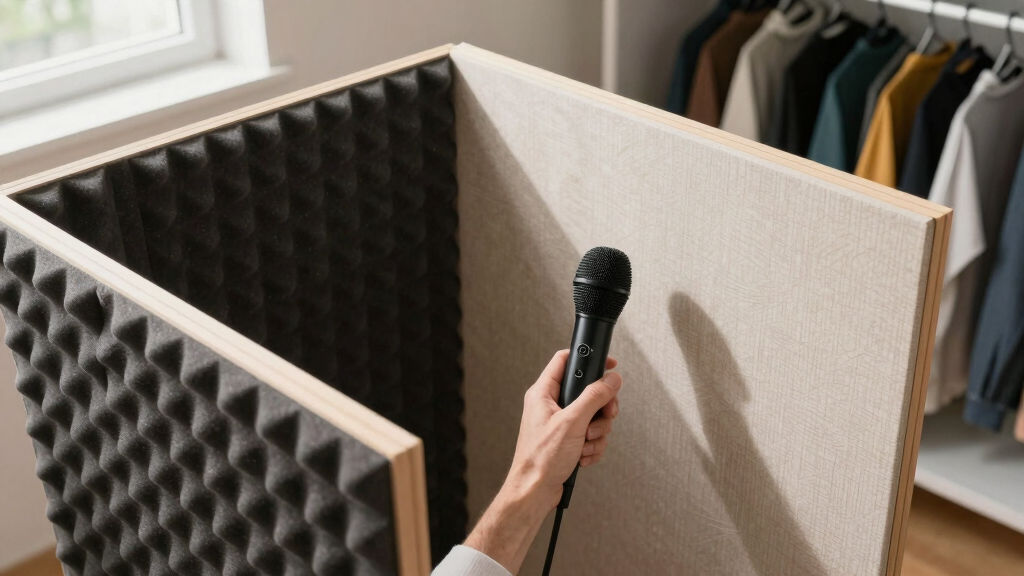
Materials like foam panels, blankets, rugs, and bass traps are effective when strategically placed. For instance, covering the door with blankets and installing absorption panels at reflection points can significantly improve sound quality. Experts note that about 20-30% wall coverage with absorption material often suffices to reduce echoes, but sealing gaps is equally important for sound isolation.
Acoustic dampening
& the rig in the closet.
The most powerful noise fix isn’t a material — it’s a floor plan. A rig you can’t hear because it’s in another room beats any amount of foam. Tap the approaches in Part 1 to see what actually works.
(another room)
(levers 1–4)
(door / barrier)
(acoustic foam)
Contain the noise, not the heat
Why Closet Setups Improve Noise Control and Sound Quality
This approach offers a practical solution for reducing noise pollution in shared or small spaces, enabling quieter work environments and better audio recordings. It also helps protect hardware from overheating by incorporating ventilation strategies. Understanding the distinction between dampening (absorbing reflections) and soundproofing (blocking sound leaks) is essential for effective room treatment. You can learn more about this in Acoustic Dampening, Placement, and the “Rig in the Closet” Setup. Implementing these techniques allows users to create a professional-quality workspace without extensive construction or expensive modifications.
acoustic foam panels for computer room
As an affiliate, we earn on qualifying purchases.
As an affiliate, we earn on qualifying purchases.
The Shift Toward Closet and Small Room Rigs
In recent years, many professionals and hobbyists have adopted the practice of placing high-performance rigs in closets or small rooms to manage noise. Historically, noise issues were addressed primarily through soundproofing, which can be costly and complex. Now, experts highlight that strategic placement combined with acoustic dampening and sealing techniques offers a simpler, more effective solution. This trend aligns with broader efforts to optimize small, dedicated workspaces for both productivity and sound quality.
"Relocating your rig into a closet and treating reflection points can drastically reduce noise and improve sound clarity, often more effectively than foam alone."
— Thorsten Meyer, acoustic expert
soundproofing blankets for closet setup
As an affiliate, we earn on qualifying purchases.
As an affiliate, we earn on qualifying purchases.
Uncertainties in Optimal Setup and Heat Management
While expert advice supports moving rigs into closets with proper treatment, the exact best combination of materials, placement, and ventilation remains case-specific. The long-term impact on hardware cooling and reliability in sealed environments is still being studied, and some users report challenges with heat buildup despite ventilation efforts. Further empirical data is needed to establish standardized best practices for various hardware configurations.
ventilation fans for enclosed PC rigs
As an affiliate, we earn on qualifying purchases.
As an affiliate, we earn on qualifying purchases.
Next Steps for Effective Closet Rig Setups
Ongoing experimentation and sharing of user experiences will refine best practices. Future developments may include specialized soundproof enclosures with integrated cooling systems and advanced acoustic treatment kits tailored for small spaces. For insights on setup and acoustic treatment, see the original analysis. Users are encouraged to monitor temperature and sound leakage closely and adjust ventilation and treatment accordingly. Industry experts plan to publish more detailed guidelines based on emerging case studies.
As an affiliate, we earn on qualifying purchases.
Key Questions
Can I completely soundproof my closet rig?
Complete soundproofing is challenging and costly. Most effective setups focus on dampening reflections and sealing gaps to reduce noise leakage, rather than total soundproofing.
What materials are best for acoustic treatment in small spaces?
Heavy foam panels, blankets, rugs, and bass traps are effective. Placement at reflection points and in corners helps control echoes and low-frequency buildup.
How do I prevent my hardware from overheating in a closet?
Use ventilation strategies like exhaust fans, ducted airflow, and placement of intake/exhaust fans to maintain safe temperatures while minimizing noise.
Does sealing gaps compromise airflow and cooling?
Proper sealing combined with ventilation ensures both noise reduction and adequate cooling. Careful planning of airflow paths is essential.
Is this setup suitable for long-term use?
With appropriate ventilation, heat management, and periodic monitoring, a closet rig can be used effectively over the long term, but hardware temperatures should be regularly checked.
Source: ThorstenMeyerAI.com
Fall Picks
fall essentials
As an affiliate, we earn on qualifying purchases.