
TL;DR

Prime made for students and young adults
- Fast, free delivery for dorm and study essentials
- Prime Video and Amazon Music included
- Member-only deals
Moving your rig into another room is the most effective way to cut noise. If you must keep it in a closet, good ventilation, strategic placement, and absorption are key. Foam alone won’t cut it for soundproofing.
Ever tried to work alongside a noisy gaming rig or a loud voice-over closet, only to realize it’s draining your focus? The secret isn’t just layers of foam or thick curtains. It’s all about where you place the gear and how you treat the space around it.
In this guide, I’ll show you how to make small spaces—like closets—work for you. Whether you want a quieter workspace or a makeshift vocal booth, these tips will save you time, money, and frustration. Ready to turn that cramped closet into a sound-friendly zone?
Acoustic dampening
& the rig in the closet.
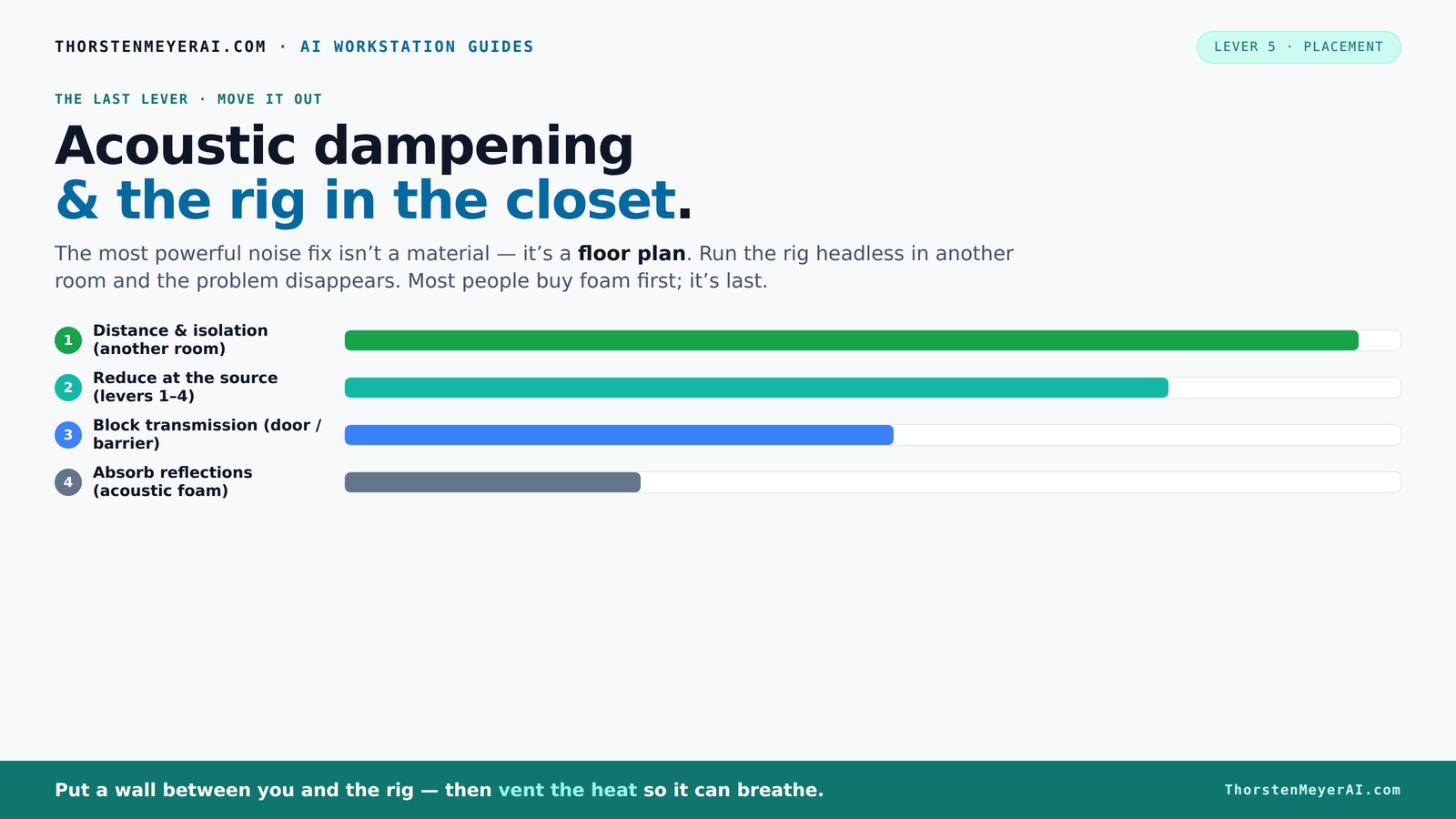
The most powerful noise fix isn’t a material — it’s a floor plan. A rig you can’t hear because it’s in another room beats any amount of foam. Tap the approaches in Part 1 to see what actually works.
(another room)
(levers 1–4)
(door / barrier)
(acoustic foam)
Contain the noise, not the heat
Key Takeaways
- Distance and isolation are the most effective noise reduction methods—move your rig into another room if possible.
- In small spaces, absorption and sealing gaps are more important than just adding foam panels.
- Ventilation is critical; a sealed closet without airflow turns into a hot, noisy trap.
- Bass traps and corner treatment eliminate low-end muddiness common in tiny rooms.
- Don’t rely solely on foam—combine absorption, sealing, and mass for true soundproofing.
soundproof acoustic foam panels for home studio
As an affiliate, we earn on qualifying purchases.
As an affiliate, we earn on qualifying purchases.
Why Distance Is Your Best Weapon Against Noise
The biggest noise reductions come from just moving your rig away from your ears. When your PC or GPU is located in another room, the sound is effectively outside your immediate environment, making it much less intrusive. This isn’t just about convenience; it’s about perceptual reduction—your brain perceives less noise because it’s physically farther away. Think of it like a noisy neighbor: if you want to learn more about fostering creativity and innovation, you can explore strategies for managing your environment.
For AI workstations or gaming setups, this means you don’t need to be physically next to the machine. Using a wired network or strong Wi-Fi, you can control the system remotely. This approach doesn’t just reduce noise; it also minimizes heat and electromagnetic interference near your workspace. According to research on sound transmission in office environments [1], moving noise sources away can reduce perceived loudness by over 80%, significantly improving comfort and productivity. The tradeoff is convenience versus latency or control, but for most tasks, remote operation is seamless.
Imagine your little office: your laptop remains quiet, while the powerful rig stays cozy in the basement or closet. You hit ‘Go’ on your model, sip coffee, and barely notice the racket. The noise? It’s out of sight—and earshot.
portable vocal booth for closet setup
As an affiliate, we earn on qualifying purchases.
As an affiliate, we earn on qualifying purchases.
The ‘Rig in the Closet’ Setup — Why It Works and What to Watch Out For
Placing your rig in a closet can be highly effective at muffling noise—if you understand the nuances. The key benefit is that a closet acts as a natural enclosure, trapping and dampening sound waves. However, this benefit only manifests when the space is properly managed. One major issue is heat buildup: a sealed closet can turn into a heat trap, causing your hardware to overheat and fans to spin faster, which ironically increases noise. This creates a paradox: trying to quiet the system can make it noisier due to thermal management problems.
To combat this, active airflow is essential. Installing vents, exhaust fans, or ducting channels hot air outside prevents temperature spikes and maintains a stable, cool environment. Think of it as giving your rig a dedicated window to breathe—without this, the heat can cause thermal throttling, which leads to increased fan noise and potential hardware damage. For more detailed advice on this, see Acoustic Dampening, Placement, and the 'Rig in the Closet' Setup.
Another consideration is the material of the closet itself. Hard surfaces reflect sound, while soft, porous materials absorb it. Choosing the right materials and adding sound-absorbing panels or blankets can significantly improve the muffling effect. The tradeoff here is balancing soundproofing with ventilation; neglecting ventilation can lead to overheating, while ignoring sound treatment results in a noisy environment. With careful planning, you can create a space that is both cool and quiet, optimizing hardware longevity and acoustic performance.
soundproofing materials for PC rig enclosure
As an affiliate, we earn on qualifying purchases.
As an affiliate, we earn on qualifying purchases.
How to Treat a Small Closet for Sound (Without Wasting Money)
Acoustic foam, blankets, and panels are commonly used to treat small spaces, but understanding their limitations is crucial. Foam reduces high-frequency reflections, making recordings sound clearer, but it doesn’t prevent sound from escaping or entering. In tight spaces like closets, the real challenge is sealing gaps and managing low-frequency buildup, which foam alone cannot handle effectively. The goal is to combine absorption with sealing strategies to maximize soundproofing without unnecessary expense.
Here’s a detailed, effective approach:
- Seal gaps around the door with weatherstripping, draft stoppers, or heavy blankets. These leaks are often the weakest points for sound escape.
- Install absorption panels at the first reflection points—these are typically behind the microphone, along side walls, and on the ceiling near your head. This reduces echo and harshness, making your recordings cleaner.
- Add bass traps in the corners to control low-frequency resonances. Without bass trapping, your recordings may sound boomy or muddy, especially in small, enclosed spaces.
- Use soft surfaces like rugs, blankets, or thick curtains on the floor and walls to absorb residual echo and prevent sound bouncing around.
- Position your microphone carefully—avoid pointing it directly at bare, reflective surfaces which can cause comb filtering and harsh echoes, degrading your sound quality.
For example, a YouTuber turned her tiny closet into a vocal booth by layering blankets, sealing gaps, and strategically placing foam panels. The result was a significant reduction in echo and a professional tone—showing that thoughtful treatment can dramatically improve sound quality without expensive equipment [1]. The key is understanding that absorption, sealing, and proper mic placement work together to achieve the best results.
sound isolation pads for gaming PC
As an affiliate, we earn on qualifying purchases.
As an affiliate, we earn on qualifying purchases.
Why Foam Isn’t a Complete Solution (And What Actually Works)
Acoustic foam is effective at reducing echo and flutter echoes within a space, but it’s not a true soundproofing material. Foam primarily absorbs high-frequency sounds, which are responsible for harshness and clarity, but it does little to block low-frequency sounds or prevent sound from leaking through gaps and structural weaknesses. Relying solely on foam gives a false sense of security—your space may sound better internally, but noise still escapes. For more insights on soundproofing techniques, check out Rotten Panda.
Effective soundproofing in small rooms requires adding mass—dense materials like drywall, mass-loaded vinyl, or thick panels that dampen vibration transmission. Sealing all gaps around doors, vents, and windows is equally important because sound leaks through these openings. To learn more about effective acoustic treatment, visit Acoustic Dampening, Placement, and the 'Rig in the Closet' Setup.
Tradeoffs include cost, space, and complexity. Thicker panels (2-4 inches) significantly improve low-frequency absorption but require more space and investment. Combining foam with door seals, double walls, or mass-loaded vinyl creates a more comprehensive barrier. Remember, a small booth can sound professional when treated holistically—covering all aspects of absorption, sealing, and mass addition. The key is understanding that foam alone is insufficient for true soundproofing, but it can be a valuable component when combined with other measures.
Corner Bass Traps and Reflection Control: Why They Matter in Small Rooms
Low frequencies tend to accumulate and resonate in the corners of small rooms, creating a muddy, boomy sound that can obscure clarity. These standing waves are particularly problematic because they are difficult to control with just surface treatments. Installing bass traps in the corners absorbs these resonances at their source, allowing for a more balanced and accurate sound. Without them, low-end frequencies can overpower the mix, making recordings sound unprofessional.
For example, placing thick acoustic panels or specialized bass traps at the corners behind your mic or near the floor can dramatically improve sound clarity. In one small vocal booth, adding corner traps reduced bass rumble by 50%, transforming muddy recordings into crisp voiceovers [4]. The investment in corner treatment is essential because it directly addresses the low-frequency buildup that standard panels can't effectively handle.
In tiny spaces, low-end treatment isn’t optional—it’s a necessity for achieving professional-quality recordings. Ignoring this aspect often results in a “muddy” sound that’s difficult to correct in post-production. Properly installed bass traps help you achieve a balanced frequency response, ensuring your recordings are clear and accurate across the spectrum.
Common Mistakes That Kill Your Closet Setup’s Effectiveness
Many enthusiasts make decisions that undermine their efforts to create a quiet, professional space. Recognizing these pitfalls is essential for effective treatment. Here are the most common mistakes and why they matter:
- Over-relying on thin foam panels that only address high-frequency reflections without sealing gaps or treating low frequencies. This creates a false sense of soundproofing and leaves your space echoey.
- Ignoring leaks and gaps around doors, vents, and seams. These leaks allow sound to escape or enter, defeating the purpose of your treatments.
- Placing the microphone directly facing bare, reflective walls, which causes comb filtering, harsh echoes, and degraded audio quality. Proper mic placement and surface treatment are crucial.
- Failing to consider ventilation—fully sealing a closet without airflow can lead to overheating, increased fan noise, and hardware damage. Balancing soundproofing with cooling is vital.
- Thinking foam alone makes a space soundproof—this is a misconception. Effective isolation requires a combination of sealing, mass, and absorption.
By avoiding these mistakes and adopting a holistic approach—integrating sealing, absorption, bass trapping, and ventilation—you can significantly improve your tiny space’s acoustic quality. Think of it like tuning a musical instrument: small, deliberate adjustments yield a much better sound.
Final Tips for Making Your Closet the Perfect Quiet Zone
Here’s a practical checklist to optimize your closet for sound isolation and acoustic quality:
- Seal gaps around doors and panels with weatherstripping, draft stoppers, or heavy blankets to prevent sound leaks.
- Use thick, broad-spectrum acoustic panels on walls and ceiling, strategically placed at reflection points.
- Place bass traps in corners to tame low-frequency resonances and prevent muddy sound.
- Ensure proper ventilation—install vents, exhaust fans, or ducting to prevent heat buildup and maintain hardware longevity.
- Position your microphone carefully—avoid facing reflective surfaces directly behind or beside it, and consider using a mic stand with some isolation.
Balancing these elements—soundproofing, absorption, and airflow—is key to turning your tiny closet into a professional-sounding space. Small adjustments in each area compound to create a significant overall improvement, making your setup both quiet and effective.
Frequently Asked Questions
Is acoustic foam enough for a closet studio?
Acoustic foam helps reduce echo and reflections inside the space, but it doesn’t block sound from leaking outside. For proper soundproofing, you need sealing, mass, and ventilation combined with foam.Where should I place panels in a closet vocal booth?
Place panels at the first reflection points—behind the mic, side walls, and ceiling near your head. Covering these points cuts harsh echoes and improves clarity.Do I need bass traps in a small closet?
Yes. Low frequencies build up in corners, creating boomy sound. Bass traps in corners can balance the low end, making your recordings clearer and more professional.How do I prevent heat buildup in a closet setup?
Ensure proper ventilation with vents, exhaust fans, or ducting. Avoid fully sealing the space, as trapped heat can throttle your hardware and cause noise issues.Will moving blankets work as well as foam panels?
Moving blankets are a good DIY solution—they absorb high-frequency reflections and are easy to hang. They won’t block sound transmission but can significantly reduce echo when used with other treatments.Conclusion
The best way to quiet your rig or create a professional-sounding closet studio isn’t just with foam or fancy panels. It’s about smart placement, sealing gaps, and ensuring your hardware can breathe. Keep the noise where it belongs—away from your workspace—and focus on treating the space for what it really needs.
With a little planning and effort, your small closet can become a surprisingly effective and quiet zone, whether for voice recordings, gaming, or AI work. Don’t just hide the noise—move it, treat it, and make your space work for you.
Evergreen bestsellers Picks
bestsellers
As an affiliate, we earn on qualifying purchases.