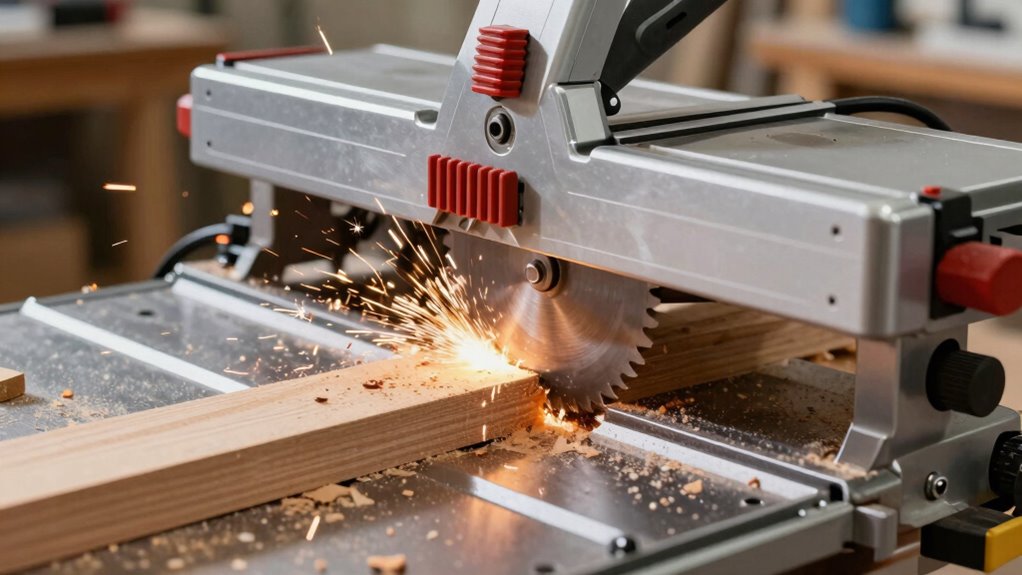
Kickback on a table saw happens when the wood pinches or twists against the blade, causing sudden force that throws it back toward you. This danger is rooted in physics, where improper cuts, such as misaligned fences or dull blades, increase the risk. By controlling the wood, keeping tools sharp, and maintaining proper technique, you can predict and prevent kickback. Keep going to gain insights that help you work more safely and confidently.

Prime made for students and young adults
- Fast, free delivery for dorm and study essentials
- Prime Video and Amazon Music included
- Member-only deals
Key Takeaways
- Kickback occurs when wood pinches or twists against the blade, releasing stored energy suddenly.
- Proper fence alignment and secure workpiece control prevent wood from shifting and causing kickback.
- Sharp, well-maintained blades reduce resistance, decreasing the likelihood of wood pinching and kickback.
- Maintaining a steady feed rate and avoiding forcing the cut minimizes sudden releases that lead to kickback.
- Standing to the side of the blade and using push sticks improve safety by reducing injury risk during unexpected kickback.
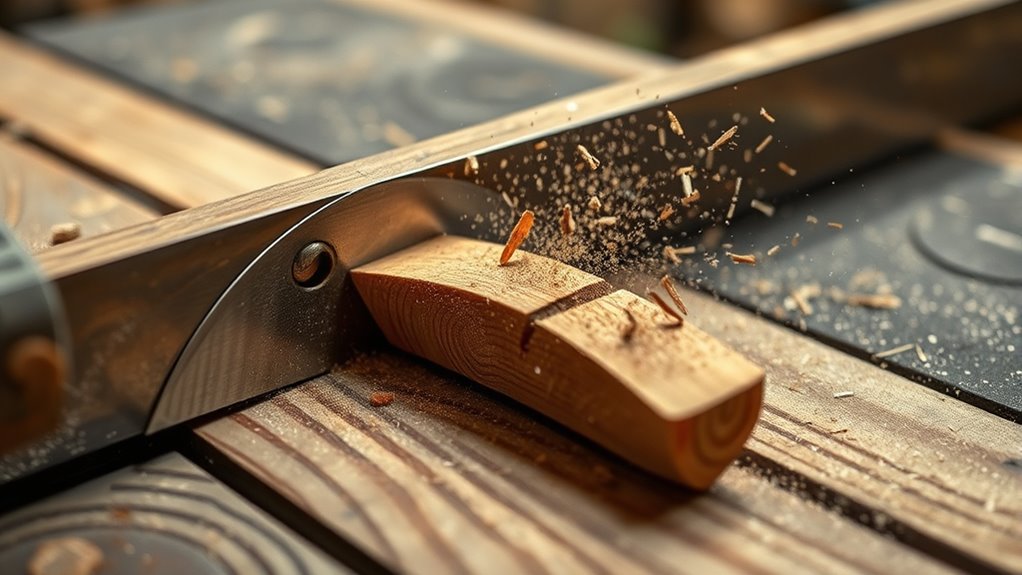
Table saw kickback is one of the most serious hazards faced by woodworkers, and understanding how it occurs is essential for safety. When you’re operating a table saw, kickback happens when the wood pinches, twists, or binds against the blade, causing the piece to be violently thrown back toward you. Recognizing the physics behind this event helps you take the right safety precautions to prevent injuries. Common injuries from kickback include cuts, lacerations, and even more severe trauma like broken bones or eye injuries if debris strikes you. Preventing these injuries relies on understanding how kickback starts and where it’s most likely to happen.
The key to avoiding kickback is to control the movement of the wood and guarantee it stays firmly against the fence and the table during cuts. When the wood shifts or twists unexpectedly, the blade’s grip on it changes, which can lead to sudden release and violent ejection. To reduce this risk, always check that your fence is aligned properly and securely locked before making a cut. Use push sticks or push blocks to keep your hands away from the blade, especially when working with narrow or small pieces. These safety precautions help you maintain control over the wood’s movement, reducing the chance of binding or pinching that could trigger kickback.
Another common mistake that leads to kickback is forcing the wood through the blade at too high a speed. Pushing too hard generates excessive resistance, which increases the likelihood of the wood twisting or binding. Instead, let the saw do the work by maintaining a steady, controlled feed rate. Keep an eye on the wood throughout the cut, and stop immediately if you notice it beginning to twist or bind. Regularly inspecting your blade for dullness or damage is essential, as a dull blade can cause irregular cuts that increase the risk of kickback. Sharp blades cut more cleanly and reduce the force needed, lowering the chance of binding.
In addition, always stand to the side of the blade, not directly behind the cut line, so you’re less likely to be hit if kickback occurs. Wearing safety gear, such as eye protection and a dust mask, also shields you from flying debris in case of an unexpected event. Being aware of the power tool physics involved in kickback helps you anticipate and prevent dangerous situations before they happen. By understanding the physics of kickback and implementing these safety precautions, you can considerably lower the risk of common injuries. Staying vigilant, maintaining your equipment, and practicing safe techniques help you work confidently and safely with your table saw.
As an affiliate, we earn on qualifying purchases.
Frequently Asked Questions
How Can I Prevent Kickback Before It Happens?
To prevent kickback before it happens, always use a blade guard to cover the blade and keep your hands away from the cutting area. Employ a push stick to guide the wood, especially when making narrow cuts, ensuring you maintain control and distance from the blade. Keep the table saw’s surface clean, avoid twisting the wood, and never bypass safety features. These precautions markedly reduce your risk of kickback.
What Safety Gear Should I Wear During Table Saw Use?
You absolutely must wear safety glasses and ear protection every time you use the table saw. Think of safety glasses as your superhero shield against flying wood chips and sawdust, and ear protection as your fortress against deafening noise that can damage your hearing in seconds. Don’t risk your eyes or ears—gear up like a pro, and make every cut safe and sound. Stay protected, stay smart, and keep your workspace accident-free!
Are There Specific Saw Models With Safer Features?
Yes, some saw models prioritize safety with feature innovations like flesh detection technology, riving knives, and anti-kickback pawls. Look for saw model safety ratings and reviews that highlight these features, as they considerably reduce the risk of kickback. Modern saws often incorporate smarter designs to prevent accidents, so choosing a model with these safety features helps protect you while you work. Always make certain of proper training and safety gear too.
How Does Blade Type Influence Kickback Risk?
Think of your saw blade as a double-edged sword—its type directly influences kickback risk. A dull or improperly sharpened blade can cause dangerous binding, while a larger blade diameter may increase leverage, making kickback more likely. For safety, keep your blade sharp and choose the right type for your cut. Remember, a well-matched blade minimizes hazards and keeps your work safe and smooth.
What Maintenance Checks Reduce Kickback Chances?
You reduce kickback chances by regularly checking blade alignment to make sure it’s straight and secure, preventing uneven cuts that cause kickback. Keep your motor well-lubricated to maintain smooth operation and avoid unnecessary strain on the saw. Also, inspect the blade for damage or dullness, and tighten all screws and guards. Consistent maintenance like these keeps your saw operating safely, minimizing the risk of kickback during your woodworking projects.
As an affiliate, we earn on qualifying purchases.
Conclusion
Stay vigilant with your table saw, because kickback can strike when you least expect it—like a modern-day Pandora’s box. By understanding and predicting this danger, you can avoid disaster and keep your workshop safe. Remember, a little caution today prevents a catastrophe tomorrow. Even if you think you’re in control, respect the saw’s power. After all, as Benjamin Franklin said, “An ounce of prevention is worth a pound of cure.” Stay safe out there.
fence alignment tool for table saw
As an affiliate, we earn on qualifying purchases.
As an affiliate, we earn on qualifying purchases.
As an affiliate, we earn on qualifying purchases.
Fall Picks
fall essentials
As an affiliate, we earn on qualifying purchases.