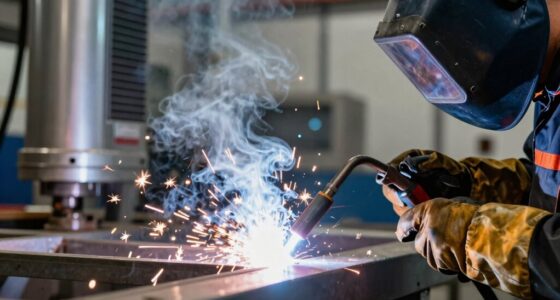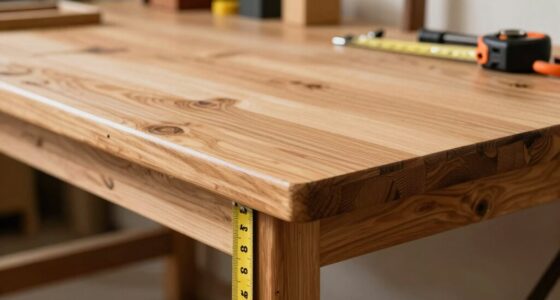
If you’re choosing between brad, finish, and framing nailers, each serves a specific purpose. Brad nailers use thin nails ideal for delicate trim and detail work, offering a clean finish without splitting wood. Finish nailers handle slightly thicker nails for molding and cabinetry, providing a stronger hold. Framing nailers use large, sturdy nails for construction framing and heavy-duty tasks, ensuring durability. Knowing these differences helps you select the right tool for your project, and exploring further reveals how each type contributes to professional results.

Prime made for students and young adults
- Fast, free delivery for dorm and study essentials
- Prime Video and Amazon Music included
- Member-only deals
Key Takeaways
- Brad nailers use thinner, shorter nails ideal for delicate trim and detailed finish work.
- Finish nailers handle slightly thicker nails suitable for molding, cabinetry, and decorative trim.
- Framing nailers use thick, long nails designed for structural framing and heavy-duty construction.
- Each nailer type offers specific safety features and operating mechanisms tailored to its use.
- Choosing the right nailer depends on project scale, material, and desired finish quality.
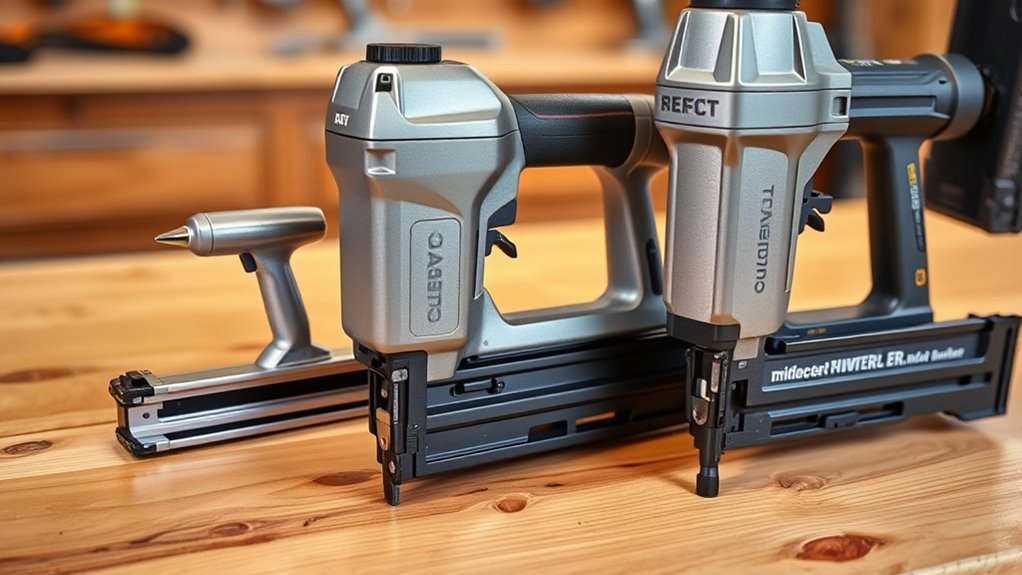
Nailers are indispensable tools for both professionals and DIY enthusiasts, making tasks like framing, finishing, and cabinetry much easier. When choosing the right nailer, understanding the different types of nails and the significance of nail gun safety is essential. Each nailer is designed to work with specific types of nails, which impacts the quality and durability of your project. For example, framing nailers use thicker, longer nails that are designed to hold large structures together, while finish nailers utilize thinner, shorter nails that leave less visible holes, perfect for detailed trim work. Knowing which type of nails to use ensures your project holds up over time and looks professional. Selecting the correct nail size and gauge is also crucial for achieving the best results and ensuring safety during operation.
Nail gun safety is another critical aspect to consider. These tools pack a lot of power, and improper use can lead to injuries. Always wear safety glasses, no matter what project you’re tackling, and keep your hands clear of the nailer’s firing zone. Before you start, inspect your nailer to make sure it’s in good condition—check for damaged parts or loose fittings. Make sure you understand your nailer’s firing mechanism, whether it’s sequential or contact actuation, and always follow the manufacturer’s instructions. When handling the nail gun, hold it firmly and avoid pointing it at yourself or others, even when you’re not actively firing. Remember, accidental discharge can happen if you’re not careful, so always engage safety features and disconnect the nailer from power when clearing jams or making adjustments.
Understanding the types of nails you use can help prevent issues like jamming or weak joints, especially in different materials.
As an affiliate, we earn on qualifying purchases.
Frequently Asked Questions
Can Nailers Be Used for Both Indoor and Outdoor Projects?
Yes, you can use nailers for both indoor and outdoor projects. Just make sure the nailer has weather resistance features, especially for outdoor work, to prevent rust and damage. Also, verify material compatibility, as some nailers work better with specific materials like treated wood or composites. Using the right nailer guarantees durability and a clean finish, whether you’re building a deck outside or framing inside.
What Safety Gear Should I Wear When Using a Nailer?
Imagine a shield guarding your eyes and ears in the battlefield of construction. You should wear safety glasses to protect your eyes from flying debris and hearing protection to block out the loud bang of the nailer. These gear pieces act as your armor, ensuring you stay safe and focused. Always gear up before you start nailing—your safety is the most valuable tool in your arsenal.
How Do I Maintain and Clean My Nailer?
To maintain and clean your nailer, regularly apply Nailer lubrication to keep it running smoothly. Always disconnect the tool before cleaning. Use dust removal techniques like compressed air to clear debris from vents and moving parts. Wipe the exterior with a damp cloth to remove grime. Proper maintenance prevents jams and extends your nailer’s lifespan, ensuring safe and efficient operation every time you use it.
Are Cordless Nailers as Powerful as Pneumatic Ones?
You might think cordless nailers can’t hold a candle to pneumatic ones, but with advances in battery technology, they’re catching up fast. While power comparison varies by model, many cordless nailers now deliver comparable force for most projects. Keep in mind, cordless nailers offer convenience and portability, making them a handy tool. So, don’t count them out just yet—they’re proving they’re more than just a pretty face.
What Are the Most Common Troubleshooting Issues With Nailers?
You might encounter common nailer issues like jammed nails or air leaks. When nails jam, clear the jam carefully without damaging the tool. For air leaks, check the gasket and connections, tightening or replacing parts as needed. Regular maintenance helps prevent these problems. If issues persist, consult the manufacturer’s instructions or a professional to guarantee safety and proper functioning of your nailer.
As an affiliate, we earn on qualifying purchases.
Conclusion
Now that you know the differences between brad, finish, and framing nailers, you’re better equipped to choose the right tool for your project. Each nailer has its unique purpose, so selecting the correct one can make your work easier and more efficient. Isn’t it satisfying to see your project come together with the right tools in hand? With this knowledge, you’re ready to nail it—literally!
As an affiliate, we earn on qualifying purchases.
As an affiliate, we earn on qualifying purchases.
Fall Picks
fall essentials
As an affiliate, we earn on qualifying purchases.