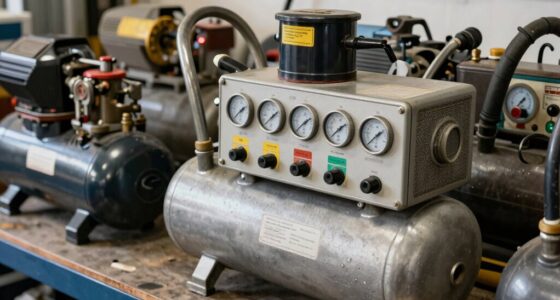
Decibel (dB) ratings can be misleading when judging how quiet a compressor truly is because these figures often focus on measurements taken at a single point or under ideal conditions, ignoring factors like soundproof casing, internal design, and environment resonance. You might see a lower dB but still experience significant noise due to vibrations or echo. To understand the real quietness, consider how well the unit is designed and insulated—there’s more than just the dB rating involved. If you keep exploring, you’ll uncover even more ways to find quieter options.

Prime made for students and young adults
- Fast, free delivery for dorm and study essentials
- Prime Video and Amazon Music included
- Member-only deals
Key Takeaways
- dB ratings often measure noise at a single point, not reflecting real-world sound levels.
- Soundproof casing and internal design significantly influence actual noise reduction beyond dB figures.
- Resonance, environment, and space layout can amplify or diminish perceived noise, which dB ratings do not account for.
- Additional features like vibration dampening and insulation improve quietness regardless of the dB specification.
- Proper installation and maintenance are crucial for maintaining low noise levels, making dB ratings an incomplete measure.
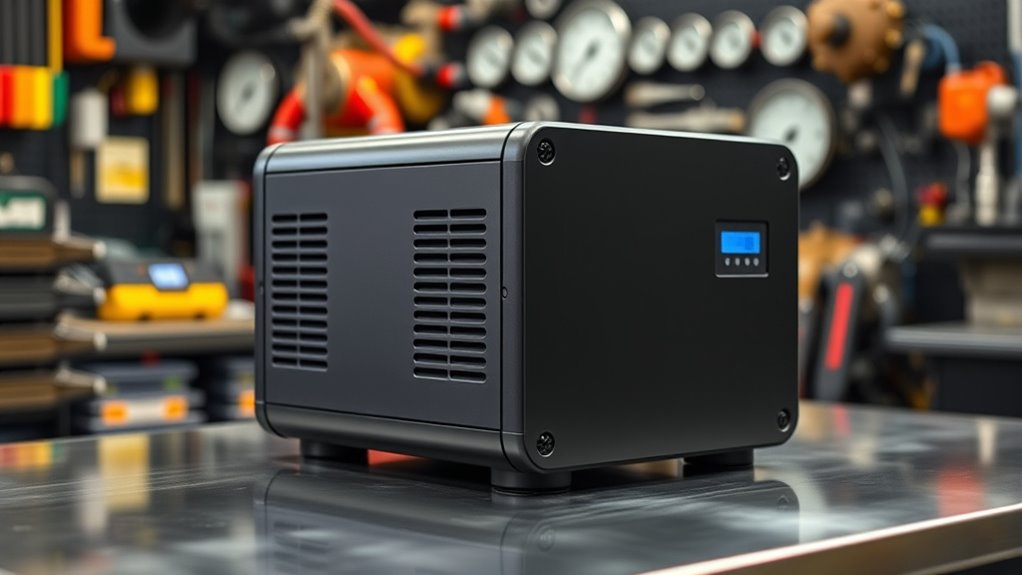
Quiet compressors are becoming an essential choice for both industrial and home use, offering powerful performance without the loud noise traditionally associated with these machines. While manufacturers often highlight decibel (dB) ratings to showcase how quiet their units are, these numbers don’t tell the whole story. You might assume that a lower dB number guarantees a quieter experience, but other factors profoundly influence noise levels. For instance, noise reduction isn’t just about the compressor’s motor; it involves how well the unit is designed to contain and minimize sound. Soundproof casing plays a vital role here. These enclosures are crafted to dampen vibrations and absorb sound waves, making the compressor operate more quietly in real-world settings. A compressor with a sturdy, well-designed soundproof casing can outperform one with a low dB rating but poor sound insulation. Additionally, the design of internal components impacts how much noise is generated and transmitted outside the unit. You’ll notice that some compressors with comparable dB ratings sound drastically different in practice. That’s because the decibel measurement often captures the noise at a single point or under ideal conditions, not accounting for how sound travels or resonates within your environment. A compressor with excellent noise reduction features—like insulated panels, vibration dampening mounts, and soundproof casing—can greatly reduce the noise you hear during operation, even if its official dB rating isn’t the lowest. Conversely, a unit with a low dB rating but lacking proper casing might still produce disruptive noise levels, especially in enclosed or sensitive spaces.
When choosing a quiet compressor, look beyond the dB specs. Consider whether it includes soundproof casing or other noise mitigation features. These design elements can make a substantial difference in creating a more comfortable and less disruptive environment. Look for units that emphasize soundproofing materials or have built-in vibration isolation. These design choices help contain the noise and prevent vibrations from amplifying sound. Keep in mind that proper maintenance and installation also affect noise levels; a well-maintained compressor with soundproof casing will remain quieter over time.
quiet air compressor with soundproof casing
As an affiliate, we earn on qualifying purchases.
As an affiliate, we earn on qualifying purchases.
Frequently Asked Questions
How Does Room Size Affect Compressor Noise Perception?
Room size substantially influences how you perceive compressor noise. In smaller rooms, sound reflects off walls, making noise seem louder, especially without good sound insulation. Larger rooms with better acoustics help disperse sound waves, reducing perceived noise levels. So, when choosing a compressor, consider your room’s size and acoustics, as these factors can amplify or dampen the actual noise, beyond just the decibel ratings.
Can a Quieter Compressor Perform as Well as Louder Models?
You might think a quieter compressor can’t match the performance of louder models, but that’s a noise level myth. A compressor with a lower decibel measurement can still deliver the same efficiency, thanks to design improvements. In fact, some quiet models outperform louder ones in durability and energy use. Don’t rely solely on decibel measurements; consider overall quality, because sometimes, less noise means better engineering, not weaker performance.
What Maintenance Reduces Compressor Noise Over Time?
You can reduce compressor noise over time by maintaining proper noise insulation and vibration dampening. Regularly inspect and replace worn vibration mounts and pads to minimize vibrations that increase noise. Adding or upgrading insulation around the compressor helps absorb sound. Keep the compressor clean, and ensure all panels are tightly secured. Proper maintenance of these elements considerably lowers operational noise, making your compressor quieter and more efficient over its lifespan.
Are There Specific Brands Known for Quiet Compressors?
If you’re looking for quiet compressors, brands like Ingersoll Rand, Quincy, and Atlas Copco are known for their excellent reputation and advanced noise reduction technology. These companies prioritize sound dampening features and innovative designs that minimize noise during operation. By choosing a brand with a strong reputation for quiet performance, you guarantee better noise control, even if the decibel ratings don’t tell the full story.
How Does Compressor Placement Impact Noise Levels?
You might think placing your compressor far from living areas reduces noise, but that’s only half the story. Proper placement with sound insulation and vibration dampening materials makes a huge difference. Positioning it on a stable, insulated surface minimizes vibrations and sound transmission. Even subtle shifts in placement can amplify noise, so think strategically—use barriers and dampers—to truly keep the noise down where it matters most.
vibration dampening compressor mounts
As an affiliate, we earn on qualifying purchases.
As an affiliate, we earn on qualifying purchases.
Conclusion
So, next time you’re choosing a quiet compressor, don’t just rely on “dB” specs—they might be louder than they seem. Sometimes, the quietest-looking models turn out to be surprisingly noisy, or vice versa. It’s funny how the quietest machines often surprise us when we test them firsthand. Remember, real-world performance can differ from specs, so trust your ears and experience. After all, the true test of quiet is in how it feels to you.
insulated soundproof compressor enclosure
As an affiliate, we earn on qualifying purchases.
As an affiliate, we earn on qualifying purchases.
As an affiliate, we earn on qualifying purchases.
Halloween Picks
halloween
As an affiliate, we earn on qualifying purchases.