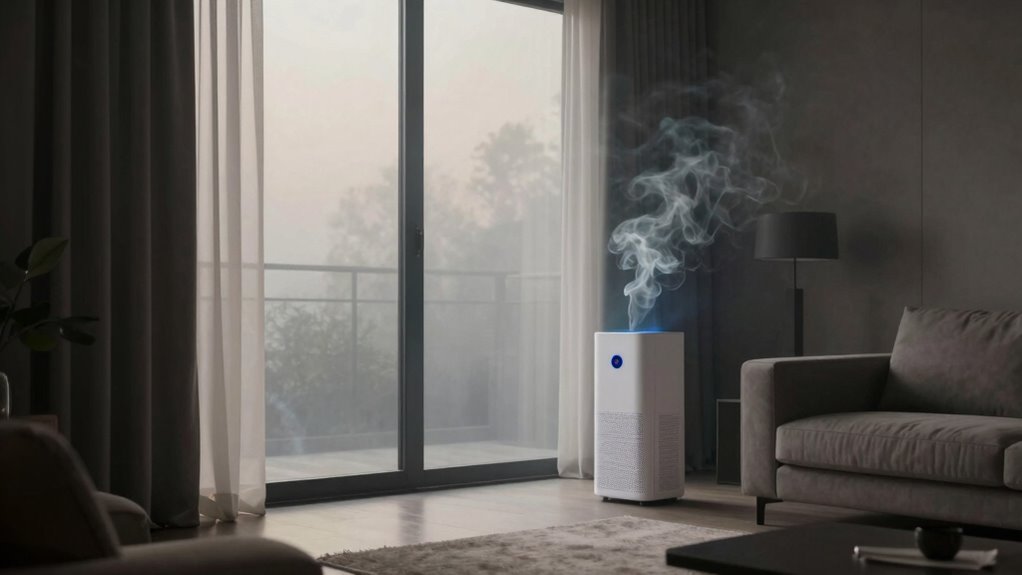

Wildfire smoke needs a different indoor strategy because it’s a complex mix of tiny particles and gases that easily infiltrate your home, unlike regular pollution. Standard filters often can’t trap these dangerous particles, so you should use HEPA filters and airtight sealing to minimize infiltration. Proper ventilation control and regular maintenance of filtration systems are key to keeping indoor air safe. To learn effective steps to protect your space, keep exploring how to manage wildfire smoke indoors.

Prime made for students and young adults
- Fast, free delivery for dorm and study essentials
- Prime Video and Amazon Music included
- Member-only deals
Key Takeaways
- Wildfire smoke contains tiny particles that penetrate indoor spaces more easily than typical pollution.
- Standard air filters often cannot effectively capture smoke particles, requiring specialized filtration like HEPA filters.
- During wildfires, sealing windows and vents is crucial to prevent indoor infiltration of harmful smoke.
- Mechanical ventilation systems with filtration help control indoor air quality while minimizing smoke entry.
- Regular maintenance of air filtration and ventilation systems ensures optimal performance during wildfire events.
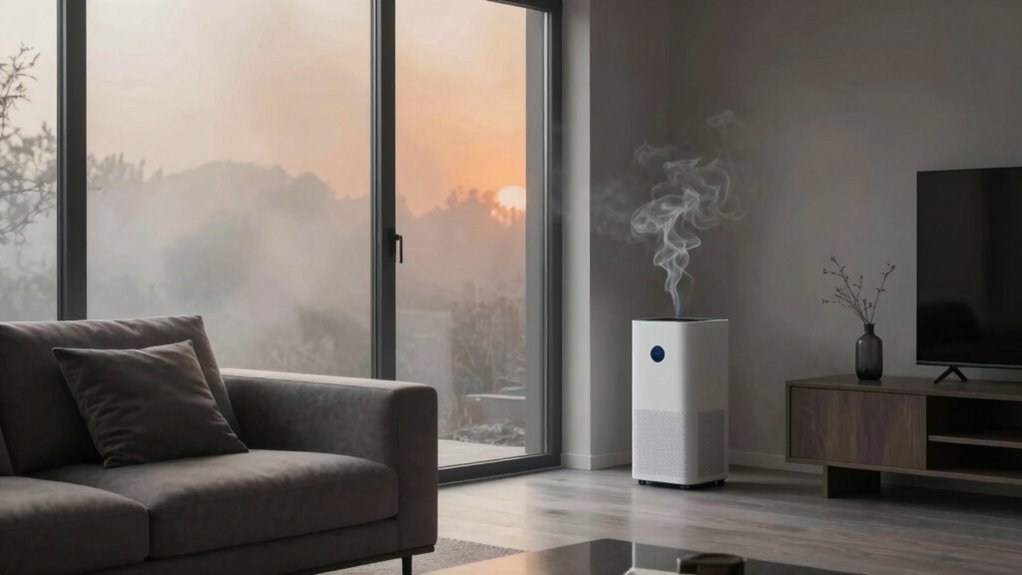
Wildfire smoke isn’t like typical air pollution; it’s a complex mix of tiny particles and gases that can easily seep into your living space. Because of its unique composition and the persistent threat during fire season, your indoor strategy needs to be more targeted and effective. To do this, you must focus on air filtration and ventilation control, which are essential in reducing indoor smoke concentrations.
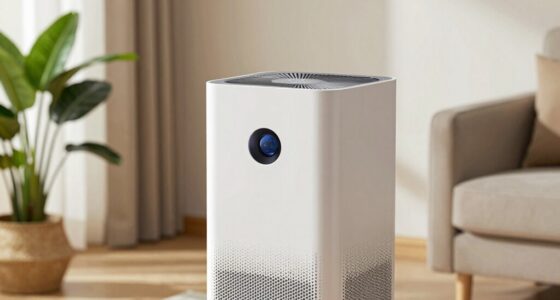
Air filtration is your first line of defense. Standard air filters might not be enough since wildfire smoke particles are extremely small—often less than 2.5 micrometers in diameter. You need high-efficiency particulate air (HEPA) filters that can trap these tiny particles. Installing a HEPA air purifier in the main living area or bedrooms ensures continuous removal of smoke particles from the air you breathe. Regularly changing or cleaning filters is imperative because clogged filters lose efficiency, allowing pollutants to circulate. Keep in mind that relying solely on air filtration isn’t sufficient; it must be part of a broader strategy. Understanding indoor air quality** can help you make better decisions during wildfire events. Additionally, using a whole-house air cleaner can significantly improve overall indoor air safety. It’s also beneficial to consider air exchange rates** to optimize indoor air quality during smoky conditions.
Use HEPA filters and maintain them regularly to effectively remove tiny wildfire smoke particles indoors.
Ventilation control plays an equally important role. When wildfire smoke is outside, bringing in fresh air can do more harm than good, as it can introduce new pollutants. You should keep windows and exterior vents closed during smoky conditions, sealing gaps around doors and windows to prevent outdoor air from infiltrating. Use mechanical ventilation systems equipped with filtration, such as heat recovery ventilators (HRVs) or energy recovery ventilators (ERVs), which allow controlled fresh air exchange without letting smoke inside. These systems can be adjusted to minimize outdoor air intake during heavy smoke events, maintaining indoor air quality. It’s important to balance ventilation to ensure your home remains fresh without pulling in harmful smoke. Additionally, understanding indoor air quality and how to improve it can help you make better decisions during wildfire events. Proper maintenance of these ventilation systems is crucial to ensure they operate effectively during wildfire seasons.
Popular right now

Ninja Flip Toaster Oven and Air Fryer, 8-in-1, Stainless Steel, SP151

Dyson Ball Animal 2 Plus Corded Vacuum

Dyson Ball Animal 3 Extra Upright Vacuum
As an affiliate, we earn on qualifying purchases.
Frequently Asked Questions
How Long Should I Keep Windows and Doors Closed During a Wildfire?
You should keep windows and doors closed during a wildfire until the smoke levels decrease, typically for several hours or as advised by local health officials. During high smoke periods, limit ventilation by sealing windows and doors properly to prevent smoke infiltration. Monitor air quality reports, and only open windows or doors when the air quality improves enough to guarantee safe ventilation timing. This helps protect you from harmful wildfire smoke.
Can Indoor Plants Help Improve Air Quality During Wildfire Smoke?
Indoor plants can help improve air quality during wildfire smoke through plant filtration, but they’re not a complete solution. They can absorb some airborne toxins and increase indoor humidity, which may soothe your respiratory system. However, for effective protection, focus on sealing windows and using high-quality air purifiers. Keep in mind that plants alone won’t fully filter out smoke, so combining strategies offers better protection during wildfire events.
Are There Specific Air Purifiers Best Suited for Wildfire Smoke?
Yes, certain air purifiers are better for wildfire smoke. Look for models with HEPA filters, as they trap tiny smoke particles effectively. Additionally, choose purifiers with activated carbon filters to absorb odors and harmful gases. These combined features provide thorough protection during wildfire events. Make sure the purifier covers your room size and runs continuously for ideal air quality. This way, you keep indoor air safe and breathable.
How Often Should I Replace or Clean Indoor Air Filters During Smoke Events?
You should replace or clean your air filters more frequently during wildfire smoke events—about every 1-2 months, or even sooner if you notice reduced airflow. HEPA filters are most effective, but consider upgrading to high-efficiency types. Additionally, improve ventilation strategies by using exhaust fans and avoiding outdoor air intake. Regularly maintaining Air filter types guarantees your indoor air stays cleaner and healthier amid heavy smoke.
What Are the Health Risks of Prolonged Indoor Exposure to Wildfire Smoke?
Prolonged indoor exposure to wildfire smoke can harm your respiratory health, causing issues like coughing, shortness of breath, and aggravating asthma or bronchitis. Air filtration becomes essential to remove fine particles and pollutants from the air you breathe. Without proper filtration, smoke toxins can accumulate indoors, increasing health risks. To protect yourself, make sure your indoor environment has effective air filtration systems, and stay indoors during heavy smoke days.
Conclusion
So, ironically, while you might think closing windows keeps smoke out, it can trap harmful particles inside. Instead, using HEPA filters and sealing vents offers better protection—yet, many overlook these simple steps. You go to great lengths to stay safe, but sometimes, the easiest solutions are the most overlooked. Next time wildfire smoke threatens your home, remember: a little strategy can make all the difference—who knew that fighting fire’s smoke requires a smarter, not harder, approach?