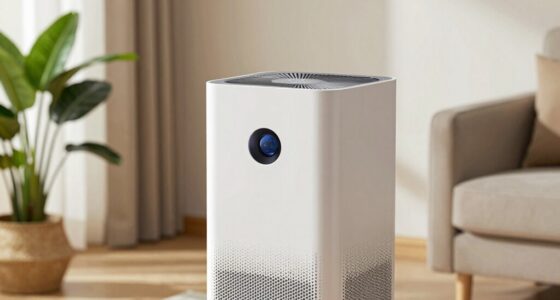
Air scrubbers and purifiers aren’t the same because scrubbers are designed for heavy-duty cleanup of large or contaminated spaces, handling things like mold, chemicals, and odors with powerful fans and multi-stage filtration. Purifiers focus on quietly removing airborne particles like dust, pollen, and pet dander to improve daily indoor air quality. Understanding these differences helps you choose the right device for your needs, and if you continue exploring, you’ll discover more about how each works.
Open a free Amazon Business account
Business pricing, bulk buying and tax-exempt orders.
As an affiliate, we earn on qualifying purchases.
Key Takeaways
- Air purifiers mainly target airborne particles like dust and pollen, while scrubbers handle larger contaminants and chemical fumes.
- Purifiers typically use HEPA filters for particles, whereas scrubbers combine HEPA and activated carbon filters for broader pollutants.
- Scrubbers include powerful fans and air exchange features for large-scale or heavily contaminated environments.
- Purifiers are designed for quiet, everyday use, while scrubbers are built for heavy-duty remediation tasks.
- The environments and contaminants each device is suited for differ significantly, affecting their specific functions and applications.
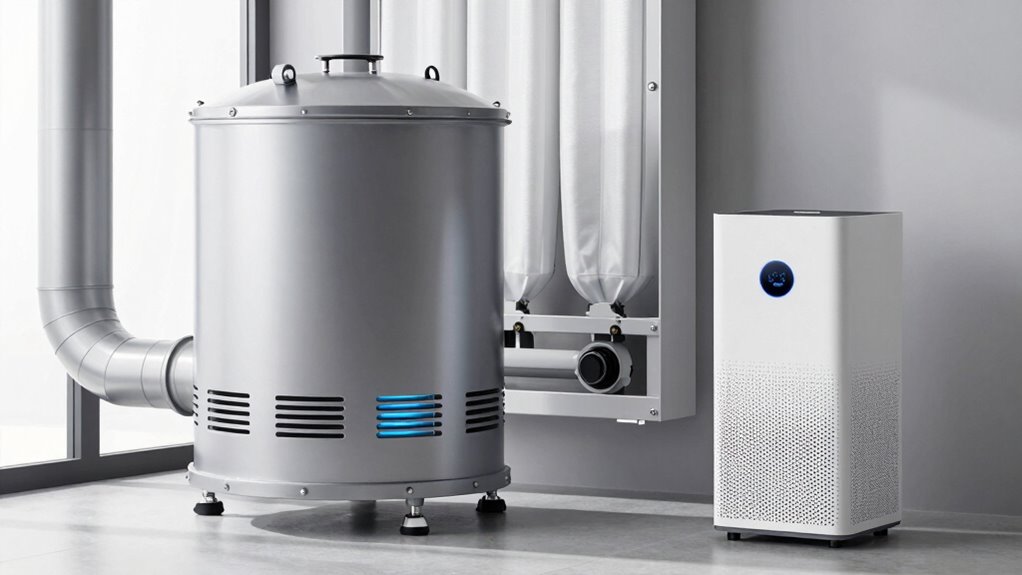
When it comes to improving indoor air quality, many people confuse air scrubbers and purifiers, but understanding their differences can help you choose the right solution for your needs. Both devices aim to clean the air you breathe, but they do so in distinct ways. Air filtration is a key component for both, yet the mechanisms they use and the problems they address differ significantly. Air purifiers typically rely on filters like HEPA technology to trap airborne particles, including dust, pollen, pet dander, and even some bacteria. HEPA filters are especially effective because they can remove particles as small as 0.3 microns with 99.97% efficiency, which makes them ideal for allergy sufferers or those with respiratory issues. When you use a HEPA-based purifier, you’re actively filtering the air to reduce the presence of allergens and contaminants, creating a cleaner indoor environment.
Air scrubbers, on the other hand, are usually more robust and designed for larger-scale air cleaning, often used in construction, renovation, or mold remediation projects. They incorporate a different approach called air filtration combined with air exchange. Many air scrubbers use high-efficiency particulate air (HEPA) filters as well, but they also include activated carbon filters to absorb odors, chemicals, and volatile organic compounds (VOCs). This multi-stage filtration makes air scrubbers more versatile for removing a broader range of pollutants, especially in environments with heavy contamination or strong odors. Unlike purifiers, air scrubbers often have powerful fans to circulate large volumes of air quickly, pulling in contaminated air and passing it through multiple filtering stages before releasing cleaner air back into the space. Additionally, air circulation is a crucial factor in maximizing the effectiveness of these devices in heavily contaminated environments. Proper air exchange techniques further enhance their ability to maintain a healthier indoor atmosphere. Moreover, understanding how air quality can be impacted by various pollutants helps clarify why different devices are suited for specific situations.
A key distinction is that ventilation plays a significant role in maintaining indoor air quality alongside filtration devices, as it helps replace stale air with fresh outdoor air. Understanding these differences can help you decide which device fits your needs. If you’re looking to improve air quality in your home and mainly want to reduce allergens and airborne particles, a good HEPA air purifier will often suffice. However, if you’re dealing with mold spores, chemical fumes, or need to clean a large or heavily contaminated space, an air scrubber’s more aggressive approach might be necessary. Both rely on air filtration, but their designs reflect different priorities—purifiers focus on quiet, efficient filtration for everyday use, while scrubbers are built for heavy-duty cleaning. Knowing this distinction empowers you to select the right device, ensuring you get effective air cleaning tailored to your specific environment.
As an affiliate, we earn on qualifying purchases.
Frequently Asked Questions
Can Air Purifiers Remove All Types of Airborne Pollutants?
Air purifiers can’t remove all airborne pollutants because some, like gases or odors, require specific filters like HEPA filtration or activated carbon. HEPA filters effectively trap particles like dust, pollen, and pet dander, but ozone generators produce ozone that can help neutralize odors and certain chemicals. You need both types of devices to thoroughly clean your air, as no single purifier can handle every pollutant type.
Do Air Scrubbers Require Professional Installation?
Think of an air scrubber as a fortress guarding your home’s air quality; its installation can be complex, requiring professional services. You might feel confident installing small purifiers yourself, but scrubbers often involve intricate setup due to their size and integration needs. Hiring professionals ensures proper installation, maximizing their effectiveness and safety. Don’t risk compromising your air quality—trust expert help to safeguard your indoor environment.
Are Air Purifiers Effective Against Odors?
Yes, air purifiers can be effective against odors, but their effectiveness depends on their filters and features. Some air quality myths suggest purifiers eliminate all smells, but purifier limitations include only addressing certain types of odors. To improve air quality, choose a purifier with activated carbon filters designed for odors. Keep expectations realistic, and remember that regular cleaning and ventilation also play vital roles in odor control.
How Long Does It Take for an Air Scrubber to Clean a Room?
It usually takes about 30 minutes to a few hours for an air scrubber to substantially improve a room’s air quality. Think of it as a breath of fresh air for your space. The exact time depends on room size, contaminants, and equipment maintenance. To keep the air scrubber working efficiently, you’ll want to regularly check filters and equipment, ensuring peak performance and cleaner air faster.
Can Air Purifiers Eliminate Viruses and Bacteria?
Air purifiers can help with virus elimination and bacterial removal, but they aren’t foolproof. They effectively trap airborne viruses and bacteria, reducing the risk of spread, especially with HEPA filters. However, they may not eliminate all pathogens, particularly those settled on surfaces. For thorough protection, combine air purifiers with regular cleaning and good hygiene practices. Always check the purifier’s specifications to guarantee it targets the specific viruses and bacteria you’re concerned about.
industrial air scrubber for mold removal
As an affiliate, we earn on qualifying purchases.
As an affiliate, we earn on qualifying purchases.
Conclusion
Imagine walking into a room filled with smoky air and thinking, “This isn’t just about freshening up; it’s about cleaning the air’s very soul.” That’s what understanding the difference between air scrubbers and purifiers feels like. Just like a deep clean versus a quick wipe, knowing which device tackles what guarantees you breathe easier. Don’t settle for a surface fix—choose the right tool to truly purify your space and your health.
As an affiliate, we earn on qualifying purchases.
heavy-duty air scrubber for construction
As an affiliate, we earn on qualifying purchases.
As an affiliate, we earn on qualifying purchases.
NFL season / tailgating Picks
team gear
As an affiliate, we earn on qualifying purchases.