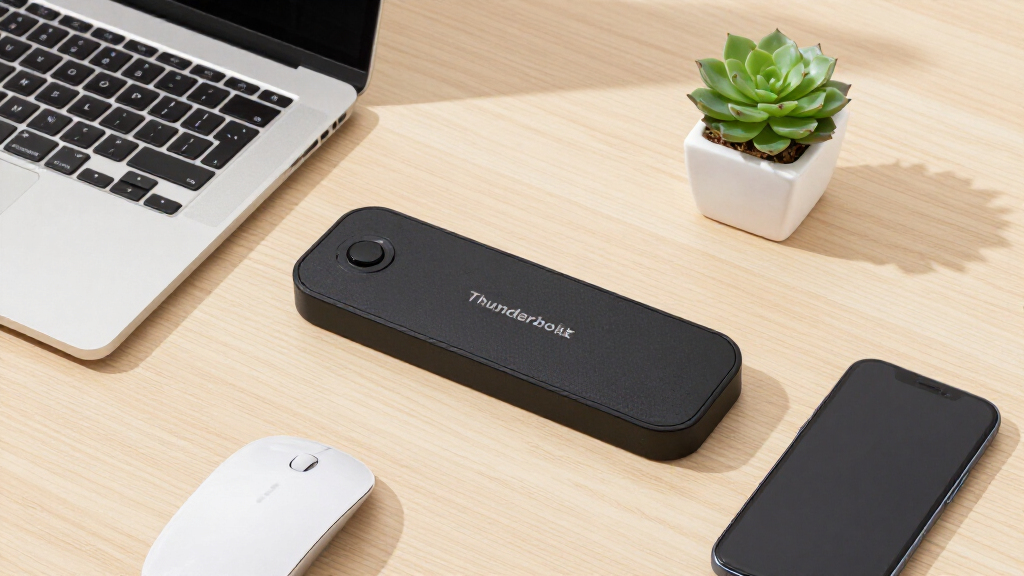

📊 Full opportunity report: The Smart Choice: Thunderbolt Docks For AI In 2026 on ThorstenMeyerAI.com — validation score, market gap, and execution plan.
Open a free Amazon Business account
Business pricing, bulk buying and tax-exempt orders.
Create a free accountAs an affiliate, we earn on qualifying purchases.
TL;DR
In 2026, Thunderbolt docks are emerging as essential tools for AI professionals, offering high-speed data, multiple display support, and charging. This article examines confirmed developments, their significance, and what remains uncertain.
In 2026, Thunderbolt docking stations are gaining prominence as vital hardware for AI professionals, offering enhanced connectivity, high data transfer speeds, and multi-display support. These developments are confirmed by industry sources and product releases, highlighting their growing importance in AI research and deployment. For a detailed overview, see the original analysis.
Leading manufacturers like Dell and others have introduced new Thunderbolt docks optimized for AI workflows, emphasizing support for multiple 4K displays, high power delivery (up to 100W), and extensive port options. Learn more about top Thunderbolt docks. These docks are compatible with both Mac and Windows systems, ensuring broad usability. The latest models incorporate Thunderbolt 4 standards, promising improved performance and future compatibility.
Experts note that these docks enable AI researchers and developers to connect high-performance GPUs, large storage arrays, and multiple peripherals efficiently. For a comprehensive review, see the full analysis. They also facilitate seamless data transfer between devices, reducing bottlenecks in AI training and deployment processes. However, the market remains diverse, with variations in display support, power delivery, and port configurations across models.
The 8 picks
- 1
 Dell Pro Thunderbolt 4 Smart Dock SD25TB4 – USB-C Station 130W, Supports 4 4K…View on Amazon →
 - 2
 Plugable Thunderbolt 4 Dock, 100W Charging, Dual HDMI, 13 Ports for Windows a…View on Amazon →
 - 3
 UGREEN 8-in-1 Thunderbolt 4 Docking Station, Dual 4K@60Hz, 3xTBT4, 40Gbps, 85…View on Amazon →
 - 4
 Plugable USB-C Triple Display Docking Station with 100W Power DeliveryView on Amazon →
 - 5
 Anker Nano 13-in-1 Laptop Docking Station with Detachable 6-in-1 USB-C HubView on Amazon →
 - 6
 Dell WD19TB Thunderbolt Docking Station with 180W Power AdapterView on Amazon →
 - 7
 13-in-1 Dual Monitor 4K USB C Docking Station for Laptop Mac by LIONWEIView on Amazon →
 - 8
 Anker Dual Monitor USB C Hub with 8-in-1 Ports, 4K HDMI, Ethernet, SD/TF Card…View on Amazon →
Why Thunderbolt Docks Are Critical for AI in 2026
Thunderbolt docks are becoming essential tools for AI professionals because they enable high-speed data transfer, support for multiple high-resolution displays, and efficient power delivery—all crucial for AI research, model training, and deployment. Their ability to connect various peripherals simplifies complex workflows, reduces hardware clutter, and enhances productivity. As AI workloads grow more demanding, these docks help meet the need for reliable, scalable connectivity, making them a strategic investment for tech firms and researchers.
2026 Market Trends and Tech Advancements in Thunderbolt Docks
Over the past few years, Thunderbolt technology has evolved from a high-speed interface for consumer electronics to a cornerstone of professional AI infrastructure. The 2026 landscape sees a surge in docks supporting Thunderbolt 4, with improvements in bandwidth, compatibility, and power delivery. Major brands have launched models tailored for AI applications, emphasizing multi-display setups, GPU support, and robust build quality. Prior to this, Thunderbolt docks primarily targeted general professional use, but recent innovations focus on high-performance computing needs.
Industry analysts highlight that these developments align with AI’s increasing computational demands, driven by advances in machine learning models and data processing. The trend indicates a shift toward integrated, high-capacity docking solutions that streamline AI workflows and future-proof hardware investments.
“The latest Thunderbolt 4 docks offer significant improvements in bandwidth and compatibility, making them indispensable for high-performance AI setups.”
— Jane Liu, Tech Hardware Expert
Unresolved Questions About Future Compatibility and Performance
While current models support high-performance AI workflows, it remains unclear how upcoming hardware standards or software updates will influence compatibility and performance over the next few years. Specific long-term durability, scalability, and support for emerging AI accelerators are still under evaluation. Additionally, the market’s rapid evolution raises questions about the longevity of current standards and the potential need for future hardware upgrades.
Next Steps in Thunderbolt Dock Development and Adoption for AI
Manufacturers are expected to release next-generation Thunderbolt docks with increased bandwidth, enhanced GPU support, and better integration with AI-specific hardware. Industry analysts anticipate broader adoption in AI research labs and enterprise environments, driven by the demand for scalable, reliable connectivity solutions. Users should monitor upcoming product announcements and software updates to ensure compatibility and maximize performance in their AI workflows.
Key Questions
Are Thunderbolt docks suitable for high-end AI workloads?
Yes, current Thunderbolt 4 docks support high-resolution displays, fast data transfer, and substantial power delivery, making them suitable for demanding AI tasks. However, specific requirements depend on the AI hardware and data throughput needs.
Will future Thunderbolt standards improve AI hardware integration?
Likely. Upcoming standards are expected to increase bandwidth and compatibility, supporting more advanced AI accelerators and larger data sets, but details remain under development.
Can I use a Thunderbolt dock with both Mac and Windows AI systems?
Most Thunderbolt docks are compatible with both platforms, but it is essential to verify specific model support and driver requirements to ensure seamless operation.
What should I consider when choosing a Thunderbolt dock for AI?
Focus on display support, data transfer speeds, power delivery capacity, port variety, and build quality. Compatibility with your hardware and future-proofing features are also important.
Source: ThorstenMeyerAI.com
Fall Picks
fall essentials
As an affiliate, we earn on qualifying purchases.