
The habit that impacts your sleep most is improving your bedroom’s air quality by properly positioning your air purifier and maintaining ideal humidity levels. Placing your purifier in a central spot, away from obstructions, maximizes its effectiveness in filtering dust, allergens, and pollutants. Balancing humidity between 40-60% helps prevent congestion and irritation. Good ventilation and monitoring ensure fresh air, leading to deeper, more restful sleep. Keep exploring to discover more ways to enhance your sleep environment.
Key Takeaways
- Proper placement of air purifiers ensures effective removal of indoor pollutants, improving sleep quality.
- Maintaining optimal humidity levels between 40-60% prevents congestion and respiratory discomfort.
- Ensuring good ventilation reduces stagnant air and lowers indoor pollutant buildup.
- Regular air quality monitoring helps identify and address pollution sources impacting sleep.
- Combining air purification with humidity control creates a healthier, more restful sleeping environment.
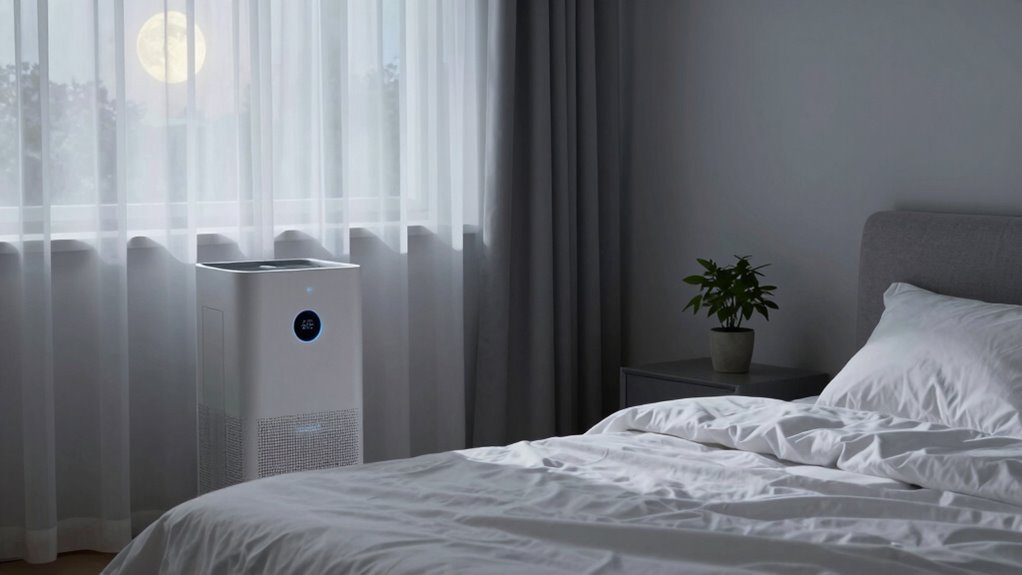
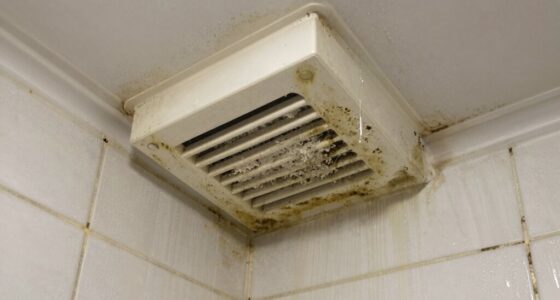
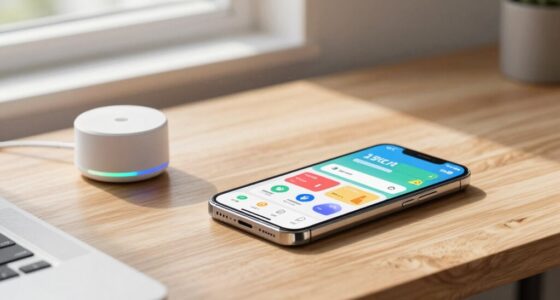
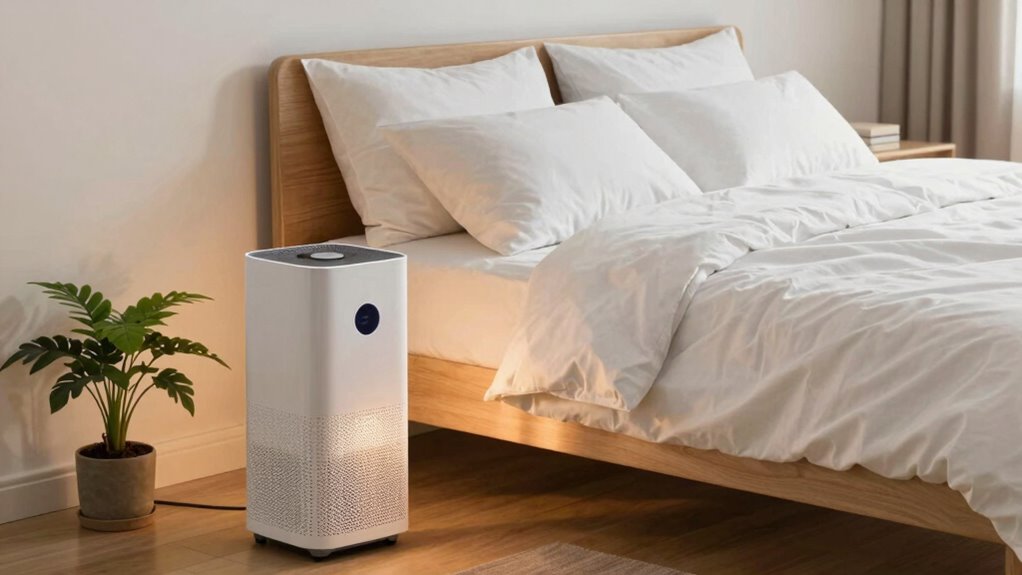
Poor air quality in your bedroom can silently sabotage your sleep, even if you think your environment is comfortable. You might have the perfect mattress, cozy bedding, and a cool temperature, but if the air you breathe isn’t clean, your sleep quality suffers. One of the most effective ways to improve indoor air quality is by paying attention to air purifier placement. You want to position your purifier where it can maximize airflow and filtration without obstructions. Ideally, place it in a central location, away from walls or furniture that could block the intake or output vents. Keeping it at a reasonable height—perhaps on a small table or stand—ensures it circulates air effectively throughout your sleeping space. Proper placement helps the purifier capture dust, allergens, pet dander, and other airborne pollutants before they reach your lungs, reducing irritation and promoting deeper rest. Ensuring proper airflow and filtration is essential for maintaining healthy indoor air quality. Humidity control is another critical factor often overlooked in maintaining healthy bedroom air. Too much moisture creates a damp environment where mold, mildew, and dust mites thrive, all of which can trigger allergies and disrupt sleep. Conversely, overly dry air can cause throat irritation, dry skin, and congestion, making it harder to breathe comfortably at night. Maintaining ideal humidity levels—generally between 40% and 60%—creates a balanced environment that discourages mold growth and keeps your nasal passages moist. Using a humidifier or dehumidifier, depending on your room’s conditions, can help you achieve this balance. Regularly monitoring humidity levels with a hygrometer ensures you don’t go too high or too low, allowing you to adjust your devices accordingly. Additionally, proper ventilation plays a vital role in keeping indoor air fresh and reducing indoor pollutants. Incorporating air quality monitoring devices can help you stay aware of potential pollutants and make informed adjustments. Good air circulation also prevents stagnant air, which can harbor allergens and pollutants. Proper air purifier placement and humidity control are essential because they directly influence the removal of airborne pollutants and moisture imbalances. Combining proper air purifier placement with humidity control greatly improves your bedroom’s air quality, creating an environment conducive to restful sleep. When your air is cleaner, and moisture levels are just right, you’re less likely to wake up feeling congested, stuffy, or restless. These small adjustments can make a big difference in how quickly you fall asleep and the quality of your rest throughout the night. Remember, the goal isn’t just having a cool or cozy room but ensuring that the air you breathe is as pure and balanced as possible. Paying attention to these habits supports your overall health and makes waking up refreshed and energized a real possibility every morning.

LEVOIT Air Purifier for Home Allergies and Pets Hair Smokers in Bedroom, H13 True HEPA Filter, 24db Filtration System Cleaner Odor Eliminators, Remove 99.97% Dust Smoke Mold Pollen, Core 300, White
- AHAM Verified for Performance: Independently tested for quality and efficiency
- Powerful Filtration System: 56W motor with 143 CFM CADR
- Effective Air Cleaning: Removes 99.97% dust, smoke, mold, pollen
As an affiliate, we earn on qualifying purchases.
As an affiliate, we earn on qualifying purchases.
Frequently Asked Questions
How Long Does It Take to Notice Improvements in Sleep After Changing Air Quality Habits?
You might notice improvements in your sleep environment within a few days to a week after improving air quality habits. As you become more aware of air quality, your body adjusts, and you may experience better sleep quality sooner. Consistently maintaining good air quality awareness, like using air purifiers or ventilating your room, helps create a healthier sleep environment, leading to more restful sleep in just a short time.
Are Air Purifiers Effective Enough to Significantly Improve Bedroom Air Quality?
Think of an air purifier like a shield, but even the strongest shield has its limits. While they considerably reduce dust, allergens, and pollutants, air purifiers do have limitations, especially with larger particles or certain chemicals. Natural air solutions like opening windows or adding houseplants can complement purifiers. Used together, they provide a more thorough approach to improving your bedroom air quality, helping you sleep better and breathe easier.
Can Indoor Plants Really Improve Air Quality and Sleep Quality Simultaneously?
Indoor plants can improve both air quality and sleep quality if you place them correctly. Strategically position plants near windows or areas with good air circulation to maximize their benefits. Plants like snake plants and peace lilies are known for filtering toxins and releasing oxygen. Proper plant placement guarantees cleaner air, which can lead to better sleep, making your bedroom a healthier, more restful space.
What Are Common Household Items That Negatively Affect Bedroom Air Quality?
Your bedroom’s air quality can be a silent thief of restful sleep. Common household items like air fresheners release emissions that fog up your breathing, while dust mite allergens settle like invisible dust bunnies, triggering allergies. These tiny offenders create a haze that clouds your sleep quality. To clear the air, opt for natural scents and keep bedding clean. Your sleep sanctuary deserves fresh, pure air to breathe easy all night long.
How Often Should I Replace or Clean Air Filters in My Bedroom?
You should replace or clean your air filter every 1 to 3 months, depending on the air filter lifespan and dust accumulation. Regularly checking your filter helps prevent dust buildup, which can reduce air quality and affect your sleep. If you notice visible dust or decreased airflow, it’s time for a change. Maintaining a consistent schedule guarantees cleaner air, promoting better sleep and overall health in your bedroom.

TempPro TP50 Digital Hygrometer Indoor Thermometer Room Thermometer
- Wellness Indicator: Air condition status with icons
- High Accuracy & Fast Updates: ±2-3%RH and ±1°F, updates every 10 seconds
- Record High & Low Levels: Displays temperature and humidity extremes
As an affiliate, we earn on qualifying purchases.
As an affiliate, we earn on qualifying purchases.
Conclusion
Think of your bedroom as a sanctuary where fresh air is the gentle breeze guiding you into restful sleep. When you prioritize clean, ventilated air, you’re nurturing a peaceful haven—like tending to a delicate flower that blooms in the quiet of the night. Small habits, like opening a window or using an air purifier, become the keys to unseal restful nights. Remember, the air you breathe shapes your dreams—make it pure and inviting.

Levoit Top Fill Humidifiers for Bedroom, 2.5L Tank for Large Room, 28dB
- Long-lasting Humidification: Up to 25 hours on low setting
- Easy Top-Fill Design: Simple one-step water filling
- Hassle-Free Cleaning: Large opening and detachable parts
As an affiliate, we earn on qualifying purchases.
As an affiliate, we earn on qualifying purchases.

ZEMEOLLO Air Quality Monitor Indoor, 10-in 1 Smart Air Quality Tester
- 10-in-1 Multi-Gas Detection: Monitors CO₂, HCHO, TVOC, benzene, PM2.5, PM10
- HD Color Display with Visual Data: Real-time data with color-coded alerts
- Intelligent Environmental Assessment: Automatic safety threshold alerts and reports
As an affiliate, we earn on qualifying purchases.
As an affiliate, we earn on qualifying purchases.