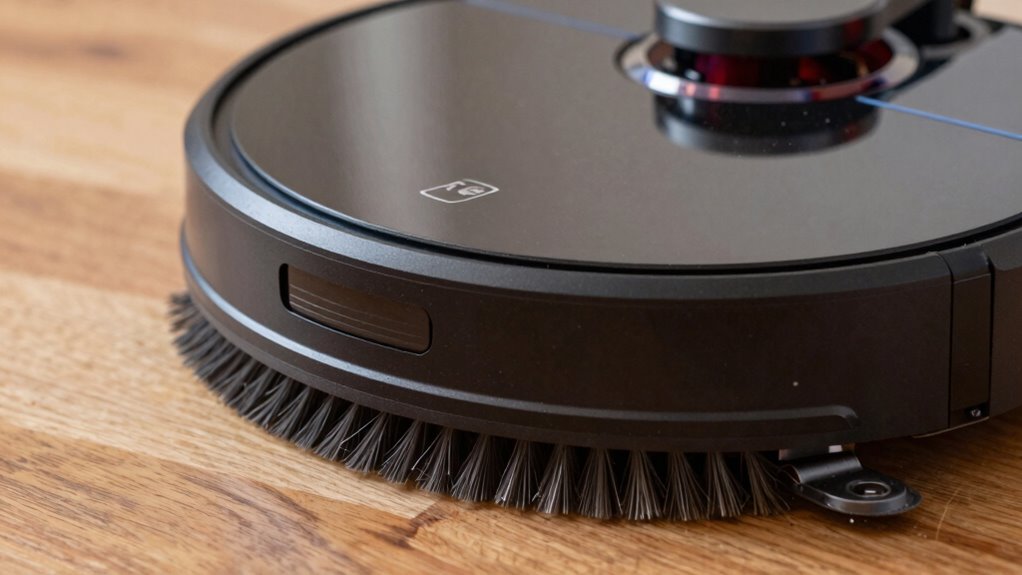

When choosing robot vacuum brushes, it’s vital to match them to your floor type for the best results. Hard floors need softer brushes that won’t scratch, while carpets require stiffer bristles to dig in and clean deeply. Regularly checking and maintaining your brushes ensures they spin freely and reach every corner. Using the right type protects your surfaces and prolongs your vacuum’s lifespan. Keep exploring to discover how you can optimize your cleaning setup even further.
Key Takeaways
- Choosing the right brush type (carpet or hard floor) enhances cleaning efficiency and prevents surface damage.
- Regular maintenance ensures brushes stay free of debris, maintaining optimal contact with different floor surfaces.
- Compatibility of brushes with your vacuum model and floor type prevents poor performance and device damage.
- High-quality, durable brushes provide consistent cleaning and extend the lifespan of your robot vacuum.
- Proper alignment and inspection of brushes improve suction, floor contact, and overall cleaning effectiveness.

Robot vacuum brushes are essential components that determine how effectively your device cleans your floors. Without properly functioning brushes, even the most advanced robot vacuums can struggle to pick up dirt, dust, and debris. One of the most important aspects of maintaining your brushes is regular brush maintenance. This involves cleaning off hair, string, and other tangled debris that can hinder the brush’s movement and reduce cleaning efficiency. By keeping your brushes free of obstructions, you guarantee that they spin freely and reach every corner of your floor, whether it’s carpet, hardwood, tile, or laminate. Regular brush maintenance also extends the lifespan of your brushes and helps prevent unnecessary wear and tear, saving you money in the long run.
Another critical factor to consider when it comes to robot vacuum brushes is brush compatibility. Not all brushes fit every vacuum model, and using incompatible brushes can lead to poor cleaning performance or even damage your device. Before purchasing replacement brushes, always check your vacuum’s specifications and manufacturer recommendations. Many robot vacuums feature specific brush types designed for particular floor types or models, so ensuring compatibility guarantees ideal performance. For example, some brushes are designed specifically for carpets, with stiffer bristles to dig into fibers, while others are better suited for hard floors, with softer bristles that prevent scratching. Using the correct brush for your floor type not only improves cleaning but also helps protect your flooring surfaces from damage.
Additionally, when replacing brushes, pay attention to the quality of the replacement parts. Low-quality brushes may look similar but often lack durability, leading to quicker wear and reduced cleaning effectiveness. Investing in high-quality, compatible brushes makes your robot vacuum work more efficiently and reduces the frequency of replacements. Proper brush compatibility also means that the brushes will fit securely into the vacuum’s mechanism, preventing rattling or dislodging during operation. This secure fit ensures consistent contact with the floor, maximizing cleaning performance. Regularly inspecting and maintaining your brushes, including proper brush alignment, can further enhance your vacuum’s efficiency and lifespan.
Frequently Asked Questions
How Often Should I Replace Robot Vacuum Brushes?
You should replace your robot vacuum brushes every 6 to 12 months, depending on the brush material and usage. If you notice hair, debris, or wear, it’s time for a replacement sooner. A regular replacement schedule guarantees peak cleaning performance. Check your manufacturer’s guidelines, and inspect brushes regularly to keep them in good condition, especially if you have pets or high-traffic floors.
Can Different Brush Types Be Used Interchangeably?
You can’t always use different brush types interchangeably because of brush compatibility. Check your vacuum’s manual for specific interchangeability options, as some brushes are designed for particular floor types or models. Using incompatible brushes can diminish cleaning efficiency or cause damage. Always verify compatibility before swapping brushes, and stick to recommended options to ensure your robot vacuum works effectively and lasts longer.
Do Brush Types Affect Noise Levels During Operation?
Think of your robot’s brush as a whispering wind—different materials create different sounds. Soft brushes with dense fibers tend to offer noise reduction, making your cleaning quieter, while stiffer brushes may produce louder noise due to their material and contact with the floor. By choosing the right brush material, you can minimize noise levels during operation, ensuring your vacuum works efficiently without disturbing your peace.
Are There Brushes Suitable for Pet Hair?
Yes, there are brushes specifically designed for pet hair removal. Look for brushes with rubber bristles or specialized brush compatibility, as they effectively pick up pet hair from different floor types. These brushes prevent hair from tangling and clogging, making your cleaning easier. Selecting the right brush guarantees better pet hair removal and keeps your robot vacuum running smoothly, especially if you have pets shedding frequently around your home.
How Do I Clean and Maintain the Brushes Properly?
Think of your vacuum brushes as the heart of your cleaning robot—keeping them in top shape is key. To clean and maintain, regularly remove dust accumulation with a brush or cloth, ensuring no debris hampers performance. Check brush alignment often, making sure they spin freely without wobbling. This keeps your robot humming smoothly, tackling pet hair and dirt with ease, and extending its lifespan.
Conclusion
Understanding your robot vacuum’s brushes is like knowing the secret ingredients in a recipe—you’ll get better results. Choosing the right brush for your floor type guarantees a thorough clean, no matter how tricky the surface. When you pick wisely, your floors will thank you, sparkling like a gem. So, don’t overlook this detail; it’s the brushstroke that can turn your cleaning routine from a chore into a breeze.