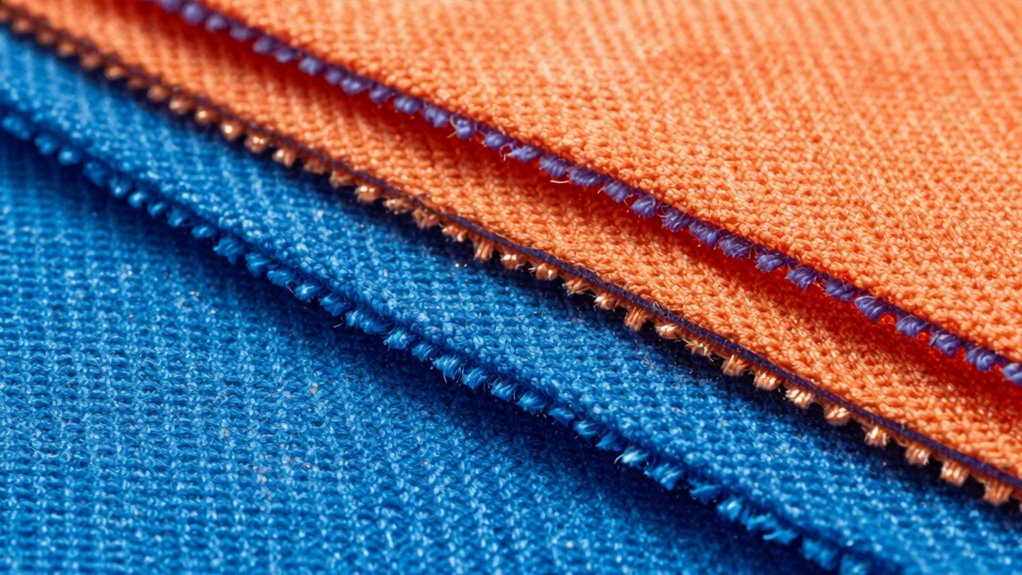
Microfiber cloths work so well because their tiny polyester and polyamide fibers create a large surface area and static charge that attract and trap dirt, dust, and grime without needing harsh chemicals. However, if you use fabric softeners, bleach, or wash improperly, these fibers can become coated or damaged, reducing their electrostatic attraction and cleaning power. To keep them effective, you’ll want to learn proper care tips that will extend their lifespan.
Key Takeaways
- Microfiber cloths trap dirt using fine fibers and electrostatic attraction, effectively lifting dust without harsh chemicals.
- Their high surface area allows for better dirt and dust capture compared to traditional cloths.
- Proper care, like avoiding fabric softeners and bleach, maintains fiber effectiveness and electrostatic properties.
- Improper cleaning methods, such as using softeners or washing with rough fabrics, coat fibers and reduce cleaning performance.
- Regular, correct maintenance extends microfiber cloth lifespan, ensuring continued cleaning efficiency and dust-trapping power.
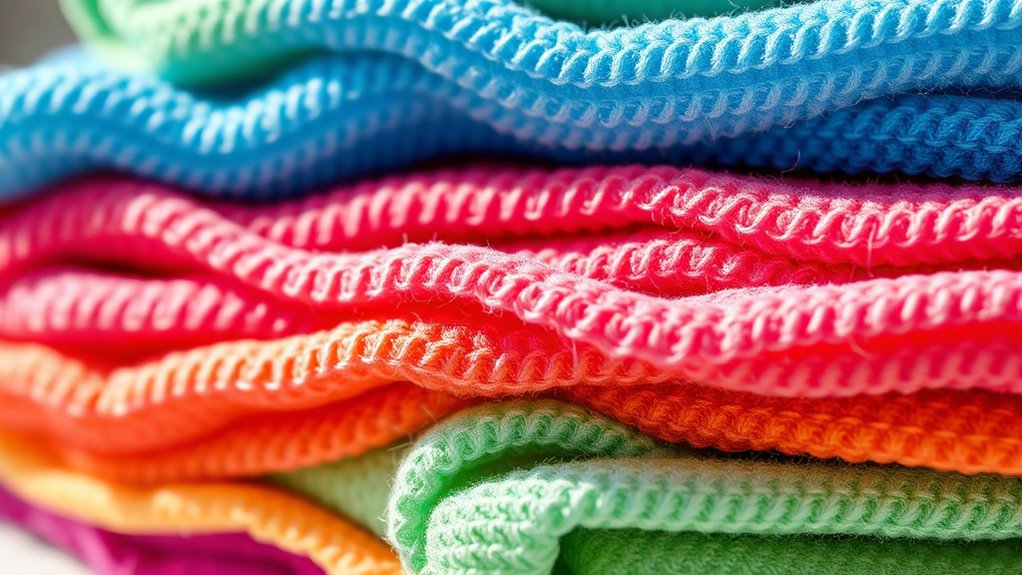
Microfiber cloths have become a popular choice for cleaning because they effectively trap dirt, dust, and grime without the need for harsh chemicals. This efficiency largely depends on their fabric composition, which is typically a blend of polyester and polyamide (nylon). The tiny fibers in microfiber are much finer than those in traditional cloths, creating a larger surface area that captures particles more effectively. When you choose a microfiber cloth, you’re selecting a material designed to maximize cleaning power through its unique fabric structure. Understanding the fabric composition helps you appreciate why microfiber is so effective at lifting dirt and how it differs from other textiles.
Microfiber cloths combine fine polyester and polyamide fibers for superior cleaning power without harsh chemicals.
Your cleaning techniques play an essential role in how well microfiber cloths perform. For light dusting or dry wiping, simply using the cloth without any additional cleaning agents is often enough, thanks to the electrostatic properties of the fibers, which attract dust particles. For more stubborn stains or greasy surfaces, dampening the cloth slightly with water enhances its ability to lift grime without introducing chemicals. When you use microfiber correctly, you avoid the need for harsh cleaners, making your cleaning routine safer and more environmentally friendly.
However, improper cleaning techniques can diminish a microfiber cloth’s effectiveness. For example, washing the cloth with fabric softeners or bleach can coat the fibers and reduce their electrostatic charge, making them less efficient at trapping dirt. Instead, it’s best to wash microfiber separately in cold or warm water without fabric softeners, and to air dry or tumble dry on low heat. Using the right cleaning techniques ensures the cloth maintains its fabric integrity and cleaning power over time.
Additionally, understanding the fabric composition can guide you in maintaining the cloth. The polyester component offers durability, while the polyamide provides softness and absorbency. When you follow proper cleaning techniques, you prolong the lifespan of your microfiber cloth, allowing it to retain its effectiveness through multiple washes. Over time, neglecting these care tips can lead to fiber degradation, reducing the cloth’s ability to pick up dirt efficiently.
In essence, the secret behind microfiber cloths’ success is a combination of their fabric composition and your cleaning techniques. Knowing what they’re made of helps you handle them properly, while applying the right cleaning methods ensures they continue to perform at their best. When you use microfiber wisely, you get a cleaning tool that’s both powerful and gentle, making your chores easier and more effective.

USANOOKS Microfiber Cleaning Cloth Grey – 12 Pcs (12.5"x12.5") – High Performance – 1200 Washes, Ultra Absorbent Microfiber Towel Weave Grime & Liquid for Streak-Free Mirror Shine – Car Washing Cloth
- High Absorbency Microfiber Weave: Locks in 8-10x its weight in liquids
- Durable 2.5mm Thick Design: Resists lint, scratches, and shedding
- Long-Lasting Reusability: Over 1200 washes for extended use
As an affiliate, we earn on qualifying purchases.
As an affiliate, we earn on qualifying purchases.
Frequently Asked Questions
Are Microfiber Cloths Environmentally Friendly?
Microfiber cloths aren’t entirely environmentally friendly due to biodegradability concerns, as they’re made from synthetic fibers that don’t break down easily. While they reduce chemical use by cleaning effectively with water, chemical sustainability is an issue if you rely on harsh cleaning agents. To minimize impact, choose eco-friendly microfiber options, wash them responsibly, and limit their use to extend their lifespan, helping address their environmental footprint.
Can Microfiber Cloths Be Used on All Surfaces?
You can use microfiber cloths on many surfaces, but not all. Picture gliding the soft, plush fabric over glass, tile, or stainless steel, effortlessly lifting dirt. However, surface compatibility is key; delicate surfaces like unsealed wood or certain electronics might get scratched or damaged due to material limitations. Always test a small area first, ensuring your microfiber cloth works safely and effectively across different materials.
How Long Do Microfiber Cloths Typically Last?
You can expect microfiber cloths to last about 100 to 500 wash cycles, depending on cloth durability and how well you care for them. To maximize their lifespan, wash them gently and avoid fabric softeners. Keep an eye on their cleaning effectiveness; once they start to fray or lose their ability to trap dirt, it’s time for replacement. Regular replacement ensures you maintain ideal cleaning performance.
Do Microfiber Cloths Require Special Cleaning?
You don’t need special cleaning for microfiber cloths, but using mild laundry detergents helps them last longer. Wash them after a few uses to prevent dirt buildup, and avoid fabric softeners, which can diminish their effectiveness. Cleaning frequency depends on how much you use them, but regular washing ensures they stay effective. Just toss them in with your laundry, and air dry or tumble dry on low to maintain their quality.
Are Microfiber Cloths Safe for Sensitive Skin?
Think of microfiber cloths as gentle whispers to your skin—they’re generally safe for sensitive skin, but watch out for skin irritation or allergy concerns. If your skin reacts easily, test a small patch first. Microfiber’s fine fibers rarely cause irritation, but in some cases, they can trap allergens or irritants. Always wash thoroughly before use, and if irritation occurs, stop using immediately to protect your skin’s delicate balance.

Casabella, Cloth Microfiber Dusting Blue
- Durable and versatile dusting cloth: Ideal for home and office use
- Extra thick nap for dust attraction: Holds dust and dirt effectively
- Machine washable for easy care: Air dry or tumble dry low
As an affiliate, we earn on qualifying purchases.
As an affiliate, we earn on qualifying purchases.
Conclusion
Microfiber cloths are powerful cleaning tools, effortlessly lifting dirt where traditional cloths often fall short. Yet, their effectiveness depends on proper use and maintenance; a neglected cloth can harbor bacteria and lose its magic. So, while they promise spotless surfaces and easy cleaning, remember that neglect can turn them into sources of grime. Stay attentive, wash them regularly, and you’ll enjoy the best of both worlds—cleanliness and convenience.

MagicFiber Microfiber Cleaning Cloth, Glasses Cleaner, Eyeglass Wipes, 6pk
- High-Quality Microfiber Material: Absorbs dust, oil, smudges, and fingerprints
- Scratch-Free Cleaning: Leaves no scratches, streaks, or lint
- Versatile Use: Suitable for glasses, screens, and TVs
As an affiliate, we earn on qualifying purchases.
As an affiliate, we earn on qualifying purchases.
USANOOKS Microfiber Cleaning Cloth Grey – 12 Pcs (12.5"x12.5") – High Performance – 1200 Washes, Ultra Absorbent Microfiber Towel Weave Grime & Liquid for Streak-Free Mirror Shine – Car Washing Cloth
- High Absorbency Microfiber Weave: Locks in 8-10x its weight in liquids
- Durable 2.5mm Thick Design: Resists lint, scratches, and shedding
- Long-Lasting Reusability: Over 1200 washes for extended use
As an affiliate, we earn on qualifying purchases.
As an affiliate, we earn on qualifying purchases.