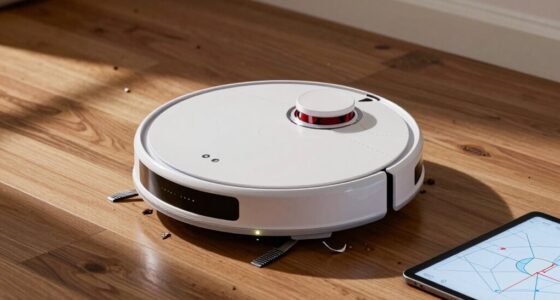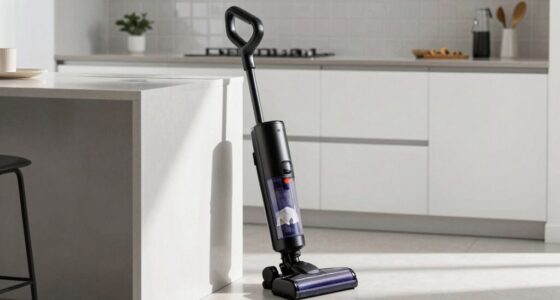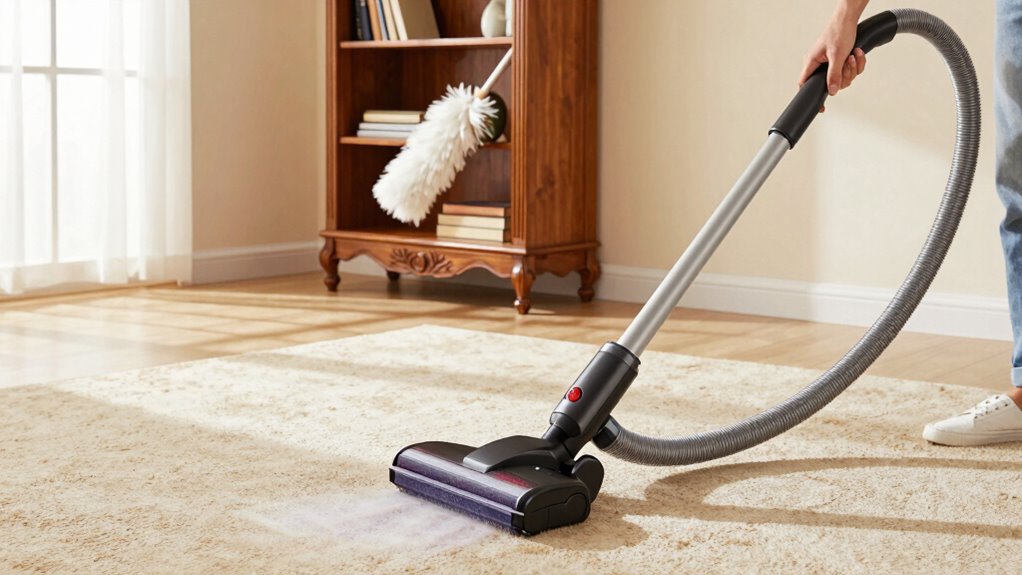

To effectively reduce dust, always vacuum before dusting. Vacuuming first removes embedded dirt, dust mites, and allergens from carpets and upholstery, especially if you use a HEPA-filtered machine. Then, dust surfaces with a damp cloth or microfiber duster to trap remaining surface dust. This sequence prevents dust from spreading back into the air or onto surfaces, keeping your space cleaner longer. Want to discover more about creating the perfect cleaning routine?

Prime made for students and young adults
- Fast, free delivery for dorm and study essentials
- Prime Video and Amazon Music included
- Member-only deals
Key Takeaways
- Vacuum before dusting to remove embedded dust and allergens effectively.
- Dust surfaces after vacuuming to trap remaining surface dust and prevent it from becoming airborne.
- Proper sequence minimizes airborne dust, improving air quality and allergy relief.
- Using a HEPA vacuum and damp dusting tools enhances dust removal efficiency.
- Following the correct order ensures a cleaner, healthier indoor environment with less residual dust.
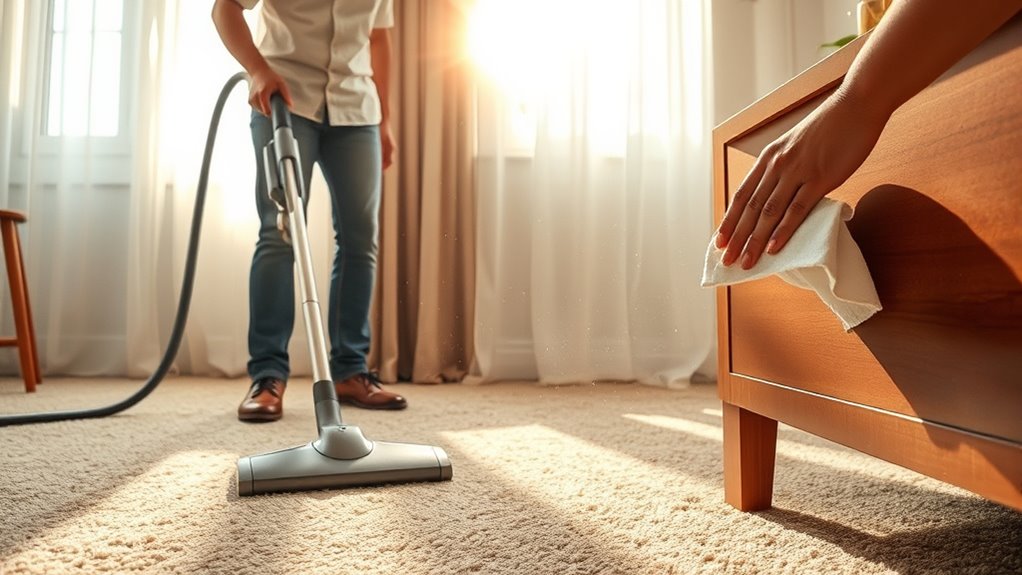
When it comes to cleaning your home, understanding the differences between vacuuming and dusting is vital for effective maintenance. Both tasks target dust and allergens, but they serve different purposes and should be performed in a specific order for maximum benefit. Vacuuming pulls dust, dirt, and allergens from carpets, rugs, and upholstery, preventing them from becoming airborne again. Dusting, on the other hand, involves removing surface dust from furniture, shelves, and other flat surfaces. Doing dusting before vacuuming can just spread dust around, making your efforts less effective. Instead, you want to vacuum first to remove embedded dirt and allergens, then dust to eliminate what’s left on surfaces. Proper cleaning sequence ensures you reduce airborne dust more effectively and maintain a healthier environment. A key reason to prioritize vacuuming is its role in improving air quality. When you vacuum thoroughly, especially with a HEPA-filtered machine, you trap airborne particles that can trigger allergies or respiratory issues. This is where the benefits of an air purifier come into play. An air purifier with a HEPA filter can filter out remaining dust mites, pet dander, and other allergens that vacuuming might miss, providing an additional layer of protection. The combined use of a quality vacuum and an air purifier can greatly enhance allergy relief, especially for allergy sufferers or those with asthma. It reduces the overall allergen load in your home, making it easier to breathe and reducing allergy symptoms. Dusting, while seemingly simple, plays a vital role in maintaining a healthier environment. When you dust after vacuuming, you catch the fine particles that might have been stirred up or left behind. Use a damp cloth or microfiber duster to trap dust effectively, rather than spreading it around with a dry cloth. This step ensures surfaces stay cleaner longer and reduces the amount of dust that can become airborne later. Remember, dusting in the right order—after vacuuming—helps prevent dust from settling again on surfaces, creating a cleaner, healthier space.
As an affiliate, we earn on qualifying purchases.
Frequently Asked Questions
Which Cleaning Method Is Better for Allergy Sufferers?
You should prioritize vacuuming over dusting if you’re an allergy sufferer, as it improves air quality by removing allergens from carpets and upholstery. Regular cleaning, at least twice a week, helps reduce dust buildup and minimizes allergen exposure. Use a vacuum with a HEPA filter to trap tiny particles effectively. Combining frequent vacuuming with dusting that targets surfaces helps create a healthier environment and eases allergy symptoms.
How Often Should I Vacuum and Dust for Optimal Cleanliness?
Think of your home as a garden that needs regular tending. You should vacuum at least twice a week to keep the soil healthy, and dust weekly to prevent buildup. Proper vacuum maintenance ensures it works efficiently, while effective dusting techniques trap allergens better. Staying consistent with this routine keeps your environment fresh, reduces allergens, and makes cleaning less intimidating—just like nurturing a thriving garden.
Can Vacuuming Alone Eliminate All Dust Particles?
Vacuuming alone can’t eliminate all airborne dust because some particles settle quickly or cling to surfaces. While vacuuming improves cleaning efficiency by removing dust from floors and carpets, it doesn’t reach dust trapped in corners or on walls. To reduce airborne dust effectively, combine regular vacuuming with dusting, especially on surfaces and hard-to-reach areas. This thorough approach ensures cleaner air and a healthier environment.
Does Dusting Spread Dust to Other Areas?
Dusting can spread dust to other areas if you’re not careful, especially with poor air circulation. When you dust, especially surfaces that haven’t been cleaned recently, tiny particles may become airborne and migrate to different spots. To minimize dust migration, use a damp cloth or microfiber duster and guarantee good air circulation. This way, you reduce the risk of spreading dust and keep your space cleaner and healthier.
Are There Eco-Friendly Vacuum and Dusting Products Available?
Yes, eco-friendly cleaning options exist, including sustainable vacuum and dusting products. Investigations show that many brands now prioritize biodegradable materials and non-toxic formulas, reducing environmental impact. You can find vacuums with HEPA filters made from recycled plastics and dusting sprays with plant-based ingredients. Using these eco-friendly cleaning products helps you maintain a healthier home while supporting sustainable practices, making your cleaning routine both effective and environmentally conscious.
As an affiliate, we earn on qualifying purchases.
Conclusion
Remember, vacuuming pulls dust from deep within carpets, like a storm clearing the air, while dusting gently sweeps away the surface’s remnants, like a breeze brushing leaves. Doing dusting first might stir up settled dust, only to settle again when you vacuum later. So, imagine cleaning as a dance—you want the sweeping breeze before the gust of a storm. This order keeps your home truly fresh, leaving dust nowhere to hide.
As an affiliate, we earn on qualifying purchases.
As an affiliate, we earn on qualifying purchases.
Halloween Picks
halloween
As an affiliate, we earn on qualifying purchases.