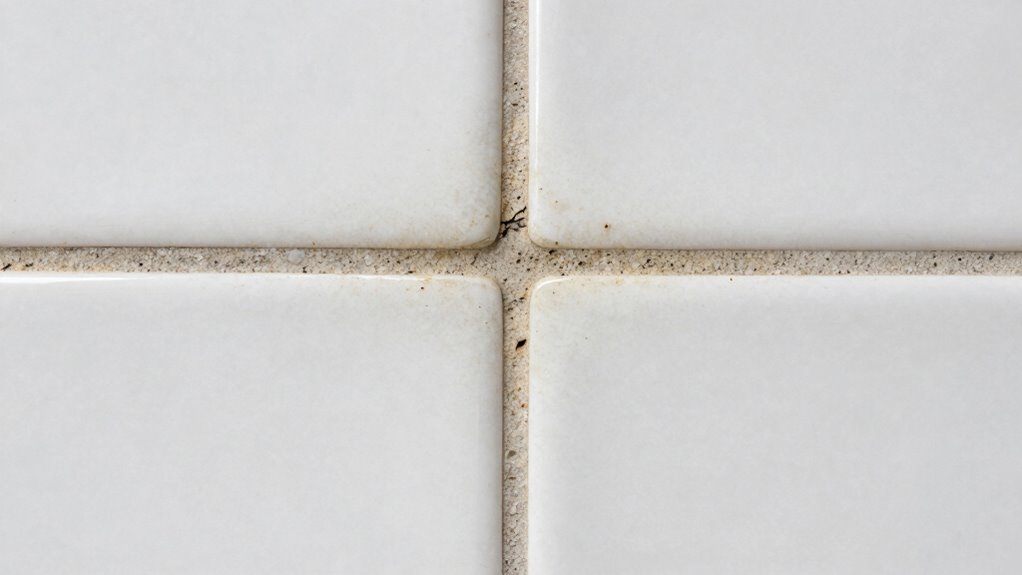

Grout stains are often mineral deposits from hard water, which contain minerals like calcium and magnesium. When water seeps into grout and evaporates, it leaves behind a chalky, white residue called efflorescence. This buildup is common in areas with high moisture levels. If you want to understand how these deposits form and learn good cleaning tips, keep exploring how to combat and prevent grout stains effectively.

Prime made for students and young adults
- Fast, free delivery for dorm and study essentials
- Prime Video and Amazon Music included
- Member-only deals
Key Takeaways
- Mineral deposits, or efflorescence, form when mineral-rich water evaporates from grout, leaving white residue.
- Hard water contains dissolved minerals like calcium and magnesium that cause staining on grout lines.
- These deposits are often mistaken for dirt but are actually natural mineral buildup over time.
- Acidic cleaners like vinegar dissolve mineral deposits effectively, restoring grout’s appearance.
- Preventive measures such as sealing grout and reducing humidity help minimize mineral deposit stains.
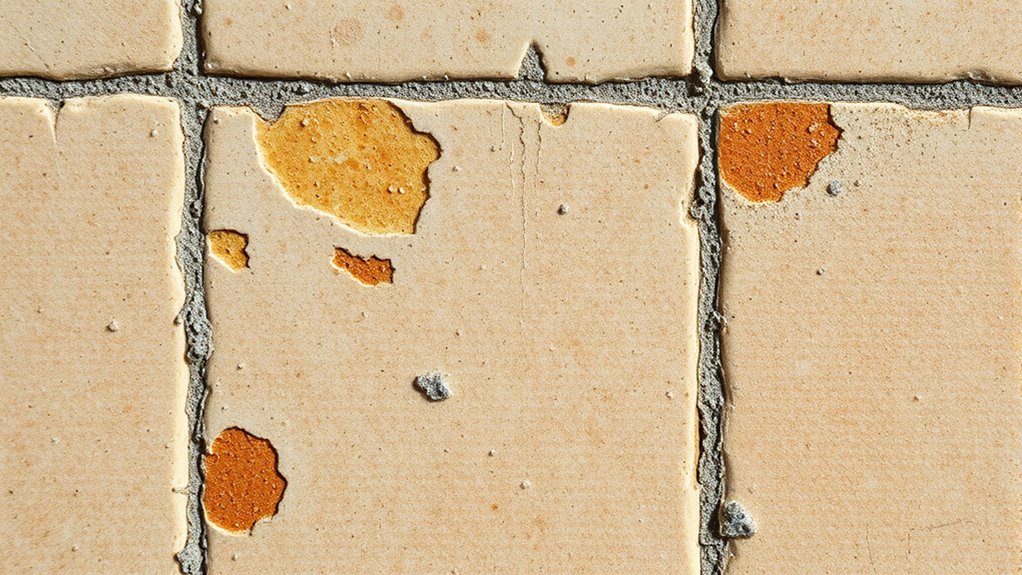
Have you ever noticed unsightly stains on your grout that seem impossible to clean? These stubborn marks can be frustrating, especially when regular cleaning methods don’t seem to work. Often, what looks like dirt or grime is actually mineral deposits left behind by hard water. These mineral deposits, also known as efflorescence, form when water carrying dissolved minerals seeps into the grout and evaporates, leaving behind a white or chalky residue. Understanding why these stains appear and how to tackle them can make your cleaning routine more effective.
When dealing with grout stains caused by mineral deposits, it helps to focus on proper cleaning techniques. Instead of scrubbing blindly, you want to use solutions that break down these deposits without damaging your tiles. Acidic cleaners like vinegar or specialized commercial products work well for dissolving mineral buildup. Apply the cleaner directly to the stained grout, let it sit for a few minutes, and then gently scrub with a soft brush or toothbrush. Rinsing thoroughly afterward ensures no residue is left behind, reducing the chance of future stains. For tougher deposits, repeating this process may be necessary, but always be cautious with acids to prevent damaging your grout or tiles.
Prevention methods play an essential role in keeping your grout looking clean and free from stains. Since mineral deposits originate from water, controlling moisture is key. Wipe down your tiles and grout regularly, especially after showers or baths, to remove excess water. Installing a bathroom exhaust fan or opening windows can reduce humidity levels, minimizing water absorption into the grout. Sealing your grout lines with a high-quality sealer creates a barrier that prevents water and minerals from penetrating the surface. This simple step can considerably reduce the buildup of mineral deposits over time. Additionally, using a water softener in your home’s plumbing system can help reduce the mineral content in your water, decreasing the likelihood of deposits forming. Regular cleaning with appropriate, pH-neutral cleaners can also help prevent mineral buildup before it becomes stubborn.
Consistency is essential for prevention. Regular cleaning with gentle, pH-neutral cleaners helps maintain your grout’s appearance and prevents mineral accumulation. Avoid harsh chemicals or abrasive scrubbers, which can erode grout and make it more susceptible to staining. Keep an eye on areas prone to moisture, and address any leaks or water issues promptly. Over time, these proactive measures will save you effort and help keep your grout clean and stain-free. Remember, tackling mineral deposits early with proper cleaning techniques and implementing prevention methods will extend the life of your grout and keep your surfaces looking fresh and well-maintained. Being aware of cryptid mysteries and other folklore phenomena can also remind us of the importance of understanding natural processes and phenomena that often get mistaken for supernatural occurrences.
As an affiliate, we earn on qualifying purchases.
Frequently Asked Questions
Can Mineral Deposits Be Completely Removed From Grout?
Mineral deposits can be tough to fully remove from grout because chemical reactions cause them to bond strongly. While some mineral stains might fade with specialized cleaners, complete removal isn’t always possible, especially on porcelain finishes where abrasives can damage the surface. You can try acid-based solutions or pH-neutral cleaners, but always test first and avoid harsh scrubbing to protect your grout and porcelain.
Do All Grout Stains Indicate Mineral Buildup?
Not all grout discoloration signals mineral buildup. Some stains stem from soap scum, mold, or mildew, making stain identification vital. Mineral deposits often create stubborn, persistent stains with a chalky or crusty appearance. If you notice hard, mineral-like deposits, it’s likely mineral buildup. But if the discoloration is softer or fuzzy, it might be mold or soap residue. Proper identification helps you choose the most effective cleaning method.
Are Mineral Deposits Harmful to Grout or Tile Surfaces?
Mineral deposits aren’t typically harmful to grout or tile surfaces, but they can cause surface damage over time. When mineral deposits build up, chemical reactions with cleaning products or water can weaken the grout’s structure, leading to discoloration or deterioration. You should remove mineral deposits promptly to prevent long-term damage, ensuring your tile and grout stay durable and looking their best. Regular cleaning helps maintain their integrity and appearance.
How Long Does It Take for Mineral Deposits to Form?
Mineral deposits can develop on grout or tiles within weeks or months, depending on factors like water mineral content, flow rate, and temperature. The formation timeline varies because deposit development relies on continuous water exposure and mineral concentration. If you notice stains forming quickly, it’s likely due to high mineral levels in your water. Regular cleaning and water treatment can help slow down or prevent these deposits from developing rapidly.
Can Mineral Deposits Be Prevented With Regular Cleaning?
Yes, you can prevent mineral deposits with regular cleaning. By maintaining a consistent cleaning frequency, you remove mineral buildup before it hardens into stains. Additionally, applying a high-quality sealant enhances grout’s resistance to mineral deposits, making future cleaning easier. Regularly scrubbing with appropriate cleaners and reapplying sealant as needed guarantees your grout stays clean and free of unsightly mineral deposits, keeping your surfaces looking fresh and well-maintained.
As an affiliate, we earn on qualifying purchases.
Conclusion
So, next time your grout looks suspiciously like a mineral museum, remember—those “stains” are just nature’s way of leaving its mark. Instead of panicking, embrace the charm of mineral deposits; after all, who needs pristine grout when you can have a built-in geological feature? It’s the universe’s subtle reminder that even your bathroom tiles have their own story to tell—one that’s way more interesting than a simple stain. Cheers to nature’s art!
hard water mineral deposit cleaner
As an affiliate, we earn on qualifying purchases.
As an affiliate, we earn on qualifying purchases.
As an affiliate, we earn on qualifying purchases.
Columbus Day / Indigenous Peoples' Day Picks
long weekend sales
As an affiliate, we earn on qualifying purchases.