
TL;DR

Get school and study supplies delivered free — and shop member deals
- Fast, free delivery on millions of items
- Access to Prime Big Deal Days deals on October 6–7
- Prime Video, Amazon Music and more included
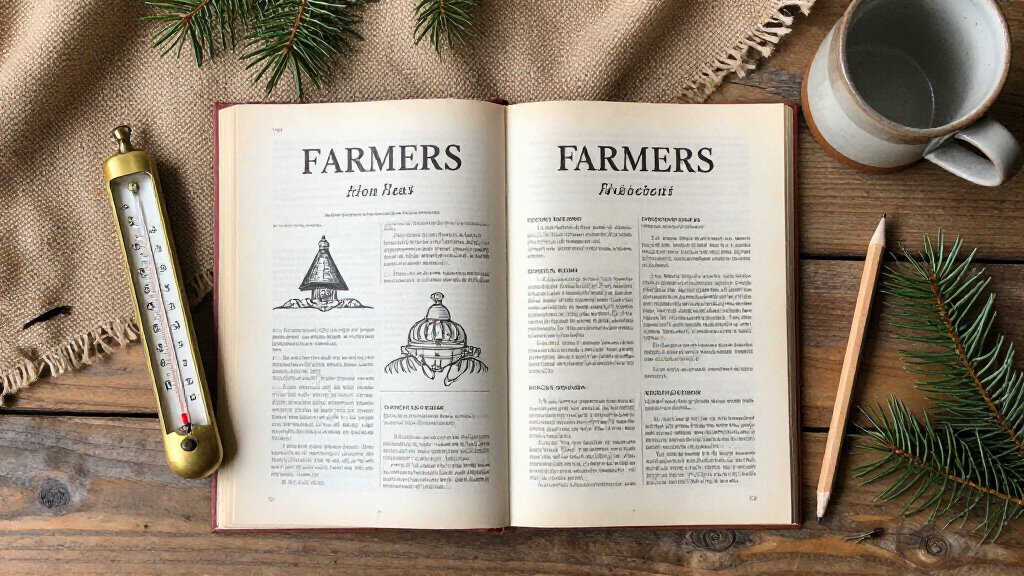
The Old Farmers Almanac has released its 2026 winter forecast, predicting a colder-than-average winter across much of the United States. This forecast is based on their traditional methods and seasonal outlooks. The forecast’s accuracy remains unconfirmed by scientific agencies.
The Old Farmers Almanac has released its 2026 winter forecast, predicting a cold and snowy season across much of the United States. This long-standing prediction relies on traditional methods and has historically been popular among farmers and outdoor enthusiasts, but its accuracy is not scientifically verified. The forecast’s release comes as many Americans prepare for winter weather impacts.
The 2026 edition of the Old Farmers Almanac forecasts a winter with below-average temperatures and above-normal snowfall in most U.S. regions, particularly in the Midwest, Northeast, and parts of the South. According to the Almanac, this prediction is based on their proprietary formula involving lunar cycles, sunspot activity, and historical climate patterns.
While the Almanac claims a high degree of accuracy based on its long history—dating back to 1792—meteorologists emphasize that its forecasts are not scientifically validated. The National Weather Service and other meteorological agencies have not endorsed or confirmed the Almanac’s predictions for the upcoming winter.
Despite the lack of scientific endorsement, the forecast has generated attention as communities prepare for potential winter storms and cold snaps. The Almanac’s predictions are often used by farmers, outdoor workers, and winter recreation enthusiasts to plan ahead.
Why the 2026 Almanac Winter Forecast Matters
The forecast’s importance lies in its cultural influence and its role in seasonal planning for many Americans. While not scientifically validated, the Almanac’s predictions often influence public perception and preparedness for winter weather. Additionally, the forecast may impact agricultural planning, outdoor activities, and emergency readiness in vulnerable regions.
Experts caution that the forecast should be viewed as a traditional prediction tool rather than a definitive forecast, but its persistence reflects the enduring interest in long-range seasonal outlooks and their potential impact on societal planning.
As an affiliate, we earn on qualifying purchases.
Historical Trends and the Almanac’s Predictive Methods
The Old Farmers Almanac has issued seasonal forecasts since 1792, relying on a combination of folklore, astronomical observations, and historical weather patterns. Its winter predictions have varied over the years, with some aligning with actual weather events and others not. The Almanac claims an accuracy rate of about 80% based on past predictions, though this figure is debated among meteorologists.
In recent years, the Almanac’s forecasts for winter have often coincided with colder, snowier seasons, leading to increased public attention. The 2026 prediction continues this trend, with the Almanac suggesting a return to harsher winter conditions after a relatively mild 2025.
Scientific agencies, such as the National Weather Service, emphasize that their forecasts are based on climate models and real-time data, which differ from the Almanac’s traditional methods.
electric space heater for large rooms
As an affiliate, we earn on qualifying purchases.
As an affiliate, we earn on qualifying purchases.
Unconfirmed Aspects of the 2026 Winter Outlook
It remains unclear how closely the Almanac’s predictions will match actual winter weather patterns in 2026. Scientific agencies have not endorsed or validated these forecasts, and weather can be highly variable. The accuracy of the Almanac’s long-term predictions is debated, and regional variations could differ significantly from the forecast.
Additionally, climate change may influence seasonal weather patterns in ways not fully accounted for by traditional forecasting methods, adding further uncertainty to long-range predictions.
ultrasonic humidifier for winter dry air
As an affiliate, we earn on qualifying purchases.
As an affiliate, we earn on qualifying purchases.
Upcoming Winter Weather Monitoring and Community Preparedness
As winter approaches, meteorological agencies will continue to monitor weather developments and issue short-term forecasts. Communities in predicted high-impact areas are advised to prepare for possible snowstorms and cold spells, regardless of the Almanac’s forecast.
The Almanac is expected to release updates and regional forecasts as the season progresses, but scientific forecasts will remain the primary source for immediate weather planning. Researchers and meteorologists will also analyze the accuracy of the 2026 prediction after the winter ends.
As an affiliate, we earn on qualifying purchases.
Key Questions
How accurate are the Old Farmers Almanac predictions historically?
The Almanac claims about 80% accuracy based on past predictions, but meteorologists note that its methods are not scientifically validated and results vary year to year.
Should I rely on the Almanac for winter preparations?
The Almanac can be used for general planning and entertainment, but official weather forecasts from meteorological agencies should guide critical decisions.
What regions are expected to experience the harshest winter conditions in 2026?
The Almanac predicts the Midwest, Northeast, and parts of the South will see the most snow and cold, but regional variations are possible.
Will climate change affect the accuracy of long-range forecasts like this?
Yes, climate change can alter weather patterns, making long-term predictions less reliable over time. Scientific forecasts based on real-time data remain the most accurate source.
Source: google-trends
Fall Picks
fall essentials
As an affiliate, we earn on qualifying purchases.