TL;DR
Open a free Amazon Business account
Business pricing, bulk buying and tax-exempt orders.
Create a free accountAs an affiliate, we earn on qualifying purchases.
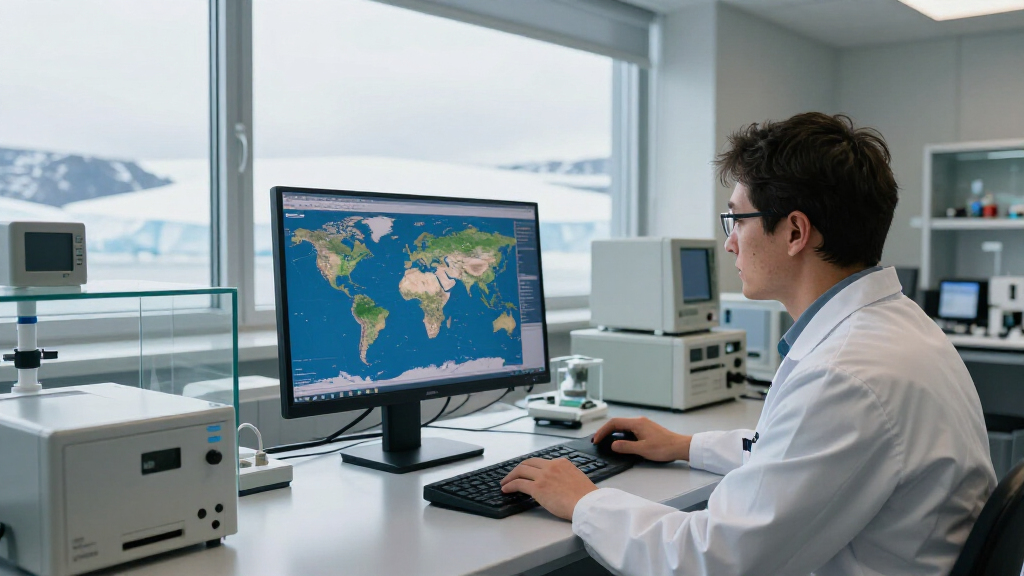
Interest in Thwaites Glacier has surged significantly, with 23 mentions in the past week—23 times higher than usual. This spike indicates growing global concern about climate change impacts, though the exact cause remains unconfirmed.
Global media coverage and online search interest in Thwaites Glacier have surged dramatically in the past week, with reports indicating 23 mentions—23 times the typical baseline—according to GDELT data. This spike reflects rising international concern about the glacier’s stability and potential contributions to sea level rise, although the exact trigger for this increased attention remains unconfirmed.
According to GDELT, a global monitoring database, Thwaites Glacier has been mentioned 23 times in this recent window, a significant increase compared to its usual baseline of less than one mention. This surge in coverage suggests a heightened focus on the glacier, which is often referred to as the ‘Doomsday Glacier’ due to its potential impact on sea levels if it were to destabilize extensively.
Experts note that this rise in media attention could be linked to a combination of emerging scientific findings, climate change discourse, and possibly recent developments in Antarctic research. However, specific events or announcements triggering this spike have not yet been identified or confirmed by authoritative sources.
Scientists and climate analysts emphasize that Thwaites Glacier’s stability is a key concern in understanding future sea level scenarios, but at this stage, the surge in coverage appears to be driven by increased public and media interest rather than confirmed new scientific developments.
Implications of Rising Media Attention on Thwaites Glacier
The surge in global coverage highlights increasing concern about the potential impact of Thwaites Glacier on future sea level rise, which could threaten coastal communities worldwide. Elevated media focus may influence public awareness and policy discussions regarding climate change mitigation and adaptation strategies. However, it is important to note that the current spike in mentions does not necessarily correlate with new scientific findings or imminent changes in glacier stability.
This trend underscores the importance of monitoring scientific updates and understanding how media attention can shape climate discourse. It also raises questions about whether this surge reflects genuine new developments or is primarily driven by media cycles and social media amplification.
As an affiliate, we earn on qualifying purchases.
Recent Trends and Scientific Focus on Thwaites Glacier
Thwaites Glacier, located in West Antarctica, has long been a focus of climate research due to its potential to significantly influence sea levels if it were to collapse or retreat rapidly. In recent years, scientific studies have highlighted its vulnerability, with some suggesting that warm ocean currents could accelerate melting and destabilization.
Historically, media coverage of Thwaites has been sporadic but has increased during periods of scientific publication or when new modeling results are released. The current spike in mentions appears to be a recent trend, with no confirmed scientific breakthrough or announcement directly linked to the surge. The exact cause of this heightened attention remains unconfirmed, though it coincides with broader climate change discussions.
Environmental groups, climate scientists, and policymakers continue to monitor Thwaites closely, given its critical role in global sea level projections. The recent increase in coverage may reflect a growing recognition of its importance, but whether it signals new scientific consensus or is a transient media phenomenon remains unclear.
As an affiliate, we earn on qualifying purchases.
Unconfirmed Causes Behind the Coverage Surge
It is not yet clear what specific event, scientific publication, or external factor triggered the recent surge in media coverage and online mentions of Thwaites Glacier. No official statements or scientific reports have been linked to this increase, and the cause remains speculative at this stage.
Experts caution that the spike could be driven by social media amplification, coincidental timing with climate discussions, or emerging but unconfirmed scientific hypotheses. Further investigation is needed to determine whether this trend reflects a substantive development or is primarily a media phenomenon.
As an affiliate, we earn on qualifying purchases.
Monitoring Scientific and Media Developments
Researchers and media analysts will continue to observe Thwaites Glacier coverage and scientific publications for any new developments or official announcements. Future updates from Antarctic research programs, climate modeling efforts, or scientific conferences may clarify whether this coverage surge is driven by substantive findings or media cycles.
Stakeholders, including policymakers and environmental groups, should remain attentive to verified scientific data to assess the potential implications of Thwaites Glacier’s stability on global sea level projections.
As an affiliate, we earn on qualifying purchases.
Key Questions
Why has interest in Thwaites Glacier increased so suddenly?
The exact cause of the recent surge in coverage is unconfirmed. It may be linked to broader climate discussions, social media trends, or emerging scientific hypotheses, but no specific event or announcement has been verified.
Does the coverage surge mean Thwaites Glacier is about to collapse?
No, the increased media attention does not indicate an imminent collapse. It reflects rising concern and interest, but scientific assessments of its stability continue to evolve based on ongoing research.
Are there any new scientific findings related to Thwaites?
As of now, no confirmed scientific breakthroughs or publications have been directly linked to the surge in coverage. Researchers are monitoring the situation for any new data.
How might this coverage impact policy or public awareness?
Greater attention could influence public perception and policy discussions on climate change, emphasizing the importance of protecting vulnerable ice sheets like Thwaites. However, policy changes will depend on verified scientific findings.
When will more information be available?
Further scientific publications, research updates, or official statements are expected in the coming weeks, which may clarify whether this coverage surge is justified by new data or remains a media trend.
Source: gdelt
Flea & tick season Picks
flea and tick prevention
As an affiliate, we earn on qualifying purchases.