To stay productive, schedule short microbreaks every 25–30 minutes, lasting 5–10 minutes, to recharge without disrupting your flow. During these breaks, stretch, relax your eyes, or do quick mental exercises to boost focus and comfort. Use timers or productivity apps to remind you, and customize your activities based on how your body responds. For a smarter, more effective routine, keep exploring how to optimize your break schedule and tools.

Prime made for students and young adults
- Fast, free delivery for dorm and study essentials
- Prime Video and Amazon Music included
- Member-only deals
Key Takeaways
- Schedule microbreaks every 25–30 minutes to maintain focus and prevent fatigue.
- Keep breaks short (5–10 minutes) to recharge without disrupting workflow.
- Incorporate varied activities like stretching, eye relaxation, and mental exercises for maximum benefit.
- Use timers or apps to prompt regular breaks and track your habits for consistency.
- Personalize break routines based on your energy levels and task demands for optimal productivity.
As an affiliate, we earn on qualifying purchases.
Understanding the Benefits of Microbreaks
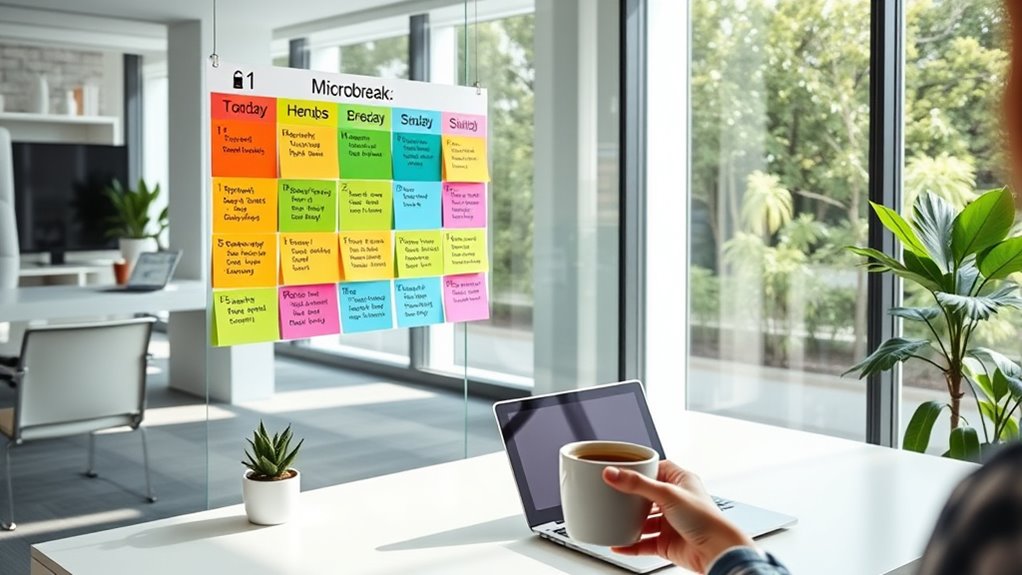
Taking regular microbreaks can substantially boost your productivity and well-being throughout the workday. When you pause briefly, you give yourself the chance to practice mindfulness practices, which reduce stress and improve focus. These small mental resets help you stay present and avoid burnout. Additionally, microbreaks allow you to make ergonomic adjustments, such as stretching or repositioning your workspace, reducing strain and preventing discomfort. Incorporating these breaks into your routine encourages better posture and movement, which enhances overall comfort. The combined effect of mindfulness practices and ergonomic adjustments during microbreaks keeps your mind sharp and your body healthy, leading to increased efficiency and sustained energy levels. Regularly maintaining your workspace during breaks ensures ergonomic benefits are maximized and discomfort minimized. Developing a routine of mindfulness techniques further supports mental clarity and stress reduction, making your microbreaks even more effective. Engaging in wellness practices during these moments can also promote a holistic approach to health and productivity. Practicing self-care consistently during microbreaks can deepen these benefits and foster long-term habits. Embracing microbreaks is a simple yet powerful way to optimize your workday and support your overall well-being.
As an affiliate, we earn on qualifying purchases.
Identifying the Ideal Length and Frequency of Breaks

Finding the right balance between break length and how often you take them is key to staying productive. Shorter breaks can refresh your mind without disrupting your flow, while more frequent breaks prevent fatigue. Incorporating natural elements such as landscaping or native plants can create a more relaxing environment during breaks. Additionally, understanding the symbolism in art and culture related to natural elements can enhance the calming effects of your break space. Recognizing how creativity storytelling can influence our perception of space may help in designing environments that boost relaxation and focus. Research shows that environmental psychology can guide you in creating effective break areas tailored to your needs. Paying attention to visual cues in your surroundings can also support your mental well-being during breaks. Let’s explore strategies to determine the ideal break duration and frequency for your work style.
Optimal Break Duration
Determining the ideal break duration involves striking a balance between giving your mind a rest and maintaining productivity. Short breaks of 5 to 10 minutes are generally effective, allowing you to recharge without losing momentum. Using ergonomic accessories, like supportive chairs or adjustable desks, can help optimize your posture during work, making your breaks more impactful. Workplace ergonomics emphasizes proper body alignment, so taking brief, intentional pauses aids in reducing strain and preventing discomfort. Incorporating regular movement during breaks can further enhance circulation and reduce fatigue. Additionally, engaging in mindfulness practices during breaks can help improve focus and reduce stress. Integrating ergonomic practices into your routine can maximize the benefits of your breaks and reduce overall discomfort. Longer breaks may lead to distraction, while shorter ones keep you refreshed without disrupting flow. The key is to find a duration that lets you reset physically and mentally, without overextending. Furthermore, understanding best anime movies can provide relaxing entertainment during longer breaks, helping to refresh your mind. Recognizing cybersecurity vulnerabilities can also be beneficial, as taking steps to protect your devices during breaks ensures ongoing safety. Ultimately, consistent, well-timed breaks enhance focus and sustain your productivity throughout the day.
Break Frequency Strategies
To optimize your work routine, establishing an effective balance between how often you take breaks and how long they last is essential. Break frequency strategies depend on your workload and task intensity. Short, regular breaks—like every 25–30 minutes—help maintain focus and prevent fatigue. Incorporating mindfulness meditation during breaks can reset your mind and reduce stress. An ergonomic workspace encourages proper posture, making these breaks more effective. Additionally, integrating connected fitness technology during breaks—such as quick stretches with smart equipment—can enhance recovery and boost energy levels. Research shows that break timing plays a crucial role in sustaining productivity and well-being. Understanding the importance of break ergonomics can further improve your break effectiveness. For example, choosing proper seating arrangements can prevent discomfort during breaks and improve overall posture. Consider this table for guidance:
| Break Frequency | Purpose |
|---|---|
| Every 25–30 min | Boost focus, incorporate mindfulness |
| Every 60 min | Prevent physical strain, stretch, reset |
| As needed | Respond to fatigue, adjust based on energy |
| Mid-morning | Refresh mental clarity |
| Afternoon | Rejuvenate for remaining tasks |
Adjust these strategies to fit your workflow for sustained productivity. Consistent break routines can further enhance your overall effectiveness and well-being.
As an affiliate, we earn on qualifying purchases.
Choosing Effective Activities During Microbreaks
During microbreaks, choosing activities like stretching, eye relaxation, or quick mental exercises can boost your focus and energy. These simple actions help prevent fatigue and keep you alert throughout the day. Picking the right activities makes your breaks more effective and invigorating, especially when incorporating smart appliances that can assist in guiding or automating these quick refreshers. Utilizing home energy management systems can also help optimize your environment for a more refreshing break, such as adjusting lighting or temperature to enhance relaxation. Additionally, integrating adaptive lighting can support circadian rhythms, further improving your overall well-being during breaks. Implementing well-designed routines can maximize their restorative benefits and keep you productive, especially when these routines are tailored to your specific needs with the help of personalized automation.
Stretching and Mobility
Choosing effective stretching and mobility activities during microbreaks can substantially boost your comfort and productivity. When you incorporate simple stretches, you improve circulation and loosen stiff muscles, which complements ergonomic setups and prevents discomfort. Remember to stay hydrated, as proper hydration habits support muscle flexibility and overall focus. During your breaks, try these activities:
- Neck and shoulder rolls to relieve tension
- Wrist stretches to prevent strain from repetitive movements
- Gentle torso twists to increase spinal mobility
These quick exercises help reset your body, making it easier to maintain good posture and stay comfortable throughout the day. By integrating mobility routines into your microbreaks, you enhance your ergonomic setup and promote better hydration habits, both vital for sustained productivity.
Eye Relaxation Techniques
Eye relaxation techniques are essential for reducing eye strain and maintaining visual comfort throughout the workday. During microbreaks, focus on simple eye exercises to combat eye fatigue. For example, try the 20-20-20 rule: every 20 minutes, look at something 20 feet away for 20 seconds. Additionally, blinking frequently helps moisten your eyes and reduce dryness. You can also perform rolling eye movements — look up, down, left, and right — to loosen muscles and refresh your vision. Here’s a quick reference:
| Technique | Benefit |
|---|---|
| Focus shifting | Relieves eye fatigue |
| Blinking exercises | Moisturizes eyes, reduces strain |
| Near-far focusing | Strengthens eye muscles |
| Palming | Calms and relaxes eye muscles |
Quick Mental Refreshers
Taking quick mental refreshers during microbreaks can substantially boost your focus and productivity. Engaging in simple activities helps clear your mind and restore energy. Consider practicing mindfulness exercises, such as deep breathing or brief meditation, to center yourself and reduce stress. Additionally, consuming nutritional snacks like nuts or fruit can provide a quick energy boost, keeping your brain alert. You might also try stretching or listening to calming music to reset your mental state. These activities are easy to fit into short breaks and yield significant benefits, helping you stay sharp throughout your workday. Incorporating these quick mental refreshers ensures you return to your tasks with renewed clarity and motivation.
productivity apps for break reminders
As an affiliate, we earn on qualifying purchases.
As an affiliate, we earn on qualifying purchases.
Structuring Your Day for Optimal Break Integration

To maximize the benefits of microbreaks, you need to structure your day intentionally, weaving short pauses seamlessly into your workflow. Effective workload management ensures you allocate time for these breaks without disrupting productivity. Plan your tasks around natural energy dips, scheduling microbreaks during slower periods. An ergonomic setup supports better posture and reduces strain, making your breaks more effective. Arrange your workspace so that each break involves stretching or repositioning, which enhances circulation and reduces discomfort. Incorporate microbreaks consistently, aligning them with your task flow, to maintain focus and prevent fatigue. By managing your workload smartly and creating an ergonomic environment, you set a foundation for sustained productivity and well-being throughout your workday.
Tools and Techniques to Remind You to Take Breaks
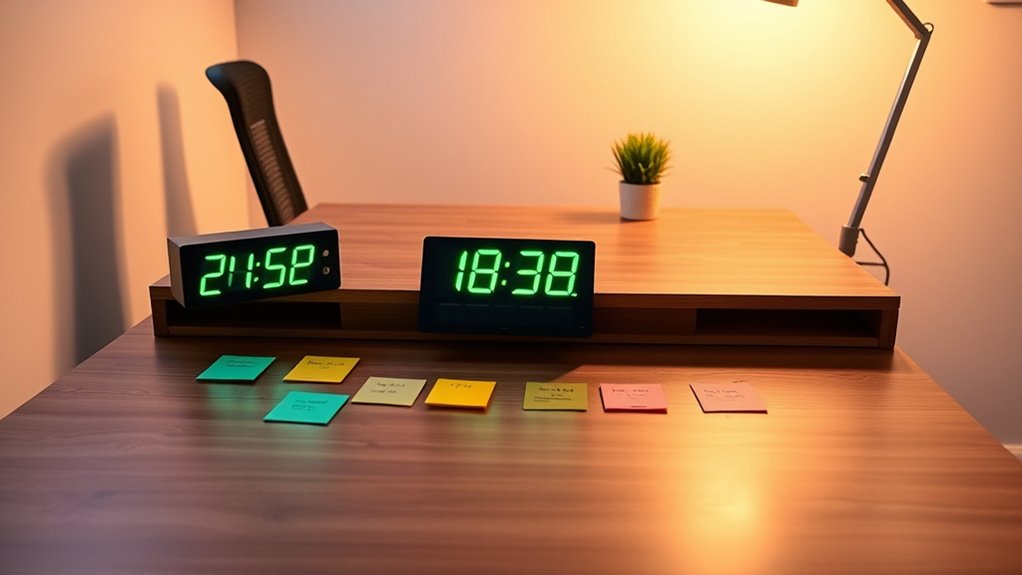
Ever find yourself working for long stretches and forgetting to pause? You’re not alone. Luckily, tools like Pomodoro timers and productivity apps can help. These tools send gentle reminders when it’s time to take a break, keeping you mindful of your schedule. Pomodoro timers are simple: set them for 25-minute work sessions, then get prompted to rest. Productivity apps often include customizable alerts, ensuring you don’t miss your microbreaks. Some even track your break habits to help you improve over time. Using these tools makes it easy to stay consistent without constantly checking the clock. With a few clicks, you can establish a reliable reminder system that keeps your energy up and your focus sharp.
Adjusting Your Microbreak Schedule for Maximum Impact

Once you’ve set up tools to remind you to take breaks, the next step is to tailor your microbreak schedule for maximum effectiveness. Focus on adjusting your break timing to match your workflow, ensuring you take regular pauses without disrupting momentum. Experiment with different intervals to find what keeps you freshest and most focused. Incorporate activity variety during your breaks—stretch, walk, hydrate, or do quick eye exercises—to engage different muscle groups and reduce fatigue. Varying your microbreaks prevents boredom and targets different areas of strain. Pay attention to how your body responds and tweak your schedule accordingly. The goal is to create a flexible, personalized routine that optimizes break timing and activity variety for sustained productivity and well-being.
Frequently Asked Questions
How Do Microbreaks Affect Long-Term Employee Health?
Microbreaks positively impact your long-term health by preventing repetitive strain injuries and reducing stress. When you take short, frequent breaks, you can make ergonomic adjustments, which lessen muscle fatigue and joint strain. These pauses also help lower stress levels, boosting your mental well-being. Over time, incorporating microbreaks promotes better posture, decreases injury risk, and supports overall health, ensuring you stay productive and healthy in the long run.
Can Microbreaks Improve Mental Clarity and Creativity?
Microbreaks can boost your mental clarity and creativity by incorporating mindfulness exercises and creative stimulation. When you pause for a short mindfulness practice, you clear mental clutter, making room for fresh ideas. Engaging in quick creative activities, like doodling or brainstorming, sparks new perspectives. These microbreaks refresh your mind, helping you return to tasks with sharper focus and innovative thinking, ultimately enhancing your productivity and problem-solving skills.
Are There Specific Industries That Benefit More From Microbreaks?
You’ll find that industries involving repetitive tasks, like manufacturing or data entry, benefit most from microbreaks. These breaks, combined with ergonomic adjustments and proper break timing, help reduce fatigue and prevent strain. By taking short, frequent breaks, you maintain focus and physical comfort. This approach keeps your productivity high and minimizes injury risk, especially when tasks demand sustained concentration or repetitive movement.
How Should Microbreaks Be Adapted for Remote Workers?
If you want to stay sharper than a razor, adapt microbreaks for remote work with flexible timing and ergonomic setups. You should take short breaks every 20-30 minutes, stretch, and change your posture. Make sure your workspace is ergonomically sound to prevent strain. Schedule breaks around your tasks, not the clock, so you stay energized and focused. This way, remote work becomes more productive and less exhausting.
What Are Common Mistakes to Avoid When Scheduling Microbreaks?
You should avoid overusing breaks, which can disrupt your workflow and reduce productivity. Neglecting consistency is another common mistake; sporadic or unpredictable microbreaks won’t offer the same benefits. Instead, stick to a regular schedule, taking short breaks at set intervals. This helps your body and mind reset without losing focus. Remember, balance is key—too many breaks or irregular timing can hinder your overall efficiency.
Conclusion
By embracing microbreaks, you’ll keep your productivity soaring and your focus sharp. Remember, “A stitch in time saves nine”—taking small breaks now can prevent bigger setbacks later. Incorporate these quick pauses into your day, choose activities wisely, and use reminders to stay on track. With a well-structured microbreak schedule, you’ll work smarter, not harder, and keep your energy flowing smoothly—like a well-oiled machine running at peak performance.
Fall Picks
fall essentials
As an affiliate, we earn on qualifying purchases.