The main lighting mistake that causes eye strain is using overly bright or poorly positioned lights that create glare, shadows, or uneven illumination. Overhead lights or harsh task lighting can force your eyes to work harder, especially if the brightness doesn’t match your environment or task. Poorly placed screens and inconsistent light levels increase discomfort over time. Fixing these issues can substantially reduce eye fatigue, and if you keep exploring, you’ll discover how to create a softer, eye-friendly setup.

Get school and study supplies delivered free — and shop member deals
- Fast, free delivery on millions of items
- Access to Prime Big Deal Days deals on October 6–7
- Prime Video, Amazon Music and more included
Key Takeaways
- Improper brightness adjustment causes eye fatigue and discomfort during prolonged screen use.
- Overhead lighting and glare from poorly positioned fixtures increase visual strain.
- Using overly bright or cool lighting creates harsh shadows and flickering, triggering eye fatigue.
- Incorrect screen placement and unoptimized workspace lead to uncomfortable viewing angles.
- Lack of balanced ambient lighting and diffuse sources intensifies eye effort and reduces clarity.
adjustable desk lamp with glare control
As an affiliate, we earn on qualifying purchases.
As an affiliate, we earn on qualifying purchases.
The Impact of Brightness and Contrast on Eye Comfort
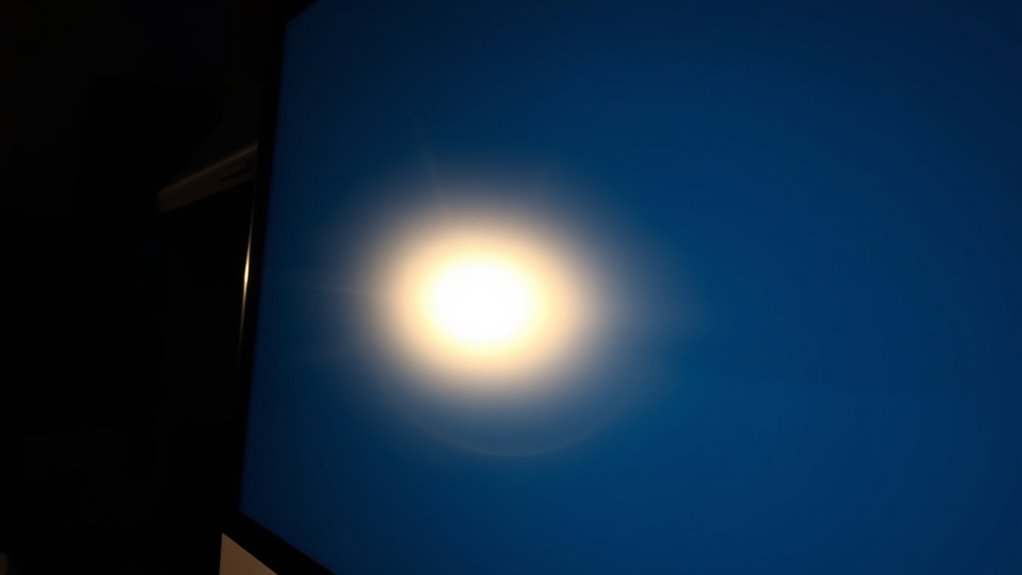
When the brightness and contrast levels of your screen aren’t properly adjusted, it can lead to eye strain and discomfort. A key factor is choosing the right color temperature, which affects how warm or cool the display appears. Too cool or too warm can cause your eyes to work harder, increasing fatigue. Light uniformity also plays an essential role; uneven brightness or contrast across the screen makes your eyes constantly adjust, leading to strain. Ensuring consistent lighting and avoiding overly bright or dim screens helps maintain comfort. Proper display calibration ensures your display matches your environment’s lighting and maintains consistent light levels, making it easier to focus without discomfort or eye strain. Adjusting these settings properly helps your eyes relax and reduces fatigue. Additionally, leveraging energy-efficient technologies can optimize display performance while minimizing eye strain by reducing unnecessary brightness fluctuations. Maintaining consistent lighting conditions in your workspace can further reduce visual stress and promote overall eye comfort.
As an affiliate, we earn on qualifying purchases.
How Overhead Lighting Can Cause Glare and Strain
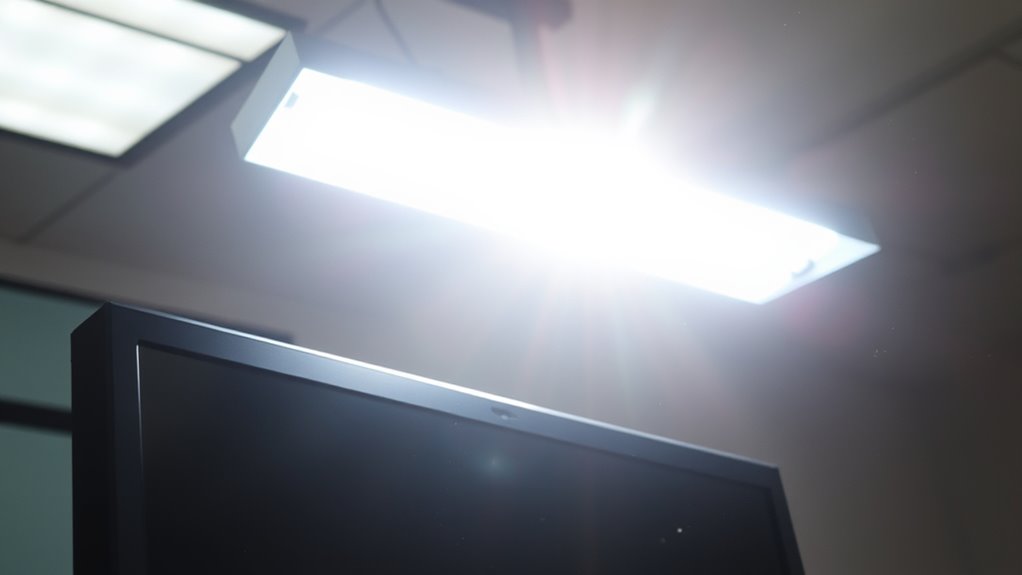
Overhead lighting can cause glare that directly disrupts your vision and makes it harder to see clearly. When light is unevenly distributed, your eyes work harder to adjust, leading to increased fatigue. This constant strain can leave your eyes tired and uncomfortable over time. Proper lighting control can help minimize glare and create a more comfortable viewing environment. Incorporating adjustable lighting technology can further optimize illumination and reduce eye discomfort. Additionally, understanding navigation and mapping principles used in smart lighting systems can help you set up effective lighting zones and schedules to promote eye health. Utilizing lighting design techniques can also ensure a balanced and consistent light distribution across your workspace. Being mindful of lighting ergonomics can further enhance comfort and prevent strain during extended periods of visual focus.
Direct Brightness Disrupts Vision
Bright, direct overhead lighting can create glare that makes it difficult to see comfortably. This intense brightness can disrupt your vision, causing eye strain and fatigue. To mitigate this effect, focus on glare management by adjusting the position of your light sources or using shades. Light diffusion is key—covering bulbs with diffusers or using softer bulbs helps spread light evenly, preventing harsh spots that cause discomfort. When light is too direct, your eyes work harder to adapt, leading to strain over time. Incorporating proper light diffusion and controlling brightness levels helps your eyes relax and reduces visual stress. Avoiding overly bright, direct overhead lighting ensures a more comfortable environment and healthier vision.
Uneven Light Distribution
Uneven light distribution from overhead fixtures can create areas of harsh glare and shadow that strain your eyes. When the light color is too harsh or mismatched, it can cause discomfort and make it harder to focus. Light direction also plays a role; if the fixture directs light unevenly, some areas become overly bright while others remain dim. This inconsistency forces your eyes to constantly adjust, increasing fatigue. Properly balanced lighting ensures the light color is soft and consistent, reducing eye stress. Adjusting the light direction to minimize glare and shadows helps your eyes work more comfortably. Additionally, considering lighting placement can help achieve a more even distribution of light throughout the space. Using appropriate light fixtures that are designed for uniform illumination can further enhance visual comfort. Ensuring that your lighting system is properly installed and maintained is essential for consistent performance and to prevent uneven lighting issues. Paying attention to lighting controls like dimmers or diffusers can also help fine-tune the environment for optimal comfort. By creating an even, well-distributed lighting environment, you can reduce strain and improve your visual comfort during extended periods of work or reading.
Increased Eye Fatigue
When light fixtures cast harsh glares and uneven shadows, your eyes are forced to work harder to focus and adjust. This increased effort leads to eye fatigue, making your eyes feel tired and strained over time. Overhead lighting with poor color temperature can intensify glare, causing discomfort. To mitigate this effect, consider lights with flicker reduction technology, which minimizes flickering that can trigger eye strain. Additionally, choosing fixtures with proper diffusers helps distribute light evenly, reducing contrast and glare. Finally, adjusting the color temperature to a warmer setting can lessen eye fatigue by providing softer, more natural illumination. Being mindful of these factors ensures your eyes stay comfortable, even during long periods of work or reading. Incorporating advanced lighting technologies can further enhance visual comfort and reduce strain, especially as some modern fixtures include features designed specifically for glare reduction. Proper lighting placement also plays a crucial role in minimizing unwanted reflections and shadows that contribute to eye strain.
As an affiliate, we earn on qualifying purchases.
The Role of Screen Placement and Lighting Alignment
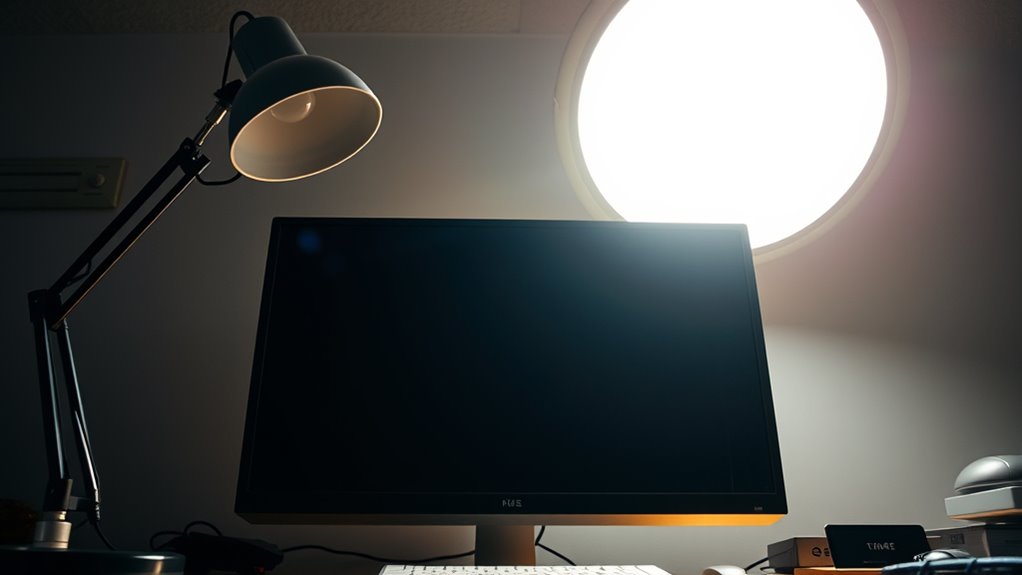
Proper screen placement and lighting alignment are essential to reduce eye strain and improve your overall comfort while working or watching. If your screen is positioned too high or too low, it forces your eyes to strain and adopt uncomfortable angles. Keep your monitor directly in front of you, about an arm’s length away, with the top of the screen at or just below eye level. Light positioning is equally important; avoid placing lights behind or beside your screen, as this causes screen glare. Instead, use well-placed task lighting that minimizes reflections and glare. Adjusting your screen and light sources to reduce bright spots and shadows helps your eyes stay relaxed. Proper alignment minimizes eye fatigue, making your work or viewing experience much more comfortable. Using appropriate lighting techniques can further reduce glare and improve visual comfort. Trusted businesses and services near you can help optimize your workspace setup for better eye health, including proper lighting and screen setup. Additionally, consulting with an ergonomic specialist can ensure your workspace is tailored to support your eye health and overall comfort. Incorporating ambient lighting adjustments can also significantly decrease eye strain during extended use.
smart lighting system for workspace
As an affiliate, we earn on qualifying purchases.
As an affiliate, we earn on qualifying purchases.
The Importance of Proper Ambient Lighting Levels
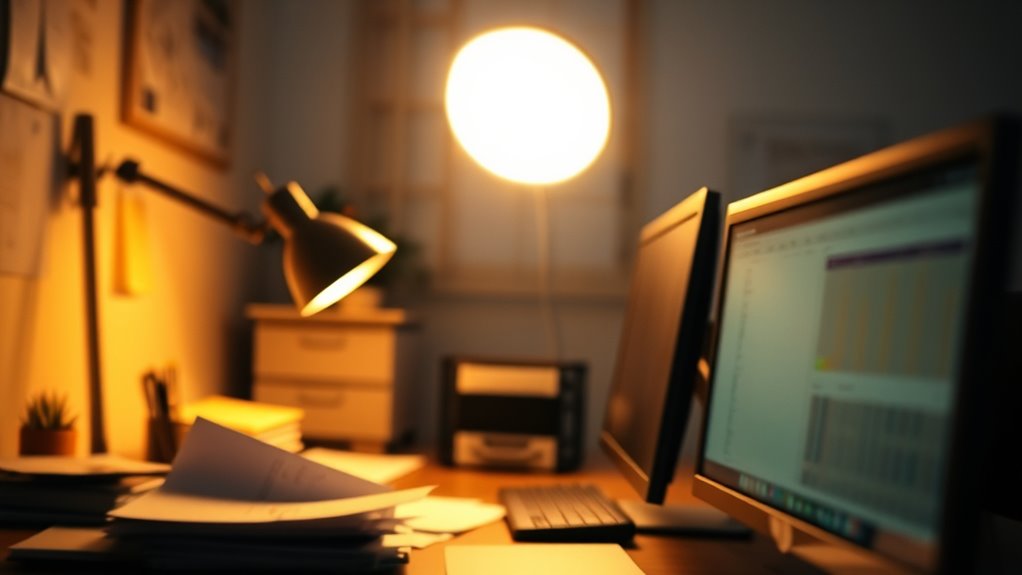
Maintaining the right ambient lighting levels is essential for minimizing eye strain and ensuring comfortable viewing. Proper ambient light creates a balanced environment where light intensity isn’t too harsh or too dim, reducing glare and eye fatigue. When the light is just right, your eyes don’t have to work harder to adjust between screen and surroundings. To achieve this, consider these factors: 1. Keep ambient light at a moderate level to prevent excessive brightness or darkness. 2. Use diffused lighting to evenly distribute light and minimize glare. 3. Adjust light intensity based on the time of day and screen brightness for ideal comfort. Additionally, implementing proper air purifier maintenance can help improve indoor air quality, reducing irritants that may contribute to eye discomfort. Being aware of indoor air quality can help you identify and address other factors that may exacerbate eye strain. Proper lighting design can also play a significant role in creating an optimal visual environment, especially when incorporating appropriate light placement for reducing glare. Incorporating smart lighting systems can further optimize ambient lighting by adjusting brightness and color temperature automatically throughout the day.
Common Mistakes in Using Task Lighting
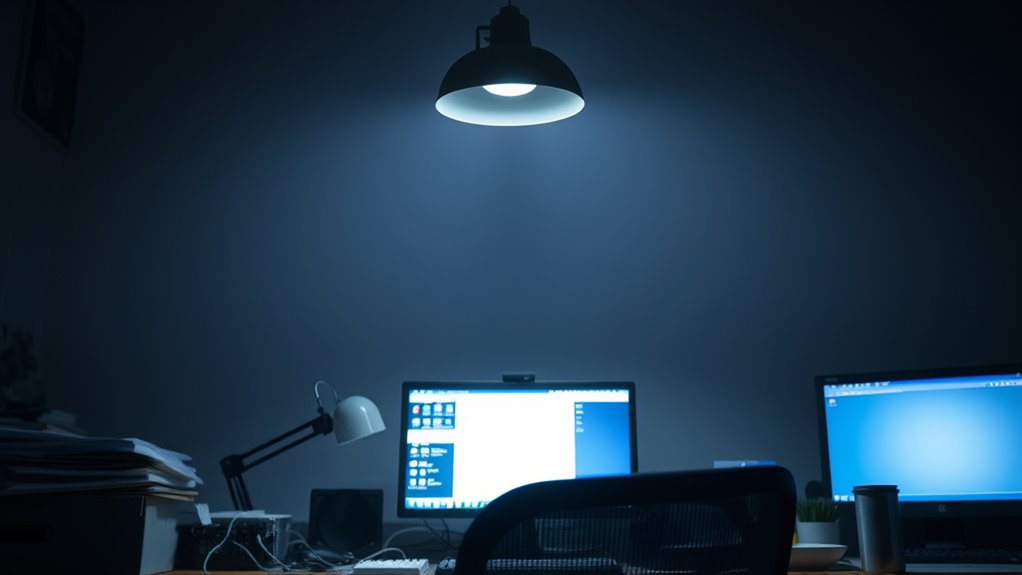
Many people make mistakes with task lighting that can cause eye strain. You might not use enough brightness, place lights in the wrong spots, or choose fixtures that are too harsh. These errors can make reading or working uncomfortable and tiring.
Insufficient Brightness Levels
When task lighting is too dim, your eyes have to work harder to see clearly, which can lead to eye strain and fatigue. Insufficient brightness levels make it difficult to focus, causing you to squint or strain your eyes unnecessarily. To improve comfort, consider the following:
- Increase light intensity to match the task’s requirements, avoiding overly dim settings.
- Use light diffusers to distribute light evenly, reducing harsh glare and eye discomfort.
- Incorporate glare reduction techniques, such as positioning lights correctly or using lamps with adjustable brightness.
Proper brightness ensures your eyes aren’t overexerted, and balanced lighting helps prevent fatigue. Remember, adequate illumination minimizes eye strain and enhances visual clarity during prolonged tasks.
Improper Light Placement
Proper light placement is key to maximizing the benefits of your task lighting and preventing eye strain. When your fixtures are poorly positioned, you might experience glare or shadows that strain your eyes. Verify your light source isn’t directly in your line of sight but instead positioned to illuminate your work area evenly. Adjusting the light color to a neutral or cool tone can reduce eye fatigue. Here’s a quick guide:
| Light Color | Fixture Placement | Effect |
|---|---|---|
| Warm | Overhead, behind | Soft glow, less glare |
| Neutral | Side, angled | Clear, balanced light |
| Cool | Directly above | Bright, alert environment |
| Dim | Close to work | Focused, less strain |
| Bright | Spread evenly | Reduces shadows and eye fatigue |
Overly Harsh Lighting
Overly harsh lighting can considerably contribute to eye strain, especially when your task lighting is too intense or uncomfortably bright. When lighting has a high color temperature, it appears bluish and cold, which can cause discomfort over time. Additionally, poor light diffusion results in sharp shadows and glare, making it harder for your eyes to adapt. To avoid this, consider these steps:
- Use bulbs with a balanced color temperature (around 3000K-4000K) for softer, more natural illumination.
- Opt for fixtures with good light diffusion to reduce glare and evenly spread light across your workspace.
- Adjust the brightness levels so they’re appropriate for your task, avoiding overly bright or unfiltered light sources.
This approach helps minimize eye strain caused by harsh, uncomfortably bright lighting.
Effects of Cool Versus Warm Light on Eyes

The type of light you use can considerably impact your eye comfort, especially when comparing cool and warm lighting. Cool light has a higher color temperature, often around 5000K to 6500K, which mimics daylight. Warm light, on the other hand, has a lower color temperature, usually between 2700K and 3000K, creating a softer, more relaxing glow. Cool light can cause glare and increase eye fatigue, making it harder to focus over time. Warm light tends to enhance visual comfort, reducing strain and helping your eyes relax during extended tasks. Choosing the right color temperature based on your activities can substantially lower eye strain and improve your overall visual experience. Remember, the goal is to match your lighting to your environment and needs to protect your eyes.
Tips for Creating an Eye-Friendly Lighting Environment
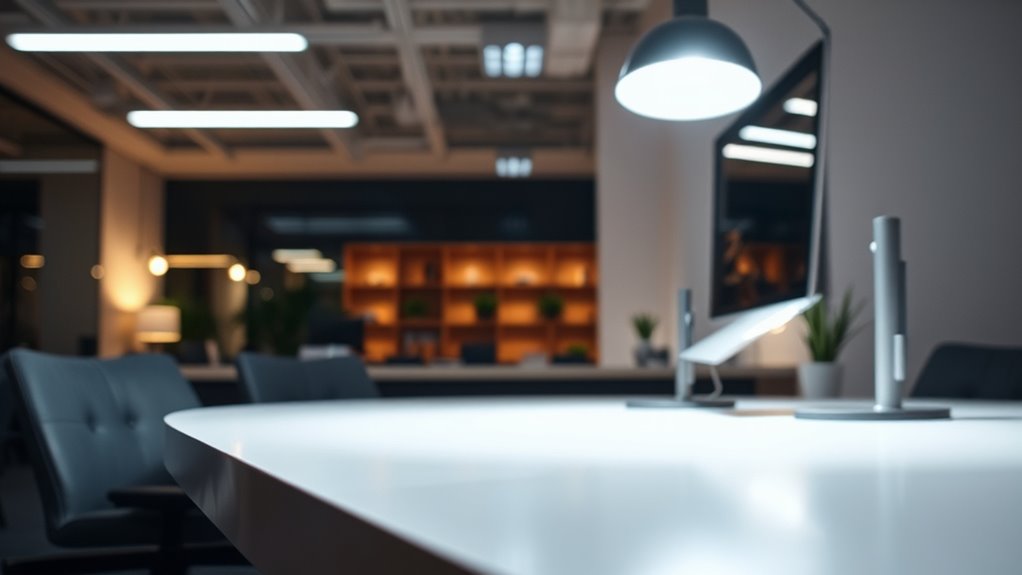
Choosing the right lighting setup can make a significant difference in reducing eye strain throughout your day. To create an eye-friendly environment, focus on adjusting the color temperature and light diffusion. First, select bulbs with a warm to neutral color temperature (around 3000-4000K), which helps prevent harsh glare. Second, ensure light diffusion by using lampshades or diffusers to soften direct light and minimize sharp shadows. Third, position your light sources to avoid glare on screens and work surfaces, reducing eye fatigue. Proper light diffusion prevents intense spots of brightness, while optimal color temperature maintains natural eye comfort. By fine-tuning these aspects, you create a balanced, soothing lighting environment that supports your eyes during extended work or leisure.
Frequently Asked Questions
How Does Flickering Lighting Affect Eye Strain Over Time?
Flickering effects from unstable lighting can cause your eye strain to worsen over time. When light isn’t stable, your eyes constantly adjust to compensate, leading to fatigue and discomfort. Continuous exposure to flickering lights forces your eyes to work harder, increasing strain and potentially causing headaches. To prevent this, make sure your lighting has steady, consistent illumination, minimizing flickering effects and promoting better light stability for your eyes’ health.
Can Colored Lighting Impact Eye Comfort During Prolonged Computer Use?
Imagine working late under colored LEDs with ambient hues shifting from blue to red. You might find that certain colors, like harsh reds or overly bright blues, cause discomfort or headaches over time. Colored lighting can impact eye comfort during prolonged computer use by causing visual fatigue or strain. Choosing softer, neutral ambient hues helps reduce eye stress, making your screen time more comfortable and preventing long-term issues.
What Are the Best Lighting Practices for People With Sensitive Eyes?
To prevent eye strain, focus on good lighting ergonomics by using soft, diffuse light that reduces glare and contrasts. Avoid harsh overhead lighting and opt for adjustable lamps that you can direct away from your eyes. Keep ambient lighting consistent with your screen brightness, and take regular breaks to give your eyes rest. These practices help minimize eye discomfort and promote eye strain prevention during extended screen time.
How Does Natural Daylight Influence Eye Health Compared to Artificial Lighting?
Did you know that just 20 minutes of daily daylight exposure can boost your mood and reduce eye strain? Natural daylight benefits your eyes by providing balanced light that minimizes glare and harsh contrasts found in artificial lighting. Sunlight benefits include improved circadian rhythms and better eye health. You should aim for regular outdoor time, as natural daylight enhances eye comfort and overall well-being compared to artificial light, which can cause strain.
Are There Specific Lighting Setups Recommended for Different Ages or Eye Conditions?
You should adjust your lighting setup based on your age and eye condition. For children, use soft, diffused light to protect developing eyes. Seniors benefit from brighter, focused lighting to reduce strain. If you have eye conditions like presbyopia or macular degeneration, consider specialized age-specific lighting that minimizes glare and enhances contrast. Always consult an eye care professional for personalized recommendations, ensuring your environment supports your eye health effectively.
Conclusion
If you keep making these lighting mistakes, your eyes might suffer more than you realize. But the good news is, a few simple changes could transform your workspace and protect your vision. Are you ready to discover the hidden secrets to eye comfort? Don’t wait until discomfort becomes a permanent problem—take action now, and unveil the true potential of your lighting setup before it’s too late. Your eyes will thank you for it.
Fall Picks
fall essentials
As an affiliate, we earn on qualifying purchases.