
TL;DR

Prime made for students and young adults
- Fast, free delivery for dorm and study essentials
- Prime Video and Amazon Music included
- Member-only deals
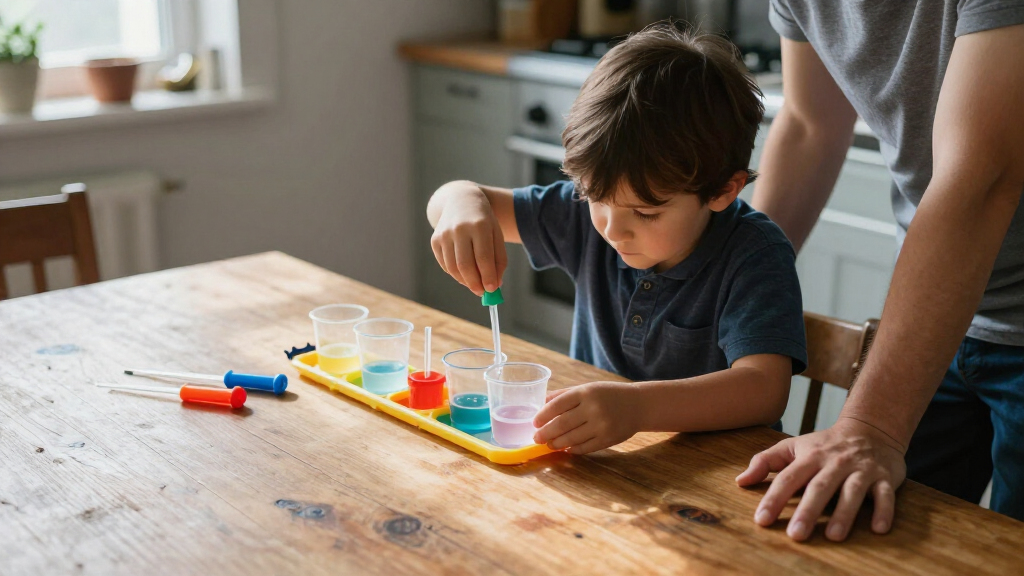
Educational science experiment kits bundle materials and instructions for exploring ideas such as circuits, plant growth, forces, and chemistry. Choose one that matches the learner’s abilities, explains the science behind each activity, and gives clear safety guidance; then ask the learner to predict, observe, and explain rather than simply follow the steps.
A fizzing cup can grab a child’s attention for ten seconds; a question about why it fizzed can hold it for the rest of the afternoon. That difference is what separates a memorable science activity from a colorful box of one-time tricks.
Educational science experiment kits give learners materials and guidance for investigating real ideas, from magnets and plant growth to simple circuits and chemistry. They can save you the scavenger hunt for supplies, but the kit alone does not do the teaching. You’ll find out how to choose a good match, check safety and value, and turn each activity into a small investigation your learner can explain.
The goal is not a perfect result every time. It is to help a learner notice, test, and think: the same habits that make a muddy puddle, a paper bridge, or a stubborn battery worth investigating.
Choose a kit by the learner’s interests and abilities, not its box art or age label alone.
Look for explanations and opportunities to predict, compare, and discuss results—not just step-by-step recipes.
Check safety directions, supervision needs, included supplies, and cleanup instructions before beginning.
Use one-factor comparisons, such as testing two paper-airplane designs from the same spot, to make observations more meaningful.
Compare reusable tools and refill needs when judging long-term value.
What a science kit gives you beyond a fun activity
Educational science experiment kits are packages of materials and instructions that help learners investigate a scientific idea through hands-on activities. A well-designed kit does more than tell a child what to mix or build: it helps them notice what changes and connect that result to an explanation. That makes it a starting point for learning, not a guarantee of it.
Think of a kit as a trail map. The materials show you where to begin, while predictions and observations help the learner make sense of the path. A young learner might place two magnets near different objects, predict which ones will move, and record the surprises. The magnet is the tool; the comparison and explanation are where the thinking happens.
Strong activities make room for the habits scientists use: asking a question, making a prediction, following a method, observing carefully, and explaining what the evidence suggests. If a crystal-growing activity only asks a child to pour and wait, it may entertain. If it also asks them to compare crystals grown under different conditions, it gives them a reason to investigate.
For a useful follow-up, ask, “What did you expect, and what actually happened?” That simple conversation can turn scientific ideas through hands-on work into something a learner can describe in their own words. The answer may be messier than the instructions promise—and that is often where the best question starts.
As an affiliate, we earn on qualifying purchases.
Choose a kit by matching the subject to the learner
Educational science experiment kits work best when the topic, task, and learner’s abilities fit together. A kit that looks exciting on a shelf can still frustrate a child if the steps demand advanced reading, tiny parts, or more adult help than you can provide. Start with what the learner already likes, then check what the activities ask them to do.
They range from broad starter sets to focused projects. General science kits can sample magnets, light, weather, and simple chemistry. Chemistry sets may explore reactions, crystals, or indicators, while physics and engineering kits often use circuits, motion, structures, or optics. Biology kits can introduce plant growth or microscopy; robotics kits combine building with coding, sometimes using visual programming.
Imagine a curious eight-year-old who loves taking apart toys but loses interest in long written instructions. A modular circuit set with large, clearly labeled pieces may suit them better than a chemistry set with several pages of text. An older learner who enjoys sketching observations might get more from a microscope or plant-growth project that unfolds over days.
Age labels help, but they do not tell the whole story. Reading comfort, fine-motor skills, patience, and adult availability matter too. Check the instructions and supervision notes before buying; a quick glance at the box can miss what the actual activity requires.
educational chemistry kits for children
As an affiliate, we earn on qualifying purchases.
As an affiliate, we earn on qualifying purchases.
Compare common kit types before you buy
There is no single best kind of science kit: the right choice depends on what the learner wants to explore and how much guidance you want built in. Use the topic, supplies, and likely reuse to compare options instead of choosing by the biggest activity count. A kit with fewer, repeatable experiments may offer more learning than a box of one-off demonstrations.
| Kit type | What learners explore | What to check |
|---|---|---|
| General science | Magnets, light, weather, or basic chemistry | Whether activities explain more than one topic clearly |
| Chemistry | Reactions, crystals, indicators, and materials | Safety guidance, protective equipment, and cleanup |
| Physics and engineering | Circuits, motion, optics, and structures | Part size, durability, and whether components can be reused |
| Robotics and coding | Building, programming, and computational thinking | Device needs, app access, and coding level |
| Biology and nature | Plants, habitats, specimens, and microscopy | Time needed, care requirements, and what supplies are included |
For instance, a classroom teacher might choose reusable circuit components because several small groups can test different connections across the term. A family looking for a rainy-afternoon activity may prefer a shorter general kit with several self-contained projects.
Digital instructions and videos can make setup easier, while open-ended sets may encourage learners to change a design and compare results. Those features vary by product, so check what is actually included rather than relying on a broad trend or a polished product photo. The table helps narrow your options; the instruction booklet tells you whether the kit will work in your home or classroom.
As an affiliate, we earn on qualifying purchases.
Use this five-point check to spot a well-designed kit
A good science kit matches the learner, explains the idea, supplies usable materials, encourages investigation, and gives clear safety directions. Those five checks matter more than a dramatic box illustration because they shape what happens after you open the packaging. Read the contents and activity examples before you commit.
- Match ability, not just age. Check reading level, small parts, hand skills, and supervision guidance. An age label is a useful signal, not a full description of fit.
- Look for the “why.” Instructions should explain what an activity shows, not only list steps. For example, a paper bridge project should help learners compare how folds affect how much weight the bridge holds.
- Check the materials. Make sure components are labeled, present in useful quantities, and suitable for the stated projects. Find out whether batteries or household ingredients are extra.
- Find chances to investigate. Strong activities invite a prediction, a comparison, or a change to one factor—not just a fixed recipe.
- Read safety and cleanup directions. Check supervision, protective equipment, warnings, and disposal instructions before starting.
Say you are choosing a kit for a curious child who wants to build a working circuit. If the kit has clear diagrams, reusable components, and a simple invitation to predict what happens when a connection changes, it offers more than a preassembled gadget. If you have to guess what each part does or source several missing supplies, that convenience fades quickly.
Good value also includes life after the first activity. Reusable tools, refill availability, and follow-up experiments can make a kit useful for months. Count repeatable investigations, not just the number printed on the front of the box.
As an affiliate, we earn on qualifying purchases.
Make each experiment feel like a real investigation
You can get more learning from a kit by pausing before the first step and asking the learner to make a prediction. Then record what happens and talk through the evidence. This small routine takes only a few minutes, but it turns “follow the recipe” into “test an idea”—a much richer experience for a learner.
Try it with a simple plant-growth activity. Before watering one plant and leaving another dry, ask which one they expect to grow more. Keep the pots in the same light and compare them over several days. A drawing, a height mark, or a short note gives the learner something concrete to discuss instead of relying on a hazy memory.
When possible, change one factor at a time. If you change the water, light, and soil together, you cannot tell which change may explain the difference. For a paper airplane kit, for example, fold two designs differently but throw them from the same spot using the same gentle motion. The comparison is fairer, and the question gets sharper.
If the outcome is unexpected, resist the urge to call it a failure. Check the steps, repeat the trial, and ask what could have affected the result. Not every activity produces a dramatic fizz or a robot that rolls across the floor on its first try. Learning to inspect a quiet result is part of the experiment, too.
Check safety, setup, and real cost before the first pour
Before you start a kit activity, read its age guidance, supervision rules, protective-equipment notes, and cleanup instructions. “Educational” does not mean risk-free, especially when an activity involves chemicals, heat, sharp tools, or small parts. The safest setup begins before anything is opened or mixed.
Do a quick inventory on a clear table. Sort small components away from younger children, confirm whether batteries or household supplies are needed, and gather any listed protective equipment. If a chemistry activity calls for disposal instructions, follow them rather than assuming a leftover mixture belongs down the drain. The kit’s directions take priority over guesswork.
Cost also includes time and replacement supplies. A classroom kit that serves twenty learners may need refills, extra batteries, and a plan for cleanup; a home kit might be a better value if its microscope or circuit pieces support many later projects. A five-minute check of the contents can save a Saturday trip for a missing battery or ingredient.
Some sets pair physical projects with apps, videos, or online lessons; robotics and electronics kits may use visual programming to make a first build feel approachable. Check device access and any online requirements before buying. Reusable components and reduced single-use packaging can also be useful features, though they vary by product and are not a substitute for checking the actual materials list.
Frequently Asked Questions
What age is right for a science experiment kit?
It depends on the activities and the learner’s reading, hand skills, and need for supervision. Follow the manufacturer’s age and safety guidance, then check the actual instructions; a simple observation project may suit a younger child, while chemistry or small electronic parts may call for more experience and adult help.
Are science experiment kits safe for children?
Many are designed for children, but “educational” does not mean risk-free. Read warnings, protective-equipment notes, adult-supervision requirements, and disposal directions before starting, especially for activities involving chemicals, heat, sharp tools, or small pieces.
Do science kits teach real science?
They can introduce genuine concepts and investigative habits. Learners get more from a project when they predict an outcome, observe what happens, compare results, or explain why a trial differed from expectations instead of only copying the steps.
Will I need to buy extra supplies?
Sometimes. Batteries, water, household ingredients, or protective equipment may not come in the box, so read the contents list and activity instructions before purchasing. A quick check helps you avoid a half-built project and a last-minute store run.
Is a kit better than buying supplies separately?
A kit offers convenience, a defined set of materials, and instructions; separate supplies can be more flexible and economical for repeated projects. If you want a structured first activity, a kit can save planning time, while experienced learners may enjoy adapting materials they already have.
What should I do if the experiment does not work?
Check the steps and materials, repeat the activity, and ask whether a changed condition could explain the result. Treat the outcome as evidence to investigate rather than a reason to promise or force a dramatic result; sometimes the unexpected part is the most useful clue.
Conclusion
Choose the kit that gives your learner a clear question to investigate, materials they can handle, and guidance you can trust. Then slow down long enough to ask what they predicted and what the evidence showed.
A good experiment does not have to end in a towering fizz. Sometimes the best result is a child leaning over a notebook, pencil smudged, asking what would happen if they tried it one more time.
Columbus Day / Indigenous Peoples' Day Picks
long weekend sales
As an affiliate, we earn on qualifying purchases.