Without proper ventilation, your greenhouse can become a heat trap that stresses and kills your plants. Stale, hot air can result in temperature spikes, excess humidity, and disease risk. Ventilation systems, including exhaust and intake vents, work together to maintain balanced conditions, prevent heat buildup, and promote healthy growth. Ensuring your ventilation setup is well-designed and adjusted for weather changes is vital. Keep going to discover how to optimize airflow and protect your plants effectively.

Get school and study supplies delivered free — and shop member deals
- Fast, free delivery on millions of items
- Access to Prime Big Deal Days deals on October 6–7
- Prime Video, Amazon Music and more included
Key Takeaways
- Poor ventilation can cause heat buildup, creating a heat trap that stresses and damages plants.
- Stagnant, hot air inside the greenhouse increases the risk of heat-related plant death.
- Inadequate airflow prevents heat from escaping, leading to excessive temperatures harmful to plant health.
- Improperly designed vents can trap heat at the top, causing heat stress and reducing crop yields.
- Effective ventilation prevents heat accumulation, protecting plants from heat stress and promoting healthy growth.
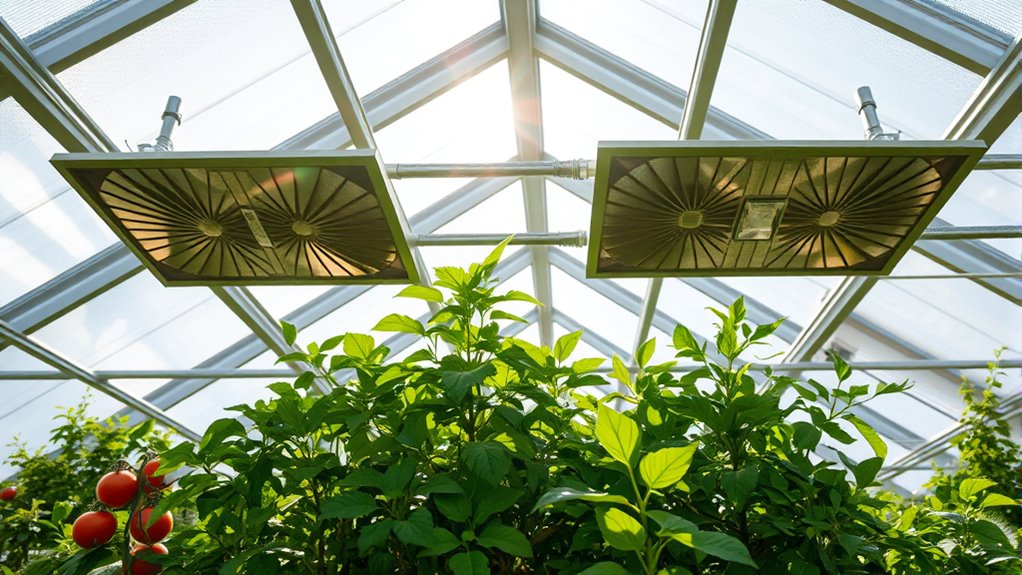
Proper greenhouse ventilation is essential for maintaining ideal growing conditions. Without effective airflow management, your plants are vulnerable to heat buildup, excess humidity, and stagnant air, all of which can severely impair growth or even cause plant death. That’s where well-designed ventilation systems come into play. They help regulate temperature, control humidity, and ensure fresh air circulates evenly throughout your greenhouse. When you implement the right ventilation setup, you create an environment where your plants can thrive, not struggle.
Ventilation systems are not one-size-fits-all; they need to be tailored to your greenhouse’s size, layout, and the specific needs of your crops. Mechanical vents, exhaust fans, and ridge vents work together to promote continuous airflow. Exhaust fans pull out hot, stale air from inside, while intake vents or side vents draw in cooler, fresh air. Properly managed, this exchange prevents heat from trapping at the top of the greenhouse and creates a steady flow of air that keeps temperatures balanced. You’ll want to position vents strategically to encourage cross-ventilation, ensuring air moves across all plant zones instead of stagnating in corners.
Effective airflow management also involves monitoring and adjusting your ventilation settings as weather conditions change. During hot days, you might need to open vents wider or run fans longer to prevent heat stress. On cooler days, closing vents helps retain warmth without risking condensation. Automated ventilation systems can simplify this process by responding to temperature and humidity sensors, so you don’t have to manually adjust vents all the time. This automation keeps your greenhouse environment stable, reducing stress on your plants and promoting healthy growth. Efficient airflow management can significantly enhance plant health and productivity by preventing heat stress and disease.
Another critical aspect of ventilation is preventing excessive humidity, which can lead to diseases like mold and mildew. Proper airflow reduces condensation on plant surfaces and walls, lowering the risk of these problems. Additionally, good ventilation helps control odorous emissions and keeps the air fresh, which benefits both the plants and anyone working inside the greenhouse.
As an affiliate, we earn on qualifying purchases.
Frequently Asked Questions
How Do I Measure Optimal Ventilation for My Specific Greenhouse?
To measure ideal ventilation for your greenhouse, start by evaluating ventilation efficiency through airflow measurement. Use tools like an anemometer to gauge airspeed at vents and fans, ensuring consistent circulation. Monitor temperature and humidity levels regularly, adjusting vents as needed. Keep track of how quickly fresh air replaces stale air, ensuring your greenhouse maintains optimal conditions for plants. This approach helps you optimize airflow measurement and achieve the best ventilation efficiency.
Can Automated Ventilation Systems Adapt to Changing Weather Conditions?
Yes, automated ventilation systems can adapt to changing weather conditions. You can set up manual controls for specific scenarios and integrate weather sensors that monitor temperature, humidity, and wind. These sensors send real-time data to the system, allowing it to automatically open or close vents as needed. This guarantees your greenhouse maintains ideal conditions, preventing heat buildup and protecting your plants from temperature fluctuations.
What Are the Energy Costs Associated With Different Ventilation Methods?
Different ventilation methods impact your energy costs considerably. Natural ventilation offers energy savings by reducing reliance on fans and cooling systems, boosting ventilation efficiency. Mechanical systems, like exhaust fans, consume more power, especially during hot days. To minimize costs, optimize your ventilation strategy by combining natural airflow with efficient mechanical aids. This approach enhances ventilation efficiency and helps you save energy while maintaining ideal greenhouse conditions.
How Does Ventilation Impact Humidity and Disease Prevention?
Did you know proper ventilation reduces humidity by up to 30%, substantially lowering disease risk? You can control humidity effectively, which is vital for disease prevention. By ensuring good airflow, you prevent excess moisture that fosters mold and fungi. Proper ventilation maintains ideal humidity levels, creating a healthier environment for your plants. This proactive approach helps you avoid costly losses and keeps your greenhouse thriving.
Are There Sustainable or Eco-Friendly Ventilation Options Available?
Yes, you can choose sustainable ventilation options like passive cooling methods, which use natural airflow to regulate temperature without energy consumption. Eco-friendly fans, such as solar-powered or low-energy models, are also excellent choices. These options reduce your environmental impact while maintaining proper airflow, humidity, and plant health. By integrating passive cooling and eco-friendly fans, you create a more sustainable greenhouse environment that’s better for your plants and the planet.
automatic greenhouse ventilation system
As an affiliate, we earn on qualifying purchases.
As an affiliate, we earn on qualifying purchases.
Conclusion
Just like a window to the soul, proper greenhouse ventilation reveals the true health of your plants. Without it, you trap heat like a sealed box, suffocating their growth. Remember, good airflow is the key to *discovering* your green sanctuary’s potential—letting fresh air breathe life into every leaf. Keep the doors open, and your plants will flourish, transforming your greenhouse into a vibrant oasis where life and *essence* reign free.
As an affiliate, we earn on qualifying purchases.
As an affiliate, we earn on qualifying purchases.
Fall Picks
fall essentials
As an affiliate, we earn on qualifying purchases.