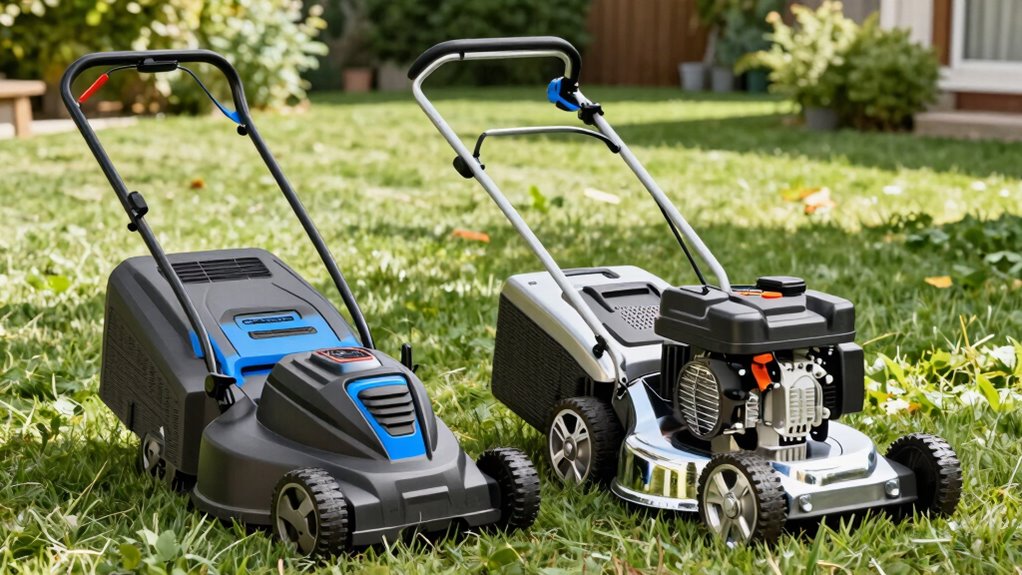

When comparing electric and gas mowers, you’ll find that electric models deliver sufficient torque for small to medium lawns, making them effective and easier to maintain. They typically offer shorter runtimes—around 30 to 60 minutes—so they’re best for smaller areas or with multiple batteries. Electric mowers also require less maintenance, with no oil or spark plug changes needed. Curious about how these factors stack up for your yard? Keep exploring to find the best fit.

Get school and study supplies delivered free — and shop member deals
- Fast, free delivery on millions of items
- Access to Prime Big Deal Days deals on October 6–7
- Prime Video, Amazon Music and more included
Key Takeaways
- Gas mowers typically offer higher torque, making them better suited for thick or tough grass conditions.
- Electric mowers generally have shorter runtime, but quick-charging batteries can help complete tasks efficiently.
- Gas engines require regular maintenance like oil changes and spark plug replacements, while electric motors need minimal upkeep.
- Electric mowers produce less noise and emissions, reducing environmental impact and maintenance related to exhaust systems.
- Torque in electric mowers depends on motor power, but overall, gas engines usually deliver more consistent high torque.
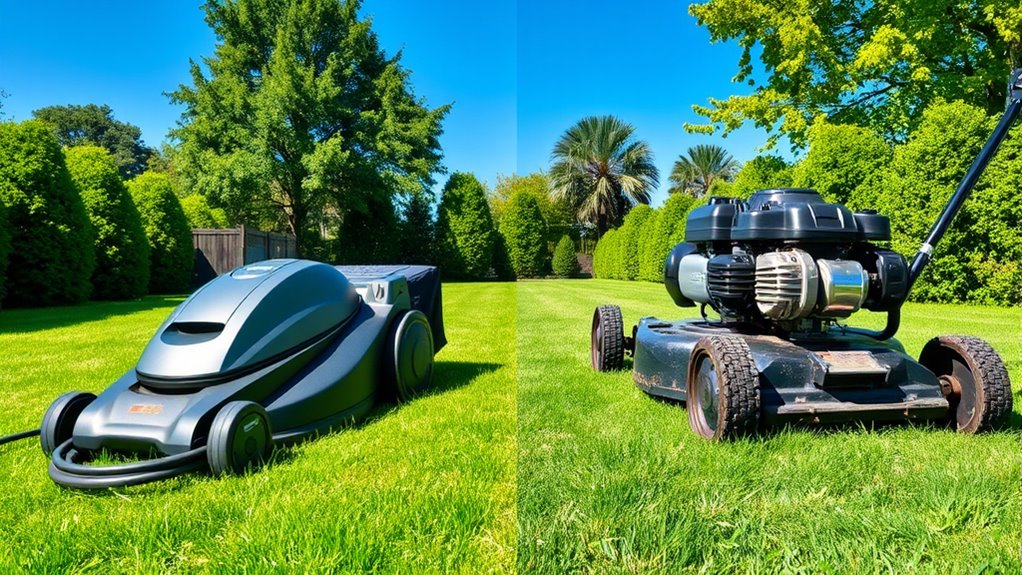
When it comes to choosing a lawn mower, you have to decide between electric and gas models, each offering distinct advantages. One of the key factors to regard is battery life, especially if you’re looking at battery-powered electric mowers. A good electric mower typically provides a runtime of about 30 to 60 minutes on a full charge, which is sufficient for small to medium-sized yards. If your lawn is larger, you might need multiple batteries or an electric mower with a longer-lasting battery. Keep in mind that battery life can vary based on the grass thickness, terrain, and the mower’s power setting. Alongside battery life, noise levels are another significant consideration. Electric mowers tend to operate much quieter than gas models, often producing noise levels around 70-85 decibels, making them less disruptive, especially if you have neighbors nearby or want to mow early in the morning or late in the evening. Gas mowers, on the other hand, can produce noise levels exceeding 90 decibels, which may require you to wear hearing protection and be mindful of noise ordinances in your area.
The quieter operation of electric mowers offers a more comfortable mowing experience and minimizes noise pollution, which is particularly beneficial if you have young children or pets. Additionally, the reduced noise levels often mean you don’t need to worry about disturbing neighbors, and you can mow at any time without feeling guilty. When considering electric mowers, it’s also helpful to evaluate the battery technology used, as advancements can significantly improve runtime and performance. When it comes to battery life, it’s important to ponder your mowing needs and whether the battery can comfortably handle your yard’s size. Many electric mowers feature quick-charging batteries, so if you have a larger lawn, you can swap out batteries or recharge quickly to finish your yard efficiently. This portability and convenience can make electric mowers especially appealing for smaller properties.
electric lawn mower with quick-charging battery
As an affiliate, we earn on qualifying purchases.
As an affiliate, we earn on qualifying purchases.
Frequently Asked Questions
How Do Electric and Gas Mowers Perform on Uneven Terrain?
Electric mowers generally handle uneven terrain well, thanks to their good traction performance and terrain adaptability. They offer smooth power delivery that helps you navigate bumps and slopes comfortably. Gas mowers, however, often excel on rugged, challenging terrain due to higher torque and stronger traction. Your choice depends on how rough your yard is—electric models suit moderate unevenness, while gas mowers are better for more demanding, uneven landscapes.
Are Electric Mowers Suitable for Commercial Landscaping?
Think of electric mowers as the quiet workhorses of commercial landscaping—you can trust them to get the job done. They’re suitable for extensive use, especially with improved battery life that keeps them running longer. Plus, their low noise levels won’t disturb clients or neighbors. While they may need more frequent recharges, their ease of maintenance and environmental benefits make them an excellent choice for many professional groundskeeping tasks.
What Safety Features Are Common in Electric Vs Gas Mowers?
You’ll find that electric mowers often feature battery safety measures like automatic shutoff and overload protection, reducing fire hazards. Gas mowers emphasize fuel safety with secure fuel caps, venting systems, and spill-proof designs. Both types usually include safety features like blade guards, emergency stop buttons, and safety switches. Always follow manufacturer instructions to guarantee safe operation, whether it’s managing battery safety or handling fuel securely.
How Do Electric and Gas Mowers Handle Thick, Tall Grass?
Electric mowers often struggle with thick, tall grass, especially if their battery life is limited, leading to shorter runtimes. Gas mowers, however, handle dense grass more efficiently due to higher torque. Plus, electric models are quieter, making them less disruptive. If you frequently mow over tough grass, a gas mower might be your best choice for power and endurance, while electric mowers excel in quieter, lighter-duty tasks.
Can Electric Mowers Be Used in Wet or Damp Conditions?
You shouldn’t use electric mowers in wet or damp conditions, as it risks electrical safety issues. Water can cause short circuits or damage to the battery and motor. Always guarantee proper electrical grounding and avoid exposing the mower to moisture. To stay safe, operate your electric mower only when it’s dry, and check the manufacturer’s guidelines on weather restrictions to prevent accidents or equipment damage.
gas powered lawn mower for thick grass
As an affiliate, we earn on qualifying purchases.
As an affiliate, we earn on qualifying purchases.
Conclusion
Ultimately, whether you choose electric or gas, your decision depends on your demands and desires. Electric mowers offer effortless operation, eco-friendly efficiency, and easy upkeep, making them ideal for everyday users. Gas mowers deliver rugged power, prolonged runtime, and proven performance for larger lawns. By weighing torque, runtime, and maintenance, you’ll find the perfect mower to match your needs, ensuring your yard stays pristine and perfect with minimal fuss and maximum satisfaction.
quiet electric mower for small yards
As an affiliate, we earn on qualifying purchases.
As an affiliate, we earn on qualifying purchases.
As an affiliate, we earn on qualifying purchases.
Halloween Picks
halloween
As an affiliate, we earn on qualifying purchases.