
TL;DR
Educational science kits give children hands-on ways to explore biology, chemistry, physics, engineering, astronomy, and more. Choose a kit by matching its activities to your child’s interests and abilities, then check safety, adult guidance, what the box includes, and whether the experiments invite questions and reuse.
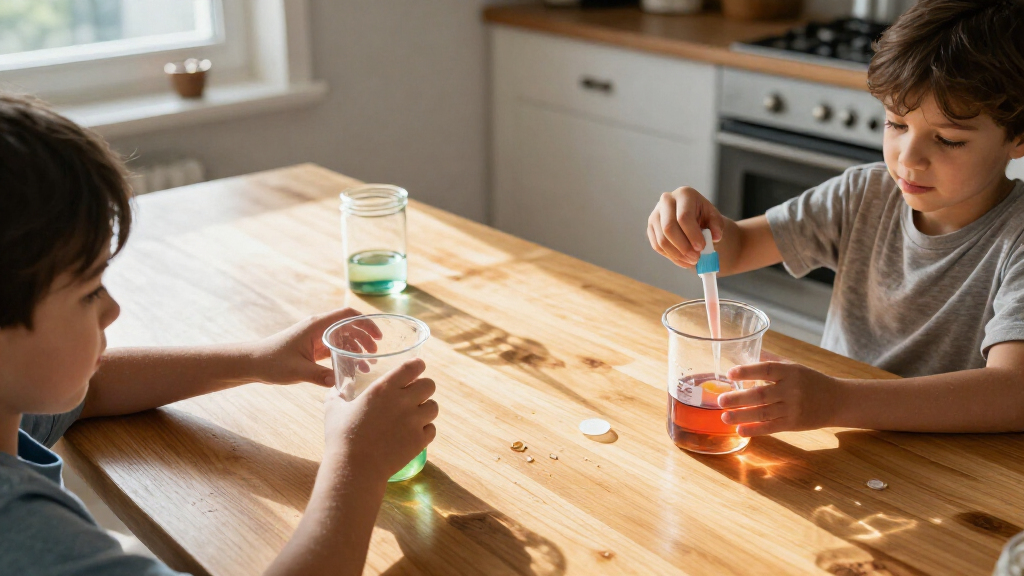
A paper volcano can erupt in a bright fizz, then leave your child with a better question than “Was that cool?”: What made it bubble? That shift from watching a result to wondering why it happened is where an educational science kit can earn its place on the kitchen table.

Prime made for students and young adults
- Fast, free delivery for dorm and study essentials
- Prime Video and Amazon Music included
- Member-only deals
These kits give children hands-on ways to explore subjects such as biology, chemistry, physics, engineering, and astronomy. You’ll learn what makes an activity educational, how to match a kit to the child in front of you, and what to check before opening the box. The goal is simple: choose something they can make, test, and talk about—without turning family time into a confusing setup job.
Match the kit to a child’s actual interests and activity style, not only its “STEM” label.
Treat the age range as guidance; check reading, motor, patience, small-part, and supervision needs.
Look for prediction, observation, explanation, and opportunities to change or repeat an activity.
Read safety warnings and materials lists, including requirements for batteries, devices, refills, and protective equipment.
Extend an experiment with a safe question, a simple observation, and one changed variable.
What makes a science kit teach more than a fun trick?
An educational science kit helps a child connect an idea to something they can build, observe, or test. A strong activity asks them to predict what will happen, notice the result, and explain it in their own words; a flashy reaction alone can entertain without teaching much.
Imagine two kits that both grow crystals. One gives you a packet, a recipe, and a finished display. The other asks your child to predict how changing the amount of water might affect crystal growth, record what they see, and compare results over several days. The second kit makes the learning visible because your child has a reason to observe closely.
Look for clear explanations alongside the activity: what is being tested, what to watch for, and why the result may occur. Conversation matters, too. Ask, “What surprised you?” or “What would you change next time?” Your child might explain that a ramp made a toy car roll farther, then test whether a steeper slope changes the distance.
“STEM” on the package describes a broad range of subjects; it does not guarantee thoughtful instruction. A useful kit gives children hands-on time and a chance to connect the activity to an idea. That can complement school lessons and free play, though it does not replace either.
Popular right now

Vitamix VX1 Professional-Grade Blender, 64 oz, Black

LG OLED evo C4 55-Inch 4K Smart OLED TV (OLED55C4PUA) with 144Hz Refresh Rate, HDMI Cable, 24-Month Protection Plan, and Streaming Bundle

Samsung 65-Inch 4K OLED Smart TV with Dolby Atmos, 120Hz Refresh Rate, and Amber Protection Bundle
As an affiliate, we earn on qualifying purchases.
How do you match a kit to your child’s age and interests?
Educational science kits work best when the child can take part in the interesting parts without facing tasks that are too hard, too easy, or unsafe. Use the listed age as a starting point, then check reading, fine motor, patience, small-part, and supervision demands.
A child who spends walks searching for beetles may light up at a nature observation kit, while a budding builder may prefer simple circuits or a bridge challenge. A younger sibling might enjoy sorting leaves and comparing shapes, even if an older child is ready to record measurements. The subject can draw a child in; the activity style helps keep them involved.
- Start with their curiosity. Notice what they already ask about: animals, rockets, magnets, machines, or the night sky.
- Read the activity instructions. Check whether children must follow several written steps, handle tiny pieces, or use tools.
- Match the challenge. Choose activities that leave room for discovery while still allowing your child to complete a satisfying task.
- Plan your role. Decide whether you can supervise, read instructions aloud, prepare materials, or help interpret results.
For example, a kit marked for ages eight and up may suit a younger child who can follow visual directions with help, but small components could make it a poor fit in a home with toddlers. The box label cannot account for every child or household. Your child’s abilities and your family’s setup tell you more.
Which kit type fits the questions your child asks?
Different science kits suit different interests and kinds of play, so the best match depends on what your child wants to explore and how they like to work. Compare the activity, likely adult role, and what happens after the first project before choosing a subject.
| Kit type | What children might do | Good fit when your child likes… | Check before buying |
|---|---|---|---|
| Nature and biology | Observe seeds, habitats, or life cycles | Animals, gardens, and outdoor discoveries | Care requirements, time to see results, and whether live materials are involved |
| Chemistry | Mix provided materials and observe changes | Color, fizz, and cause-and-effect experiments | Warnings, adult handling, protective equipment, and cleanup |
| Physics and simple machines | Test ramps, magnets, or moving parts | Building, movement, and “what if?” questions | Part size, repeatability, and room to change one variable |
| Engineering and robotics | Build a model or program a small device | Construction, puzzles, coding, and debugging | Required tools, compatible devices, batteries, and app needs |
| Astronomy | Map constellations or model orbits | Space, planets, and looking at the night sky | Weather dependence, viewing conditions, and whether a telescope is included |
For instance, a child fascinated by the moon may enjoy a star map and observation journal more than a robotics kit, even if the robot seems more elaborate. A nature kit can also be a poor match if its results take weeks and the child wants quick feedback. Pick for the child’s questions and attention span, not the package’s biggest promise.
What should you check to make a kit safe and practical?
A science kit is a better fit when you know what each activity requires before your child opens the box. Read the age guidance, warnings, material list, protective equipment notes, and supervision instructions, then check the parts against your household.
Some activities may involve heat, sharp tools, small components, chemicals, or electrical parts. In those cases, an adult may need to prepare materials, handle a step, or stay beside the child throughout. Follow the manufacturer’s directions, keep small parts away from young children, and do not substitute household chemicals or materials unless the instructions say to.
- Check the real contents: “Everything included” may still mean you need water, batteries, a smartphone, or other household supplies.
- Check the workspace: A tabletop activity may fit a small apartment; a messy project may need a protected surface and cleanup time.
- Check the instructions: Look for clear diagrams, readable steps, and notes about what an adult should handle.
- Check local labeling: Review relevant safety labels and warnings for your country.
Consider a beginner circuit kit that needs batteries and a compatible app. If you discover those requirements after gifting it, the child may have to wait while you find a device or supplies. A five-minute package check can prevent that disappointment—and helps you decide whether the supervision and cleanup fit your routine.
Will your child keep using it after the first experiment?
A kit offers more lasting value when your child can repeat an activity, change a variable, or build on the first result. Reusable pieces and open-ended challenges invite another round of questions, while single-project kits can still be worthwhile if their one activity matches a strong interest.
For example, after a child tests which paper bridge holds the most coins, invite them to change one feature: fold the paper, shorten the gap, or use a different shape. They may discover that a small change makes the bridge sag less. That follow-up uses the same materials but gives the child a fresh problem to solve.
Check whether a kit includes several activities, whether components can be reused, and whether experiments require refills. Some kits adapt well to common household materials, while others rely on specific parts. The package’s activity count does not tell you how long each experiment takes or whether your family will want to repeat it.
Digital companions can add videos or step-by-step guidance, especially when a diagram is hard to follow. They also bring questions about device compatibility, account creation, privacy, and screen time. If the app fails or the child loses interest in it, will the printed instructions still make the activity useful? A kit that works offline may suit families who want more hands-on building and less screen dependence.
How can you turn one experiment into a useful learning habit?
You can get more learning from a science kit by giving your child time to predict, observe, and explain, rather than rushing from instruction to result. A short conversation after the activity can turn a fizzing reaction or wobbly tower into a question they want to investigate.
- Ask for a prediction. “Which ramp do you think will send the car farther?” gives your child a reason to look closely.
- Let them do the safe parts. They can pour, sort, build, or record while you handle steps the instructions reserve for adults.
- Pause to observe. Invite them to describe what changed, using a drawing or a few words if writing feels like work.
- Change one thing. Test a different ramp height or arrangement, following the kit’s safety directions.
- Connect the result. Ask where the same idea might appear in a playground, garden, or toy.
Suppose the first paper helicopter spins quickly, then a shorter rotor makes it fall faster. Your child can sketch both designs and explain what changed. They do not need to use technical terms to think like a scientist; careful noticing and a fair comparison are a strong start.
Keep the tone curious rather than turning each activity into a quiz. If your child gives an unexpected answer, ask what they noticed. The conversation can matter as much as the finished model, especially when the experiment does not work as planned.
How do you choose a good gift without paying for unused extras?
A good science-kit gift matches a child’s interest, your available space, and the kind of adult help their activities need. Price alone cannot tell you whether the kit offers useful learning, because the total cost may include refills, batteries, protective equipment, or a compatible device.
Imagine you are buying for a nine-year-old who loves building but gets frustrated by long instructions. A simple engineering challenge with clear pictures and reusable pieces may suit them better than a complex robotics set with an app account and many setup steps. For a child who enjoys slow outdoor discoveries, a seed-growing kit could be a better match—provided the family is happy to water and wait.
Before buying, compare the number and quality of activities, included materials, setup and cleanup time, storage needs, and reuse. Look closely at environmental claims, too: a kit about renewable energy or ecology should have activities that actually explore those ideas, not just green-colored packaging. Product availability and features change, so check current descriptions and safety notices at the time you shop.
For siblings of different ages, choose activities that can be adapted and supervise closely when small parts or age-specific materials are involved. A kit can make a thoughtful gift, but the best surprise is one the child can start safely and the household can realistically support.
Frequently Asked Questions
What age is a science kit suitable for?
Start with the recommended age, then check reading demands, small parts, tools, patience, and supervision instructions. Children develop at different rates, so the activity details matter more than the number on the box alone.
Which science kit is best for my child?
Choose a subject your child already asks about, then compare activity clarity, safety, included materials, and opportunities to explore. A nature kit may suit an animal lover better than a robotics set, even if the robotics box looks more elaborate.
Are science kits educational or just entertaining?
They can be both. Look for explanations of the science, prompts to predict and observe, and chances to discuss why a result occurred; a dramatic reaction without those elements may offer less learning.
Do children need adult supervision?
Many kits need some adult involvement, especially for younger children or activities with heat, sharp tools, small parts, chemicals, or electrical components. Follow the specific instructions and let your child take on the safe steps they can manage.
Are all the materials included in a science kit?
No. Check the package for required household supplies, batteries, refills, protective equipment, or a compatible phone or tablet. “Everything included” may not cover basics such as water.
Can one kit work for siblings of different ages?
Sometimes, especially when activities allow different levels of challenge and an adult can supervise. Check for small parts and materials intended for older children, and keep them out of a younger sibling’s reach.
Are app-based science kits worth it?
An app can show a tricky step or add interactive instructions, but check device compatibility, account requirements, privacy details, and screen time. Consider whether the core activity remains useful if the app is unavailable.
Conclusion
Choose the kit that fits your child’s curiosity, abilities, and your household’s time for setup and supervision. Then give the activity room to breathe: let them predict, notice, and ask what might happen if they change one thing.
The model may end up crooked, the crystals may grow unevenly, and the volcano may leave a fizzy ring on the table. If your child comes away with a new question, the kit has done something worth keeping.