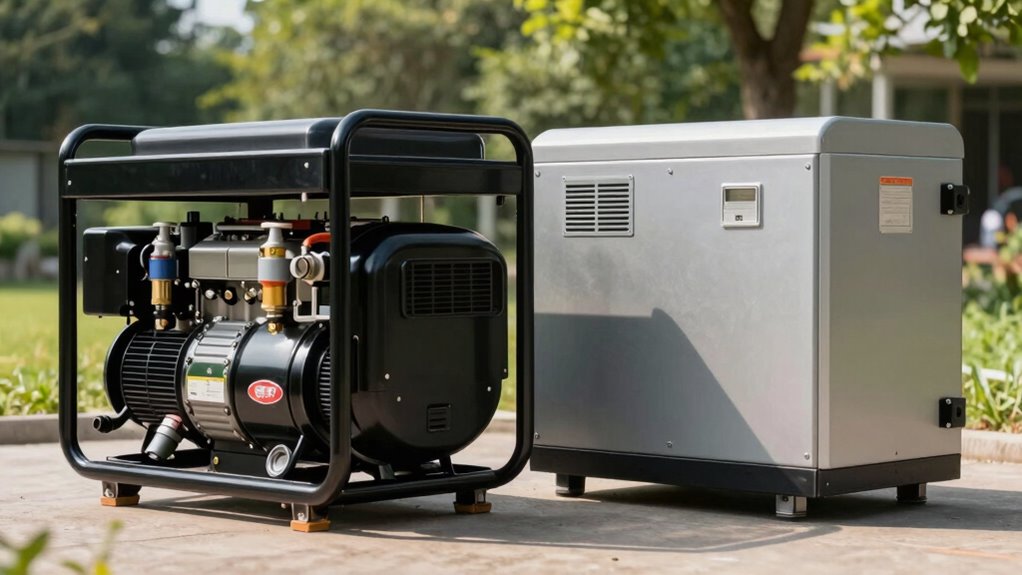

When switching between gas and propane on a dual fuel generator, you’ll notice differences in power output, fuel efficiency, and storage. Gasoline offers more immediate power and easier refueling, but it’s less efficient and has a shorter shelf life. Propane burns cleaner, lasts longer in storage, and provides longer run times, though it may deliver slightly less peak power. Understanding these changes helps you optimize performance—continue exploring to uncover all the details.

Get school and study supplies delivered free — and shop member deals
- Fast, free delivery on millions of items
- Access to Prime Big Deal Days deals on October 6–7
- Prime Video, Amazon Music and more included
Key Takeaways
- Power output is higher with gasoline, ideal for peak demands, while propane offers cleaner, more efficient burning for longer runtimes.
- Switching between fuels is straightforward, allowing adaptability based on power needs and fuel availability.
- Gasoline provides quick refueling but has a shorter shelf life; propane lasts longer and is easier to store safely.
- Gasoline fuels are more widely available but require strict handling, whereas propane is safer, less volatile, and suitable for extended storage.
- Environmental impact favors propane’s cleaner burn, reducing emissions compared to gasoline.
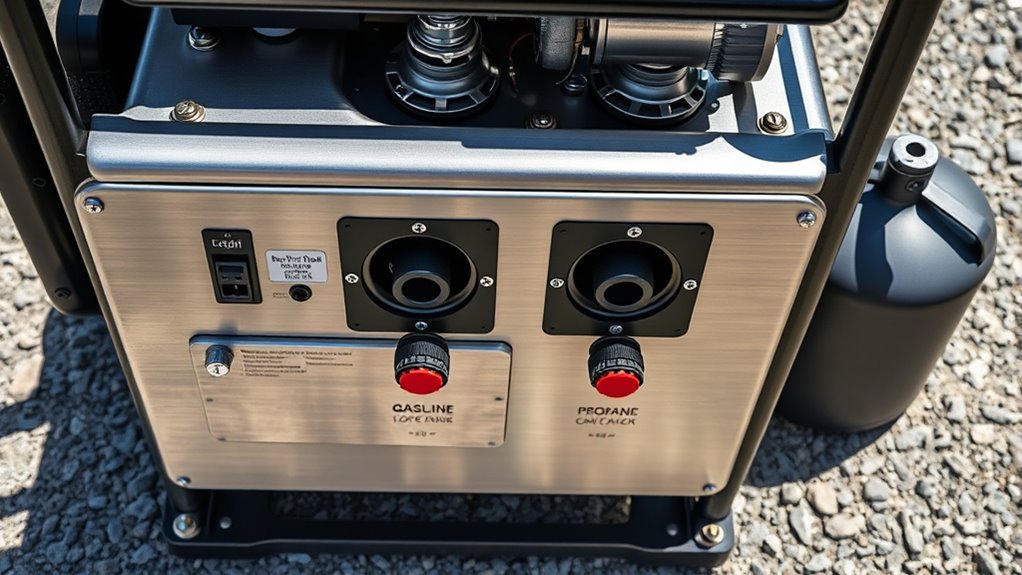
Have you ever wondered how to guarantee reliable power during outages or outdoor events? Dual fuel generators are an excellent solution because they give you the flexibility to switch between gasoline and propane, ensuring you’re never left powerless. Understanding how these two fuel types differ, especially in regards to fuel efficiency and storage requirements, helps you make an informed choice that suits your needs. When running on gasoline, dual fuel generators tend to deliver higher power output, making them ideal for heavy-duty tasks or prolonged use. Gasoline is widely available and easy to refuel, which adds to its convenience. However, it’s less fuel-efficient over time, especially when used frequently or for extended periods, because it tends to evaporate and degrade faster. This means you might need to stockpile larger quantities to sustain longer outages or events, which can take up more storage space. Gasoline also has stricter storage requirements; it needs to be kept in approved containers away from heat sources, and it has a shorter shelf life compared to propane, often lasting only about a month before it begins to deteriorate. This can be a hassle if you’re planning for long-term storage or emergencies. Additionally, fuel storage considerations are crucial for maintaining the longevity and safety of your supplies. On the other hand, propane offers notable advantages in fuel efficiency and storage. Propane burns cleaner and more efficiently over time, which means you get more usable energy from each tank. This can translate into longer run times with less fuel, an important factor if you’re trying to maximize your power supply during outages. Plus, propane has a longer shelf life—often up to a decade—making it easier and safer to store in larger quantities without worrying about deterioration. Its storage requirements are also less strict; you can keep propane tanks outside in well-ventilated areas without the same risk of evaporation or spoilage that gasoline poses. This makes propane a practical choice for those who want to keep emergency supplies on hand without frequent replacement or special handling. Switching between gasoline and propane on a dual fuel generator is straightforward, allowing you to adapt based on availability, cost, or environmental considerations. Gasoline might be your go-to during peak power needs or when quick refueling is necessary, while propane shines when you prefer longer storage and cleaner burning. Ultimately, understanding these differences helps you optimize your power setup, ensuring you’re prepared for any situation. Whether prioritizing fuel efficiency or storage convenience, dual fuel generators give you the versatility to match your specific needs, making sure you stay powered up no matter what.
dual fuel generator gasoline propane
As an affiliate, we earn on qualifying purchases.
As an affiliate, we earn on qualifying purchases.
Frequently Asked Questions
How Does Fuel Choice Affect Generator Noise Levels?
Choosing between gas and propane affects your generator’s noise levels because propane generally provides quieter operation due to better combustion and less vibration. This fuel choice enhances noise reduction, making it more suitable for noise-sensitive environments. Additionally, propane often offers improved fuel efficiency, meaning you can run your generator longer with less noise. So, if quiet operation is a priority, propane is typically the better option for minimizing noise levels.
Are Dual Fuel Generators More Environmentally Friendly?
Yes, dual fuel generators are more environmentally friendly because they offer better fuel efficiency and help you meet stricter emission standards. By switching between gas and propane, you can reduce harmful emissions, especially when using propane, which burns cleaner. This flexibility allows you to lower your carbon footprint and adhere to eco-friendly practices, making dual fuel generators a smarter choice for environmentally conscious users.
Can I Switch Fuels During Operation?
Switching fuels during operation is generally not recommended, as it’s like changing the sails mid-journey. For safety considerations, most dual fuel generators require you to turn off the engine, switch the fuel source, and restart the unit. Fuel switching isn’t designed for quick changes, so make certain you follow manufacturer guidelines closely to prevent damage or hazards. Always prioritize safety and consult your manual before attempting any fuel switch during operation.
What Maintenance Differences Exist Between Gas and Propane?
You’ll notice that maintenance differs mainly in fuel storage and ignition system upkeep. Gas requires regular checks for moisture and contaminants, while propane storage needs secure, leak-proof tanks. The ignition system on a propane generator often lasts longer because it burns cleaner, reducing carbon deposits. You should inspect fuel lines frequently for leaks and guarantee proper storage to maintain ideal performance, especially when switching between fuels.
How Does Fuel Type Impact Generator Lifespan?
You might find that fuel type influences your generator’s lifespan more than you expect. Propane often leads to longer durability because it burns cleaner, reducing wear and tear, while gas may cause more deposits that accelerate aging. With better fuel efficiency and easier storage considerations, propane could extend your generator’s life. But, if stored improperly, both fuels can diminish lifespan, so choose wisely and maintain carefully for lasting performance.
best portable dual fuel generator
As an affiliate, we earn on qualifying purchases.
As an affiliate, we earn on qualifying purchases.
Conclusion
Now that you know the differences between gas and propane, you can confidently choose the right dual fuel generator for your needs. Remember, whether you’re powering your castle or your modern-day cottage, the right fuel can make all the difference. Just like a trusty steed from yore, your generator will serve you faithfully—no need to break out the quill or parchment. With this knowledge, you’re ready to face any blackout or adventure ahead.
dual fuel generator fuel efficiency
As an affiliate, we earn on qualifying purchases.
As an affiliate, we earn on qualifying purchases.
dual fuel generator storage tanks
As an affiliate, we earn on qualifying purchases.
As an affiliate, we earn on qualifying purchases.
Fall Picks
fall essentials
As an affiliate, we earn on qualifying purchases.