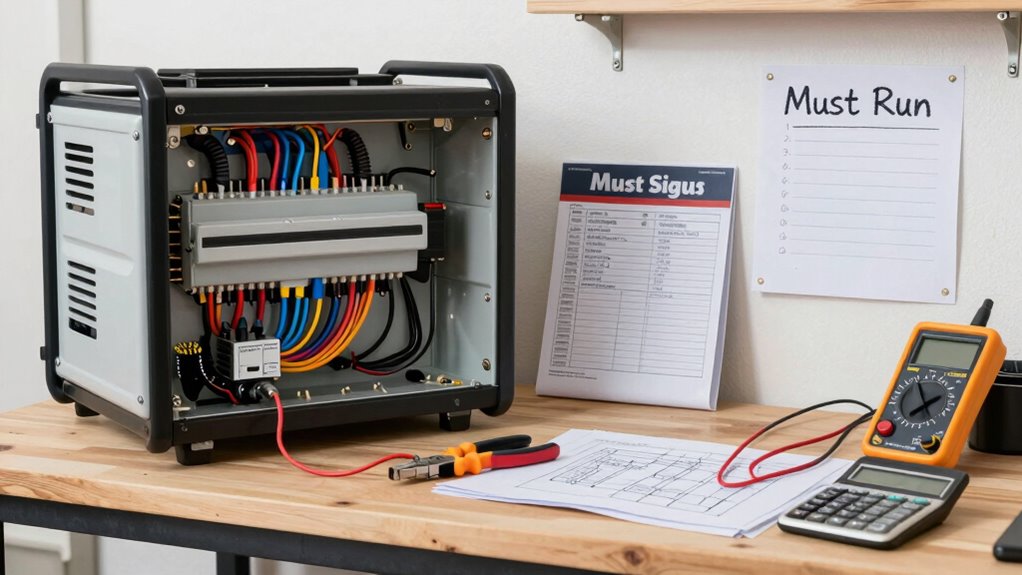

To size a home backup generator using the “must run” list method, start by listing all essential appliances and devices you need powered during an outage. Sum their running wattages plus any startup surges, then add a safety margin for future needs. Guarantee the generator is fuel-efficient and isn’t too loud for your area. Getting this right saves money, avoids overloads, and keeps your essentials running smoothly—discover how to perfect your calculation for reliable backup power.

Get school and study supplies delivered free — and shop member deals
- Fast, free delivery on millions of items
- Access to Prime Big Deal Days deals on October 6–7
- Prime Video, Amazon Music and more included
Key Takeaways
- List all essential appliances and devices to determine their total running wattage.
- Include startup surge wattages for appliances like refrigerators and HVAC systems.
- Add a safety margin (typically 10-20%) to accommodate future needs and prevent overloads.
- Match the total “must run” wattage with a generator that offers optimal fuel efficiency and noise levels.
- Consider future power needs and startup surges to ensure the generator can handle peak loads reliably.
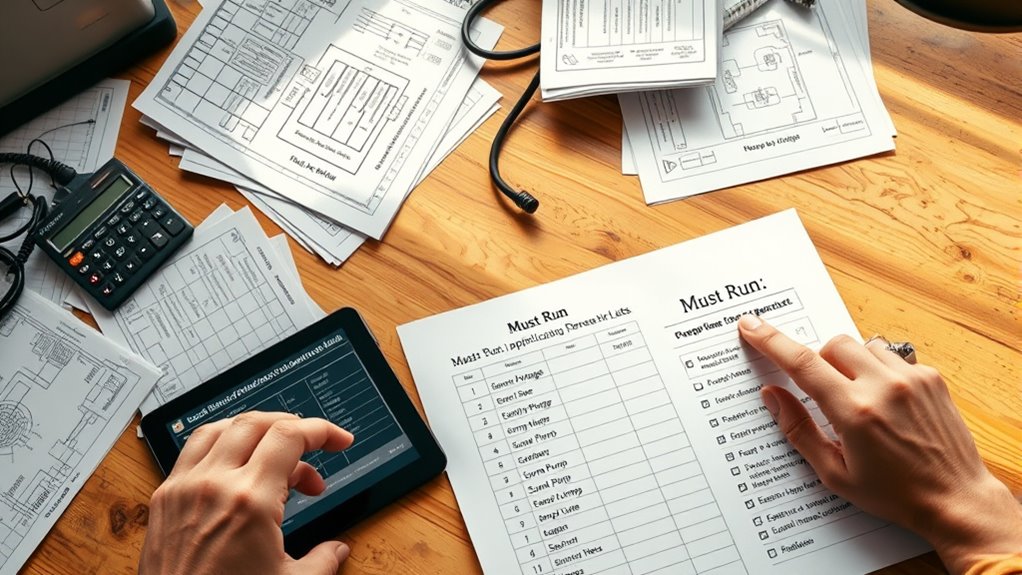
Choosing the right generator size for your home backup system is essential to guarantee your essential appliances and devices stay powered during an outage. A properly sized generator ensures you don’t waste money on unnecessary capacity or struggle with insufficient power when you need it most. When selecting a generator, you should consider not only the total wattage of your “must run” appliances but also factors like fuel efficiency and noise levels. These elements influence both the operational costs and your comfort during extended outages.
Fuel efficiency is critical because it directly impacts how long your generator can run on a given amount of fuel. A generator that matches your needs precisely will consume less fuel, saving you money and reducing the frequency of refueling. Larger generators are often less fuel-efficient on a per-watt basis, wasting energy when powering small loads. Conversely, a generator that’s too small won’t handle your essential appliances, leading to overloads or unreliable power. By carefully calculating your critical load—things like refrigerators, sump pumps, lights, and medical devices—you can choose a generator that strikes the right balance between capacity and fuel consumption. Proper sizing also helps prevent unnecessary wear and tear, extending the lifespan of your generator.
Matching generator size to your needs saves fuel and ensures reliable power during outages.
Noise levels are another key consideration. A generator that’s too loud can become a significant nuisance, especially if your home is close to neighbors or if you plan to run it during quiet hours. Many modern generators are designed with noise-reducing features, making them more suitable for residential environments. When sizing your generator, look for models that specify their noise output in decibels. This way, you can select a unit that not only meets your power needs but also maintains a peaceful environment. Proper placement—such as installing the generator on a sound-insulating pad or away from windows—further helps minimize noise disturbance.
In addition to ensuring your chosen generator can handle your “must run” list, keep in mind that oversizing can lead to unnecessary fuel consumption and higher costs, while undersizing risks leaving critical appliances unpowered. To find the ideal size, list all appliances you want to run during an outage and note their wattage. Add these figures together, and include a margin for startup surges and future needs. This approach helps you avoid overbuying and ensures your generator operates efficiently and quietly, providing reliable backup power when you need it most.
Ultimately, selecting the right generator size involves balancing power capacity with fuel efficiency and noise considerations. This careful approach ensures you’ll have dependable, cost-effective backup power that minimizes disruption and keeps your essential appliances running smoothly during any outage.
home backup generator for essential appliances
As an affiliate, we earn on qualifying purchases.
As an affiliate, we earn on qualifying purchases.
Frequently Asked Questions
How Do I Calculate Starting Wattage for My Appliances?
To calculate starting wattage for your appliances, you first identify their running wattage and then add the appliance surge wattage, which is the extra power needed during startup. Check the appliance labels or manuals for surge and running wattage, then perform a wattage calculation. This helps you determine the generator size you need, ensuring your appliances can handle their surge wattage without overloads during startup.
Can I Use a Smaller Generator for Occasional Use?
Think of a smaller generator like a compact backpack—perfect for occasional trips. It provides portable power efficiently, saving fuel while handling your essential appliances. But, if you suddenly need to power more devices, it might struggle, just like a tiny pack can’t carry everything. For infrequent use, a smaller generator works well and keeps fuel costs low. However, for bigger needs, upgrading guarantees reliable backup without overloading your portable power source.
What Are Safety Considerations When Sizing a Generator?
When sizing a generator, prioritize electrical safety by ensuring proper grounding and avoiding overloads. You should also consider safe fuel storage—store fuel in containers designed for that purpose, away from heat or flames. Always follow manufacturer guidelines, use transfer switches correctly, and keep a fire extinguisher nearby. Regularly inspect wiring and connections to prevent electrical hazards, and adhere to local codes to protect yourself and your home.
How Does Inverter Technology Affect Generator Sizing?
Inverter technology influences your generator sizing by offering higher inverter efficiency and cleaner waveform quality. While you may need a smaller generator with inverter technology due to its efficiency, you must also consider peak power demands. The high-quality waveform reduces stress on sensitive electronics, allowing you to size your generator more precisely. Ultimately, inverter tech helps you balance size, efficiency, and safeguarding your home’s critical devices.
Is It Better to Oversize or Undersize a Backup Generator?
It’s better to slightly oversize your backup generator for effective load management and backup planning. Oversizing ensures your generator can handle all essential loads during outages without strain, providing reliable power. Undersizing risks overloading the system, leading to frequent shutdowns. By carefully evaluating your “must run” list, you can choose a generator that balances capacity and efficiency, making your backup power system more dependable and easier to manage during emergencies.
quiet residential portable generator
As an affiliate, we earn on qualifying purchases.
As an affiliate, we earn on qualifying purchases.
Conclusion
By following the “must run” list method, you’ll confidently select a generator that keeps your home safe and powered through any storm. Remember, choosing the right size isn’t just a task—it’s your lifeline in emergencies. Don’t settle for a generator that’s barely enough; aim for one that could power a small city! With this method, you’ll be prepared for anything, turning your home into a fortress against the unpredictable forces of nature.
As an affiliate, we earn on qualifying purchases.
generator noise reducing enclosure
As an affiliate, we earn on qualifying purchases.
As an affiliate, we earn on qualifying purchases.
Halloween Picks
halloween
As an affiliate, we earn on qualifying purchases.