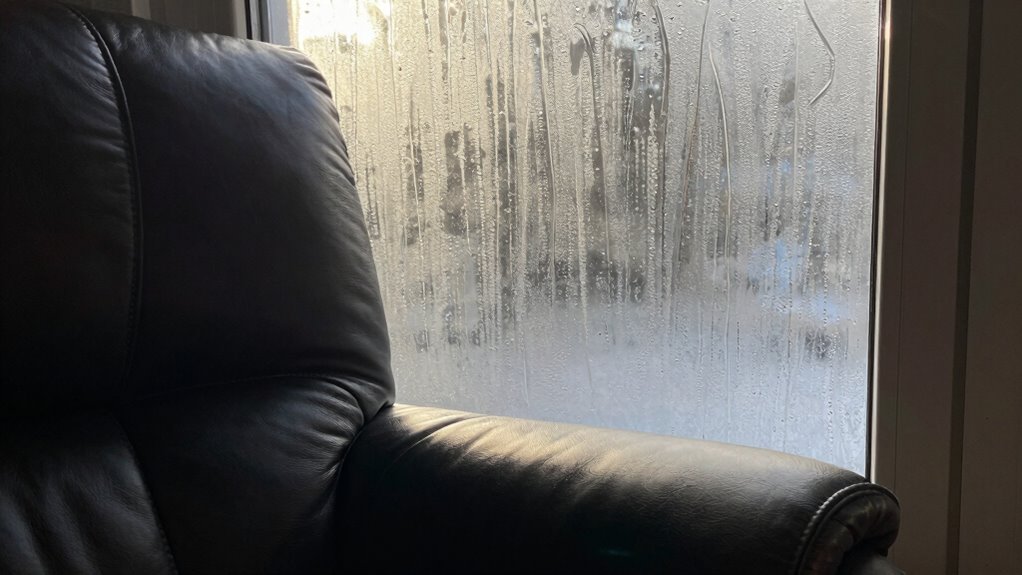
When you place large furniture directly against your windows, it blocks airflow and traps warm, moist air near the glass. This prevents proper circulation and allows humidity to settle, creating ideal conditions for condensation. Additionally, the furniture can act as a thermal bridge, speeding up cooling of the window surface. By adjusting furniture placement, you help reduce moisture buildup. Stay tuned to learn more about how to prevent window condensation effectively.
Play games included with Prime
Start a Prime free trial and play with Amazon Luna on your devices.
As an affiliate, we earn on qualifying purchases.
Key Takeaways
- Furniture placed against windows obstructs airflow, trapping warm, moist air near the glass surface.
- Large furniture near windows creates thermal bridges, accelerating window cooling and condensation.
- Obstructed airflow reduces heat transfer, increasing the chance of condensation on cooler window surfaces.
- Overcrowding with furniture near windows prevents proper ventilation, raising indoor humidity levels.
- Proper furniture placement improves airflow, reduces moisture buildup, and minimizes window condensation risks.
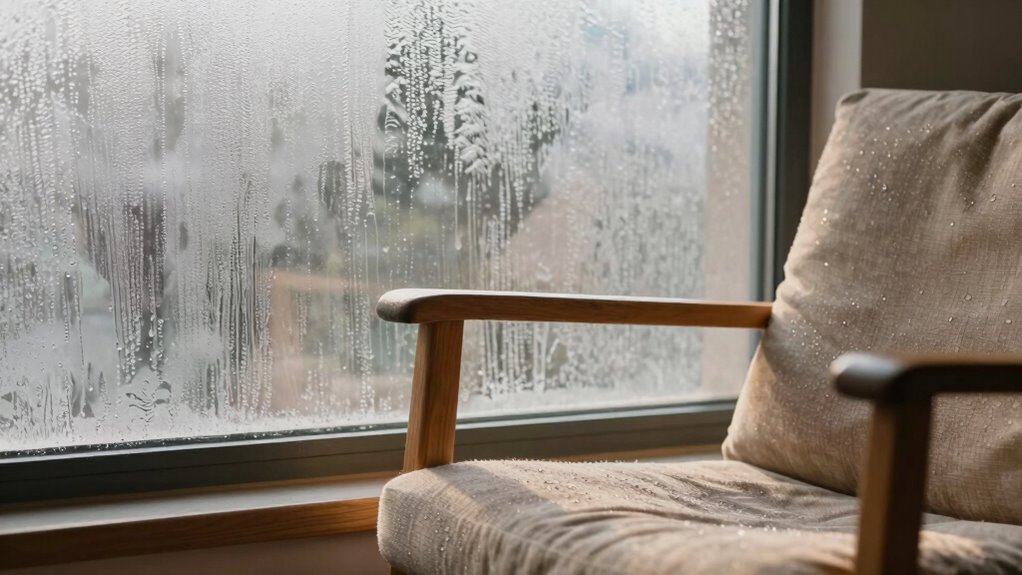
If you notice condensation forming on your windows, it’s often a sign that your indoor humidity levels are too high or that there’s poor airflow in your space. One common culprit behind this issue is furniture placement. When you position large furniture pieces directly against or near your windows, you may unintentionally create conditions that promote condensation. This happens because furniture can obstruct airflow, trapping warm, moist air close to the glass surface. Without proper circulation, the warm air meets the cooler window, leading to water vapor turning into droplets.
Understanding how thermal bridges contribute to condensation helps you see why furniture placement matters. Thermal bridges occur when heat travels through materials that conduct heat more efficiently, like a piece of furniture or a wall stud, creating a pathway for heat loss. When furniture blocks airflow around windows, it can intensify these thermal bridges by preventing the natural movement of warm air across the room’s surface. As a result, the window’s surface cools more rapidly, increasing the likelihood of condensation. To control humidity and prevent this, you need to ensure good airflow and reduce thermal bridging by placing furniture thoughtfully. Additionally, being aware of thermal bridging can help you identify other sources of heat loss in your home and improve overall energy efficiency.
Thermal bridges from furniture block airflow, cooling windows faster and increasing condensation risk. Proper placement reduces moisture buildup.
Proper humidity control is essential. If your indoor humidity levels are consistently high, it’s more likely that condensation will form on your windows, especially when airflow is restricted by furniture. Using dehumidifiers or increasing ventilation helps keep humidity in check. Also, avoid overcrowding your space with bulky furniture near windows, as this can trap moist air and block the natural movement of air currents, making it harder for your home to dry out excess moisture. Recognizing the importance of air circulation can help you optimize your space for better moisture management.
You can also improve airflow by rearranging your furniture. Keep large pieces away from windows to allow air to circulate freely around the glass. Consider placing sofas or bookshelves a few inches away from the window frame to prevent moisture buildup. Additionally, installing vents or using fans can help promote better circulation, reducing localized moisture and preventing condensation. Recognizing the role of thermal bridges in heat transfer can help you better understand how to optimize your space for improved energy efficiency and moisture control.
window condensation prevention fan
As an affiliate, we earn on qualifying purchases.
As an affiliate, we earn on qualifying purchases.
Frequently Asked Questions
How Can I Prevent Furniture From Causing Condensation Issues?
To prevent furniture from causing condensation issues, make sure you maintain proper humidity control in your space. Use a dehumidifier if needed, and avoid overwatering indoor plants or drying clothes indoors. Additionally, guarantee good furniture ventilation by not blocking airflow around your furniture. Keep windows open slightly when possible to allow moisture to escape. Proper humidity levels and good airflow minimize the chances of condensation forming on windows and furniture.
Does Furniture Material Affect Condensation Formation?
Yes, furniture material affects condensation formation. For condensation prevention, avoid placing furniture made of absorbent materials like fabric or unsealed wood close to windows, as they trap moisture and increase humidity. Opt for materials like metal or sealed wood that resist moisture buildup. Proper furniture placement can help minimize condensation, and choosing the right materials plays a vital role in maintaining a dry, comfortable environment in your space.
Can Moving Furniture Improve Indoor Humidity Levels?
Yes, moving furniture can improve indoor humidity levels by enhancing humidity control. When you reposition furniture away from windows or vents, you allow better air circulation, reducing trapped moisture that causes condensation. Proper furniture positioning helps maintain a balanced humidity level, preventing excess moisture buildup and improving overall comfort. So, rearranging your furniture strategically is a simple yet effective step to manage indoor humidity and minimize window condensation.
Are Certain Furniture Placements Better for Reducing Condensation?
Furniture placement is like a puzzle piece, fitting into your room’s ventilation strategies to prevent condensation. Keep furniture away from windows to allow air circulation, reducing moisture buildup. Avoid blocking vents or radiators, which can trap humidity near windows. Proper furniture arrangement promotes better airflow, helping to keep windows dry. By strategically placing furniture, you can minimize condensation and maintain a more comfortable, moisture-free environment.
How Does Furniture Insulation Impact Window Condensation?
Furniture insulation impacts window condensation by reducing thermal bridging, which occurs when furniture conducts heat away from the window, lowering its temperature. Properly spaced furniture minimizes moisture trapping against the window surface, preventing cold spots where condensation forms. When you position furniture away from windows, you help maintain better air circulation and temperature balance, reducing the chances of condensation. This simple adjustment can make a significant difference in your home’s comfort and moisture control.
As an affiliate, we earn on qualifying purchases.
Conclusion
So, next time you notice condensation on your windows, consider where your furniture is placed. Moving furniture away from cold windows can reduce moisture buildup and prevent mold. Did you know that improper furniture placement can increase indoor humidity by up to 15%? Small adjustments make a big difference in keeping your home comfortable and dry. Pay attention to your space, and you’ll prevent condensation issues before they start, ensuring a healthier environment for you and your family.
As an affiliate, we earn on qualifying purchases.
ventilation fan for indoor air flow
As an affiliate, we earn on qualifying purchases.
As an affiliate, we earn on qualifying purchases.
Flea & tick season Picks
flea and tick prevention
As an affiliate, we earn on qualifying purchases.