
TL;DR

Prime made for students and young adults
- Fast, free delivery for dorm and study essentials
- Prime Video and Amazon Music included
- Member-only deals
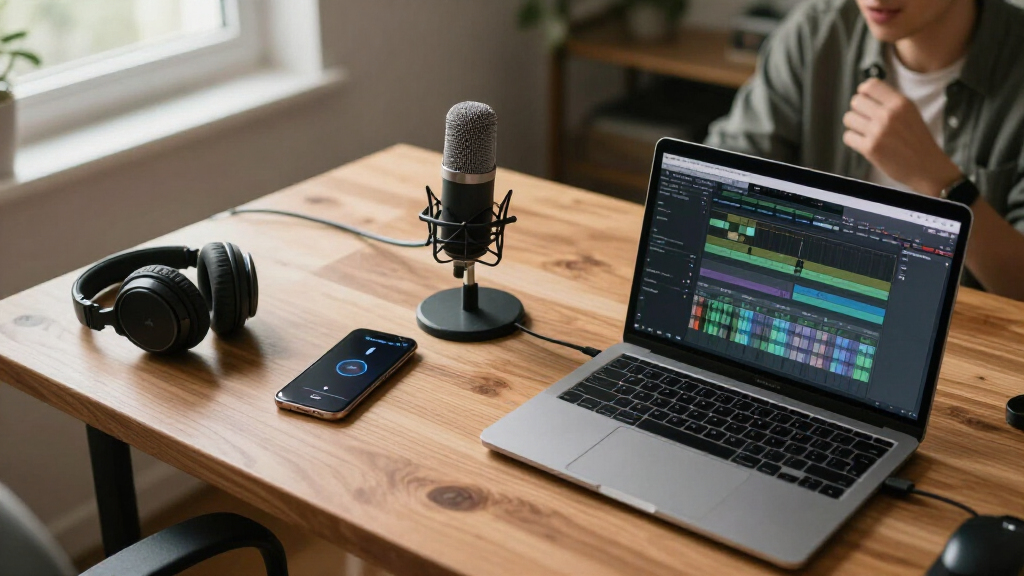
In 2026, AI-driven innovations are significantly shaping USB microphone design and functionality. These advancements improve sound clarity, noise reduction, and user experience, making microphones more versatile and accessible for various users.
In 2026, artificial intelligence is becoming a core component of USB microphone technology, leading to smarter, more adaptable devices. Industry experts confirm that AI integration enhances sound quality, noise suppression, and user controls, marking a significant shift in the market. For a detailed overview, see the original analysis of top USB microphones.
Multiple manufacturers have launched AI-enabled USB microphones this year, emphasizing features such as automatic noise cancellation, adaptive sound profiles, and real-time audio processing. These models leverage machine learning algorithms to optimize audio capture based on environment and user preferences, offering a level of customization previously unavailable in standard USB mics. Learn more about best USB microphones in 2026.
For example, Logitech introduced the Blue Yeti X AI, which uses AI to analyze ambient noise and adjust gain automatically, improving clarity during live streaming and recording. Similarly, FIFINE released the K699B AI, integrating AI-driven noise reduction that adapts to changing background sounds, making it ideal for remote work and content creation. These innovations are driven by advances in embedded AI processors and improved software interfaces, enabling real-time adjustments without user intervention. For an in-depth review, see the top USB microphone guide.
Industry analysts note that AI features are increasingly becoming standard even in mid-range models, reflecting consumer demand for high-quality, hassle-free audio. The trend also aligns with broader developments in smart audio devices, where AI enhances usability and performance across various platforms.
The 9 picks
- 1
 Logitech Blue Yeti USB Microphone for PC, Mac, Gaming, Recording, Streaming,…View on Amazon →
 - 2
 NEEWER UM01 AI Noise Canceling USB Microphone, Cardioid Condenser with RGB Li…View on Amazon →
 - 3
 TONOR Conference USB Microphone, Omnidirectional Condenser PC Mic G11View on Amazon →
 - 4
 Aokeo AK-10 USB/XLR Dynamic Desktop Microphone for Gaming, Podcast, Streaming…View on Amazon →
 - 5
 FIFINE K669B USB Microphone, Condenser Recording Mic for Vocals, MeetingsView on Amazon →
 - 6
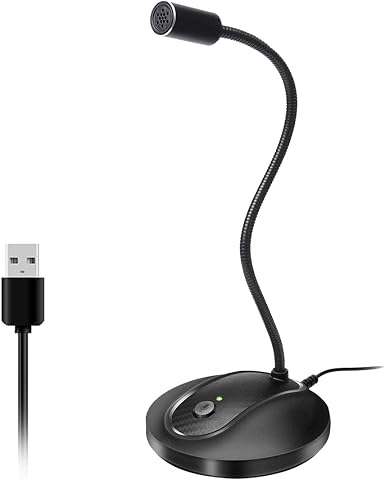 USB Microphone with Adjustable Gooseneck, Mute Button, and Noise-Canceling Te…View on Amazon →
 - 7
 CMTECK Conference USB Microphone, Plug-and-Play Omnidirectional Desktop MicView on Amazon →
 - 8
 CMTECK USB Computer Microphone G009, Noise-Cancelling Desktop Mic for PC/Lapt…View on Amazon →
 - 9
 Plug & Play USB Computer Microphone with Flexible Gooseneck and Mute ButtonView on Amazon →
AI’s Impact on Microphone Performance and User Experience
The integration of AI into USB microphones in 2026 represents a major leap forward in audio technology, offering users significantly improved sound quality and ease of use. For streamers, podcasters, and remote workers, this means clearer communication and less need for manual adjustments. AI-driven noise suppression and adaptive sound profiles reduce background distractions and improve overall audio fidelity, which is critical in professional and casual settings alike.
Moreover, these advancements lower the barrier to entry for high-quality audio recording, enabling even novice users to produce professional-sounding content. As a result, AI-enhanced USB microphones are poised to reshape the landscape of digital communication, content creation, and live streaming, making high-end audio accessible to a broader audience.
Evolution of USB Microphones and AI Integration
USB microphones have grown in popularity over the past decade, driven by the rise of remote work, podcasting, and live streaming. Traditionally, improvements focused on hardware features like multiple pickup patterns, RGB lighting, and better build quality. However, in recent years, software-based enhancements, especially AI, have started to play a pivotal role.
Industry sources indicate that the first AI features appeared in high-end models around 2023, primarily offering noise reduction and automatic gain control. By 2025, AI began to be integrated into mid-range devices, with manufacturers emphasizing real-time audio optimization and user-friendly controls. The transition to AI-powered microphones reflects broader trends in smart device development, where machine learning enables devices to adapt intelligently to user environments and preferences.
This year’s product launches confirm that AI is now a standard feature in many USB microphones, signaling a shift from purely hardware-based improvements to smarter, more adaptable devices.
Unresolved Questions About AI Microphone Capabilities
While AI features are rapidly advancing, it remains unclear how these technologies will evolve in terms of reliability and user control. Some experts question whether AI can fully adapt to highly dynamic or unpredictable environments without manual adjustments. Additionally, concerns about privacy and data security related to AI processing in microphones are still being addressed, with manufacturers working to ensure user data is protected.
It is also uncertain how widespread adoption will be across different market segments, especially among budget models, and whether AI features will be standardized or remain proprietary to high-end devices.
Future Developments and Market Adoption of AI USB Mics
Manufacturers are expected to continue refining AI algorithms for better accuracy and adaptability, with upcoming models promising even more seamless integration of noise suppression, sound customization, and environmental awareness. Industry analysts predict that by late 2026, AI will be a standard feature in most USB microphones, with some models offering fully autonomous operation.
Additionally, software updates and cloud-based AI processing could further enhance device capabilities over time. Consumers and professionals can anticipate a broader range of options tailored to specific needs, from casual content creation to professional broadcasting.
Key Questions
How does AI improve the sound quality of USB microphones?
AI enhances sound quality by automatically reducing background noise, adjusting gain dynamically, and optimizing audio profiles based on environment and user preferences, resulting in clearer, more natural recordings.
Are AI features in USB microphones reliable for professional use?
While AI-driven features are improving rapidly, their reliability varies by model and environment. High-end models tend to offer more consistent performance, but some users may still prefer manual controls for critical recording sessions.
Will AI make USB microphones more expensive?
Initially, AI features may add to the cost, but as technology matures and becomes standard, prices are expected to stabilize. Budget models may also incorporate basic AI capabilities to stay competitive.
Can AI in USB microphones replace manual adjustments entirely?
AI can significantly reduce the need for manual adjustments, but for certain professional applications, users may still prefer manual controls to fine-tune audio to specific standards.
What privacy concerns are associated with AI-enabled USB microphones?
AI processing often involves data analysis that could raise privacy issues. Manufacturers are working to ensure data security and user privacy, but consumers should review privacy policies before purchase.
Source: ThorstenMeyerAI.com
Halloween Picks
halloween
As an affiliate, we earn on qualifying purchases.





![Terence Tao: Math 2.0 [Pdf]](https://micronomicon.com/wp-content/uploads/2026/10/terence-tao-math-2-0-pdf-featured-260x140.jpg)