
A C-wire provides a continuous power source from your HVAC system to your smart thermostat, preventing power errors and ensuring reliable operation. Without it, your thermostat relies on wireless power or draws energy from other wires, which can cause inconsistent performance and frequent battery changes. Installing a C-wire or using adapters can solve these issues. Keep exploring to discover how a proper C-wire setup can boost your thermostat’s reliability and performance.
Key Takeaways
- The C-wire supplies continuous power, preventing smart thermostats from experiencing power errors due to insufficient energy.
- Without a C-wire, thermostats often rely on power-stealing methods that can be unreliable, leading to errors.
- Installing a C-wire ensures a stable power source, reducing the likelihood of frequent power errors and reset issues.
- Older HVAC systems may lack a C-wire, requiring retrofit solutions that might be complex or invasive.
- Proper C-wire installation improves smart thermostat performance, ensuring seamless operation and fewer power-related problems.

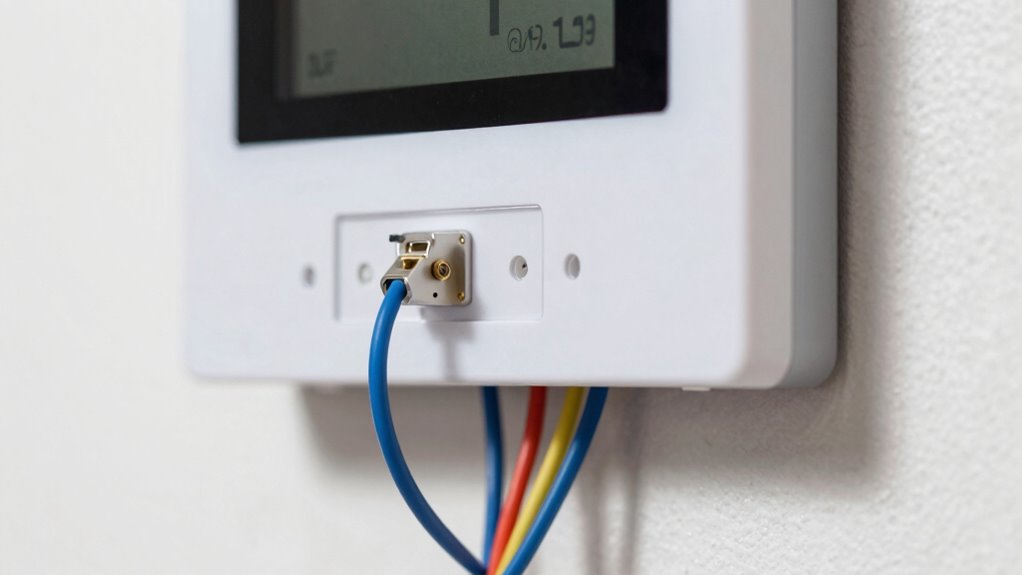
Have you ever wondered how your thermostat powers itself without needing batteries? It’s a common curiosity, especially with the rise of smart thermostats that seem to operate seamlessly. The secret lies in the C-wire, also known as the common wire. This wire provides a continuous flow of power from your HVAC system to the thermostat, guaranteeing it stays powered and connected. Without the C-wire, many smart thermostats rely on alternative methods to stay charged, but these wireless alternatives often come with limitations. They might draw power from the existing wires, like the R wire, or use power-stealing technology, which can lead to inconsistent performance. That’s why having a dedicated C-wire is so advantageous—it offers a steady, reliable power source that keeps your thermostat functioning properly.
However, not all homes are wired with a C-wire. This absence creates installation challenges that can leave you frustrated. When your system lacks a C-wire, you might see power errors or be prompted to replace batteries more frequently. Some manufacturers have developed solutions to bypass this issue, such as adding a C-wire adapter or using a power extender kit. These devices essentially mimic the role of the C-wire, but their installation can be tricky. You’ll need to identify the right connections and sometimes modify your existing wiring, which isn’t always straightforward. If you’re not comfortable working with electrical components, this can turn into a significant installation challenge. In some cases, you might need professional assistance to ensure everything is set up correctly and safely.
The installation challenges don’t end there. Even if you manage to add a C-wire or use an adapter, compatibility issues can arise depending on your HVAC system and existing wiring setup. Some older systems weren’t designed with a C-wire in mind, which can complicate the process further. Additionally, trying to retrofit a C-wire into a home without one might require running new wires through walls or ceilings, which can be invasive and costly. Despite these hurdles, having a C-wire remains the most dependable way to power a smart thermostat consistently. It eliminates the need for wireless alternatives that might not always provide the same level of stability or performance. While it might take some effort to install, a proper C-wire connection ensures your smart thermostat operates smoothly and without interruption, giving you peace of mind and comfort in your home. Understanding HVAC wiring can help you better navigate these installation challenges.
Frequently Asked Questions
Can I Install a Smart Thermostat Without a C-Wire?
Yes, you can install a smart thermostat without a C-wire by opting for wireless installation options. Many models include power adapters that draw power from your existing wiring or batteries, eliminating the need for a dedicated C-wire. Just guarantee your chosen thermostat supports wireless setup and has compatible power adapters. This way, you avoid power errors and enjoy smart control without rewiring your HVAC system.
How Do I Identify if My Thermostat Needs a C-Wire?
You can tell if your thermostat needs a C-wire by inspecting the wiring. Look for a wire labeled “C” or a blue wire, which is typically the common wire. If you don’t see a C-wire or it’s not connected, compatibility issues may arise, causing power errors. Check your existing wiring or consult your thermostat’s manual to determine if a C-wire is necessary for proper operation.
Are There Alternative Power Options for Smart Thermostats?
Your smart thermostat won’t survive without power, but don’t worry—alternative power options exist! You can use a power adapter, a rechargeable battery, or a power extender kit as backup options. These solutions guarantee your thermostat stays connected even if the C-wire isn’t available. Just choose the best alternative power method suited to your setup, and your smart device will keep running smoothly without missing a beat.
What Are the Risks of Bypassing the C-Wire?
Bypassing the C-wire risks unstable wireless power and voltage fluctuations, which can damage your thermostat or HVAC system. Without a dedicated power source, your device may experience inconsistent operation, leading to frequent resets or errors. You might also compromise safety or void warranties. To guarantee reliable performance and protect your system, it’s best to find a proper power solution rather than bypassing the C-wire.
How Does a C-Wire Impact Thermostat Compatibility?
A C-wire directly impacts your thermostat’s wireless compatibility and voltage requirements. Without a C-wire, your thermostat may struggle to maintain consistent power, limiting its ability to connect seamlessly to Wi-Fi. Confirm your system supports the necessary voltage levels, typically 24V, for reliable operation. If your setup lacks a C-wire, consider alternatives like power extenders or smart thermostats designed for no-C-wire installations to ensure proper compatibility and functionality.
Conclusion
Understanding the c-wire is like revealing a secret passage to your thermostat’s full potential. When you guarantee it’s properly connected, you prevent power errors from sneaking in like unwelcome guests. Think of the c-wire as the heartbeat of your smart thermostat—without it, your device struggles to keep its pulse. So, take the time to check and install your c-wire correctly, and enjoy a smooth, worry-free climate control experience that keeps your home cozy and connected.