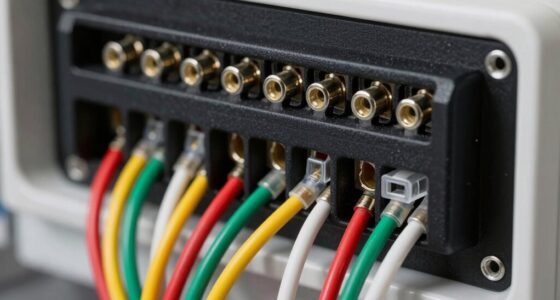

To guarantee your mini split operates safely, you need the right electrical setup, including a dedicated circuit with the correct breaker size—usually 15 to 20 amps—based on the system’s requirements. Install a disconnect device near the indoor or outdoor unit for easy shutoff during maintenance or emergencies. Make sure everything matches local electrical codes, and consider hiring a licensed electrician to assess your panel capacity and install everything properly. Keep going to learn more about staying safe and compliant.
Key Takeaways
- A dedicated circuit with the correct breaker size (usually 15–20 amps) is essential for safe mini split operation.
- Install a disconnect switch near the indoor or outdoor unit for easy power shut-off during maintenance.
- Ensure the electrical system matches the mini split’s voltage and phase requirements per manufacturer specifications.
- Consult local electrical codes and hire a licensed electrician for proper circuit and breaker installation.
- Proper load calculation and adherence to safety standards prevent overloads, electrical faults, and system damage.
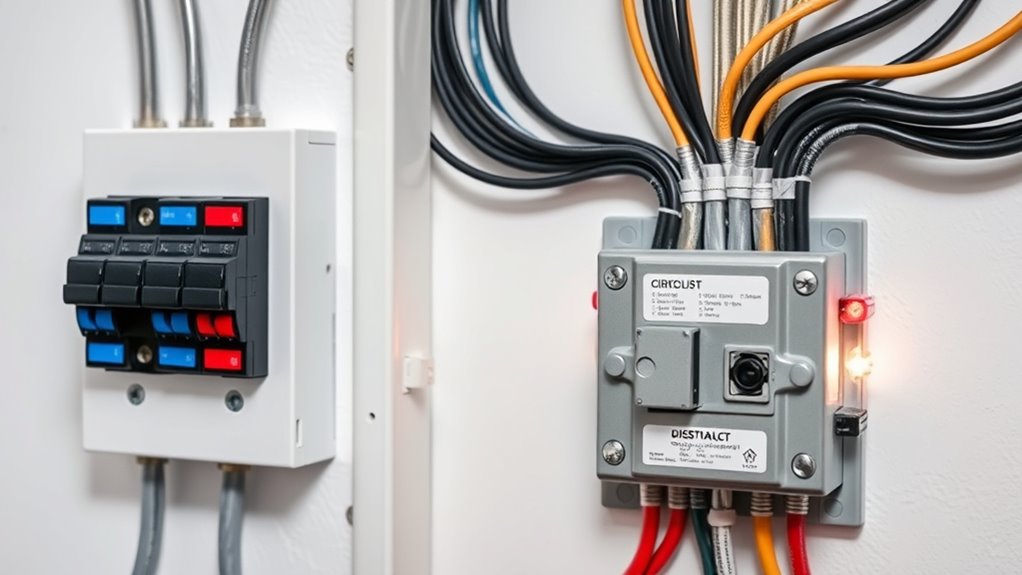
Before installing a mini split system, understanding its electrical requirements is essential. Your first step is to analyze the power supply available in your location. The power supply must match the system’s specifications to operate safely and efficiently. Most mini splits require a dedicated electrical circuit to prevent overloads and guarantee consistent performance. Check your local electrical code for the specific voltage and phase requirements, as these can differ depending on the model and your region. Having an appropriate power supply means your system gets the right voltage and amperage, reducing the risk of electrical issues down the line.
Ensure your power supply matches your mini split’s specifications for safe, efficient operation.
Next, you need to pay close attention to the circuit capacity. This involves calculating the electrical load your mini split will draw and confirming your existing circuit can accommodate that load. Overloading a circuit can cause breakers to trip frequently, which not only interrupts cooling but also creates a safety hazard. Typically, mini splits require a circuit with a dedicated breaker rated for the system’s amperage—often 15 to 20 amps. However, larger units or multi-zone systems might need higher-rated breakers. It’s necessary to consult the manufacturer’s specifications and electrical codes to determine the exact circuit capacity. If you’re unsure, hiring a licensed electrician is the safest move. They can evaluate your electrical panel and install a dedicated circuit if needed, avoiding potential overloads.
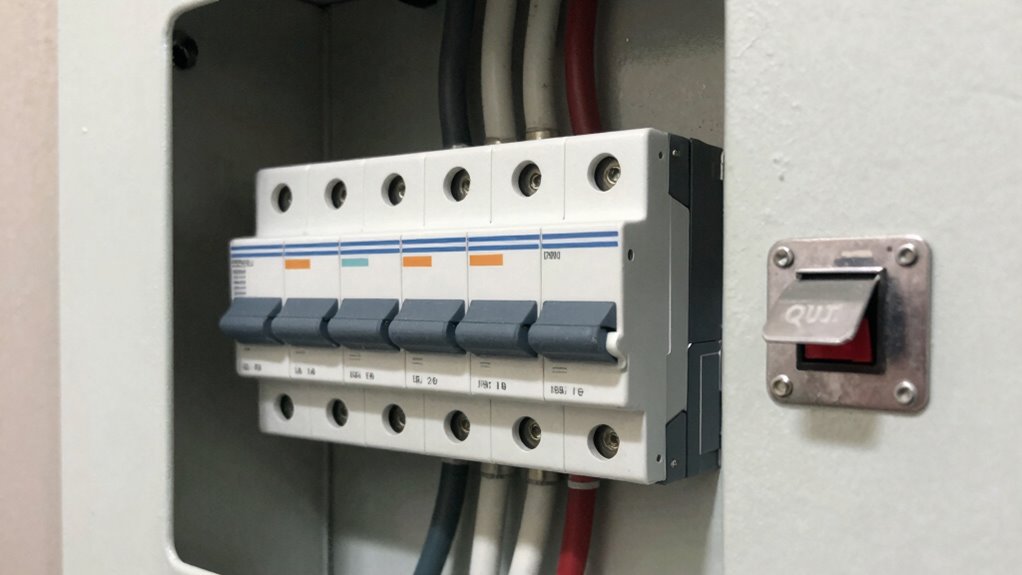
Breakers play an important role in protecting your system and home. A properly rated breaker will trip if there’s a short circuit or overload, preventing damage to the mini split and reducing fire risk. Never bypass or modify the breaker ratings, as doing so compromises safety. When installing a new mini split, your electrician will likely install a dedicated circuit breaker designed specifically for that system. This breaker acts as a safeguard, ensuring that if electrical faults occur, the circuit disconnects immediately. It’s also important to consider the placement of the breaker within your electrical panel—ideally, it should be accessible and clearly labeled for easy maintenance or emergency shut-off.
Finally, don’t forget about the disconnect device. A disconnect switch provides a convenient way to cut power to the mini split for maintenance or emergencies. It should be installed close to the indoor or outdoor unit, easily accessible, and rated for the system’s voltage and current. Proper sizing and load‑planning are crucial to ensure safety and efficiency. Combining proper breakers, a suitable disconnect, and a reliable power supply guarantees your mini split operates safely and efficiently. Always follow manufacturer instructions and local electrical codes when setting up your system to protect both your investment and your safety.

HVAC Surge Protector 120/240V Mini Split Surge Protector with TPMOV Technology Device for AG3000, Watertight Enclosure Lightning Protection, Comprehensive Surge Protection
【 HVAC Surge Protector】Three protection modes: L-G, L-L, L-N. Two installation modes: ① The 240V Surge Protector device…
As an affiliate, we earn on qualifying purchases.
As an affiliate, we earn on qualifying purchases.
Frequently Asked Questions
Can I Install a Mini Split Without a Dedicated Breaker?
You shouldn’t install a mini split without a dedicated circuit breaker. Proper mini split wiring requires a dedicated circuit breaker to safeguard the system and ensure safety. Circuit breaker requirements specify using a breaker sized appropriately for your mini split’s amperage. Skipping this step can lead to electrical hazards, system damage, or voiding your warranty. Always follow manufacturer instructions and local electrical codes for a safe, compliant installation.
What Is the Minimum Distance Between Disconnects and the Mini Split?
You should keep at least 3 feet of electrical clearance between the disconnect and the mini split to guarantee a safe zone. This distance helps maintain proper airflow and prevents accidental contact with electrical components. Adhering to this minimum safety zone reduces the risk of electrical hazards and makes maintenance easier. Always check your local electrical codes, as they may specify different clearance requirements for your specific installation to ensure safety.
Are Special Tools Required for Mini Split Electrical Connections?
You won’t need special tools for mini split electrical connections, but proper equipment makes the job safer and easier. Remarkably, about 80% of DIY electrical mishaps happen due to improper tools or procedures. You should use the right electrical connectors and a multimeter to ensure secure connections. While basic tools like screwdrivers are enough, having a wire stripper and voltage tester helps prevent accidents and ensures a safe, professional installation.
How Often Should I Have My Mini Split’s Electrical System Inspected?
You should have your mini split’s electrical system inspected at least once a year to guarantee electrical safety and proper functioning. Regular maintenance helps catch potential issues early, preventing hazards or system failures. If you notice flickering lights, unusual noises, or tripped breakers, schedule an inspection sooner. Keeping up with maintenance frequency not only maintains efficiency but also safeguards your home and loved ones from electrical risks.
Is a Permit Needed for Installing a Mini Split Electrical System?
Yes, you need an electrical permit to install a mini split system. Building codes require permits to guarantee safety and compliance with local regulations. You should contact your local building department before starting installation. They’ll review your plans and issue the necessary electrical permits. Skipping this step can lead to fines or safety issues. Always follow the proper procedures to keep your installation safe, legal, and up to code.

CHGAOY 30 Amp AC Disconnect Switch Outdoor 120/240VAC Pull Out Switch Waterproof Metal Box for Air Conditioning Non-Fused
🔷【Efficient AC 30 Amp Disconnect】 Meticulously designed with a 30A 120/240V, single-phase, 3-wire, 2-pole switch, without fuses, and…
As an affiliate, we earn on qualifying purchases.
As an affiliate, we earn on qualifying purchases.
Conclusion
Understanding the electrical requirements for your mini split is like laying a strong foundation for a sturdy house—you’ll enjoy reliable comfort without surprises. Ensuring proper breakers, disconnects, and safety measures keeps your system running smoothly and protects your loved ones. Don’t let electrical issues cast a shadow over your comfort; instead, stay informed and prepared. With the right setup, your mini split becomes a gust of fresh air, bringing peace of mind and cool relief to your home.

TAUROX 1/2Inch 3 Conductor 10 Gauge Electrical Wires Liquid Tight Conduit Wire with Ground Nonmetallic Flexible Conduits AC Disconnect Box Outdoor Electrical Whip Kit Power Whips Assembly(4FTx1/2Inch)
【Easy Installation】Easy hookup.Upgrade your electrical system with our Power Whip Assembly Kit. Make installation faster and more convenient.
As an affiliate, we earn on qualifying purchases.
As an affiliate, we earn on qualifying purchases.

Chtaixi AC Miniature Circuit Breaker, 20 Amp 120V/240V 1 Pole
FUNCTIONS: Used to protect 110V 120V 220V 230V AC circuit from overload and short circuit damage, and can…
As an affiliate, we earn on qualifying purchases.
As an affiliate, we earn on qualifying purchases.