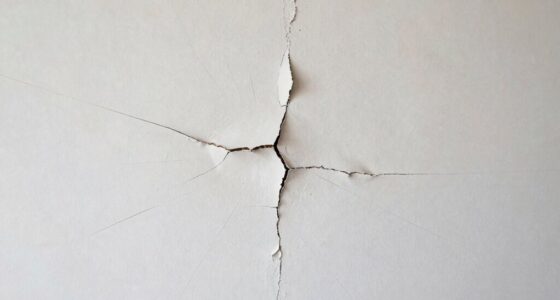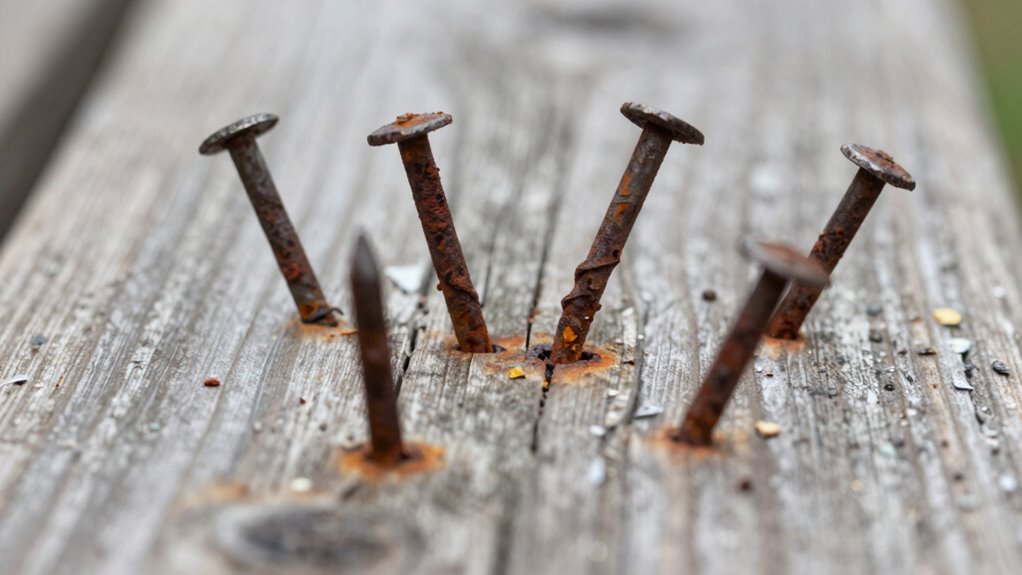

Nails pop out over time because of factors like poor material quality, exposure to moisture, and weather changes that cause rust and weaken the nails. Structural shifts, such as building movement or settling, also loosen nails gradually. Additionally, improper nailing techniques and years of wear and biological damage can weaken their grip. If you keep exploring, you’ll discover how these issues can be prevented and fixed for lasting results.
Get ready for Prime Big Deal Days — try Prime free
Exclusive member deals on October 6–7, plus fast free delivery. Cancel anytime.
As an affiliate, we earn on qualifying purchases.
Key Takeaways
- Moisture and weather fluctuations cause rust and corrosion, weakening nails over time.
- Building movement from temperature changes and settling gradually loosens nails.
- Poor nailing techniques or improper placement reduce nail grip and stability.
- Aging materials and biological damage weaken nails, making them more prone to popping out.
- Exposure to elements and lack of protective coatings accelerate corrosion and deterioration.
galvanized nails for outdoor projects
As an affiliate, we earn on qualifying purchases.
As an affiliate, we earn on qualifying purchases.
How Material Quality and Nail Types Impact Holding Power
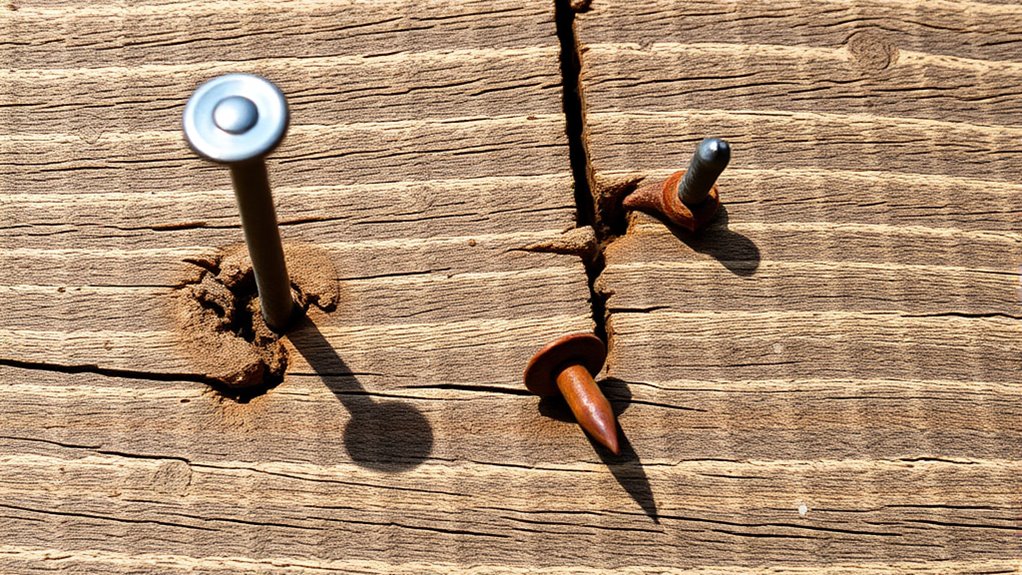
The quality of the material and the type of nail you choose directly affect how well nails stay in place over time. High material durability guarantees that nails resist wear and tear, maintaining their hold longer. If you select nails made from softer or lower-quality metals, they’re more prone to nail corrosion, which weakens their grip and causes them to loosen. For outdoor projects, using nails with corrosion-resistant coatings, like galvanized or stainless steel, helps prevent deterioration. The right nail type also matters; thicker or specialized nails provide better holding power, especially in tougher materials. Choosing quality materials and appropriate nail types minimizes the risk of nails popping out prematurely, ensuring your project remains secure and stable over the years. material durability is a key factor in long-term nail performance.
stainless steel corrosion resistant nails
As an affiliate, we earn on qualifying purchases.
As an affiliate, we earn on qualifying purchases.
How Moisture and Weather Changes Loosen Nails
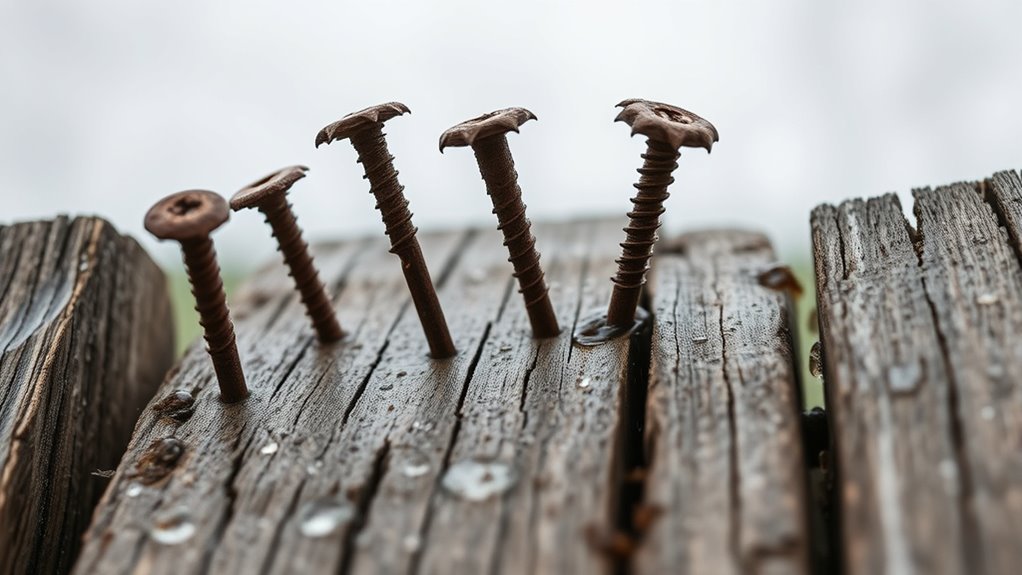
Moisture and weather changes can profoundly weaken nails over time, especially if your project is outdoors or exposed to the elements. Fluctuating humidity and rain cause rust formation on nails, reducing their strength and grip. Additionally, moisture accelerates paint deterioration, which can loosen nails further. When paint chips or peels, nails lose their protective barrier, making them vulnerable to corrosion. To highlight this, consider the following:
| Effect | Consequence |
|---|---|
| Rust formation | Nails weaken and become brittle |
| Paint deterioration | Exposes nails to moisture |
| Loosened nails | Increased risk of popping out |
These weather-related factors gradually compromise nail stability, leading to more frequent popping over time. Furthermore, proper maintenance can help prevent some of these issues and extend the lifespan of your nails.
As an affiliate, we earn on qualifying purchases.
Why Proper Nailing Techniques Matter
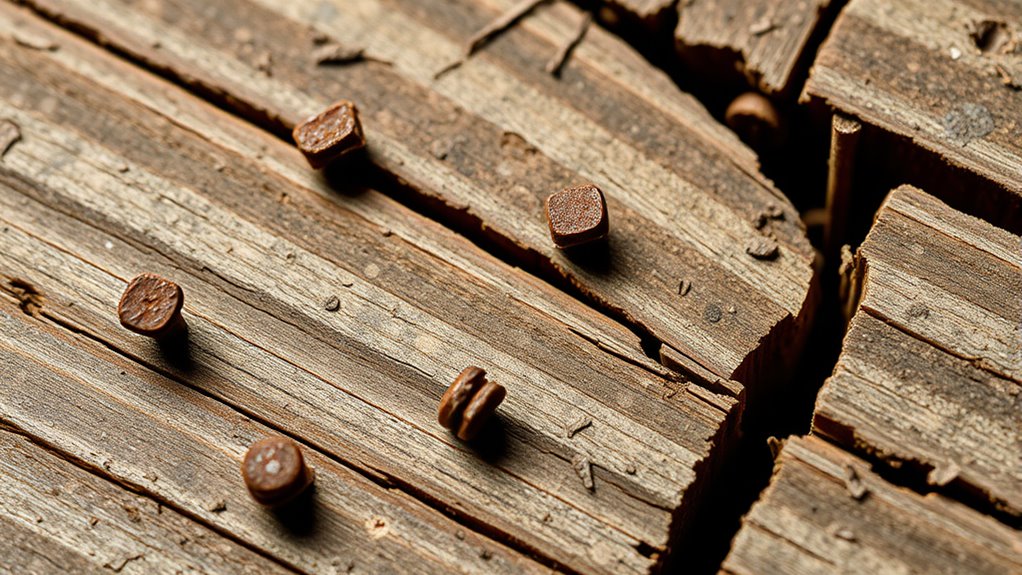
Using correct nail placement guarantees your nails stay secure longer and don’t cause damage. Choosing secure fastening methods helps prevent nails from loosening or popping out over time. Paying attention to proper techniques makes a big difference in the durability of your nails.
Correct Nail Placement
Proper nail placement is essential because it directly affects the durability and appearance of your nails. When you position nails correctly, you enhance nail aesthetics, making your project look professional and polished. Proper placement ensures the nails hold securely without causing split or weak spots, reducing the chances of popping out over time. It also makes nail removal techniques simpler and less damaging, preventing unnecessary breakage or damage to the surrounding material. If nails are too shallow, they may loosen prematurely; too deep, and they can weaken the structure. Focus on aligning nails properly and driving them straight in, avoiding angles that compromise stability. Correct nail placement not only improves the visual appeal but also contributes to the longevity of your work. Additionally, using the right tools and techniques can help prevent incorrect nailing, which can lead to issues over time.
Secure Fastening Methods
When you apply nails correctly, you guarantee your project stays secure and durable over time. Using proper fastening methods guarantees nails hold firm, preventing them from popping out prematurely. Whether you’re choosing decorative nail styles or creating nail polish effects, the key is secure fastening. Proper technique involves selecting the right nail type and driving it straight in without bending or overdriving. This careful approach helps prevent damage that can loosen nails over time. Additionally, understanding nail technology can guide you in selecting the best fastening methods for long-lasting results.
- Feel confident your design stays intact, from intricate nail polish effects to bold decorative styles
- Avoid the frustration of nails loosening or falling out, saving you time and effort
- Enhance durability, ensuring your nails last longer and look better
- Keep your nails looking flawless, with secure fastenings that support your creative expression
As an affiliate, we earn on qualifying purchases.
How Building Movement Causes Nails to Loosen

Building movement, caused by temperature changes, settling, or shifting soil, puts constant stress on nails holding building materials together. When the foundation settles or the structure shifts, it creates stress points that pull or push against nails. This ongoing pressure causes nails to loosen gradually. Structural shifting, whether from ground movement or thermal expansion, means the materials aren’t stable anymore. As the building moves, nails experience tension and compression, weakening their grip over time. You might notice gaps forming or nails popping out as a result. The continuous stress weakens the nails’ hold, making them more prone to loosening or backing out completely. Additionally, natural forces such as wind or minor seismic activity can exacerbate these stresses, accelerating the loosening process. Over time, these movements considerably contribute to the common issue of nails losing their secure fastening.
What Wear and Time Do to Nails Over the Years
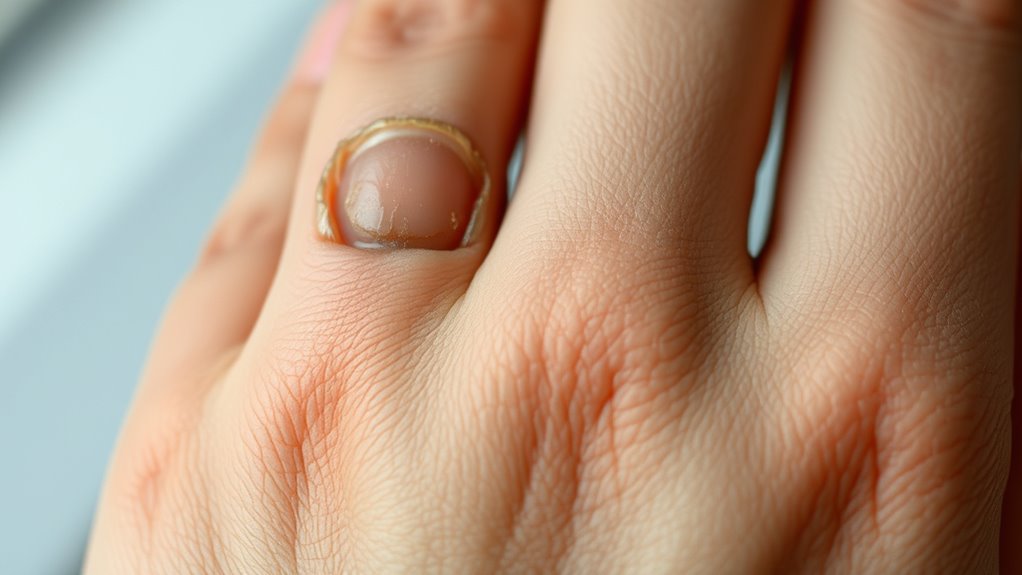
Over the years, exposure to the elements and constant use gradually wear down nails, making them less effective at holding materials securely. This natural process impacts nail longevity and highlights aging effects on your nails. As time passes, nails become thinner, more brittle, and less resilient. You might notice:
- Increased susceptibility to cracking and breaking
- Reduced strength for holding fasteners
- A duller appearance and loss of natural shine
- Slower growth and difficulty repairing damage
These changes aren’t just cosmetic; they weaken your nails’ ability to perform their job effectively. Over time, aging effects diminish their durability, increasing the likelihood of nails popping out or loosening. Understanding this natural wear helps you manage expectations and care for your nails better. Additionally, nail health can be influenced by overall aging processes and external factors, emphasizing the importance of proper maintenance.
How Insects and Biological Factors Damage Nails
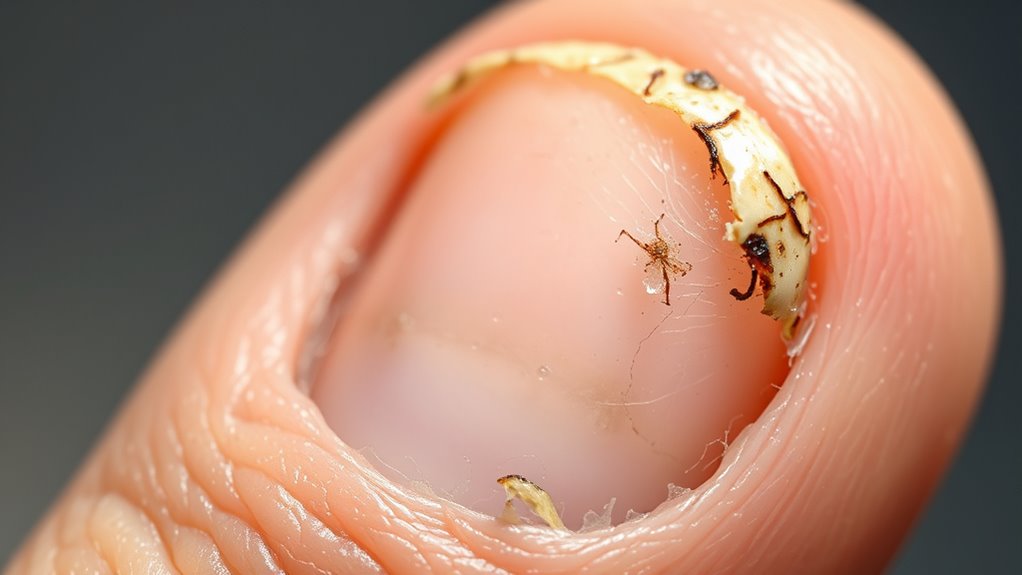
Insects and other biological factors can cause significant damage to your nails by introducing bacteria, fungi, or parasites that weaken the nail structure. Insect damage often occurs when pests like mites or fungi burrow into the nail bed, leading to biological decay. This process deteriorates the keratin, making nails brittle, discolored, or prone to splitting. Parasites may also cause inflammation or infections that accelerate nail deterioration. Over time, biological decay from these factors compromises the integrity of your nails, causing them to lift or pop out. Additionally, nail health maintenance plays a crucial role in preventing such biological invasions. If left untreated, the damage worsens and increases the risk of further infection. Understanding how insects and biological factors contribute to nail damage emphasizes the importance of proper hygiene and prompt treatment to protect your nails’ health.
Frequently Asked Questions
Can Using Different Nail Sizes Prevent Nails From Popping Out?
Using different nail sizes can help prevent nails from popping out, especially if you consider the nail material and placement. Larger nails provide better grip for thicker or denser materials, while smaller nails suit delicate surfaces. Proper nail placement ensures they penetrate deeply enough without damaging the material, reducing the risk of popping out over time. So, selecting the right nail size for your specific project makes a big difference in durability.
How Does Temperature Fluctuation Affect Nail Stability Over Time?
Temperature fluctuations can considerably shake your nails’ stability. When temperatures rise and fall, thermal expansion causes materials to expand, while cooling leads to contraction. This constant cycle creates stress and strain on nails, loosening them gradually. You might notice nails popping out over time because these thermal shifts weaken the bond. To prevent this, choose nails suited for your environment, minimizing the impacts of material contraction and thermal expansion.
Are There Specific Building Designs That Reduce Nail Loosening?
You can reduce nail loosening by choosing building designs that emphasize proper load distribution in wood framing. Using techniques like reinforced joints and strategic load paths helps guarantee nails stay secure longer. Incorporate continuous framing members and avoid excessive stress points, which can cause nails to loosen over time. These strategies improve stability, prevent nails from popping out, and extend the overall durability of your structure.
What Role Do Adhesives Play in Supplementing Nail Holding Power?
Adhesives boost nail holding power by enhancing adhesive strength and bonding longevity. You can think of them as a glue that strengthens the connection between nails and surfaces, preventing loosening. When you apply a suitable adhesive, it fills gaps, resists vibrations, and endures environmental changes. This creates a more secure, long-lasting bond, reducing the chances of nails popping out over time, and ensuring your structure stays firm and reliable.
How Often Should Nails Be Inspected and Replaced in Structures?
You should inspect nails regularly, ideally during scheduled maintenance or inspections, to guarantee ideal nail durability. Generally, inspecting every 1 to 3 years helps catch signs of corrosion, rust, or loosening. Replace any nails that show deterioration or signs of weakening promptly. Following consistent inspection schedules helps prevent structural issues and maintains the integrity of your building, ensuring safety and long-term durability.
Conclusion
Understanding why nails pop out over time helps you protect your investments. Factors like material quality, weather, and proper nailing techniques all play a role, but even the best nail won’t hold forever if nature and time have their way. Remember, a nail’s lifespan isn’t set in stone—things change and wear down. So, stay vigilant and don’t let small issues turn into big headaches; it’s better to nip problems in the bud before they grow.
NFL season / tailgating Picks
team gear
As an affiliate, we earn on qualifying purchases.