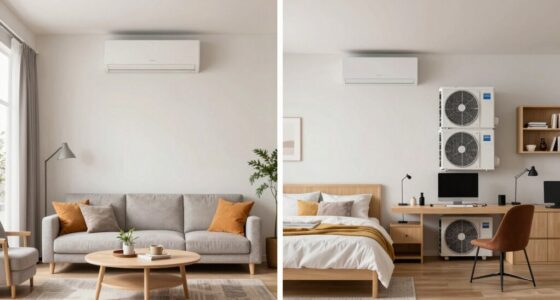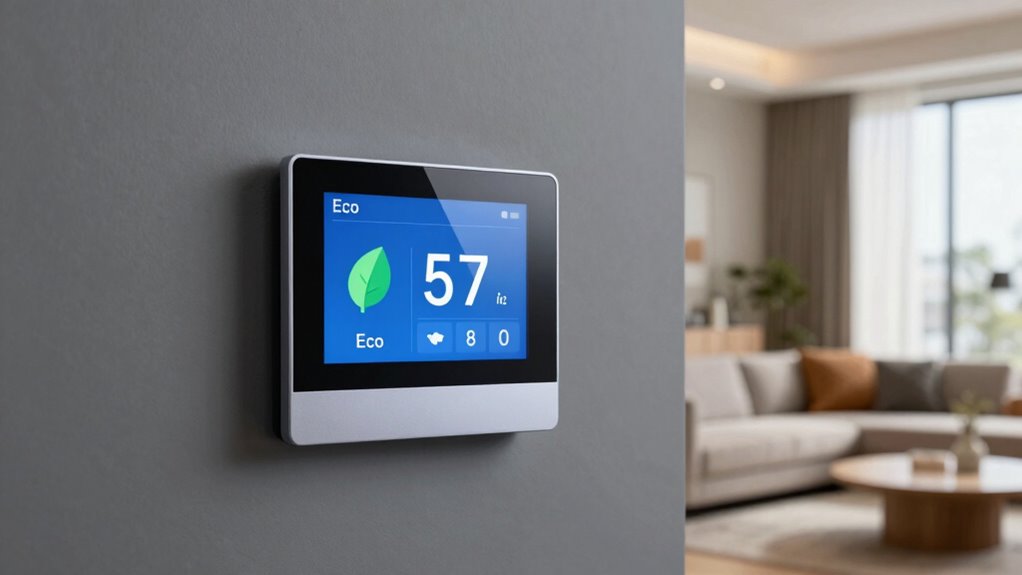

To save money with your heat pump, choosing the right thermostat mode is key. Auto mode is often the most efficient, as it switches between heating and cooling automatically based on indoor needs, reducing energy waste. In winter, keep the thermostat around 68-72°F in heating mode, and in summer, set it to about 78°F or higher during cooling. Proper settings prevent overuse and extend your system’s life, so exploring these options more can help you optimize savings.

Prime made for students and young adults
- Fast, free delivery for dorm and study essentials
- Prime Video and Amazon Music included
- Member-only deals
Key Takeaways
- Use auto mode to optimize heating and cooling efficiency without manual adjustments.
- Set your thermostat to energy-efficient temperatures (around 68-72°F in winter, 78°F in summer).
- Avoid keeping the system in continuous heating or cooling mode; let auto switch modes as needed.
- Maintain proper thermostat settings to prevent overuse and reduce energy bills.
- Regularly monitor and adjust modes based on seasonal changes for maximum savings.

Setting your heat pump thermostat correctly can greatly improve your home’s comfort and energy efficiency. When you choose the right mode, you not only create a more comfortable environment but also save money on your energy bills. Many homeowners overlook the importance of selecting the appropriate thermostat setting, but it plays a pivotal role in how well your heat pump performs and how efficiently it uses energy. By understanding the different modes and when to use them, you can optimize your system to meet your needs without wasting power.
The most common mode is heating, which you’ll use during colder months. In this setting, the heat pump works to maintain a consistent indoor temperature, typically around 68-72°F. Setting your thermostat too high can lead to unnecessary energy consumption and increased costs, while setting it too low can compromise your comfort. Striking the right balance is key. When you set the thermostat to a moderate temperature that feels comfortable, your system runs efficiently, reducing strain on the unit and extending its lifespan. This mode is ideal for maintaining user comfort without overworking your system.
In warmer months, switching your heat pump to cooling mode is just as important. This mode helps remove excess heat from your home, keeping the indoor environment pleasant. To maximize energy efficiency, set the thermostat to a temperature that feels comfortable but isn’t lower than necessary. For most people, 78°F is a good starting point. Every degree you lower the temperature can greatly increase energy use, so use this setting to strike a balance between comfort and savings. When you keep the cooling setpoint at a reasonable level, your system won’t run continuously, which saves energy and reduces wear and tear.
Many modern heat pumps also feature an auto mode, which automatically switches between heating and cooling based on your settings and indoor conditions. This mode offers convenience and efficiency because it adapts to changing weather and indoor temperatures without your intervention. When you use auto mode, your system is less likely to waste energy running when it isn’t needed, ultimately improving energy efficiency and maintaining user comfort seamlessly.
Understanding and properly setting your heat pump to the right mode is essential for optimizing performance. Whether you’re heating or cooling, selecting the appropriate mode ensures your system operates efficiently, saving you money while keeping your home comfortable. Remember, the goal isn’t just about setting a temperature — it’s about choosing the right mode that aligns with your comfort needs and energy-saving goals. When you do so, you’ll notice a smoother, more cost-effective operation and a more comfortable living environment year-round. Additionally, paying attention to system technology can help you make more informed adjustments and improve overall efficiency.
Popular right now

Dyson Ball Animal Total Clean Upright Vacuum

De'Longhi Linea Classic Espresso Machine with Adjustable Milk Frother

KitchenAid Artisan 5-Quart Tilt-Head Stand Mixer, Almond Cream
As an affiliate, we earn on qualifying purchases.
Frequently Asked Questions
How Often Should I Adjust My Heat Pump Thermostat Settings?
You should adjust your heat pump thermostat settings seasonally, ideally at the start of each new season. Regularly calibrate your thermostat to guarantee it maintains accurate temperatures, which helps save energy and money. During milder months, set your thermostat lower in winter and higher in summer to optimize efficiency. Frequent adjustments aren’t necessary unless you notice temperature inconsistencies, but seasonal calibration ensures your system runs smoothly and cost-effectively year-round.
What Is the Best Temperature for Energy Savings?
You should set your thermostat around 68°F during the day and lower it at night for ideal energy savings. To maximize efficiency, incorporate energy-efficient tips like using a programmable thermostat and ensuring proper thermostat calibration. Keep the temperature consistent, avoid frequent adjustments, and consider upgrading to a smart thermostat to optimize settings automatically, reducing energy consumption and lowering your bills while maintaining comfort.
Can I Use a Smart Thermostat With My Heat Pump?
Yes, you can use a smart thermostat with your heat pump, as long as it’s compatible. Check your smart thermostat’s specifications for heat pump compatibility before purchasing. Once installed, you’ll gain better control over your heating and cooling, saving energy and money. Smart thermostats learn your schedule, optimize settings, and can be controlled remotely, making them an excellent upgrade for your heat pump system.
How Does Outdoor Weather Affect Thermostat Settings?
Outdoor weather considerably impacts your thermostat settings, especially with outdoor humidity and temperature fluctuations. When it’s chilly or humid, you might need to lower or raise your thermostat to maintain comfort and efficiency. Imagine a sudden cold snap; adjusting your thermostat ensures your heat pump responds promptly, saving energy. By staying aware of outdoor weather changes, you optimize your system’s performance and save money while staying comfortable year-round.
Are There Specific Settings for Different Seasons?
Yes, you should make seasonal adjustments to your thermostat for ideal setting. In winter, set your heat pump to a lower temperature to save energy, while in summer, increase cooling settings slightly to prevent overuse. Setting optimization involves adjusting your thermostat based on outdoor weather changes and your comfort preferences. Regularly review and tweak these settings to guarantee energy efficiency year-round, saving you money on utility bills.
Conclusion
Think of your heat pump thermostat as the captain steering your home’s comfort ship. By choosing the right mode and setting it wisely, you’re steering toward savings and efficiency, avoiding the storm of high energy bills. When you set your thermostat thoughtfully, you’re not just controlling temperature—you’re guiding your home to stay cozy without wasting fuel. So, take the helm, make smart adjustments, and enjoy smooth sailing on your energy-saving voyage.