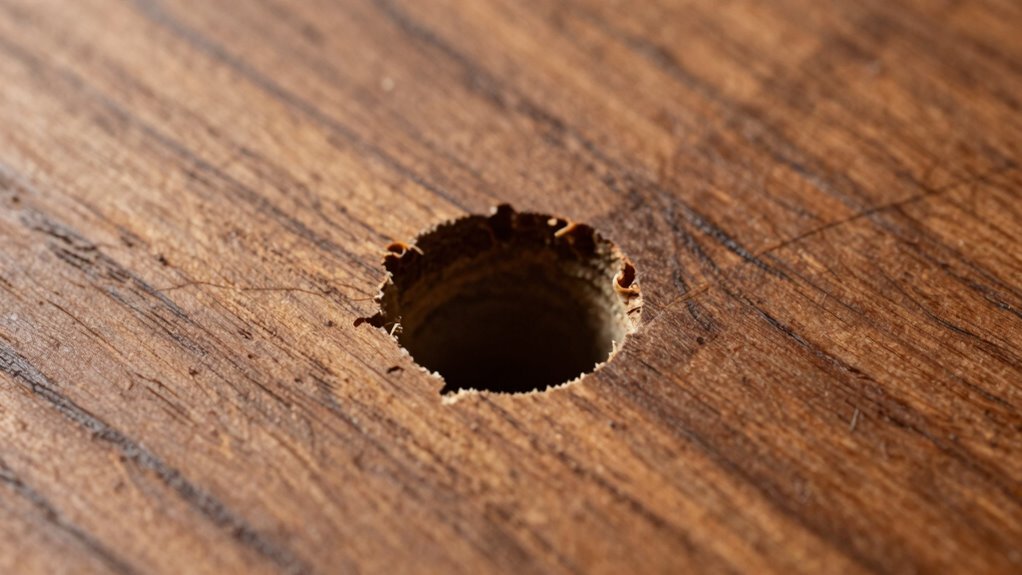

When you drill pilot holes before inserting screws, you reduce the risk of splitting and cracking your wood. These tiny guides make fastening easier, guarantee better screw grip, and protect delicate materials during assembly. Choosing the right size and drilling slowly helps you achieve clean, precise holes every time. Want to learn the best techniques for perfect pilot holes and how they boost your project’s quality? Keep going to discover expert tips that make the process smoother.
Key Takeaways
- Pilot holes reduce stress on wood fibers, preventing splits during screw insertion.
- They guide screws accurately, minimizing sideways pressure that causes cracking.
- Properly drilled pilot holes decrease the risk of material cracking in hardwoods and delicate materials.
- Pilot holes allow for easier screw driving, reducing the force needed and preventing splits.
- Using the correct size and depth of pilot holes preserves material integrity and enhances project durability.

EZARC Countersink Drill Bit Set, 12 PCS Counter Sink Drill Bit Adjustable, #4, #6, #8, #10, #12, Magnetic Extension bit Holder for Woodworking with Storage Box
【Unique Two-Flute Design】Featuring a dual-edge cutting design, these countersink drill bits eliminate chatter and ensure smooth, precise finishes….
As an affiliate, we earn on qualifying purchases.
As an affiliate, we earn on qualifying purchases.
What Are Pilot Holes and Why Do They Matter?
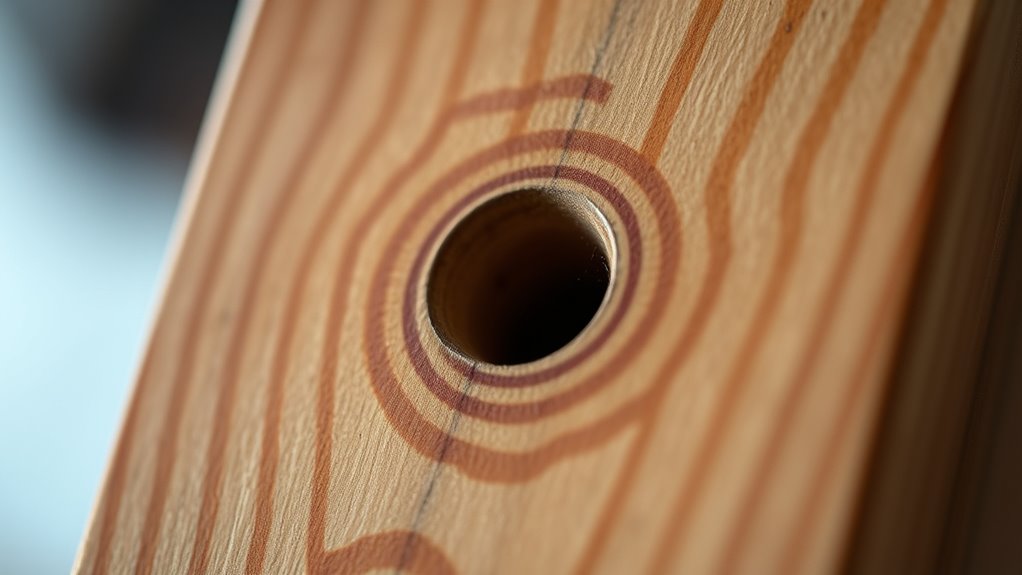
Have you ever wondered why you should drill a small hole before inserting a screw? That’s where pilot holes come in. They’re essential for proper fastening techniques, helping screws go in smoothly and securely. By creating a pilot hole, you reduce the risk of splitting the wood, especially with harder or thinner materials. This step also enhances woodworking safety since it minimizes the chance of the wood cracking unexpectedly, which can cause injury or damage your project. Pilot holes ensure your screws align correctly and hold tighter, saving you time and frustration. They’re a simple yet critical part of craftsmanship, making your work more precise and professional. Overall, understanding and using pilot holes is key to safe, efficient, and high-quality woodworking. Additionally, using tools like BTU and CADR calculators can help ensure your project maintains optimal comfort and safety standards.

Gulfmew 10 Pcs Wood Anchor, Stripped Screw Hole Repair Kit for Wood, Door Hinge Screw Hole Repair Fits Screws Sizes #2 to #16, Red
Fix Stripped Wood Screw Holes in Seconds: Gulfmew wood anchor for screws is designed to quickly and easily…
As an affiliate, we earn on qualifying purchases.
As an affiliate, we earn on qualifying purchases.
What Materials and Tools Do You Need for Pilot Holes?
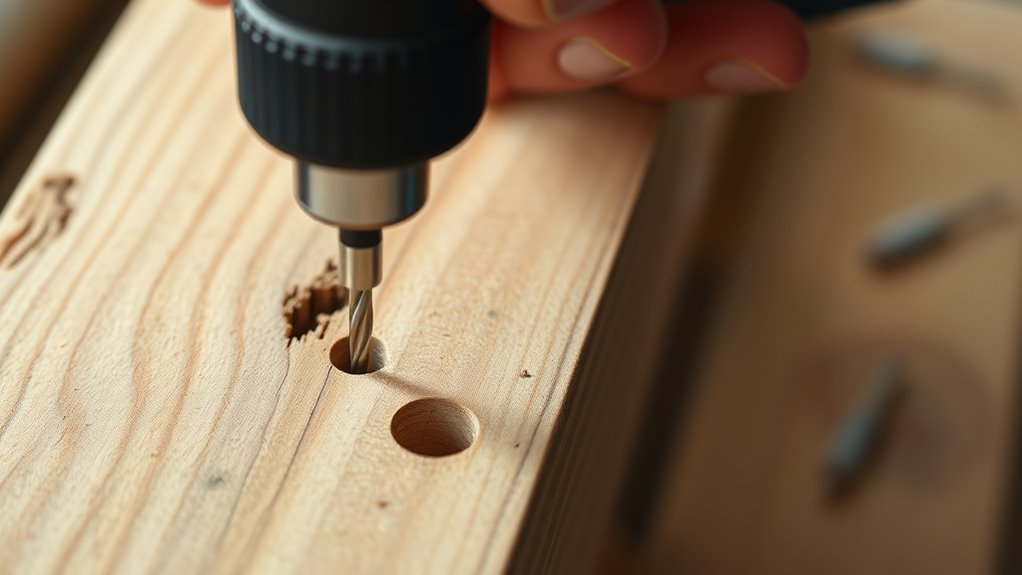
To create effective pilot holes, you’ll need the right materials and tools. Having the proper drill bit types guarantees your holes are clean and precise. Choose a drill bit suited for your material—metal, wood, or plastic. Measuring tools, like a ruler or calipers, help you mark the exact spot and determine the correct depth. Properly calibrated tools and understanding projector specifications can also aid in ensuring accuracy during drilling. Using the right tools makes drilling easier and prevents splitting or cracking. Selecting the correct drill bit type is essential for a smooth, accurate hole. Measuring tools ensure your pilot hole is perfectly placed, saving you time and effort.

COMOWARE Forstner Bit Set 16pcs for Woodworking, Precision Carbon Steel Drill bits for Clean Holes, Professional Heat-Treated Boring Tool Kit for Plastic & PVC, 1/4" to 2-1/8" Sizes
Premium Material & Heat Treatment: Engineered from high-grade carbon steel with advanced heat treatment, these Forstner bits deliver…
As an affiliate, we earn on qualifying purchases.
As an affiliate, we earn on qualifying purchases.
How to Drill Pilot Holes Step by Step
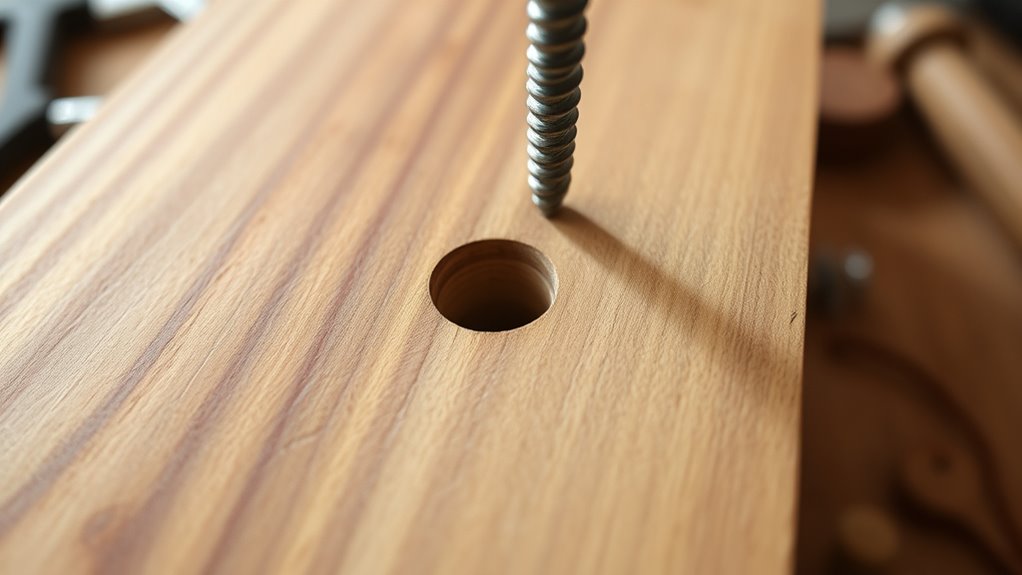
Start by selecting the right drill bit for your material to guarantee a clean hole. Next, mark your spot accurately and drill slowly to keep the bit steady. Paying attention to these steps makes drilling pilot holes easier and more precise. Using simple systems can also help you stay organized and confident throughout the project.
Choose Correct Drill Bit
Choosing the right drill bit is essential for creating clean, accurate pilot holes. Proper drill bit selection guarantees your holes are precise and prevent wood splits or damage. When selecting a drill bit, consider material compatibility—different bits work best with wood, metal, or plastic. Using the correct bit type makes drilling easier and safer.
Here are some tips to help you choose the right drill bit:
- Match the drill bit size to the screw or fastener diameter.
- Use high-quality bits designed for your material.
- Opt for sharp, new bits to ensure clean cuts and reduce heat.
Mark and Drill Precisely
Before drilling, accurately marking your pilot hole locations guarantees your project stays aligned and looks professional. Use a measuring tape or ruler for measurement accuracy, ensuring each mark is precise. Choose the right drill bit based on your screw size and material—smaller for softer woods, larger for harder surfaces. To improve clarity, refer to the table below:
| Step | Action | Tip |
|---|---|---|
| 1 | Measure carefully | Double-check measurements before marking |
| 2 | Mark the spot | Use a pencil for clear, small marks |
| 3 | Select drill bit | Match bit size to screw diameter |
| 4 | Drill slowly | Prevent bit slipping or splintering |
| 5 | Check alignment | Confirm pilot holes are straight and evenly spaced |
This method ensures measurement accuracy and proper drill bit selection for professional results. Incorporating precision in measurement is essential for consistent and accurate drilling outcomes.

ASNOMY 5pcs Titanium-Plated M2 Steel Pilot Drill bit for Hole Saw, Hole Saw Center Drill bit for Metal, Steel, Iron, Wood, Plastic
Compatiable: Pilot drill bit for ASNOMY metal cutting TCT carbide hole Saw series(≥9/16" Inch / 14mm);
As an affiliate, we earn on qualifying purchases.
As an affiliate, we earn on qualifying purchases.
Common Mistakes to Avoid When Using Pilot Holes
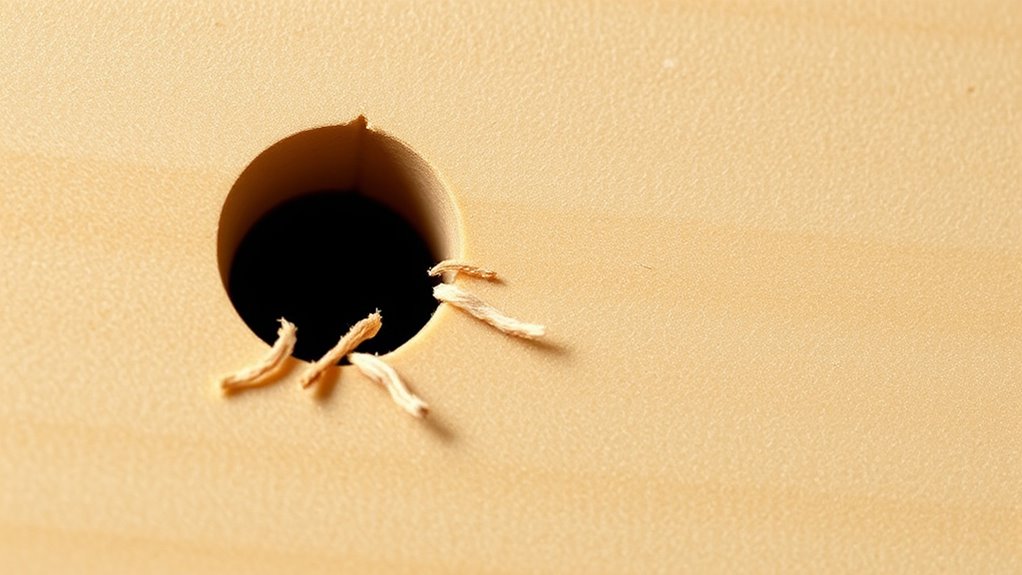
Using pilot holes might seem straightforward, but making common mistakes can compromise your project’s quality and safety. One mistake is choosing the wrong drill bit size, which can lead to loose or overly tight fasteners. Always match your drill bit selection to the screw size and material. Another error is ignoring material compatibility; some materials require specific pilot hole sizes or types to prevent splitting or damage. Additionally, drilling too shallow or too deep can weaken your connection or cause splitting. To avoid these issues, double-check your measurements, select the appropriate drill bit, and consider the material you’re working with. Properly prepared pilot holes ensure a cleaner, safer, and more durable project outcome. Incorporating energy-efficient tools and techniques can further enhance your project’s sustainability and performance.
How Pilot Holes Prevent Wood Splits and Cracks

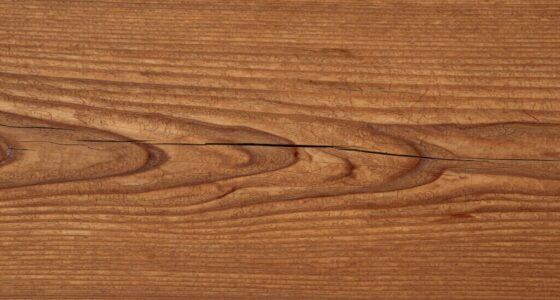
Pilot holes play a crucial role in preventing wood from splitting or cracking when you drive screws or nails. By creating a precise path, they help accommodate wood expansion, which occurs with temperature and humidity changes. This reduces pressure on the wood fibers, minimizing the risk of splits. Proper nail alignment is also maintained because the pilot hole guides the nail straight, preventing sideways force that could cause cracks. Without pilot holes, force concentrates along the grain, increasing the chance of splitting, especially near edges or knots. Using these holes ensures your fasteners go in smoothly, reducing stress on the wood. Additionally, outdoor kitchen construction benefits from pilot holes because they help maintain the structural integrity of weather-exposed materials. Ultimately, pilot holes preserve the integrity of your project, keeping it durable and aesthetically pleasing over time.
When and Where Should You Use Pilot Holes?
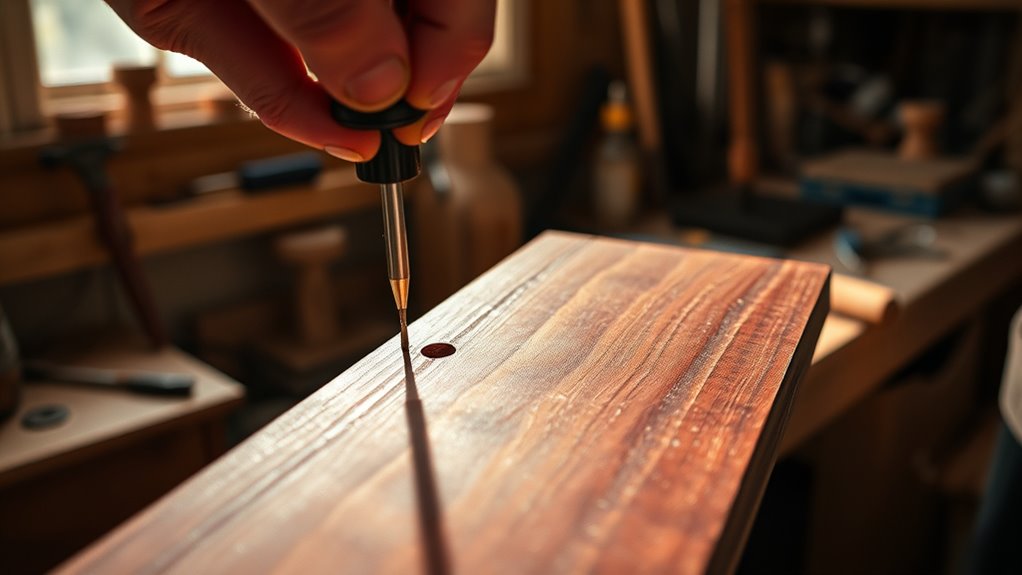
Knowing when and where to drill pilot holes can make a significant difference in the quality of your woodworking projects. Use pilot holes when attaching hardwoods, working with fragile or thin materials, or joining pieces where splitting is likely. Always follow safety precautions, such as wearing eye protection and securing your workpiece. Consider alternative methods, like countersinking or using self-drilling screws, if you want to avoid pilot holes in certain situations. Pilot holes are particularly useful for screws that require precision or when working with dense wood to prevent splitting. In general, drill pilot holes at stress points or near edges where splits are prone to occur. Being mindful of where and when to use them helps guarantee cleaner results and safer, more durable joints. Additionally, understanding wood grain direction can help you determine the best locations for pilot holes to minimize splitting risks.
Tips for Drilling Perfect Pilot Holes Every Time
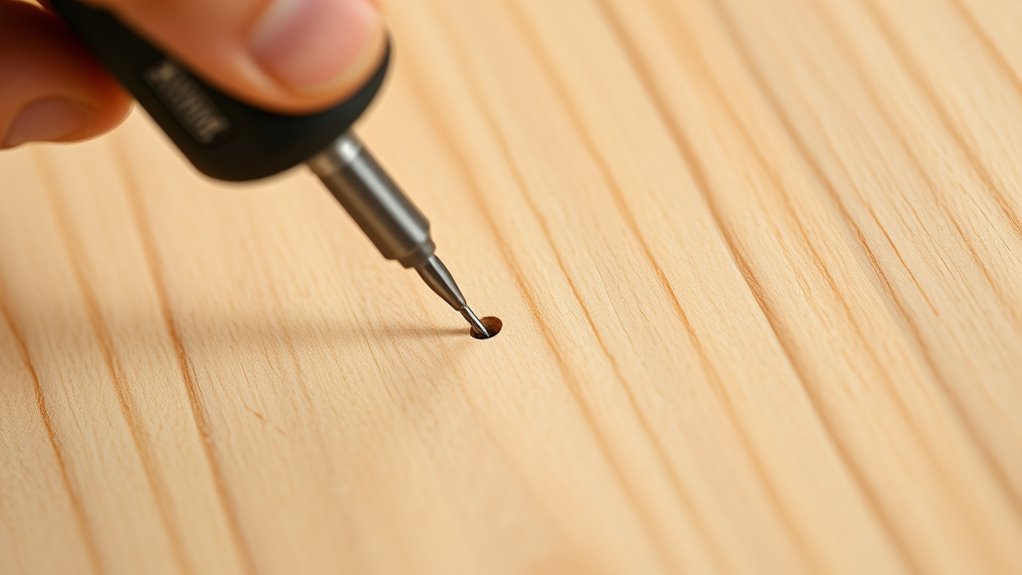
Achieving perfectly drilled pilot holes requires attention to detail and the right technique. Start by measuring accurately to determine the correct pilot hole size; this prevents splits and ensures a tight fit. Mark your spot clearly before drilling to avoid misalignment. When drilling, adjust your drill speed—use a slow, steady pace for hardwoods and tougher materials, and a slightly faster speed for softer woods. Keep the drill perpendicular to the surface to maintain accuracy. Applying consistent pressure helps prevent wandering or enlarging the hole. Using sharp bits also makes a difference, reducing tear-out and ensuring a clean, precise hole. Practicing proper technique and controlling your drill speed are fundamental for quality results. Additionally, understanding the material properties can help you choose the right tools and methods. Practice patience and take your time to measure carefully and control the drill speed. These tips will help you drill perfect pilot holes every time.
Frequently Asked Questions
Can Pilot Holes Be Drilled in Metal or Plastic Materials?
Yes, you can drill pilot holes in metal and plastic materials. When doing metal drilling, pilot holes make threading easier and reduce the risk of splitting or damaging the material. For plastic, pilot holes help prevent cracking and guarantee accurate screw placement. Use the right drill bits for each material—metal bits for metal and sharp, fine bits for plastic—to achieve clean, precise results and make your project smoother.
How Deep Should a Pilot Hole Be Relative to the Screw Length?
Imagine guiding a screw into wood, confident it won’t split, thanks to the perfect pilot hole depth. You should drill the pilot hole about 60-70% of the screw length, ensuring it’s deep enough to hold securely but not so deep that it weakens the material. This screw length ratio helps prevent splits and keeps your project sturdy. Adjust based on material density for best results.
Are There Specific Drill Bit Types for Different Materials?
Yes, selecting the right drill bit depends on the material you’re working with. For wood, use high-speed steel or brad point bits for clean holes. For metal, opt for cobalt or HSS bits designed for durability. Masonry requires carbide-tipped bits. Always consider material compatibility when choosing drill bits to guarantee efficient drilling and prevent damage. Matching your drill bit type to the material makes your project safer and more successful.
What Size Should the Pilot Hole Be Compared to the Screw?
Did you know that choosing the right pilot hole size minimizes screw breakage by 50%? You should make the pilot hole about 70-80% of the screw diameter, guaranteeing material compatibility. For hardwoods, go closer to 80%, while softer materials need less. This helps prevent splitting and ensures a secure fit. Always match your pilot hole size to the screw diameter and material for the best results.
Do Pilot Holes Affect the Overall Strength of the Joint?
Pilot holes do affect the overall strength of the joint; they help manage wood expansion and guarantee screw alignment. By drilling a properly sized pilot hole, you reduce the risk of splits, which can weaken the joint over time. While they might slightly lessen the grip compared to directly driving a screw, their benefits in preventing damage and maintaining alignment outweigh this. Proper pilot holes lead to stronger, more durable joints.
Conclusion
Think of pilot holes as the tiny guardians of your woodworking projects, quietly preventing cracks before they start. By understanding when and how to use them, you’ll turn rough cuts into smooth finishes with ease. Remember, neglecting these small steps is like skipping the foundation of a house—you risk everything falling apart. So, embrace pilot holes as your secret weapon, and watch your craftsmanship stand the test of time. After all, greatness often starts with the tiniest details.