
Robot vacuums struggle on some floor shifts because their sensors often can’t accurately detect small or abrupt height changes, like from hardwood to carpet or over thresholds. Safety features prevent them from crossing steep or uneven surfaces, which limits their coverage. Sensor limitations and programmed safety protocols can cause hesitation or getting stuck. Understanding these challenges can help you choose better models, and if you keep exploring, you’ll discover ways to improve your vacuum’s performance across different floors.

Prime made for students and young adults
- Fast, free delivery for dorm and study essentials
- Prime Video and Amazon Music included
- Member-only deals
Key Takeaways
- Sensors often cannot accurately detect subtle or abrupt floor height changes, leading to navigation errors.
- Safety features prevent robot vacuums from crossing steep or uneven thresholds to avoid damage.
- Variations in surface textures like rugs or mats create inconsistent sensor readings and movement issues.
- Large or sudden floor transitions can cause vacuums to get stuck or miss areas during cleaning.
- Limited sensor technology makes it difficult for robots to differentiate between furniture, thresholds, and floor shifts.
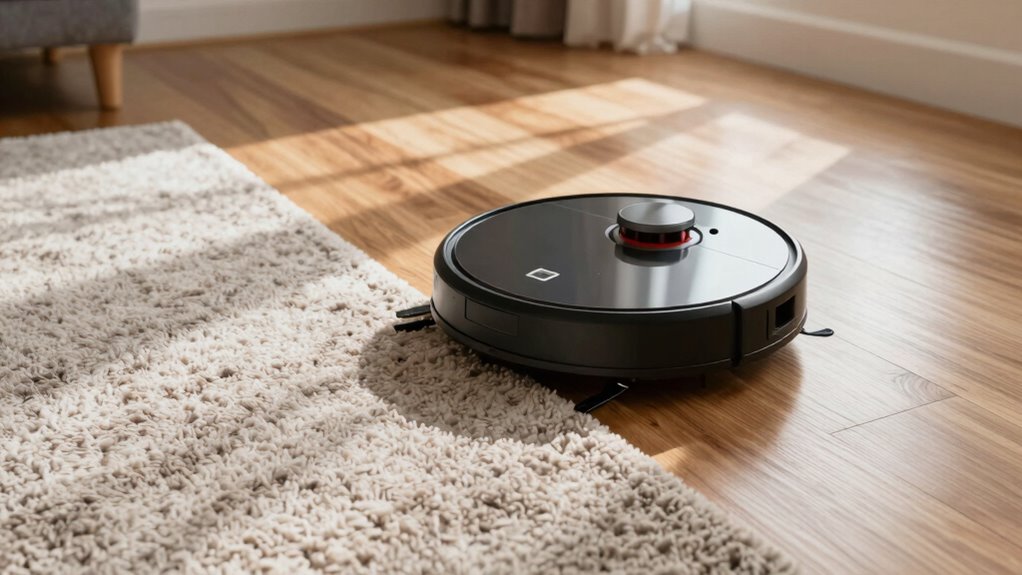
Robot vacuums have revolutionized how we keep our homes clean, but one common challenge they face is maneuvering floor changes. When your vacuum encounters shifts like from hardwood to carpet or a step up to a lowered area, it may struggle to navigate smoothly. These navigation challenges arise because your robot’s ability to recognize and adapt to different floor heights isn’t flawless. You might notice it hesitating or even getting stuck, which can be frustrating when you’re aiming for a hassle-free cleaning experience.
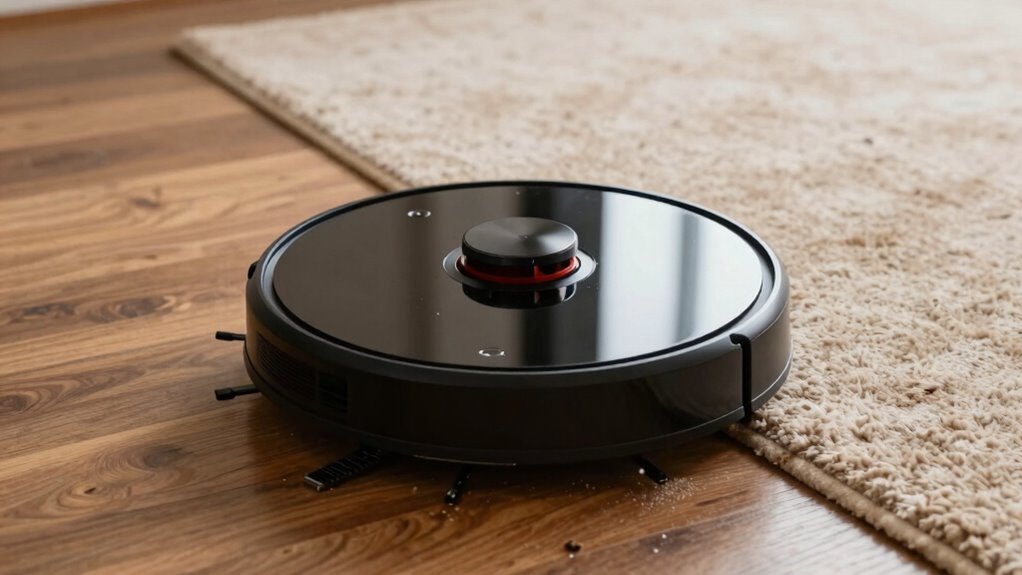
At the core of these issues are sensor limitations. Most robot vacuums rely on a combination of infrared sensors, cameras, or bump sensors to map your space and detect obstacles. While these sensors work well in many situations, they often have difficulty with floor shifts. For example, infrared sensors may not properly detect the height difference when moving from a flat surface to a raised or lowered area, leading the vacuum to misjudge the obstacle or ignore it altogether. Similarly, bump sensors can’t differentiate between a piece of furniture and a step, which can cause the vacuum to bump into a shift or attempt to climb it repeatedly.
Sensor limitations cause robot vacuums to misjudge or ignore floor height changes, leading to navigation issues and potential obstacles.
Your robot’s navigation system also struggles with subtle changes in floor height** that are too small for its sensors to detect accurately. This can result in the vacuum attempting to traverse a step or a sudden change, risking damage or getting stuck. Some models attempt to climb small thresholds, but if they’re too high or the sensors aren’t precise enough, they won’t succeed. This limitation is especially noticeable on uneven surfaces or when crossing over uneven rugs and mats. Additionally, sensor accuracy plays a critical role in how well the vacuum can adapt to different floor transitions. Advances in sensor technology** are gradually helping to mitigate these issues, but they are not yet foolproof.
Another factor is the programming of the vacuum itself. Many models are designed to avoid large drops or steep inclines to prevent falls or damage. However, this safety feature can sometimes prevent the vacuum from crossing minor floor changes, even if it could handle them safely. As a result, your robot might miss cleaning certain areas or avoid shifts altogether, leaving some parts of your home less-than-clean.
In essence, the combination of navigation challenges and sensor limitations is at the heart of why robot vacuums sometimes struggle on floor changes. Despite advances in technology, these devices still have difficulty recognizing and managing changes in elevation reliably. To minimize these issues, you can try to reduce abrupt floor height differences or use models with more advanced sensors designed specifically to handle shifts better. But for now, understanding these limitations helps set realistic expectations for your robot’s performance across various flooring types.
robot vacuum threshold crossing aid
As an affiliate, we earn on qualifying purchases.
As an affiliate, we earn on qualifying purchases.
Frequently Asked Questions
Do Robot Vacuums Learn From Previous Floor Transitions?
Yes, robot vacuums can learn from previous floor shifts, especially if they have features like sensor calibration and manual programming. These vacuums remember obstacles and changes in floor types, adjusting their cleaning patterns accordingly. Over time, they refine their navigation by analyzing past experiences, which helps improve performance on tricky shifts. However, some models might require manual input or updates to better handle specific floor changes.
Can Robot Vacuums Be Customized for Specific Floor Types?
You can customize your robot vacuum for specific floor types by adjusting settings and using floor-specific brushes. For example, a user in a multi-floor home sets higher suction and switches to brushes designed for carpets upstairs, then adjusts for hardwood floors downstairs. These customizable settings let you optimize cleaning, ensuring your vacuum performs well on different surfaces, reducing struggles with shifts and improving overall efficiency.
How Do Robot Vacuums Detect Different Floor Surfaces?
You can tell how robot vacuums detect different floor surfaces through sensor calibration and carpet detection features. They use optical and infrared sensors to identify changes in surface texture and reflectivity. When these sensors pick up a change, like a shift from hardwood to carpet, the vacuum adjusts its cleaning mode. This process helps guarantee efficient cleaning and prevents issues like getting stuck or missing spots on various floor types.
Are There Robot Vacuums Designed Specifically for Multi-Level Homes?
Yes, there are robot vacuums designed specifically for multi-level floors. These models often feature advanced surface detection, allowing them to recognize different floor types and adjust cleaning settings accordingly. Some come with multi-floor mapping capabilities, so you can easily switch between levels without starting from scratch. This guarantees thorough cleaning across your entire home, even on complex multi-level floors, making your cleaning routine more efficient and hassle-free.
What Maintenance Helps Improve Robot Vacuum Performance on Transitions?
You might think your robot vacuum’s perfect, but regular maintenance like checking battery health and sensor calibration can seriously boost its shift game. Ironically, the more you neglect these, the more it stumbles. Keep the battery in top shape and recalibrate sensors often, especially after updates or rough terrain. Doing so guarantees smooth navigation across shifts, making your vacuum’s performance as flawless as you hoped—no more awkward stumbles!
As an affiliate, we earn on qualifying purchases.
Conclusion
So, next time your robot vacuum stumbles at a carpet threshold or tiny step, remember it’s a common challenge. For example, imagine your robot hesitating at a rug’s edge, leaving dirt behind. By adjusting the settings or adding a ramp, you can help it glide smoothly across shifts. With a few tweaks, your vacuum will tackle those tricky spots more confidently, making cleaning less frustrating and more efficient.
As an affiliate, we earn on qualifying purchases.
robot vacuum with obstacle detection
As an affiliate, we earn on qualifying purchases.
As an affiliate, we earn on qualifying purchases.
Halloween Picks
halloween
As an affiliate, we earn on qualifying purchases.