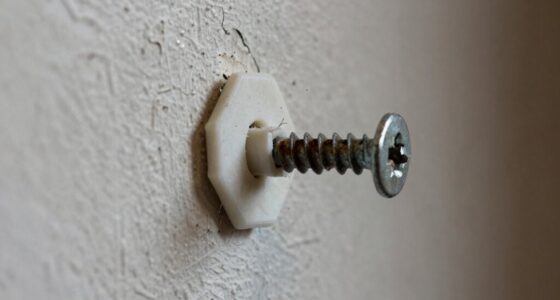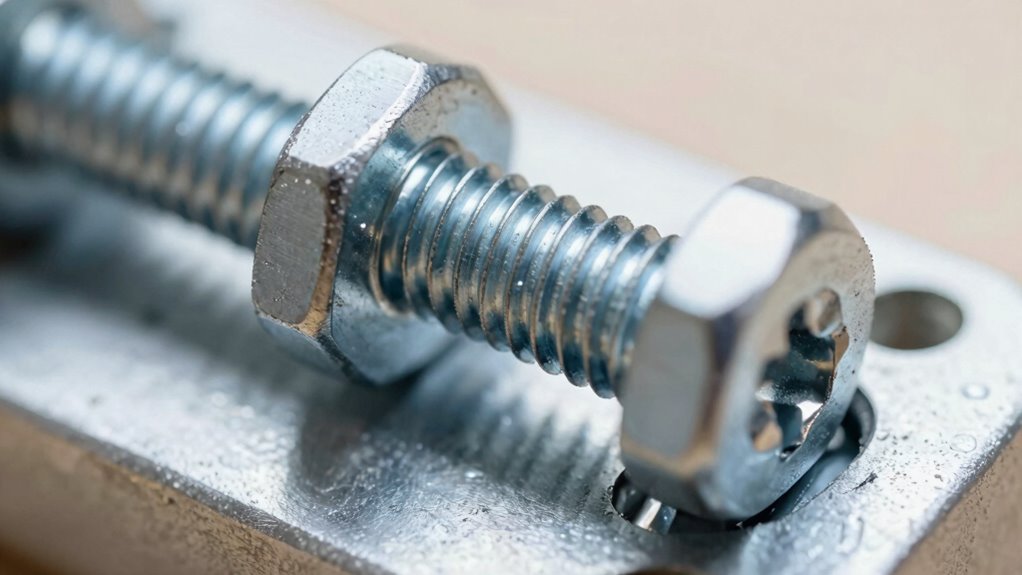
Using the wrong fastener—like confusing screws with bolts—can make your projects wobbly and unstable. Screws often don’t provide enough strength when used where bolts or proper fasteners are needed, especially if thread engagement isn’t correct or materials aren’t compatible. This mistake weakens joints, causes wobbling, and can lead to structural failure. To fix these issues, it helps to understand fastener differences and how to choose the right ones. Keep going to learn more about avoiding these common mistakes.
Prime for Young Adults — start your free trial
Fast free delivery, streaming and member deals for eligible 18–24 year olds.
As an affiliate, we earn on qualifying purchases.
Key Takeaways
- Using screws instead of bolts with nuts can lead to insufficient thread engagement and wobbling.
- Over-tightening screws or bolts damages materials, causing instability and wobbly structures.
- Mismatched fastener types (screw vs. bolt) in the same joint prevent proper tightening, resulting in looseness.
- Failing to use washers or proper torque can cause fasteners to loosen over time, creating wobble.
- Incorrect fastener choice for material or load leads to poor grip and unstable, wobbly connections.
As an affiliate, we earn on qualifying purchases.
Understanding the Basic Differences Between Screws and Bolts
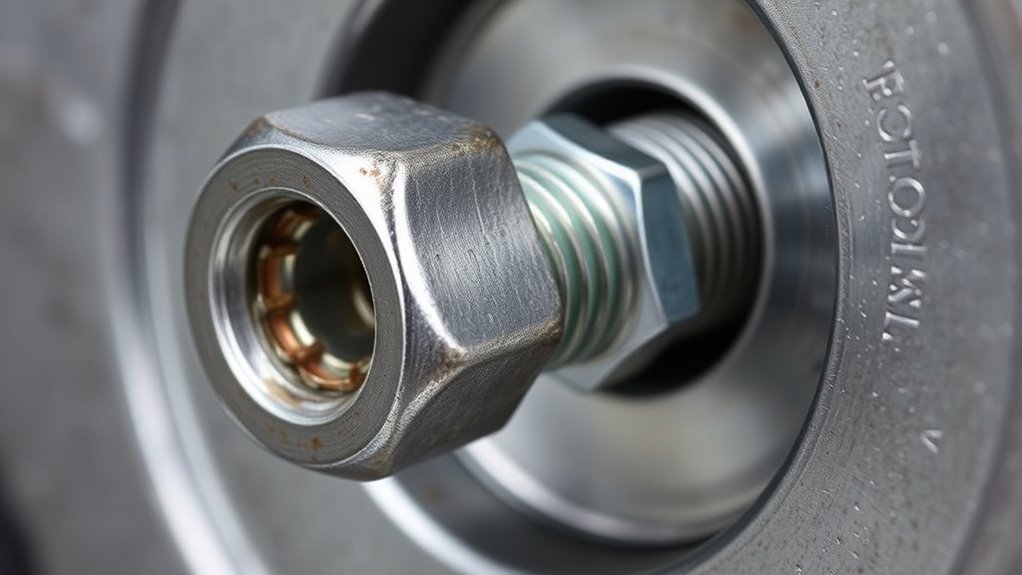
While screws and bolts may look similar, they serve different purposes and have distinct features. One key difference is thread types; screws often have fine or coarse threads designed to grip into materials like wood or drywall, while bolts typically have uniform threads suited for use with nuts. Material compatibility is also vital—you need the right fastener for the material you’re working with to guarantee stability. Screws are usually self-tapping, cutting their own threads into softer materials, whereas bolts require pre-threaded holes or nuts for secure fastening. Understanding these differences helps you choose the right fastener, avoiding improper use that can lead to instability or damage. Recognizing the unique thread types and matching them to your materials is the first step toward a secure, reliable connection. Proper fastener selection is essential for ensuring the stability and longevity of your projects. Additionally, selecting the correct fastener can help prevent wobbling or failure caused by incompatible hardware, especially when considering material compatibility, which is fundamental in fastening technology.
As an affiliate, we earn on qualifying purchases.
Common Projects Where Choosing the Wrong Fastener Causes Instability

Choosing the wrong fastener in common projects can lead to serious instability and safety issues. Incorrect fasteners often result in poor thread engagement, which weakens the connection and causes wobbling or failure under load. For example, using a bolt with insufficient thread engagement in furniture or machinery can create uneven load distribution, increasing stress on individual components. This imbalance reduces the overall stability and can lead to sudden loosening or collapse. Similarly, mismatched fasteners in structural applications compromise load distribution, risking structural failure. Selecting the wrong fastener disrupts the intended force transfer, making everything wobbly and unsafe. Additionally, understanding thread engagement can help ensure proper fastening techniques for improved safety and accuracy. Proper fastener selection is crucial for ensuring that material compatibility is maintained and that the fasteners can withstand the intended loads over time, especially in projects requiring precise force transfer.
As an affiliate, we earn on qualifying purchases.
How to Properly Select the Right Fastener for Your Task
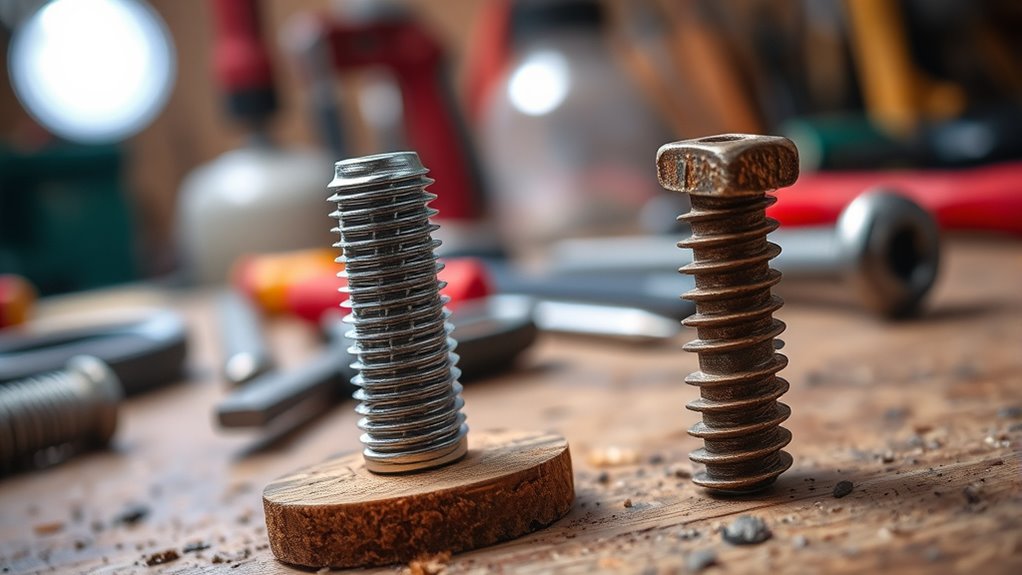
Selecting the right fastener begins with understanding the specific requirements of your project, including the materials involved, load capacity, and environmental conditions. To guarantee a secure connection, focus on thread engagement—how well the threads of the fastener and material mesh. Proper thread engagement prevents stripping and ensures strength. Equally important is material compatibility; choose fasteners made from materials that won’t corrode or weaken when in contact with your project’s materials. For example, stainless steel works well with moisture-prone environments, while softer metals might be better suited for lighter loads. Always match the fastener type and size to your task, considering these factors to achieve a durable, stable fit. Proper selection now saves you from wobbling, loosening, or failure later. Additionally, understanding fastener science can help you select the most effective solution for your specific application, including considerations of thread engagement and material compatibility.
As an affiliate, we earn on qualifying purchases.
Tips for Correctly Using Screws and Bolts to Ensure Stability
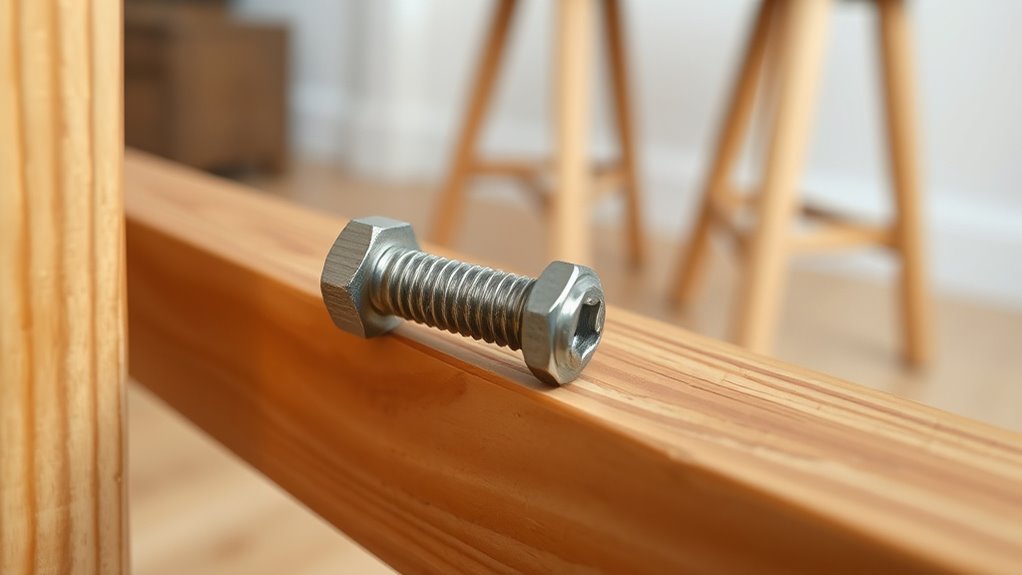
To guarantee screws and bolts provide a stable and secure connection, it’s essential to follow proper installation techniques. First, ensure the thread tension is appropriate; too tight can cause material damage, while too loose leads to wobbliness. Always check material compatibility to prevent corrosion or weak joints. Use the right tools to avoid stripping threads or over-tightening. Consider this quick guide:
| Fastener Type | Material Compatibility | Thread Tension |
|---|---|---|
| Screw | Wood, Metal | Moderate |
| Bolt | Steel, Aluminum | Firm |
| Washer | Prevents Loosening | Even Pressure |
Applying these tips guarantees a durable connection, reducing wobbling and ensuring long-term stability. Proper technique matters just as much as choosing the right fastener, and understanding fastener types can help you select the best option for your project. Additionally, selecting the appropriate thread engagement ensures maximum holding power without compromising material integrity. To achieve consistent results, always refer to installation best practices and ensure your tools are properly calibrated for the task.
Recognizing Signs of Improper Fastening and Fixing Wobbles

Wobbles and instability often signal that fasteners aren’t properly secured. One key sign is inconsistent thread tension—if threads feel loose or overly tight, it indicates improper fastening. Also, check for material compatibility; using screws or bolts not suited for your materials can cause wobbling or stripping. Look for uneven or persistent movement in furniture, fixtures, or machinery, especially when weight shifts or vibrations occur. Loose or missing fasteners are obvious indicators of a problem. Pay attention to parts that squeak, rattle, or shift unexpectedly. Properly tightened fasteners with compatible materials reduce wobbling and improve stability. Recognizing these signs early helps you fix issues before they worsen, ensuring everything stays secure and safe.
Frequently Asked Questions
Can Using the Wrong Fastener Damage the Material Permanently?
Using the wrong fastener can definitely cause material damage permanently. When fastener compatibility isn’t considered, it can lead to cracking, stripping, or weakening the material you’re working with. For example, a screw that’s too small or too large might not hold properly, causing stress and damage over time. Always make certain you pick the right fastener for your material to avoid costly repairs and maintain the integrity of your project.
Are There Specific Tools Recommended for Tightening Screws and Bolts?
You should use tools like a screwdriver or wrench designed for the specific fastener. For ideal tightening, consider a torque wrench to apply the correct torque, preventing over-tightening or loosening. Incorporate thread locking compounds when needed to guarantee stability. Proper tools and techniques help avoid damage and wobbliness, assuring your screws and bolts stay secure over time. Always match the tool to the fastener size and type for best results.
How Often Should Fasteners Be Inspected for Safety?
You should inspect your fasteners at least once a year to guarantee safety, but more often if you notice signs of corrosion or frequent use. Regular inspection helps catch issues like fastener corrosion early, preventing potential failures. If you work in harsh environments or expose your fasteners to moisture, consider increasing your inspection frequency to maintain the integrity of your equipment and avoid wobbly, unsafe setups.
What Environmental Factors Affect Fastener Longevity?
An ounce of prevention is worth a pound of cure. Environmental factors like moisture, salt exposure, and temperature fluctuations substantially impact fastener longevity. You’ll want to prioritize corrosion resistance in humid or salty environments and guarantee temperature stability to prevent expansion or contraction that weakens connections. By considering these factors, you can extend the lifespan of your fasteners and avoid costly repairs or failures down the line.
Can DIY Repairs Fix Wobbling Furniture Caused by Fastener Issues?
Yes, DIY repairs can fix wobbling furniture caused by fastener issues if you address fastener corrosion and material compatibility. First, inspect the fasteners for corrosion and replace any that are rusted or weakened. Use fasteners made from a compatible material to prevent future issues. Tighten or replace loose fasteners, ensuring they fit properly. This approach helps restore stability and prevents future wobbling caused by material mismatch or corrosion.
Conclusion
So, next time your furniture wobbles or your DIY project turns into a circus act, remember it’s probably just a screw or bolt throwing a tantrum. Don’t be that person who blames the universe—double-check your fasteners first. With a little attention and the right choice, you’ll have everything standing tall and proud, not wobbling like a drunken sailor. Because in the world of fasteners, precision beats chaos—unless you enjoy the wobble dance.
Fall Picks
fall essentials
As an affiliate, we earn on qualifying purchases.