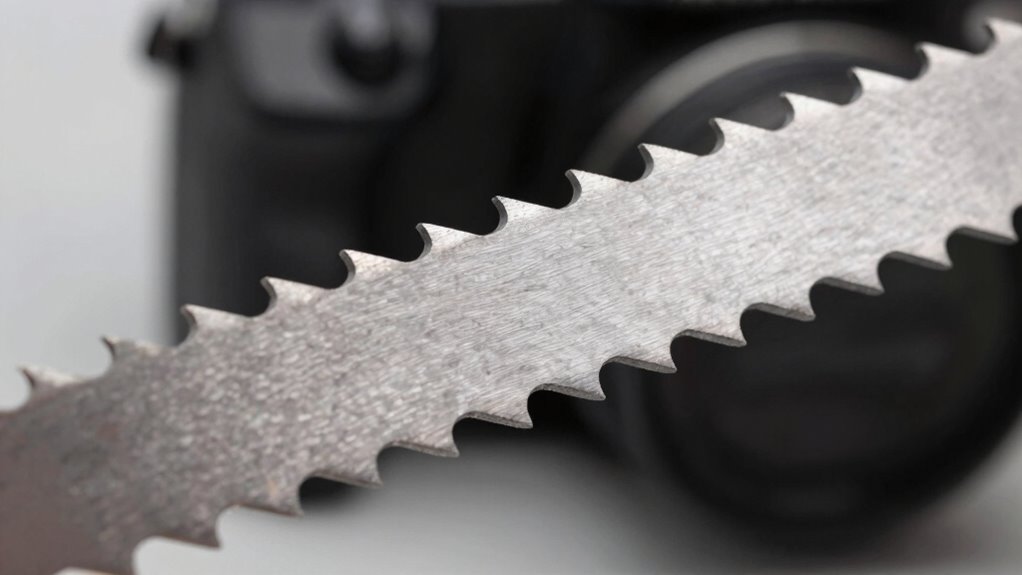

The teeth count on your saw blade impacts how fast you can cut, the quality of the finish, and which materials work best. Fewer teeth cut quickly but leave rougher edges, while more teeth deliver smoother, cleaner results but slow down your work. Choosing the right teeth count depends on your project and material. Keep exploring to find out how to pick the best blade for your needs and get peak results every time.
Key Takeaways
- Higher teeth count produces smoother, finer cuts suitable for detailed work and finishing.
- Fewer teeth enable faster cutting, ideal for rough cuts or softer materials.
- Increasing teeth reduces vibration and noise, improving cut stability and surface quality.
- Lower teeth count can lead to rougher edges and less precise finishes.
- Matching teeth count to the material and project needs optimizes cutting efficiency and blade durability.

Diablo Fine Finish Saw Blade for Wood – Ultra-Smooth Cuts, 60 Hi-ATB Teeth, 10" Diameter, .098" Kerf, 5/8" Arbor – D1060X
- Shock Resistant Design: Reinforced carbide tips withstand impacts
As an affiliate, we earn on qualifying purchases.
As an affiliate, we earn on qualifying purchases.
How Teeth Count Impacts Cutting Efficiency
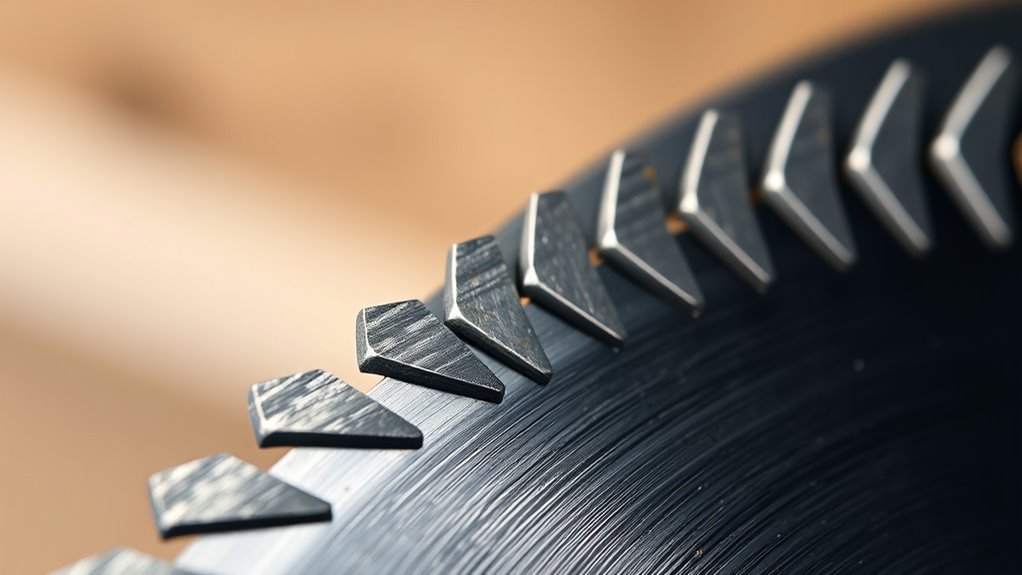
The number of teeth on a saw blade directly affects how efficiently it cuts through material. A blade with fewer teeth tends to cut faster because each tooth removes more material, but it can generate more blade noise and vibration. These vibrations can cause instability, making your cuts less precise and increasing wear on the blade over time. Conversely, a blade with more teeth provides smoother cuts by reducing vibration, but it may cut slower and require more effort. Blade noise also tends to decrease with more teeth, making operation quieter. Understanding this balance helps you choose the right blade for your project’s speed and finish quality, ensuring ideal cutting efficiency without sacrificing accuracy or comfort.
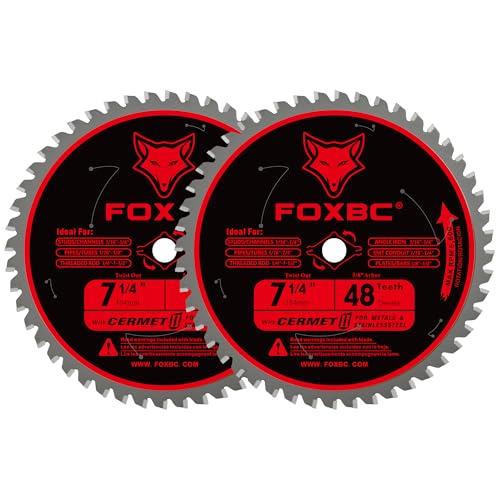
FOXBC 7 1/4 inch Metal Circular Saw Blade 48 Teeth, Metal and Stainless Steel Cutting Saw Blade, Ceramic Carbide with 5/8 Arbor – 2 Pack
- Blade Size: 7-1/4 inch diameter
- Teeth Count: 48 teeth for smooth cuts
- Material Compatibility: Cuts metal and stainless steel
As an affiliate, we earn on qualifying purchases.
As an affiliate, we earn on qualifying purchases.
How Teeth Count Affects Cut Quality and Finish
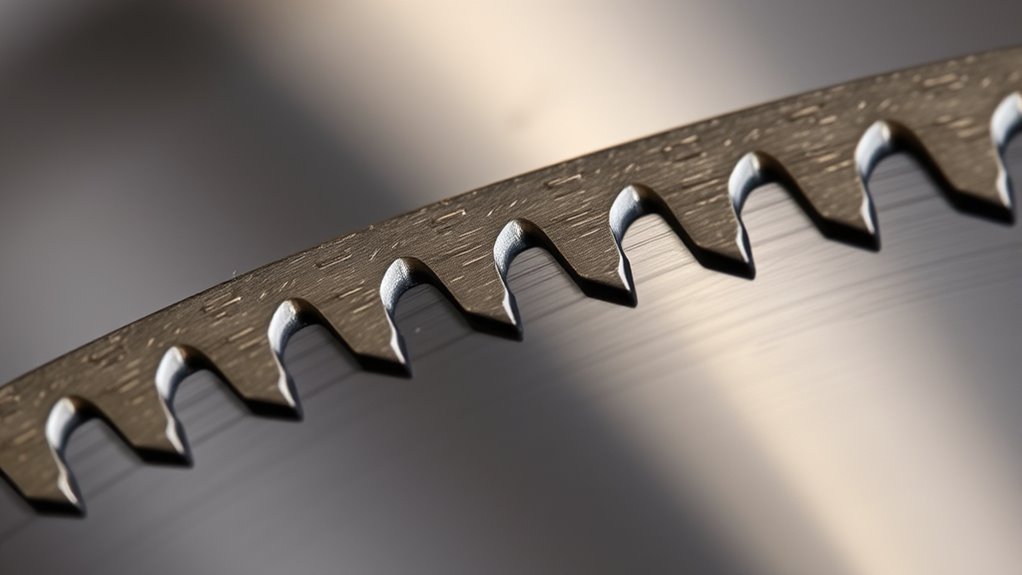
A higher teeth count on a saw blade generally results in a finer, smoother cut, which is essential for projects requiring a polished finish. The tooth geometry plays a key role here; smaller, more closely spaced teeth produce cleaner cuts with less tear-out. These teeth create less blade noise because they engage the material more gently, reducing vibration and roughness. Conversely, fewer teeth tend to generate rougher edges and may leave a less refined surface. When choosing a blade, consider the desired finish quality—more teeth help achieve a professional, smooth surface. Keep in mind that increased teeth count might require more frequent sharpening and can slow down the cutting process, but the improved finish often outweighs these drawbacks for fine woodworking or finishing tasks. Additionally, the cutting speed can be affected by the teeth count, influencing overall efficiency.

Amana Tool Carbide Tipped Glue Line Ripping Circular Saw Blade, 612401, 12 Inch D x 40T TCG, 22 Deg, 1 Bore
- Glue-Line Rip Finish: Leaves edges ready to glue
- Versatile Compatibility: Suitable for various saw types
- Cuts Hardwood and Softwood: Supports fast feed rates
As an affiliate, we earn on qualifying purchases.
As an affiliate, we earn on qualifying purchases.
How Teeth Count Influences Cutting Speed and Material Compatibility
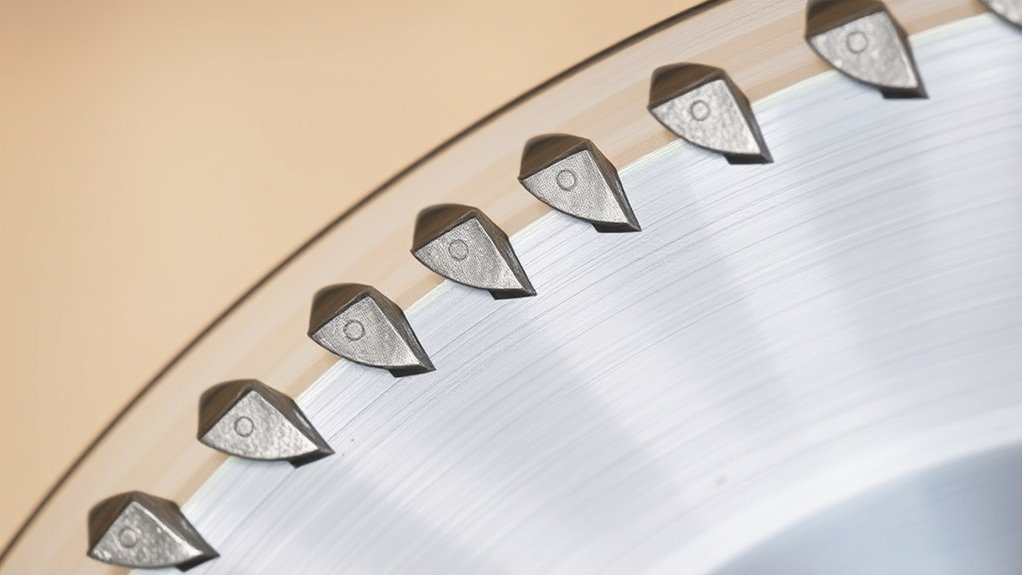
While a saw blade’s teeth count directly impacts the quality of the cut, it also considerably influences cutting speed and material compatibility. A blade with fewer teeth typically cuts faster because it removes material more quickly, making it suitable for rough cuts on softer materials like plywood or softwood. Conversely, blades with more teeth provide cleaner, finer cuts but at slower speeds, ideal for precision work on hardwood or laminate. The blade material also plays a role; for example, carbide-tipped blades usually handle tougher materials better. Safety considerations are vital—using the correct teeth count reduces kickback and ensures smoother operation. Choosing the right combination of teeth count and blade material optimizes your cutting speed while maintaining safety and material compatibility. Additionally, cutting efficiency is enhanced when matching the teeth design to the specific material, further improving performance and safety.

EZARC Japanese Teeth Reciprocating Saw Blade 15 Inch, Arc Edge Wood Pruning Saw Blades 6TPI for Tree Trimming, Wood Cutting, 3 Pieces
- Blade Length: 15-inch arc edge for efficient cuts
- Cutting Efficiency: Super fast coarse cut with Japanese teeth
- Design Innovation: Arc edge with triple-ground teeth for smooth cuts
As an affiliate, we earn on qualifying purchases.
As an affiliate, we earn on qualifying purchases.
How to Pick the Right Teeth Count for Your Projects

Choosing the right teeth count for your project depends on balancing your desired cut quality, speed, and the material you’re working with. Consider your blade material and tooth design, as these influence performance. A higher teeth count offers smoother cuts but reduces speed, ideal for fine woodworking. Conversely, fewer teeth cut faster but produce rougher edges, suitable for rough cuts or softer materials. Use this guide:
| Material Type | Recommended Teeth Count | Tooth Design Focus |
|---|---|---|
| Hardwood | 60-80 | Fine, precise cuts |
| Softwood | 24-40 | Fast, aggressive cuts |
| Plywood/Composite | 40-60 | Balance of speed and smoothness |
| Metal | 14-24 | Tough tooth design for durability |
| Plastic | 60-80 | Sharp teeth for clean cuts |
Match your blade’s tooth design and material to guarantee ideal results. Additionally, understanding cybersecurity vulnerabilities in tools and devices can help protect your equipment from hacking attempts.
How to Balance Teeth Count and Blade Durability for Best Results
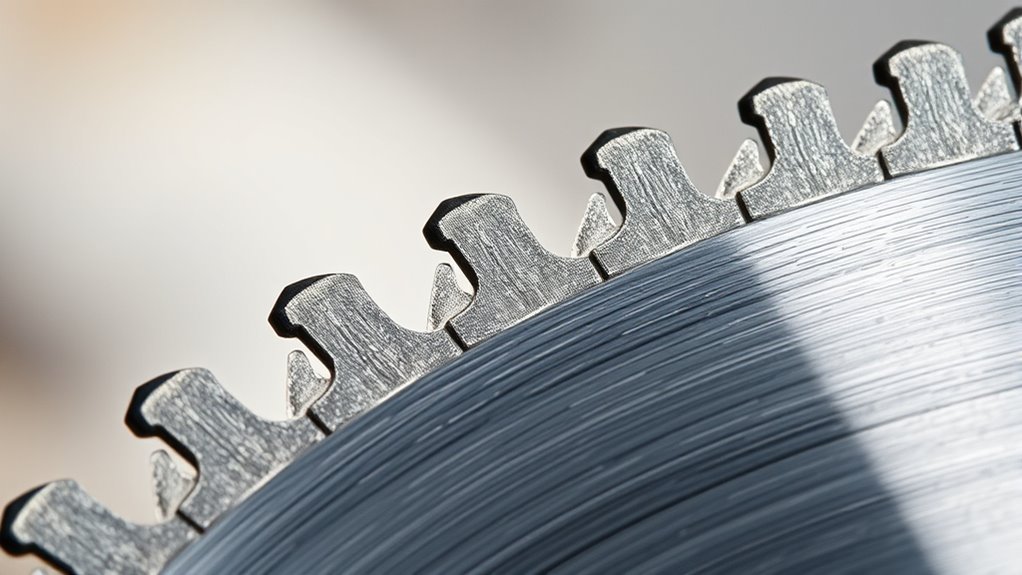
Finding the right balance between teeth count and blade durability is key to ensuring your saw blade performs ideally and lasts longer. A blade with too many teeth can produce more blade noise and wear out faster, especially if you’re cutting tough materials. Conversely, fewer teeth may reduce noise and increase durability but can compromise cut quality. Consider cost considerations; a more durable blade might cost more upfront but saves money over time by needing fewer replacements. To optimize, choose a teeth count suitable for your material and cutting frequency. Balance the need for smooth, precise cuts with long-term durability. Regularly inspect your blade for wear and replace it when necessary to maintain performance while managing blade noise and avoiding unnecessary expenses. Understanding blade geometry can help you select the appropriate teeth configuration for your specific tasks.
Frequently Asked Questions
How Does Teeth Count Affect Noise Levels During Cutting?
You’ll notice that higher teeth counts generally produce less noise during cutting because they create smoother cuts and reduce vibrations, aiding in noise reduction. This also improves cutting precision, as finer teeth cut more accurately with less chattering. On the other hand, fewer teeth tend to generate more noise, but they cut faster through thicker materials. Choosing the right teeth count balances noise levels and cutting efficiency based on your project needs.
Can Changing Teeth Count Extend Blade Lifespan?
Yes, changing the teeth count can extend your blade’s lifespan. A higher teeth count distributes cutting forces more evenly, reducing wear and tear on individual teeth, which enhances blade durability. Additionally, with better cutting precision, you’ll experience less strain on the blade, further prolonging its life. By selecting the appropriate teeth count for your material and task, you guarantee more efficient cuts and greater longevity for your saw blade.
Is There a Universal Teeth Count for All Cutting Tasks?
Is there a universal teeth count for all cutting tasks? Think of it as trying to find one size fits all; it simply doesn’t exist. While some blades boast standardized sizes for common tasks, universal compatibility remains elusive due to varying materials and precision needs. You’ll need to choose the right teeth count based on your specific project, as no single standard size can handle every cut efficiently.
How Does Teeth Shape Interact With Teeth Count?
Teeth shape interacts with teeth count by influencing cut quality and efficiency. Sharp teeth enhance cutting action, especially on tougher materials, while the blade material affects durability. Finer teeth with sharper edges provide cleaner cuts on delicate materials, but may require more frequent sharpening. Conversely, coarser teeth with durable materials cut faster on rougher surfaces. Combining the right teeth shape with ideal count and quality ensures precise, efficient results tailored to your specific task.
Does Teeth Count Influence the Need for Lubrication?
Yes, teeth count influences lubrication requirements because higher teeth counts generate more heat and friction, which can reduce cutting efficiency if not properly lubricated. With more teeth, you’ll need better lubrication to keep the blade cool and maintain smooth cuts. Proper lubrication enhances cutting efficiency by minimizing heat buildup and preventing wear, especially when working with dense or tough materials. So, always adjust your lubrication based on teeth count for ideal performance.
Conclusion
Choosing the right teeth count can considerably boost your cutting performance. For example, a higher teeth count increases cut quality but might slow you down, while fewer teeth speed things up but can compromise finish. Did you know that blades with 60 teeth deliver a smooth cut on hardwood, making your projects look professional? Understanding these details helps you select the perfect blade for every job, ensuring efficiency, quality, and durability every time.