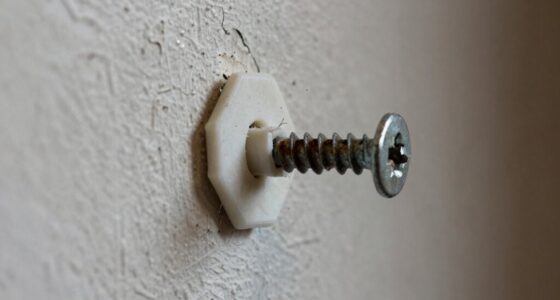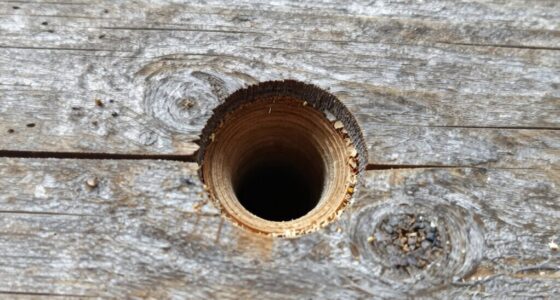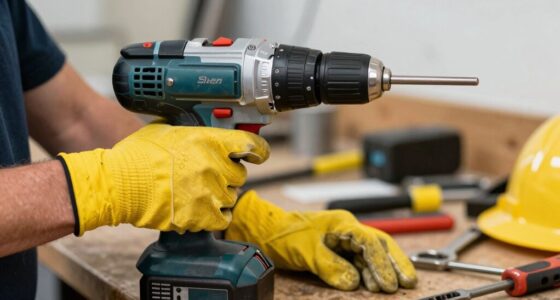
Countersinks and counterbores are both drill tools that prepare holes for fasteners, but they serve different purposes. A countersink creates a conical, beveled hole so screw heads sit flush or below the surface, improving safety and appearance. In contrast, a counterbore drills a cylindrical, flat-bottomed cavity for bolt heads or nuts, ensuring a neat, secure fit. Understanding these differences helps you choose the right tool for precise, professional results—if you want to learn more, keep exploring.
Prime for Young Adults — start your free trial
Fast free delivery, streaming and member deals for eligible 18–24 year olds.
As an affiliate, we earn on qualifying purchases.
Key Takeaways
- Countersink creates a conical, beveled hole for flush screw seating; counterbore produces a flat-bottomed, cylindrical recess for bolt heads.
- Countersinks are used when aesthetics and safety are priorities; counterbore is ideal for deep bolt seating and secure fastening.
- Countersinks require angled drill bits; counterbore uses straight bits for cylindrical holes.
- Material type influences tool choice, with softer materials needing less aggressive bits and harder materials requiring tougher, sharper tools.
- Proper selection ensures a professional finish, prevents material damage, and guarantees fastener fit and safety.
As an affiliate, we earn on qualifying purchases.
What Is a Countersink and How Does It Work?
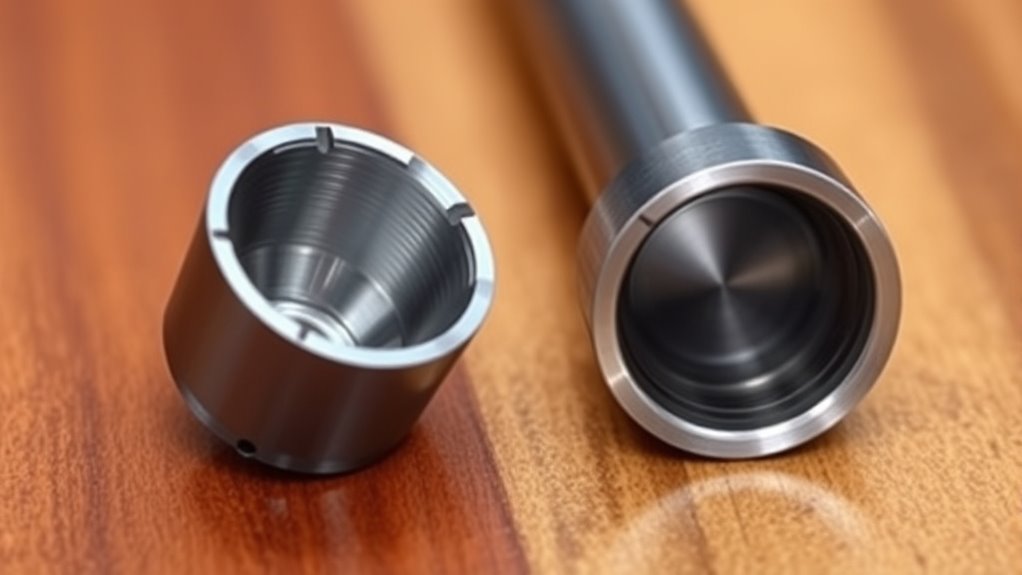
A countersink is a conical tool or feature designed to create a tapered, beveled hole for screw or bolt heads. To achieve the best results, you need to contemplate material properties—harder materials may require specialized drill bit types, like high-speed steel or carbide-tipped bits, for durability and precision. The right countersink bit depends on the material you’re working with; softer woods need less aggressive bits, while metals demand tougher, sharper options. As you drill, the countersink bit cuts a conical hole that allows the screw head to sit flush or below the surface, preventing protrusions. Choosing the appropriate drill bit type ensures clean cuts, reduces splintering, and maintains the integrity of your project. Proper understanding of material properties and bit types is key to successful countersinking. Additionally, understanding material properties can help you select the most effective tools and techniques for your specific project.
As an affiliate, we earn on qualifying purchases.
What Is a Counterbore and When Should You Use It?
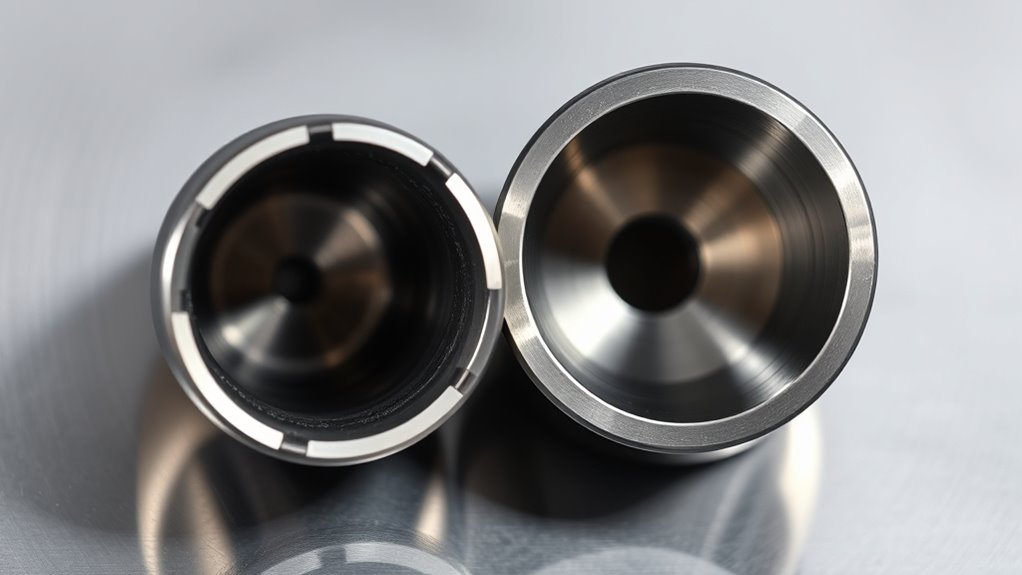
A counterbore is a cylindrical, flat-bottomed hole that enlarges the top part of a drilled hole to accommodate bolt heads or nuts. You should use it when you want the fastener to sit flush with or below the surface, providing a neat finish. Material compatibility is key; verify your counterbore tool suits the material you’re working with to avoid damage or uneven cuts. Proper tool maintenance extends the life of your counterbore bits, ensuring clean, precise holes and reducing the risk of tool failure. Use sharp, well-maintained tools for best results, especially on harder materials like steel or aluminum. Knowing when and how to apply counterboring helps you achieve strong, professional joints while maintaining efficiency and safety in your work. Additionally, understanding the contrast ratio of your projector can significantly impact the perceived quality of your images, especially in dark scenes.
As an affiliate, we earn on qualifying purchases.
How Do Countersinks and Counterbores Differ?
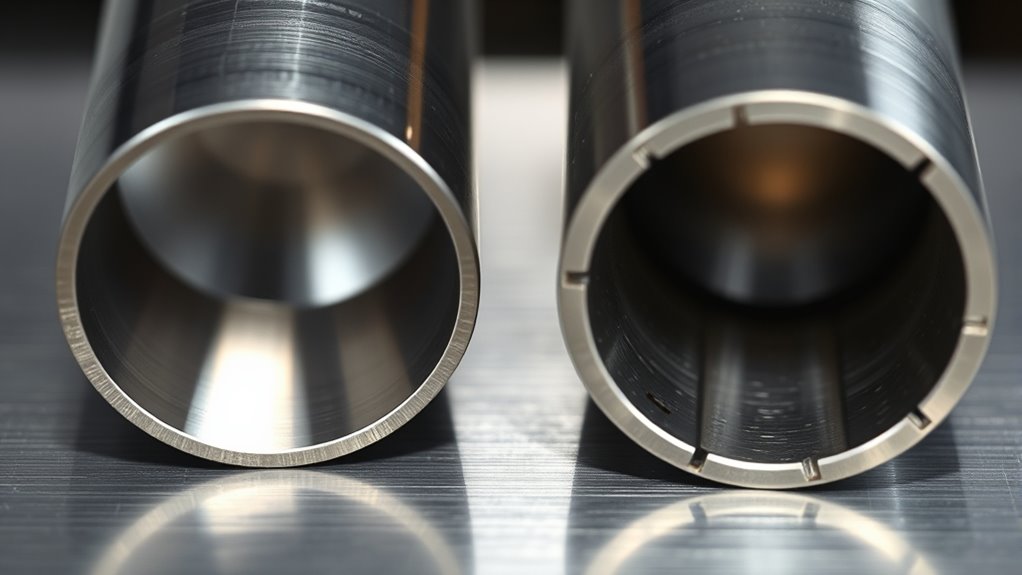
Countersinks and counterbores may seem similar since both prepare holes for fasteners, but they serve different purposes and produce distinct results. A countersink creates a conical hole to allow the screw head to sit flush, ideal for aesthetic and safety reasons. A counterbore, on the other hand, drills a cylindrical recess for the fastener’s head, providing more space and strength. Your drilling techniques differ: countersinks require angled bits, while counterbores use straight bits. Material compatibility also matters—harder materials may need specialized bits to prevent damage. Here’s a quick comparison:
| Feature | Countersink | Counterbore |
|---|---|---|
| Drilling technique | Angled drill bit | Straight drill bit |
| Fastener type | Flat-head screws | Bolts or socket screws |
| Material compatibility | Soft metals to plastics | Hard metals and dense materials |
Additionally, material compatibility is crucial to ensure the longevity of the fasteners and the integrity of the material being worked on.
As an affiliate, we earn on qualifying purchases.
When Should You Use a Countersink?

You should use a countersink when you need to create a flush surface or guarantee the screw head sits below or even with the material. It’s ideal for applications where a smooth finish matters or when the screw head needs to be hidden. This helps achieve both aesthetic appeal and functional reliability. Additionally, understanding the tool selection ensures you choose the right countersink for your specific project needs.
Creating a Flush Surface
When a flush surface is vital for your project, choosing the right tool guarantees a clean and professional finish. A countersink is ideal when you want the screw head to sit flush with or below the material’s surface, enhancing aesthetic considerations. It works well across various materials, provided you select the appropriate size and angle for material compatibility. Using a countersink ensures a smooth, finished look, especially for projects where appearance matters most. It’s perfect for wood, plastics, and softer metals, preventing protrusions that could catch on objects or cause injury. By creating a clean, flat surface, you improve both the visual appeal and safety of your project. Always match the countersink bit to the material and screw type for best results. Additionally, understanding the different types of drill bits can help you select the most effective tool for your specific application.
Accommodating Screw Heads
Using a countersink is essential when you need screw heads to sit flush or below the surface of the material, ensuring a neat and unobtrusive finish. This technique works best with screw head types like flat-head or beveled-head screws, which are designed to sit flush. When selecting a countersink, consider material compatibility; softer woods or plastics require gentle cutting to avoid damage, while metals may need sharper tools for clean results. Countersinks are ideal for applications where aesthetics matter or when screws may interfere with moving parts. If your project involves specific screw types and materials, using a countersink guarantees proper seating, reduces the risk of splitting, and provides a professional look. Always match your screw head and material for most suitable results. Additionally, understanding the environmental impact of your materials and tools can help promote sustainable practices in your woodworking or assembly projects.
When Is a Counterbore the Right Choice?

A counterbore is your best option when you need deep threads or extra clearance for bolt heads. It also helps prevent damage to the material during assembly. If these factors are important, a counterbore is the right choice for your project. Proper hole preparation ensures the best fit and longevity of your fasteners.
When Deep Threads Are Needed
Have you ever needed to create deep threads that can securely hold a fastener? When thread engagement is critical, a counterbore is often your best choice. It provides enough depth for full thread engagement, ensuring a strong hold. Plus, it’s suitable for various materials, especially when compatibility is key.
Here’s a quick comparison:
| Aspect | When to Use a Counterbore |
|---|---|
| Thread Depth | For deep threading needs |
| Material Compatibility | Works well with metals and plastics |
| Fastener Type | Ideal for socket head caps |
If your project demands deep threads and strong material compatibility, a counterbore guarantees the reliability you need.
For Bolt Head Clearance
When guaranteeing that bolt heads sit flush or below the surface, a counterbore is often the perfect solution. It creates a flat-bottomed, cylindrical cavity that accommodates the bolt head, providing clearance for smooth, flush mounting. If your bolt head is larger than the hole diameter or needs to sit below the surface, a counterbore ensures proper fit and avoids protrusion. This is especially useful in applications where a flush finish improves aesthetics or prevents snagging. You choose a counterbore when you want to maintain a neat, functional surface without sacrificing strength. By matching the counterbore depth to the bolt head height and adjusting the diameter accordingly, you get a clean, professional look that ensures the bolt head fits perfectly without damaging the material. Proper fit is essential for both safety and appearance in many assembly projects.
To Prevent Material Damage
Using a counterbore is an effective way to prevent material damage during assembly, especially when working with softer or delicate materials. It provides better material protection by distributing the load over a larger area, reducing the risk of cracks or deformation. Additionally, a counterbore helps maintain surface integrity, ensuring the surrounding surface remains smooth and unmarred. This is particularly important in applications where aesthetics or precise fit are critical. By creating a recess for the bolt head or fastener, a counterbore minimizes direct contact and pressure on the surface, preventing dents or gouges. Choosing a counterbore in such cases preserves the material’s strength and appearance, making it the ideal choice when protecting delicate surfaces and maintaining overall material integrity. Safe installation practices are essential to ensure the longevity and effectiveness of the assembly.
Which Tools and Techniques Do You Need?
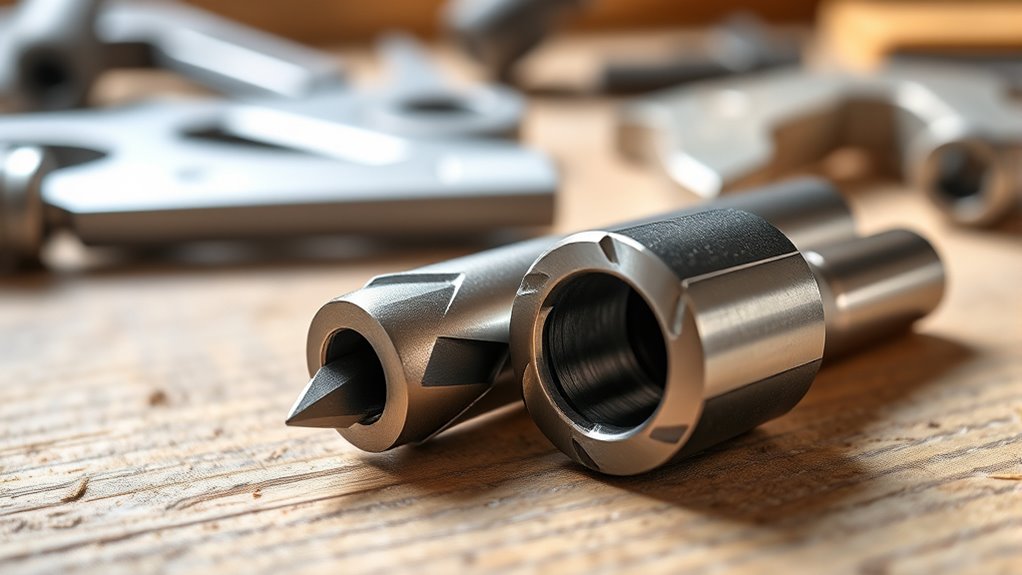
Choosing the right tools and techniques is essential for achieving clean, precise countersinks and counterbores. You’ll need the appropriate drill bits and accessories tailored to the material and desired finish. Proper drilling techniques help prevent tear-out and ensure accuracy, so steady, controlled pressure is key. Regular tool maintenance keeps your bits sharp and prevents overheating, which can compromise results. Consider using pilot holes to guide larger bits and maintain alignment. Selecting the correct speed and feed rate improves cut quality and prolongs tool life. Use clamps or jigs to stabilize your workpiece, and always double-check measurements before drilling. Additionally, understanding the proper lubrication and cooling techniques can significantly extend the lifespan of your bits and improve cutting performance.
What Are Common Uses in Different Industries?
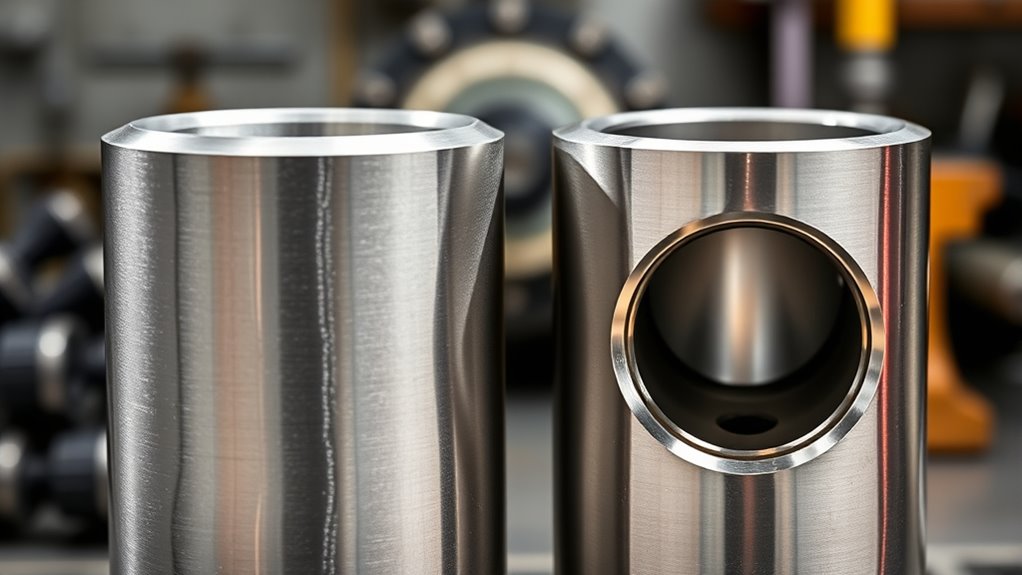
Countersinks and counterbores are widely used across various industries to create precise, clean holes for fasteners and fittings. In manufacturing, they guarantee secure fastening methods while maintaining a professional appearance. Automotive industries rely on counterbores for strong, flush fittings in engine assemblies, where material compatibility is critical to prevent damage. Aerospace applications use countersinks for lightweight, aerodynamic designs, requiring compatibility with specialized materials like composites and alloys. Furniture production employs countersinks to hide screw heads, enhancing aesthetics. Construction projects utilize both tools for durable, reliable joints, especially when working with wood, metal, or plastic. Understanding industry-specific fastening methods and material compatibility helps you choose the right tool, ensuring effective performance and long-lasting results across different fields.
How Does Choosing the Right Tool Improve Your Results?
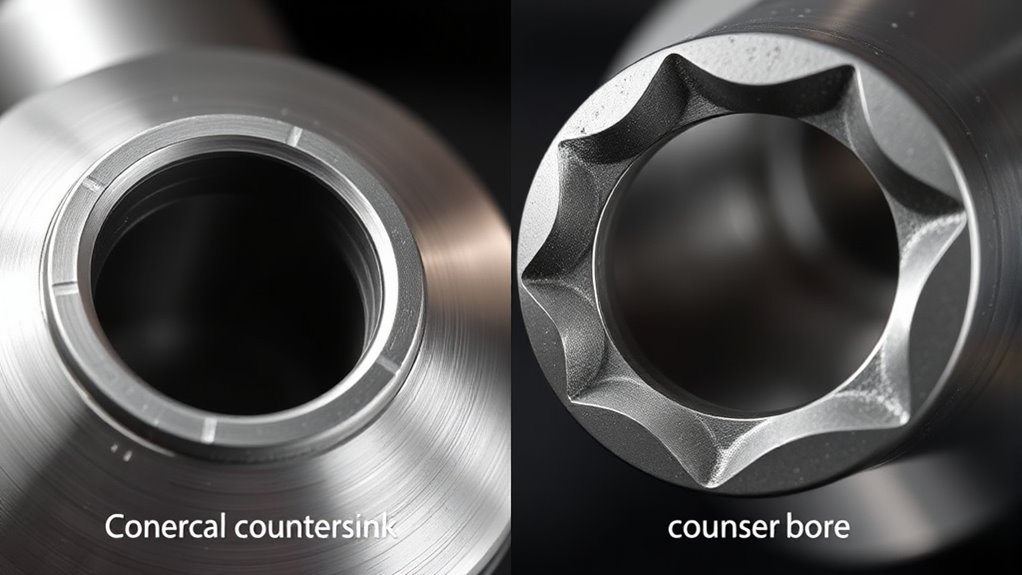
Selecting the appropriate tool for your project guarantees that fasteners sit flush, hold securely, and look professional. When you choose the right countersink or counterbore, you improve drill bit selection and surface finishing, leading to better results. Proper tool choice guarantees clean, accurate holes that prevent material damage. It also reduces the need for rework and saves time. With the right tool, you can:
Choosing the right tool ensures clean, professional holes and a polished finish.
- Achieve smooth, polished surface finishes
- Minimize material splintering or cracking
- Ensure consistent hole depth and diameter
- Enhance the strength of the fastening point
- Improve overall project aesthetics and durability
Focusing on the right tool means your work looks professional and performs reliably. By matching your tools to your materials and fasteners, you optimize both efficiency and quality.
What Tips Help You Achieve a Professional Finish?
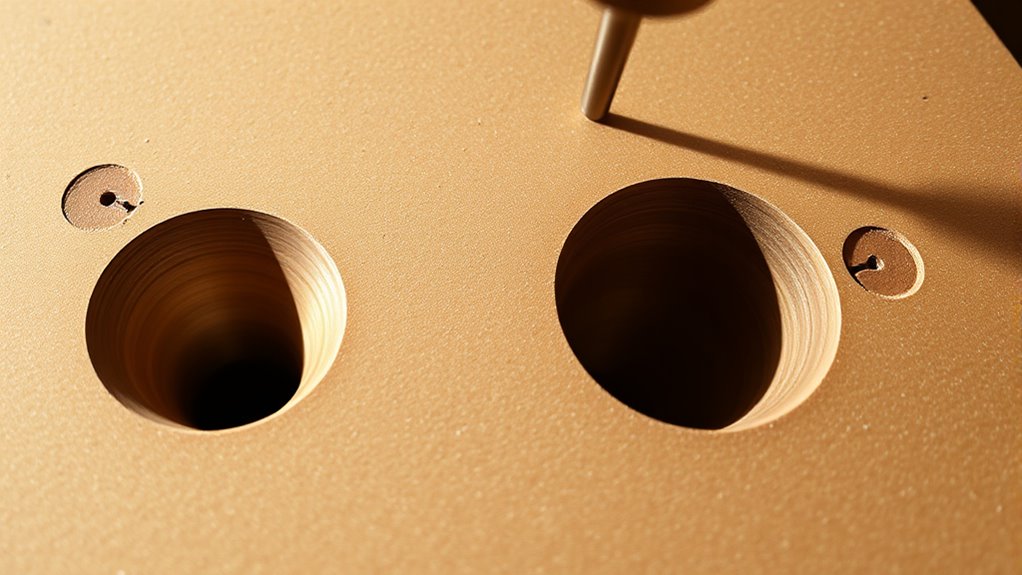
Ever wondered how to achieve a flawless, professional finish when using countersinks or counterbores? The key lies in proper finishing techniques and surface preparation. Start by ensuring your workpiece is clean and free of debris, which helps prevent uneven surfaces. Use sharp, well-maintained tools to achieve precise cuts and smooth edges. Adjust your drill speed and pressure to avoid overcutting or chipping the material. Take your time to align the tool correctly; this ensures the countersink or counterbore sits flush and looks professional. Sand or file any rough edges after drilling to enhance the finish. Practicing these finishing techniques and paying attention to surface preparation will result in a clean, polished look that elevates your craftsmanship to a professional standard.
Frequently Asked Questions
Are Countersinks and Counterbores Interchangeable for Any Applications?
No, countersinks and counterbores aren’t interchangeable for all applications. You need to contemplate material compatibility and tool versatility. Countersinks are ideal for creating a conical hole for screw heads in softer materials like wood or plastic, while counterbores are better for providing a flat bottom for bolts or larger screws in metals. Using the wrong tool can damage your material or compromise the fit, so choose carefully based on your specific needs.
What Materials Are Best Suited for Countersink and Counterbore Tools?
Did you know that high-speed steel and carbide tools last 3-5 times longer than standard options? For countersinks and counterbores, you should choose materials like high-speed steel, carbide, or cobalt, as they offer excellent material compatibility and tool durability. These materials work well with metals such as steel, aluminum, and brass, ensuring clean cuts and longer tool life, especially in demanding applications.
How Do Tool Sizes Influence the Finish Quality of Drilled Holes?
Your tool size, especially drill diameter, directly impacts the finish quality of drilled holes. Using the right tool material, like high-speed steel or carbide, guarantees precision and smooth surfaces. A larger drill diameter can reduce the risk of burrs and rough edges, resulting in a cleaner finish. Conversely, smaller sizes might cause more tearing or splintering if the tool isn’t sharp or suited for the material, affecting the overall quality.
Can You Modify Existing Drills to Perform Countersinking or Counterboring?
Did you know that over 60% of DIY enthusiasts modify their drills for specific tasks? You can definitely modify your existing drills for countersinking or counterboring by adding or swapping out tool adaptation components like countersink bits or counterbore attachments. Drill modification is straightforward if you have the right accessories, allowing you to transform your drill into a versatile tool that handles precise finishing without needing a new machine.
What Safety Precautions Should Be Taken When Using Countersink and Counterbore Tools?
When using countersink and counterbore tools, always wear personal protective equipment like safety glasses and gloves to protect against flying debris. Keep your tools well-maintained, inspecting for damage before use, and make certain they are properly sharp to prevent accidents. Follow manufacturer instructions carefully, secure your workpiece firmly, and work at a steady pace. These precautions help prevent injuries and ensure precise, safe operation of your tools.
Conclusion
Choosing between a countersink and a counterbore depends on your project needs. Think of it like a puzzle—you need the right piece to fit perfectly. Using the correct tool not only guarantees a professional look but also extends your work’s durability. With the right technique, you can turn a simple task into a precise craft. Remember, selecting the right tool isn’t just practical; it’s the key to achieving flawless results every time.
Fall Picks
fall essentials
As an affiliate, we earn on qualifying purchases.