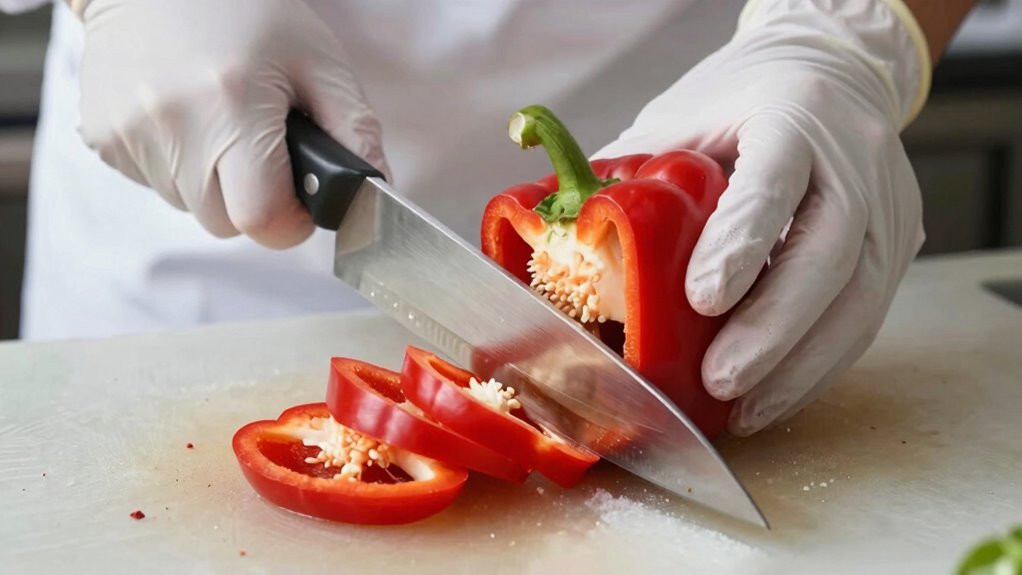

To prevent the worst cuts, focus on practicing a proper knife grip and maintaining the right cutting angle. Keep a firm but controlled grip, with fingers wrapped securely around the handle, and stay clear of the blade’s path. Also, aim for a consistent, slightly angled cut (20-30°) to reduce slips and force. Mastering these habits makes slicing safer and more efficient—keep going to discover how to turn these techniques into your routine.
Key Takeaways
- Maintain a secure, controlled grip to prevent slips during slicing.
- Keep fingers tucked away using a claw grip to avoid contact with the blade.
- Use a consistent, proper cutting angle (20-30°) for safer, smoother cuts.
- Focus on deliberate, controlled movements rather than rushing.
- Regularly check and adjust hand positioning for safety and comfort.
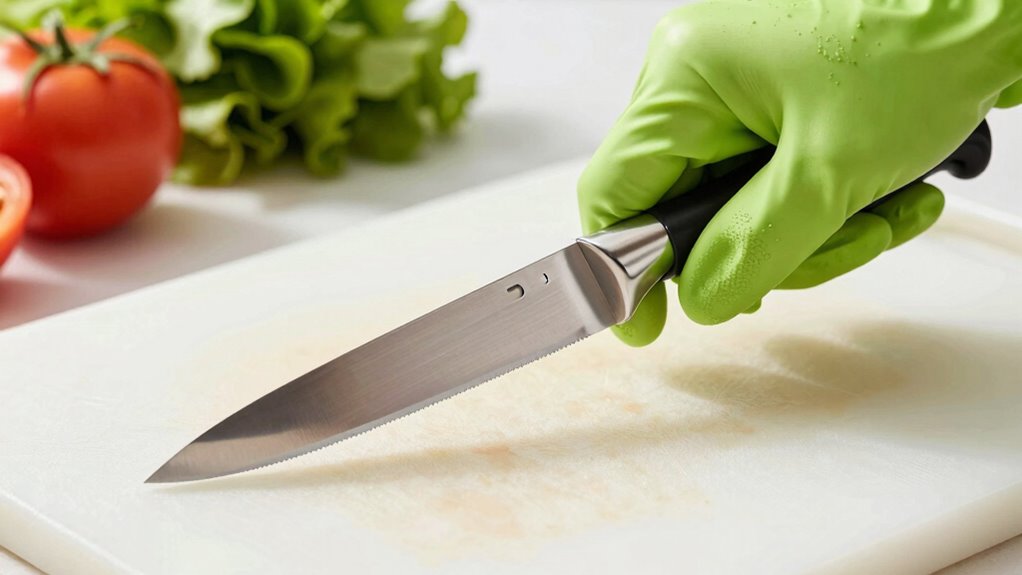
Have you ever thought about how a simple habit can prevent serious injuries while using a slicer? It’s often the small details that make the biggest difference. One of the most effective safety habits involves paying close attention to your knife grip and the cutting angle. When you handle a slicer, your grip on the knife should be firm but controlled, guaranteeing you have steady command without risking slips. Hold the handle with your fingers wrapped securely around it, keeping your thumb and fingers away from the blade’s path. This reduces the chance of accidental cuts if the knife suddenly slips or if pressure shifts unexpectedly.
Maintain a firm, controlled grip and keep fingers away from the blade to prevent slips and injuries.
Equally important is maintaining the correct cutting angle. When slicing, aim to keep the knife at a consistent, slightly angled position—roughly 20 to 30 degrees—relative to the food and the cutting surface. This angle allows the blade to cut smoothly and efficiently, minimizing the need for excessive force that can cause slips. A stable cutting angle also helps keep your fingers and hand away from the blade’s sharp edge. By controlling the angle, you create a safer slicing motion that feels natural and reduces the risk of sudden movements that could lead to injuries. Developing this safe slicing technique regularly can significantly improve your safety practices.
Practicing this safety habit means being mindful every time you work with a slicer. Before you start, check your grip to make certain it’s secure and comfortable. Adjust your hand position if necessary, so your fingers stay clear of the blade’s path. As you slice, focus on maintaining that consistent cutting angle, making controlled, deliberate movements. Avoid rushing or applying too much pressure, as these are common causes of slips and cuts. Remember, it’s better to take your time and keep your hands in a safe position than to rush through the task and risk an injury. Incorporating proper technique into your routine helps reinforce safe habits and reduces the chance of accidents.
Developing proper knife handling techniques can further enhance your safety while slicing, ensuring you use the right skills to prevent accidents. Practicing this habit consistently builds muscle memory, making safe slicing second nature. Over time, you’ll find yourself instinctively holding the knife correctly and maintaining the right angle without much thought. Additionally, ensuring proper air quality in your workspace can help you stay alert and focused during precise tasks like slicing, reducing the likelihood of mishaps. Not only does this protect you from serious cuts, but it also improves your overall efficiency, giving you cleaner, more precise slices. When you combine a proper knife grip with a mindful cutting angle, you establish a simple yet powerful safety routine that keeps your fingers intact and your slicing tasks safer and more effective.

NoCry Premium Cut Resistant Gloves Food Grade — 100% Food Safe — Level 5 Meat Cutting Glove for Chefs & Butchers — Perfect Mandoline Glove or Oyster Shucking Gloves with Superior Comfort & Dexterity
4X MORE CUT-RESISTANT THAN LEATHER — Safety gloves made from the highest level of cut resistant material on…
As an affiliate, we earn on qualifying purchases.
As an affiliate, we earn on qualifying purchases.
Frequently Asked Questions
What Type of Gloves Are Safest for Slicer Use?
You should wear protective gloves made of cut-resistant materials when using a slicer. These gloves are designed to shield your hands from accidental cuts during slicing tasks. Look for gloves labeled with high cut resistance ratings, like those made from Kevlar or Spectra. Always make sure the gloves fit well and are in good condition. Wearing proper protective gloves greatly reduces the risk of injury, keeping your hands safe while working with slicers.
How Often Should I Replace Dull Blades?
You should replace dull blades as soon as you notice decreased cutting efficiency or increased effort, typically every few weeks depending on usage. Regular blade maintenance helps prevent dull blade risks, which can lead to slips and cuts. Keep an eye on blade sharpness and replace promptly to guarantee safety and ideal slicing. Sharp blades reduce the chance of accidents, so don’t delay in swapping out dull ones for safer, cleaner cuts.
Can Children Safely Use the Slicer?
Children can use the slicer safely, but only with close child supervision and adherence to age restrictions. Typically, kids should be at least 12 years old, depending on their maturity level. Always demonstrate proper safety habits, like keeping fingers away from the blade and using protective devices. Never leave children unsupervised around a slicer, and make certain they understand the risks before allowing them to operate it.
What Is the Best Way to Clean a Slicer?
Think of cleaning your slicer like tending a treasured garden—carefully and thoroughly. To keep it sharp and safe, use proper knife maintenance and cleaning techniques. Unplug the slicer first, then disassemble removable parts and wash them with warm, soapy water. Wipe down the machine’s surface with a damp cloth, avoiding abrasives. Dry all parts completely before reassembling, ensuring your slicer stays in top shape and safe to use.
Are There Specific Slicer Safety Certifications to Look For?
Yes, you should look for slicers with certification standards that guarantee safety compliance, like NSF or UL listings. These certifications confirm the equipment meets strict safety guidelines, reducing risk of injury. Always check for slicers with clear safety labels and certification marks. By choosing certified slicers, you ensure the machine adheres to industry safety standards, helping you prevent accidents and operate confidently and securely in your workspace.

Knife Sharpening Angle Guide for Whetstone, 2 Pack 15° Knife Angle Guide with Ceramic Glide, Non-Slip Blade Guide for Sharpening Stone, Kitchen Knife Sharpener Angle Guide Tool
15° Whetstone Angle Guide: Helps keep a steady sharpening angle on a whetstone, so beginners can build a…
As an affiliate, we earn on qualifying purchases.
As an affiliate, we earn on qualifying purchases.
Conclusion
By adopting this simple slicer safety habit, you might just find yourself avoiding the worst cuts when you least expect it. It’s funny how a small change in your routine can make such a big difference—like how you often find your keys right when you’re searching for them. Stay vigilant and mindful while slicing, and you’ll be surprised how safety becomes second nature. Sometimes, the tiniest habits save you from the biggest accidents.

Dfito Chef Knife Sets with Roll Bag, 9 Pieces Professional Knife Set, High Carbon Stainless Steel Kitchen Chef Knife Set, Red Pakkawood Handle, Dishwasher Safe
Super Sharp Blade: The super sharp blade is made of high-quality German stainless steel, with a chromium content…
As an affiliate, we earn on qualifying purchases.
As an affiliate, we earn on qualifying purchases.
Knife Sharpening Angle Guide for Whetstone, 2 Pack 15° Knife Angle Guide with Ceramic Glide, Non-Slip Blade Guide for Sharpening Stone, Kitchen Knife Sharpener Angle Guide Tool
15° Whetstone Angle Guide: Helps keep a steady sharpening angle on a whetstone, so beginners can build a…
As an affiliate, we earn on qualifying purchases.
As an affiliate, we earn on qualifying purchases.