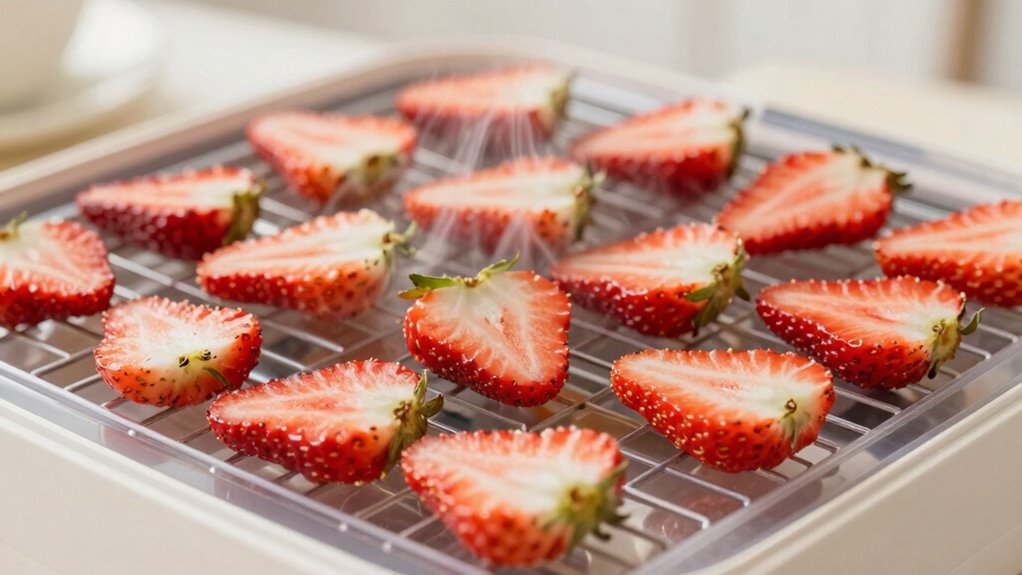
Food dehydration depends on airflow, not just heat, because airflow carries moisture vapor away from the food surface, preventing a barrier from forming. Without proper circulation, vapor lingers, slowing down dehydration and risking spoilage or uneven drying. Consistent airflow keeps the food surface dry and allows moisture to escape from deeper tissue. By controlling airflow, you can achieve faster, more even drying results. If you want to learn how to optimize your dehydration process, keep exploring these concepts.
Key Takeaways
- Airflow carries moisture vapor away, preventing a barrier that hinders further dehydration.
- Proper circulation ensures even drying, avoiding partial or uneven moisture removal.
- Airflow maintains low humidity around the food, accelerating moisture escape.
- Without airflow, vapor stagnates, slowing dehydration and increasing spoilage risk.
- Effective airflow transforms heat into a more efficient moisture removal process.
Have you ever wondered how proper airflow impacts the process of food dehydration? It’s not just about applying heat; airflow plays a vital role in moisture removal, which is the key to effective dehydration. When you dehydrate food, the goal is to eliminate water content without compromising texture or flavor. Heat alone can help warm the food, but without good air circulation, moisture tends to linger around the surface and inside the food, slowing down the dehydration process. That’s why consistent airflow is essential—it carries away the moisture vapor as it escapes from the food, maintaining a dry environment that allows dehydration to proceed efficiently.
Think of airflow as a conveyor that keeps moisture moving away from the food surface. As heat warms the food, moisture inside begins to evaporate. If the air surrounding the food is stagnant, the vapor can form a thin barrier, making it harder for more moisture to escape. This stagnation prolongs dehydration, risking spoilage or uneven drying. On the other hand, when air is constantly circulating, it picks up the moisture vapor quickly and carries it out of the drying environment. This process accelerates moisture removal, guaranteeing that the food dries evenly and thoroughly.
Air circulation isn’t just about moving air around; it’s about creating a steady flow that prevents moisture buildup. Proper airflow keeps the surface of the food dry, allowing water molecules from the interior to escape more easily. When moisture is effectively removed, you reduce the risk of mold or bacterial growth, which thrive in damp conditions. Plus, good airflow helps maintain consistent drying conditions**, so you don’t end up with partially dried or uneven pieces. Improving airflow management can also help you control humidity levels within your dehydrating setup more precisely. This consistency is critical whether you’re drying fruits, vegetables, or meats. Additionally, understanding the importance of airflow in dehydration can help you optimize your drying setup for better results. Proper airflow also minimizes the energy needed for dehydration by making the process more efficient. Moreover, using equipment designed with airflow efficiency** in mind can significantly enhance dehydration outcomes.
You’ll notice that many food dehydrators and ovens are designed with fans or vents specifically to enhance airflow. These features ensure that air moves uniformly across all surfaces of the food, maximizing moisture removal. Without this circulation, relying solely on heat can cause uneven drying and possibly spoilage in some areas while others remain moist. Proper airflow, thus, isn’t just an accessory—it’s the backbone of efficient and safe food dehydration. It’s what turns heat into an effective tool for moisture removal, making your dehydration process faster, more uniform, and ultimately more successful.
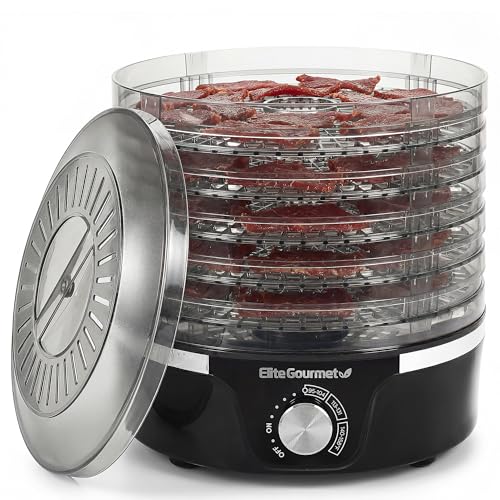
Elite Gourmet EFD319 Food Dehydrator, 5 BPA-Free 11.4" Trays Adjustable Temperature Controls, Jerky, Herbs, Fruit, Veggies, Dried Snacks, Black
CUSTOM TEMPERATURE CONTROL FOR PERFECT RESULTS: Adjustable temperature range from 95°F–158°F lets you dry fruits, vegetables, herbs, mushrooms…
As an affiliate, we earn on qualifying purchases.
As an affiliate, we earn on qualifying purchases.
Frequently Asked Questions
How Does Humidity Affect Dehydration Efficiency?
Humidity considerably impacts dehydration efficiency because high humidity levels hinder moisture control, making it harder for your food to dry evenly. When the air is moist, it slows down evaporation, leading to inconsistent dehydration. To achieve dehydration consistency, you need to reduce humidity around your food, ensuring moisture escapes effectively. Proper airflow helps, but controlling humidity is essential for efficient dehydration, preventing spoilage and ensuring your food dries thoroughly.
Can Low Airflow Cause Spoilage During Dehydration?
Imagine a still pond, where water stagnates and spoils quickly—that’s what low airflow does during dehydration. Without proper air circulation, moisture removal slows, creating a damp environment perfect for mold and bacteria. This stagnation increases the risk of spoilage. To prevent this, guarantee good airflow so the air can carry away moisture efficiently, keeping your food safe, dry, and preserved.
What Equipment Optimizes Airflow for Dehydration?
You should look for a dehydrator with a well-designed airflow system that promotes even air circulation. Equipment featuring multiple fan settings and adjustable vents optimizes airflow, ensuring consistent dehydration. Vertical and horizontal airflow designs help distribute air evenly across trays. Good dehydrator design minimizes hot spots and maintains steady airflow, preventing spoilage and ensuring your food dehydrates uniformly. Investing in quality equipment with these features guarantees better results.
Does Dehydration Speed Vary With Different Airflow Rates?
Dehydration speed does vary with different airflow rates—by up to 50%, studies show. When you increase air circulation, dehydration becomes faster and more uniform, preventing spoilage and uneven texture. Proper airflow guarantees even moisture removal, reducing drying time and improving quality. If you want quicker results without sacrificing consistency, optimizing airflow is essential. You’ll notice a significant difference in both efficiency and the final product’s quality.
How Do I Measure Airflow in My Dehydrator?
You can measure airflow in your dehydrator by using an anemometer, which gauges airflow measurement directly. Place the device near the vents or fans to get accurate readings. Proper dehydrator ventilation ensures consistent drying, so checking airflow regularly helps optimize dehydration. Make certain your vents aren’t blocked, and adjust any fan settings if available. Monitoring airflow guarantees even dehydration and preserves food quality efficiently.
Elite Gourmet EFD319 Food Dehydrator, 5 BPA-Free 11.4" Trays Adjustable Temperature Controls, Jerky, Herbs, Fruit, Veggies, Dried Snacks, Black
CUSTOM TEMPERATURE CONTROL FOR PERFECT RESULTS: Adjustable temperature range from 95°F–158°F lets you dry fruits, vegetables, herbs, mushrooms…
As an affiliate, we earn on qualifying purchases.
As an affiliate, we earn on qualifying purchases.
Conclusion
So, next time you’re obsessing over the perfect temperature for dehydrating your snacks, remember—airflow actually does the heavy lifting. It’s ironic, isn’t it? All that fuss about heat, when the real secret lies in good airflow to get that crispy crunch you crave. Don’t just crank up the heat; give your food the airflow it deserves. After all, sometimes the simplest trick is the one that makes all the difference.
Elite Gourmet EFD319 Food Dehydrator, 5 BPA-Free 11.4" Trays Adjustable Temperature Controls, Jerky, Herbs, Fruit, Veggies, Dried Snacks, Black
CUSTOM TEMPERATURE CONTROL FOR PERFECT RESULTS: Adjustable temperature range from 95°F–158°F lets you dry fruits, vegetables, herbs, mushrooms…
As an affiliate, we earn on qualifying purchases.
As an affiliate, we earn on qualifying purchases.

Magic Mill Pro Food Dehydrator Machine | Powerful 600W Rear Fan Even-Drying System | 7 Full-Size Stainless Steel Trays | 95°-176° Temperature Control, 48H Timer, Keep Warm + Auto Shutoff | ETL Listed
FULL-STAINLESS BUILD, INSIDE & OUT | Built the way a premium dehydrator should be—stainless steel exterior + stainless…
As an affiliate, we earn on qualifying purchases.
As an affiliate, we earn on qualifying purchases.