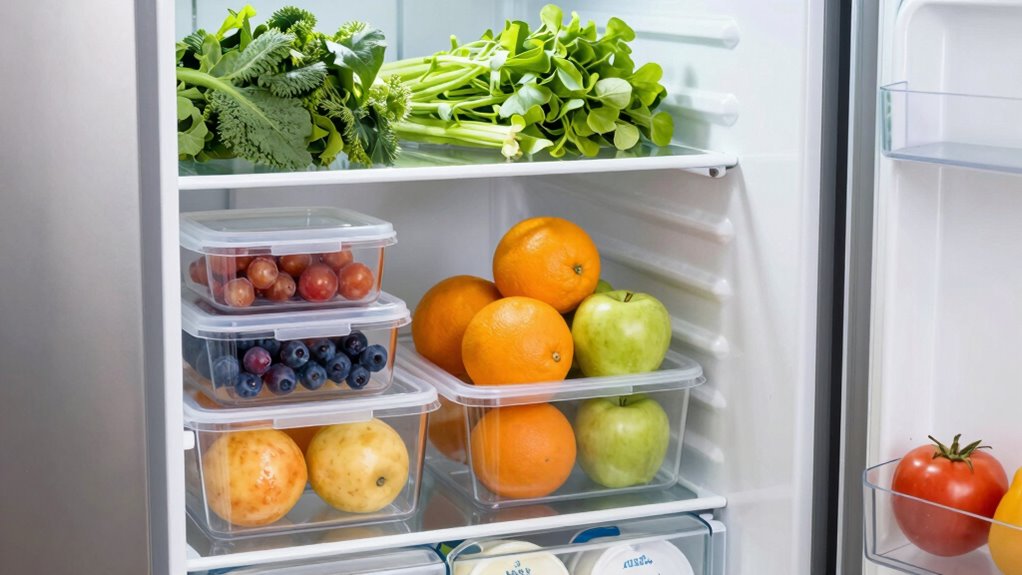

To protect your stored food, organize your fridge by placing warmer items like drinks on the door shelves and more perishable items like dairy and leftovers in the colder top shelf and back of the fridge. Keep foods in their proper temperature zones and leave space around containers for airflow, which prevents hotspots and spoilage. Regularly clean vents and coils to maintain efficiency. If you want to learn more about ideal fridge organization, keep exploring these helpful tips.

Prime made for students and young adults
- Fast, free delivery for dorm and study essentials
- Prime Video and Amazon Music included
- Member-only deals
Key Takeaways
- Store perishable items in the coldest zones, such as the top shelf and near the back, to prevent spoilage.
- Keep items organized to allow proper airflow and prevent hotspots, ensuring even cooling throughout the fridge.
- Place fruits and vegetables in crisper drawers based on humidity needs to maintain freshness.
- Avoid overpacking to maintain ventilation and temperature stability, reducing the risk of bacterial growth.
- Regularly clean vents and coils to sustain optimal airflow and temperature regulation.
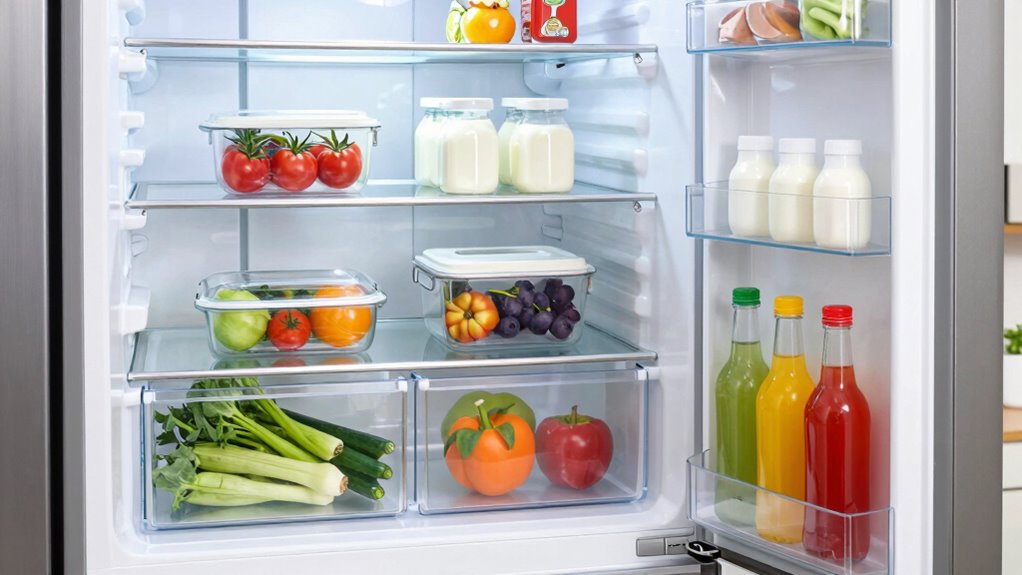
Have you ever wondered how to organize your refrigerator for maximum efficiency? It all comes down to understanding the significance of temperature zones and airflow enhancement. When you set up your fridge correctly, you not only keep your food fresher longer but also prevent spoilage and keep bacteria at bay. The key is to recognize that different areas of your refrigerator have specific temperature needs, so placing items accordingly makes a big difference. The top shelf, for instance, tends to be the coldest zone, making it ideal for dairy products, leftovers, and ready-to-eat foods. The middle shelf usually maintains a consistent temperature, perfect for eggs, snacks, and deli meats. The crisper drawers are designed to regulate humidity, so use them wisely for fruits and vegetables based on their moisture requirements. The door shelves are warmer, so avoid storing milk or perishable items there, as frequent opening causes temperature fluctuations that can accelerate spoilage.
To guarantee your refrigerator works efficiently, airflow enhancement is crucial. Proper airflow prevents hotspots and uneven temperature distribution, which can lead to food deterioration. Keep a reasonable space between items inside the fridge to allow air to circulate freely. Overpacking can block vents and hinder airflow, so organize your shelves to promote even cooling. Items should be placed in a way that air can flow around them, especially near the vents at the back of the fridge. Avoid blocking these vents with large containers or bulky items. Regularly cleaning the vents and coils also helps maintain optimal airflow and ensures your refrigerator runs efficiently and maintains steady temperatures across all zones. Additionally, understanding airflow management can help you optimize your refrigerator’s performance and prolong the freshness of your stored foods. Recognizing the importance of temperature stability can further prevent food spoilage caused by fluctuations. A well-maintained environment also minimizes energy consumption and reduces wear on the appliance.
Another important aspect of the refrigerator layout rule is understanding that temperature fluctuations can compromise food safety. When you open the door frequently or leave it open for a long time, warm air enters, disrupting the temperature zones. This can be particularly problematic for perishable foods stored on the door shelves. To combat this, organize your fridge so that the most perishable items are closer to the back and in the colder zones, minimizing their exposure to temperature changes. Keep the fridge temperature set at around 37°F (3°C) to ensure consistent cooling. Regularly checking the temperature with a thermometer helps you stay within the safe range. Proper temperature regulation is essential for maintaining food quality and safety.
refrigerator organization storage bins
As an affiliate, we earn on qualifying purchases.
As an affiliate, we earn on qualifying purchases.
Frequently Asked Questions
How Often Should I Reorganize My Refrigerator for Optimal Food Safety?
You should reorganize your refrigerator every one to two weeks to keep food safe and fresh. During this process, check your meal prep containers and adjust their sizes to fit your needs, ensuring leftovers are stored properly. Reorganizing helps you identify expired items and maintain ideal airflow, which prevents spoilage. Regularly updating your fridge layout makes it easier to access ingredients and reduces waste, keeping your food safe longer.
Does Temperature Variation Affect Food Preservation in Different Fridge Zones?
Yes, temperature variation affects food preservation in different fridge zones. You need to maintain temperature consistency across all areas to keep food safe. Proper zone separation helps guarantee that cold air circulates effectively, preventing warm spots that can lead to spoilage. By organizing your fridge with these principles, you’ll reduce bacteria growth and extend the freshness of your stored foods. Regularly check your fridge’s thermometer to monitor for ideal temperature stability.
Are There Specific Foods That Should Never Be Stored Together?
Don’t put all your eggs in one basket—some foods just don’t mix. You should avoid storing raw meats near ready-to-eat items to prevent food cross contamination. Incompatible food storage can lead to spoilage or health risks. For example, keep strong-smelling cheeses away from fruits that absorb odors, and separate cooked foods from raw ingredients. This way, you protect your food and prevent unwanted surprises in your fridge.
How Can I Tell if My Refrigerator’s Layout Is Working Effectively?
You can tell your refrigerator’s layout is effective if you notice consistent, fresh food quality and minimal spoilage. Check for ideal placement by guaranteeing perishable items are stored in the coldest zones, like the back or bottom shelves. Zone efficiency improves when you organize items logically, reducing temperature fluctuations. Regularly clean and adjust shelves, and monitor temperatures with a thermometer to ensure your layout maintains proper cooling, keeping food fresh longer.
What Are Common Mistakes People Make When Organizing Their Fridge?
You might be making common mistakes like overcrowding your fridge or ignoring proper food storage zones. This hampers airflow and causes spoilage. To avoid this, follow organization tips that prioritize separating raw meats from produce and keeping dairy in the coldest spots. Overloading leads to inefficient cooling. Keep things tidy, and remember, a well-organized fridge preserves your food longer and reduces waste.
fridge crisper drawers for fruits and vegetables
As an affiliate, we earn on qualifying purchases.
As an affiliate, we earn on qualifying purchases.
Conclusion
By following the refrigerator layout rule, you guarantee your food stays fresher longer and reduces waste. Imagine a busy parent who organizes their fridge so leftovers are on top, raw meats on the bottom, and vegetables in the middle. This simple setup prevents cross-contamination and spoilage, saving time and money. Applying this rule daily transforms your fridge into a safe, efficient space, making meal prep smoother and more organized—proving that small changes can have big benefits.
refrigerator vent and coil cleaning tools
As an affiliate, we earn on qualifying purchases.
As an affiliate, we earn on qualifying purchases.
airflow management refrigerator accessories
As an affiliate, we earn on qualifying purchases.
As an affiliate, we earn on qualifying purchases.
Evergreen bestsellers Picks
bestsellers
As an affiliate, we earn on qualifying purchases.