
To cut food waste fast, streamline your kitchen workflow by planning ingredient prep ahead, pre-measuring and labeling ingredients, and organizing your storage system systematically. Keep similar items together, rotate stock regularly, and use clear containers to monitor freshness. Establish routines and dedicated prep zones to boost efficiency and minimize waste. By maintaining a clutter-free workspace and tracking ingredients, you’ll prevent spoilage and unnecessary purchases. Keep going, and you’ll discover even more ways to maximize your kitchen’s effectiveness.

Prime made for students and young adults
- Fast, free delivery for dorm and study essentials
- Prime Video and Amazon Music included
- Member-only deals
Key Takeaways
- Implement systematic storage with clear labeling to prevent forgotten or spoiled ingredients.
- Pre-measure and portion ingredients in advance to reduce over-prepping and waste.
- Rotate stock regularly using FIFO to ensure older items are used first.
- Organize workspace for easy access, encouraging frequent use of available ingredients.
- Monitor ingredient freshness consistently to discard spoiled items promptly and minimize waste.

Changing your kitchen workflow can considerably boost efficiency and reduce stress during busy hours. One of the most effective ways to do this is by streamlining your ingredient prep and refining your storage organization. When you carefully plan ingredient prep, you minimize the chances of over-prepping or wasting ingredients. Instead of rushing to chop or measure ingredients at the last minute, set aside dedicated times to prepare everything in advance. Use clear containers for pre-measured ingredients, label them accurately, and keep them within easy reach. This not only accelerates cooking but also helps you track what’s available, preventing you from buying duplicates or letting perishables spoil.
Streamline ingredient prep and organization to boost kitchen efficiency and reduce waste during busy hours.
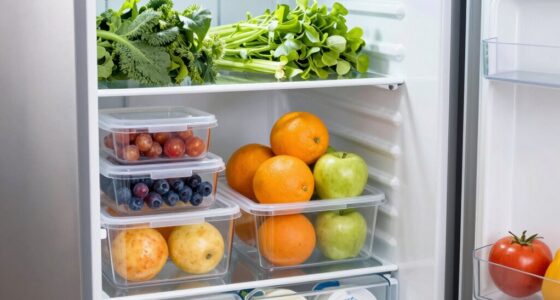
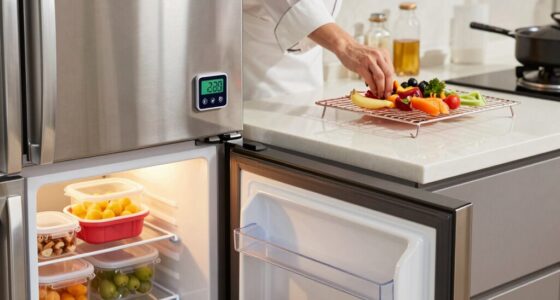
Your storage organization plays an essential role in reducing food waste as well. When items are stored systematically, you can see what you have at a glance, making it easier to use ingredients before they spoil. Group similar items together—such as grains, canned goods, or fresh produce—and place frequently used ingredients at the front for quick access. Rotate stock regularly, practicing first-in, first-out (FIFO) to make sure older items are used before newer ones. Keep a list of what’s in your pantry and fridge, updating it as you use items. This helps you plan meals more precisely, reducing unnecessary purchases and preventing ingredients from sitting unused for too long. Incorporating organized storage solutions can further streamline your kitchen activities and help prevent spoilage. Additionally, using clear labeling can improve your ability to quickly identify and utilize ingredients efficiently. Maintaining a consistent routine for ingredient prep and storage organization also improves your overall workflow. When you start your day or shift with a clear plan, you waste less time searching for ingredients or figuring out what needs to be prepped. Establishing a dedicated prep area ensures that everything needed for cooking is centralized and easily accessible. Use dedicated containers for chopped vegetables or pre-portioned spices, which can be stored in the fridge overnight or ready to go in the morning. This approach speeds up meal assembly and cuts down on last-minute improvisation that often leads to food waste. Furthermore, incorporating efficient storage practices can help you monitor ingredient freshness more effectively. Additionally, reorganizing your workspace to keep prep stations clean and clutter-free enhances efficiency. Keep knives, cutting boards, and frequently used utensils within arm’s reach, and designate specific areas for ingredient prep and storage. When everything has a designated spot, you’re less likely to accidentally forget about items or leave them to spoil. This organized environment makes it easier to stay on top of ingredient usage and reduces the tendency to toss out spoiled or forgotten food.
food storage containers with labels
As an affiliate, we earn on qualifying purchases.
As an affiliate, we earn on qualifying purchases.
Frequently Asked Questions
How Quickly Can We See Results From This Workflow Change?
You can start seeing results within days to a week after implementing the workflow change. As you focus on waste reduction and efficiency improvement, you’ll notice less food waste and smoother operations quickly. Regular monitoring and adjustments will help accelerate these benefits. Keep in mind, the more consistently you apply the new workflow, the faster you’ll observe significant improvements in reducing waste and boosting overall kitchen efficiency.
What Initial Costs Are Involved in Implementing This Change?
You’ll need to conduct a cost analysis upfront to understand the initial financial investment involved in implementing this workflow change. The costs typically include training staff, updating equipment, and possibly redesigning kitchen layouts. While these upfront expenses might seem significant, they’re offset by long-term savings through reduced food waste. This strategic financial investment quickly pays for itself as waste diminishes, boosting overall efficiency and profitability in your kitchen.
How Do Staff Members Typically React to Workflow Adjustments?
You’ll find staff members’ reactions vary; some embrace the workflow adjustments quickly, while others resist change. To manage resistance effectively, focus on staff adaptation by clearly communicating benefits and providing training. Engage your team early, listen to their concerns, and involve them in the process. Resistance management is key to ensuring smooth shifts, so patience and support help staff adapt more comfortably, resulting in faster, more successful implementation of the new workflow.
Are There Specific Kitchen Sizes Best Suited for This Change?
Think of your kitchen like a well-oiled machine, smoothly humming along. Smaller kitchens with open layouts benefit most from this change, as they adapt quickly without clutter. Your kitchen layout should promote easy flow, reducing unnecessary steps. Equipment requirements are minimal—just organized stations and clear pathways. Larger kitchens may need tailored adjustments, but with the right setup, you’ll see waste cut fast and efficiency soar.
What Common Challenges Might We Face During Implementation?
During implementation, you might face training challenges as staff adapt to new procedures, which can slow progress initially. Equipment compatibility could also pose issues if existing tools don’t support the new workflow, requiring upgrades or adjustments. To overcome these hurdles, provide clear training and assess equipment needs beforehand. Staying flexible and maintaining open communication will help your team smoothly shift and successfully cut food waste.
As an affiliate, we earn on qualifying purchases.
Conclusion
By streamlining your kitchen workflow, you can markedly cut food waste and boost efficiency. Implementing simple changes, like organized prep stations, can reduce waste by up to 25%. Imagine saving a quarter of your ingredients from going to waste—that’s more money in your pocket and less environmental impact. Small adjustments make a big difference, so start refining your process today and watch waste diminish while your kitchen runs smoother than ever.
As an affiliate, we earn on qualifying purchases.
As an affiliate, we earn on qualifying purchases.
Fall Picks
fall essentials
As an affiliate, we earn on qualifying purchases.