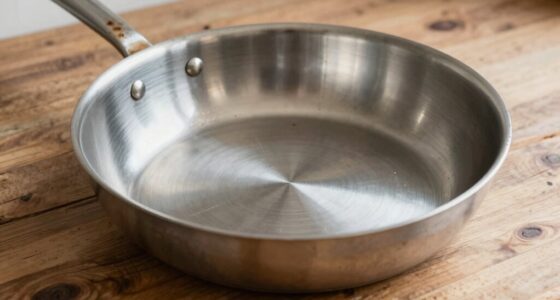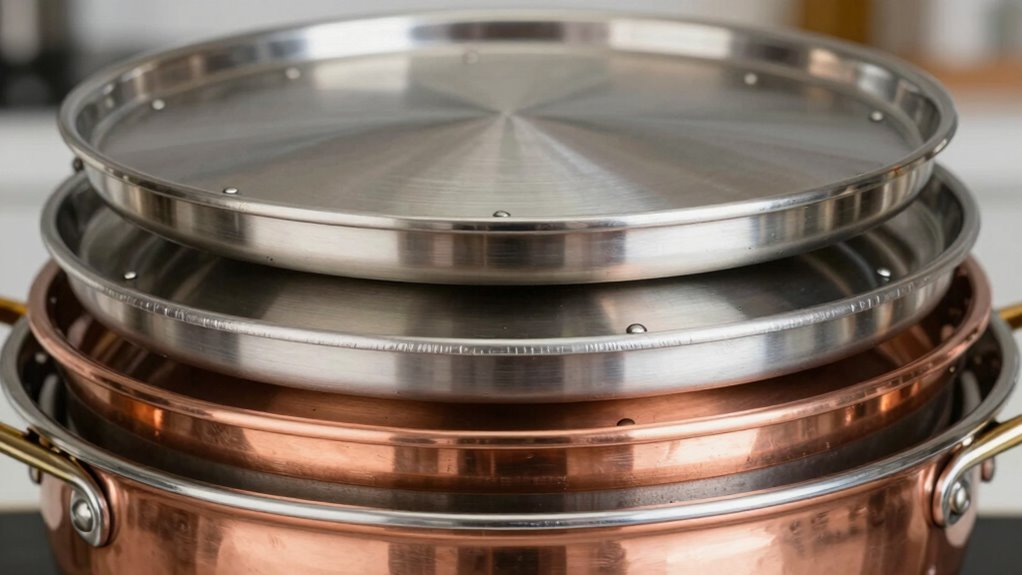
The layer at which materials are bonded inside cookware, especially the core layer, greatly affects how quickly and evenly heat spreads. When metals like copper or aluminum are directly attached to the cooking surface, heat transfers rapidly, offering better control. Strong bonding guarantees efficient heat conduction and prevents hot spots, leading to more consistent cooking results. Pay attention to how layers are bonded; if you want to understand how this impacts heat response, there’s more to discover.
Key Takeaways
- The material combination within layered cookware, especially core materials like copper or aluminum, significantly impacts heat responsiveness.
- Proper bonding and contact quality between layers ensure efficient heat transfer and minimize hot spots.
- The placement of heat-conductive layers directly beneath the cooking surface enhances temperature control.
- The outer layers’ material, such as stainless steel, influences heat retention and response stability.
- Layering design determines how quickly cookware responds to heat adjustments and distributes heat evenly.
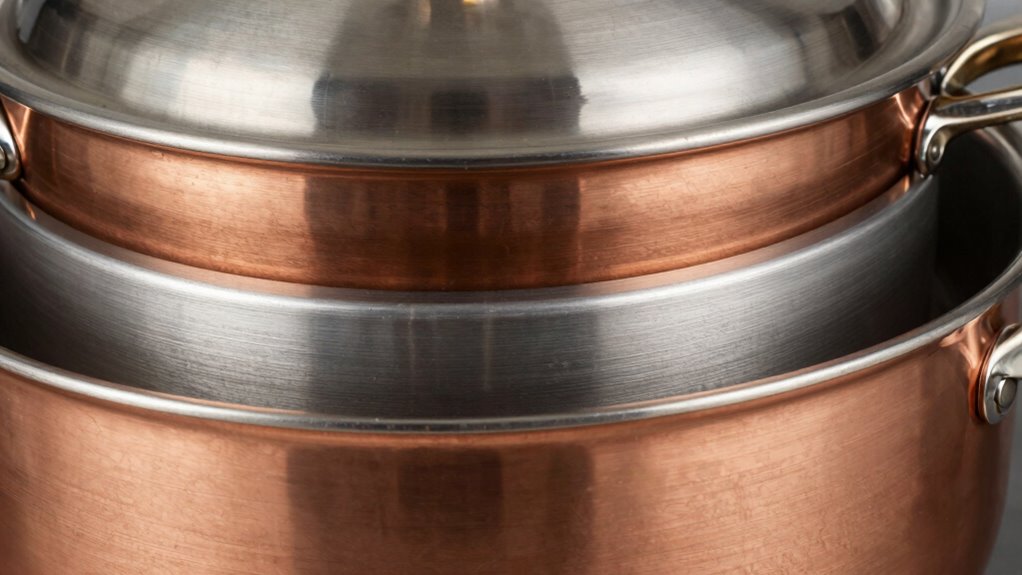
Have you ever wondered why some cookware heats evenly while others don’t? The secret often lies in the layered construction of the cookware and how its material combinations influence heat conduction. When you’re choosing pots and pans, understanding this layering detail can dramatically improve your cooking experience. Different materials conduct heat at different rates, and the way they’re combined determines how uniformly heat spreads across the surface.
Layered cookware with strategic material combinations ensures even heat distribution and better cooking results.
In cookware with multiple layers, each material plays a specific role. For example, stainless steel is durable and resistant to corrosion, but it doesn’t transfer heat as efficiently as copper or aluminum. Copper boasts excellent heat conduction, allowing for quick and precise temperature control, but it’s softer and more delicate. Aluminum strikes a balance, being lightweight and highly conductive, which makes it popular in layered cookware. By combining these materials, manufacturers optimize heat response, guaranteeing that heat distributes evenly without hot spots. Proper layer bonding ensures efficient heat transfer and prevents hot spots.
The key to effective heat conduction in layered cookware is the contact quality between the different materials. If the layers are poorly bonded or if there’s air or gaps between them, heat transfer becomes inefficient, causing uneven heating. High-quality cookware uses processes like cladding or pressing to assure tight bonding, maximizing heat conduction. When you use cookware with well-designed layering, you’ll notice that the temperature remains stable, and you can better control your cooking process. Recognizing the importance of material combinations helps you choose cookware that responds predictably to heat.
Knowing how material combinations influence heat conduction helps you pick the right cookware for your needs. If you value quick heating and precise temperature control, look for pieces with copper or aluminum cores. For durability and compatibility with various cooktops, layered stainless steel options are ideal. Recognizing how the layers work together allows you to make smarter choices, ensuring your meals cook evenly and efficiently. Ultimately, understanding this layering detail clarifies why some cookware responds better to heat—because the materials and their arrangements are designed specifically to optimize heat conduction.
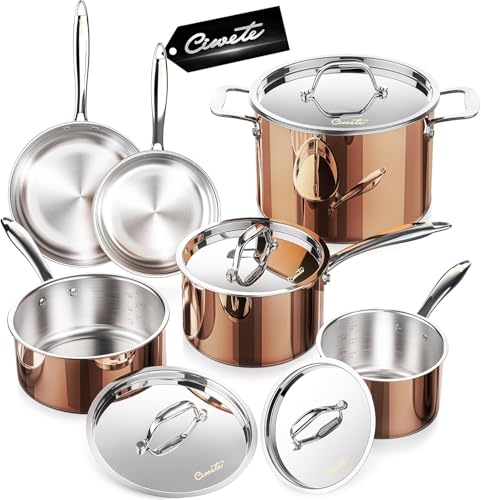
Ciwete Whole Tri-ply 18/10 Stainless Steel Cookware Set, 10 Pcs Elegant Copper Pots and Pans Set, Induction Cookware, Frying Pans, Saucepans & Stock Pot with Lid, Ideal Gift for Wedding, Housewarming
【Whole Clad Tri-Ply 18/10 Stainless Steel】The cooking pot set has a Tri-ply construction not only at the bottom…
As an affiliate, we earn on qualifying purchases.
As an affiliate, we earn on qualifying purchases.
Frequently Asked Questions
How Does Cookware Layering Affect Energy Efficiency?
Cookware layering improves energy efficiency by enhancing thermal insulation and heat distribution. When you layer cookware properly, it retains heat better, reducing the amount of energy needed to maintain cooking temperatures. The layers help distribute heat evenly across the surface, preventing hot spots and saving energy. This means you use less power or gas, cook faster, and achieve better results with less waste, making your cooking more efficient overall.
Can Layering Modify Cooking Times Significantly?
Layering can considerably modify cooking times by improving temperature regulation and heat distribution. When your cookware has multiple layers, it responds more evenly to heat, reducing hot spots and maintaining consistent temperature. This means you can cook food more efficiently, often reducing overall cooking time. Proper layering ensures heat spreads quickly and evenly, helping you achieve desired results faster without sacrificing quality or risking overcooking.
What Materials Are Best for Layered Cookware?
Think of layered cookware as a culinary symphony, where each material plays its part. You should look for stainless steel with aluminum or copper cores, as they offer excellent heat response. Material compatibility is essential, and manufacturing techniques like layered bonding ensure durability and even heat distribution. These materials work harmoniously, providing reliable performance and quick responses, making your cooking experience more precise and enjoyable.
Are There Safety Concerns With Layered Cookware?
Yes, there are safety concerns with layered cookware if materials aren’t chosen carefully. You should guarantee material safety, avoiding cookware with harmful chemicals or metals that could leach into food. Also, consider heat transfer properties; some layers might heat unevenly or trap heat, increasing risks of burns or fires. Always check manufacturer guidelines, and opt for high-quality, tested cookware to ensure safe use in your kitchen.
How Durable Are Layered Cookware Structures?
Back in the day, layered cookware structures are quite durable if you consider modern standards. You’ll want to focus on layer durability and material compatibility, as these factors influence long-term performance. High-quality layered cookware often withstands daily use and temperature changes well, but poor material compatibility can cause delamination or warping over time. Proper care and selecting the right materials guarantee your layered cookware remains robust and reliable for years to come.

Tramontina Signature Tri-Ply Clad Stainless Steel 10-Inch Frying Pan, Induction-Ready Skillet, Dishwasher-Safe, NSF-Certified, Made in Brazil
Tri-ply construction: For precise heat distribution and top-notch cooking performance for any kitchen
As an affiliate, we earn on qualifying purchases.
As an affiliate, we earn on qualifying purchases.
Conclusion
Understanding the layers in your cookware helps you master heat response, making every meal a culinary masterpiece. When you choose your pots and pans wisely, you’re like a seasoned alchemist transforming raw ingredients into magic—just like the masters of old, who knew that layering mattered. Remember, it’s not just about the tools, but how you wield them. So, embrace this knowledge, and cook with the wisdom of a bygone era—where every detail made a difference.

All-Clad Copper Core 5-Ply Stainless Steel Sauce Pan 3 Quart Induction Oven Broiler Safe 600F Pots and Pans, Cookware Silver
Features high, straight sides to assist with stirring a smaller surface area to hold heat and limit evaporation…
As an affiliate, we earn on qualifying purchases.
As an affiliate, we earn on qualifying purchases.

All-Clad D3® Stainless Steel 10 Piece Cookware Set- Made in USA- Includes Frying Pans, Saucepan, Sautépan, Stockpot – Professional Grade -Oven Safe & Induction Compatible
Our kitchen favorite, 10-piece cookware set includes a 8 and 10-inch fry pan, 2 and 3-quart saucepan with…
As an affiliate, we earn on qualifying purchases.
As an affiliate, we earn on qualifying purchases.