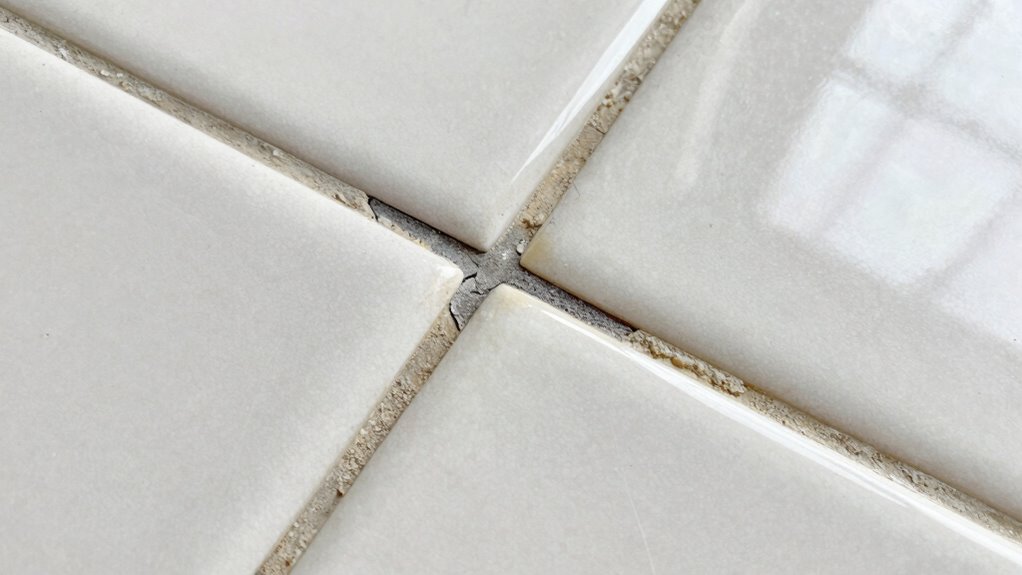

The biggest mistake you can make when cleaning tiles is using harsh or improperly diluted acidic cleaners like vinegar or lemon juice. These can slowly erode the grout’s surface over time, especially if you don’t rinse thoroughly or let the acids sit too long. This damage is gradual and can cause staining, dullness, and cracks. To protect your grout and tiles, it’s better to use gentle, pH-neutral cleaners and proper sealing methods—keep going to learn more about safeguarding your surfaces.

Prime made for students and young adults
- Fast, free delivery for dorm and study essentials
- Prime Video and Amazon Music included
- Member-only deals
Key Takeaways
- Using acidic cleaners like vinegar or lemon juice without proper dilution can erode grout over time.
- Applying unsealed or worn grout sealant allows acids to penetrate and cause gradual damage.
- Relying on harsh or undiluted cleaning agents accelerates grout deterioration.
- Frequent use of abrasive tools or improper cleaning techniques can weaken grout surfaces.
- Neglecting regular re-sealing and proper maintenance leads to slow, long-term grout damage.
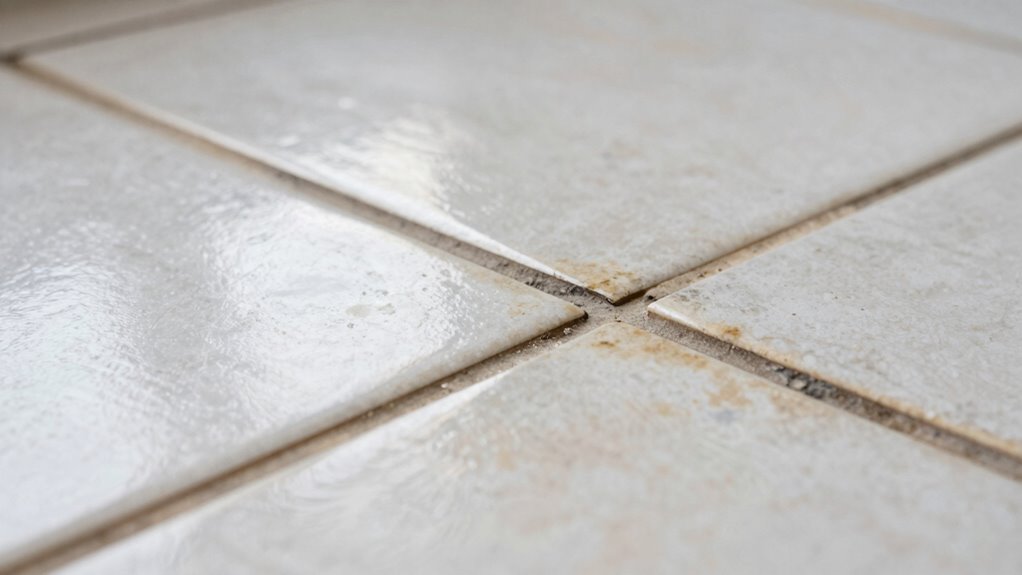
Many homeowners unknowingly damage their grout over time by making one common cleaning mistake: using harsh or improperly diluted cleaning agents. This mistake can lead to gradual deterioration, making your tiles look dull and your grout more vulnerable to stains and cracks. One of the biggest culprits is the misuse of acidic cleaners, which many people reach for without realizing the harm they cause. Acidic cleaners, such as vinegar or lemon juice, are often seen as natural solutions, but when used excessively or undiluted, they can erode the grout’s surface and weaken its structure. This damage isn’t immediately visible but accumulates over months or years, leading to costly repairs or regrouting. Additionally, many homeowners are unaware that proper cleaning techniques can significantly extend the lifespan of their grout and tiles. For instance, using the wrong tools, like abrasive scrub brushes, can also contribute to deterioration, so choosing gentle cleaning methods is crucial.
Using harsh or undiluted acids weakens grout over time, causing damage and costly repairs.
A key way to protect your grout is through proper grout sealing. Grout sealing acts as a barrier, preventing moisture, dirt, and stains from penetrating the porous surface. If your grout isn’t sealed or if the sealant has worn away, acids from cleaners can seep in more easily, accelerating deterioration. Regularly applying a high-quality grout sealer keeps your grout protected, especially if you prefer to use natural or acidic cleaners for routine cleaning. However, it’s essential to remember that even sealed grout isn’t invincible—using the wrong cleaning agents can compromise the sealant’s effectiveness, making your grout more susceptible to damage.
When it comes to cleaning, it’s tempting to reach for acidic cleaners because they seem effective at cutting through grime and soap scum. But these cleaners are harsh on grout, especially if you use them frequently or don’t dilute them properly. Instead of relying on acidic cleaners, consider gentle, pH-neutral options that won’t strip away the sealant or weaken the grout’s surface. If you do choose to use vinegar or lemon juice, do so sparingly and always dilute them with water. Never let acidic cleaners sit on the grout for long periods, and rinse thoroughly afterward to prevent residual acids from lingering and causing damage.
Ultimately, understanding the importance of grout sealing and being cautious with acidic cleaners can save you money and effort in the long run. Protect your investment by adopting proper cleaning habits, which means avoiding harsh chemicals and maintaining a good sealant. Doing so guarantees your tiles stay beautiful and your grout remains durable, preventing the slow damage that results from neglecting these simple but essential precautions. Proper sealing techniques and cautious use of cleaning agents are vital steps to extend the life of your grout and keep your tiles looking their best. Regular inspections and reapplication of sealant can further ensure ongoing protection against moisture infiltration, which can compromise your grout’s integrity over time.
As an affiliate, we earn on qualifying purchases.
Frequently Asked Questions
Can Using Vinegar Damage Grout Over Time?
Yes, using vinegar can damage grout over time. Vinegar risks causing grout deterioration because its acidic nature breaks down the cement-based grout, especially with frequent use. You might see discoloration, weakening, or cracks develop. To protect your grout, avoid using vinegar and opt for pH-neutral cleaners instead. Regularly cleaning with gentle products helps maintain the grout’s integrity and keeps your tiles looking fresh without risking long-term damage.
How Often Should Grout Be Sealed for Maintenance?
You should seal your grout every 6 to 12 months as part of regular maintenance tips. This sealing frequency helps prevent stains, moisture, and dirt from penetrating, keeping your grout looking fresh and durable. Keep an eye on the grout’s condition; if it starts to look dull or stained, it’s time for another round of sealing. Regular sealing extends your grout’s lifespan and maintains a clean, polished look.
Are There Natural Cleaning Alternatives for Grout?
Yes, you can use natural cleaning alternatives for grout. Eco-friendly solutions like baking soda and vinegar work well for DIY cleaning methods. Mix baking soda with water to form a paste and scrub gently with a brush, then spray vinegar for extra cleaning power. These natural options are safe, cost-effective, and avoid harsh chemicals, helping you maintain your grout’s appearance without risking damage.
What Signs Indicate Grout Is Being Damaged?
If your grout begins to fade like a dying ember, it’s a sign of damage. Watch for discoloration in grout color or cracks that grow like tree branches. Frequent cleaning without proper care can erode the grout’s integrity, revealing these signs sooner. Keep an eye on your cleaning frequency; overdoing it can wear down the grout, making it more vulnerable to damage and losing its vibrant hue over time.
Can Professional Cleaning Restore Damaged Grout?
Yes, professional cleaning can often restore damaged grout, especially when it’s discolored or stained. Professionals use specialized cleaning tools and techniques that target grime without harming the grout’s color or integrity. They carefully assess the grout’s condition first, then choose appropriate methods to remove buildup. While deep damage may need regrouting, regular professional cleaning can markedly improve grout’s appearance and prolong its lifespan.
As an affiliate, we earn on qualifying purchases.
Conclusion
Remember, a gentle touch can preserve the charm of your grout over time. By avoiding harsh cleaning habits, you’re gently safeguarding your tiles’ beauty and longevity. Think of it as giving your space a tender hug, rather than a rough nudge. With a bit of care and patience, your grout will continue to look fresh and inviting. So, take it easy—your tiles will thank you with lasting charm and grace.
As an affiliate, we earn on qualifying purchases.
As an affiliate, we earn on qualifying purchases.
Halloween Picks
halloween
As an affiliate, we earn on qualifying purchases.