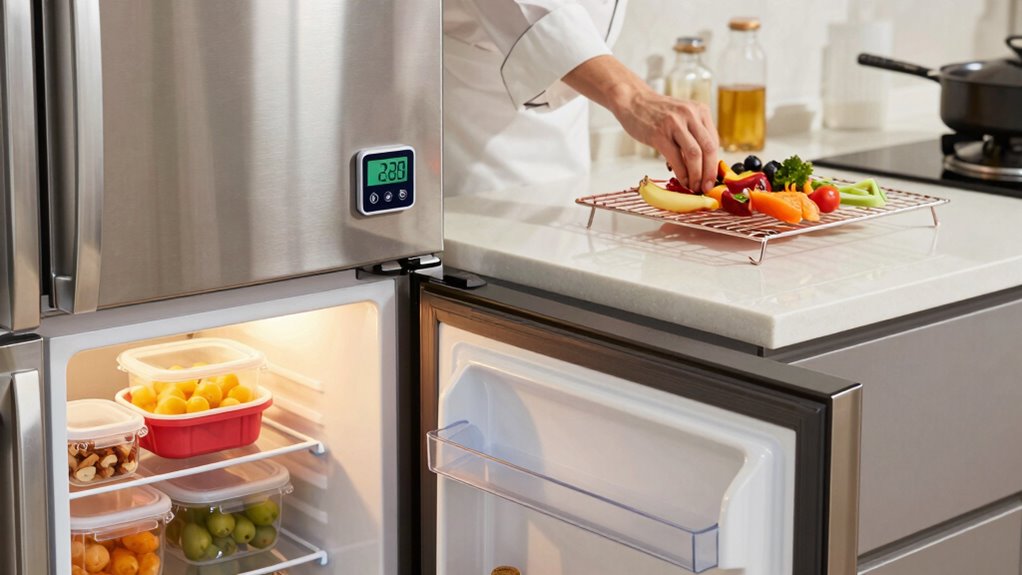

Safe cooling is just as important as safe cooking because bacteria can grow rapidly in the “danger zone” (40°F to 140°F) if food isn’t cooled properly. Promptly dividing large portions into smaller containers helps speed up cooling and prevents contamination. Proper storage, like keeping your refrigerator at 40°F or below, stops bacteria from multiplying and keeps your food safe to eat. To master all the best practices for food safety, keep exploring these essential tips.
Listen free for 30 days with Audible
Thousands of audiobooks and originals — cancel anytime.
As an affiliate, we earn on qualifying purchases.
Key Takeaways
- Proper cooling prevents bacteria from multiplying in leftovers, reducing foodborne illness risk.
- Rapid cooling limits time food spends in the “danger zone” where bacteria thrive.
- Dividing large portions into smaller containers speeds up cooling and maintains food safety.
- Inadequate cooling can cause spoilage, odors, and waste, even after proper cooking.
- Safe cooling practices are essential to preserve food quality and prevent contamination over time.
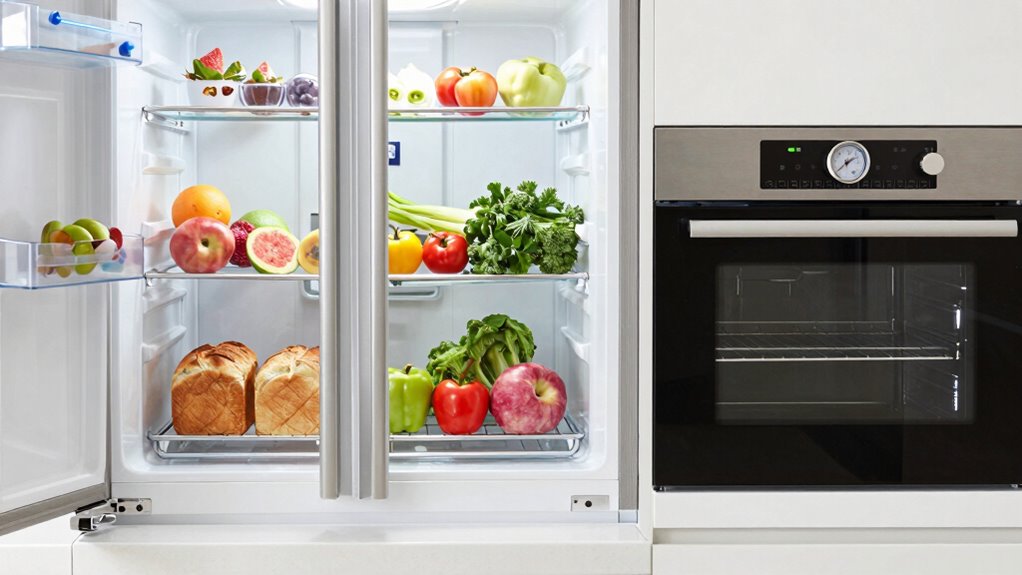
Have you ever wondered how to keep your food safe from bacteria? The answer lies not only in how you cook your meals but equally in how you cool and store leftovers. Food storage and temperature control are crucial steps that often get overlooked, yet they play a significant role in preventing foodborne illnesses. When you finish cooking, it’s tempting to leave food sitting out or to stash leftovers without much thought. However, bacteria thrive in the “danger zone”—between 40°F and 140°F—so promptly cooling your food is essential. Proper food storage involves dividing large quantities into smaller, shallow containers that cool faster and more evenly. This practice helps bring the temperature down quickly, reducing the time bacteria have to multiply. Using the right containers and dust-proofing solutions can further prevent contamination during storage. Ensuring your food is stored in appropriate containers helps maintain its safety and quality over time. Temperature control doesn’t stop once food is cooled; it’s a continuous process. When storing leftovers, always set your refrigerator to 40°F or below. Using a thermometer to monitor your fridge’s temperature is a good habit that guarantees your food remains in a safe zone. If food isn’t cooled correctly, bacteria can grow rapidly, even after cooking. That’s why it’s important to never leave cooked food out at room temperature for more than two hours. If the room is particularly warm—above 90°F—that time drops to one hour. Cooling food promptly and storing it at the correct temperature minimizes the risk of bacteria reaching harmful levels. Additionally, understanding how to use your freezer correctly is part of good food storage. Freezing doesn’t kill bacteria but halts their growth, preserving your food’s safety for longer periods. Proper freezer organization can help prevent freezer burn and cross-contamination. It’s also helpful to learn about temperature danger zones so you can better manage your food safety practices. Developing awareness of food safety tips can further enhance your ability to prevent contamination and spoilage. When you’re ready to reheat leftovers, make sure to bring them to a proper internal temperature—usually 165°F—to kill any lingering bacteria. Remember, safe cooling isn’t just about avoiding illness; it also helps maintain the quality and flavor of your food. Improper storage can lead to spoilage, off-odors, and waste, which is both disappointing and costly. Ultimately, your awareness of food storage practices and temperature control directly influences the safety of your meals. It’s not enough to cook food thoroughly; you must also cool and store it properly to prevent bacterial growth. By paying attention to these details, you’re taking fundamental steps to protect yourself and your loved ones from foodborne risks. Safe cooling and careful storage are just as important as safe cooking—together, they ensure your meals are not only delicious but also safe to enjoy.
food storage containers with lids
As an affiliate, we earn on qualifying purchases.
As an affiliate, we earn on qualifying purchases.
Frequently Asked Questions
How Long Can Leftovers Safely Stay in the Temperature Danger Zone?
Leftovers can stay in the temperature danger zone for no more than two hours. Food safety relies on proper temperature control, so keeping food out of the 40°F to 140°F range helps prevent bacteria growth. After two hours, bacteria can multiply rapidly, increasing the risk of foodborne illness. To guarantee safety, refrigerate leftovers promptly, ideally within that two-hour window, and reheat them thoroughly before eating.
What Are the Best Tools for Quick Cooling of Hot Foods?
Studies suggest that rapid cooling prevents bacterial growth effectively. To achieve this, use tools like ice water baths, shallow pans, or blast chillers for rapid cooling. Cooling techniques such as dividing hot foods into smaller portions or using a cooling paddle accelerate temperature reduction. These methods help move foods quickly through the danger zone, ensuring safety and freshness. Invest in reliable tools to make the process efficient and safe.
Can Improper Cooling Cause Foodborne Illnesses?
Improper cooling can definitely cause foodborne illnesses because it promotes food contamination and bacterial growth. When hot foods aren’t cooled quickly and stored properly, bacteria can multiply rapidly, increasing the risk of illness. You should always cool foods promptly, ideally within two hours, to prevent harmful bacteria from thriving. Proper cooling techniques help keep your food safe and reduce the chance of foodborne illnesses.
How Does Cooling Affect the Taste and Texture of Leftovers?
Cooling leftovers quickly preserves flavor, maintains texture, and prevents spoilage. When you cool food properly, you lock in the fresh taste and keep the original texture intact, avoiding sogginess or dryness. Rapid cooling minimizes moisture loss and flavor deterioration, ensuring your leftovers taste just as good tomorrow. By focusing on proper cooling, you enjoy consistent flavor and satisfying texture, making your leftovers as delicious as when you first cooked them.
Are There Specific Guidelines for Cooling Large Quantities of Food?
Yes, there are specific guidelines for cooling large quantities of food. You should use effective cooling methods like dividing food into smaller portions and placing them in shallow, airtight storage containers. This speeds up cooling and prevents bacterial growth. Always cool food quickly—within two hours—and store it in the refrigerator at 40°F (4°C) or below. Proper cooling methods and suitable storage containers guarantee food safety and maintain quality.
digital refrigerator thermometer
As an affiliate, we earn on qualifying purchases.
As an affiliate, we earn on qualifying purchases.
Conclusion
If you ignore safe cooling, you’re playing a dangerous game where bacteria multiply faster than you can blink—turning a simple meal into a potential disaster. Remember, proper cooling isn’t just a step; it’s your armor against food poisoning. Skip it, and you risk releasing a microscopic army that could cause chaos in your stomach. So, don’t just cook safely—cool wisely, or face the shocking consequences of neglect!
As an affiliate, we earn on qualifying purchases.
As an affiliate, we earn on qualifying purchases.
Fall Picks
fall essentials
As an affiliate, we earn on qualifying purchases.