“True HEPA” filters meet strict standards, capturing at least 99.97% of airborne dust particles as small as 0.3 microns. This means your air purifier or filter is highly effective at removing dust, allergens, and microbes, helping you breathe easier and stay healthier. Not all filters labeled “HEPA” meet these rigorous standards, so knowing what “True HEPA” entails guarantees your home gets the best protection. If you keep exploring, you’ll learn how these filters improve your indoor air quality even more.
Key Takeaways
- True HEPA filters capture at least 99.97% of airborne dust particles as small as 0.3 microns.
- They are designed to meet strict standards, ensuring consistent and high-efficiency dust filtration.
- True HEPA filters reduce dust buildup on surfaces, lessening cleaning needs and improving indoor cleanliness.
- Not all filters labeled “HEPA” meet true HEPA standards, so proper labeling guarantees better dust removal.
- Using True HEPA filters helps create a healthier environment by significantly reducing dust and airborne allergens.

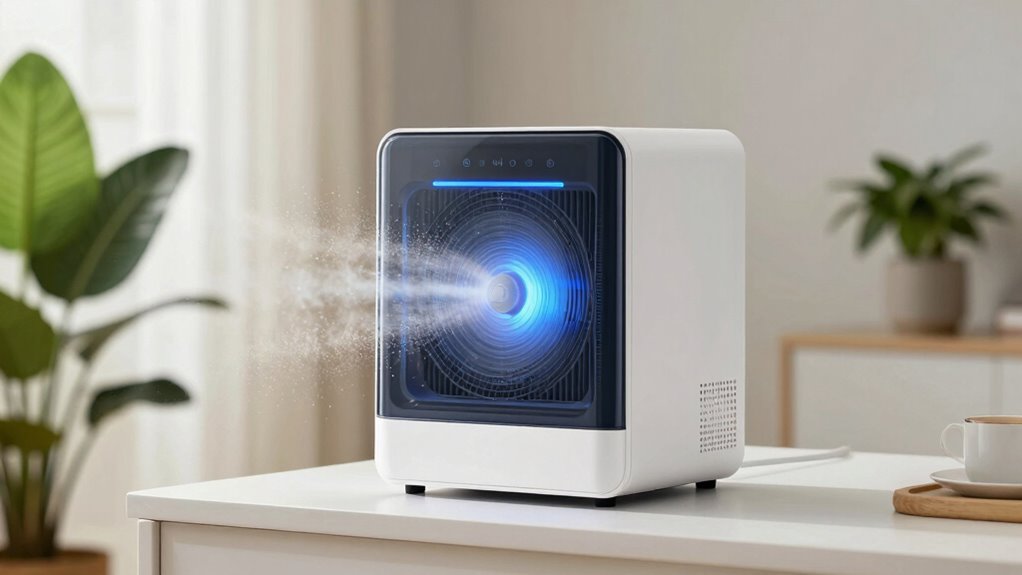
HEPA filtration is a highly effective method for removing airborne particles, including dust, pollen, pet dander, and harmful microbes. When you’re choosing an air purifier or vacuum, understanding what “True HEPA” means can make a big difference in how well it performs. True HEPA filters are designed to meet strict standards, capturing at least 99.97% of airborne particles as small as 0.3 microns. This level of filtration efficiency means you’re markedly reducing the amount of tiny particles floating in your indoor air, which is essential if you or someone in your household suffers from allergies or asthma.
The key to their effectiveness lies in their ability to trap even the smallest airborne particles. As air passes through the filter, particles like pollen, pet dander, and microscopic microbes get caught in dense layers of fibers. This process ensures that very few particles bypass the filter, improving the overall air quality in your space. It’s important to note that not all filters labeled as “HEPA” are equal—some may only meet lower standards, which means their filtration efficiency is less reliable. When you see “True HEPA,” you can trust that the filter adheres to rigorous manufacturing standards, providing consistent performance over time.
You’ll notice a tangible difference in the air around you when using a True HEPA filter. These filters excel at capturing airborne particles that trigger allergies and respiratory issues, helping you breathe easier and feel more comfortable in your environment. The high filtration efficiency also means less dust settling on surfaces, reducing the frequency of cleaning and improving overall cleanliness. If you’re concerned about microbials like bacteria and viruses, know that while HEPA filters are excellent at trapping these microbes, they do not kill them. However, their ability to remove such tiny particles from the air is a vital advantage during allergy seasons or in homes with pets.
In essence, choosing a True HEPA filter means investing in a product that delivers reliable filtration efficiency, removing the most problematic airborne particles. It’s not just about capturing dust; it’s about improving your indoor air quality and reducing health risks associated with airborne contaminants. When you prioritize filters labeled “True HEPA,” you’re guaranteeing that your air purifier or vacuum performs at the highest standard, giving you peace of mind and a cleaner, healthier living space. Monitoring social media for giveaways and contests can be a useful way to access free or discounted high-quality filters.
Frequently Asked Questions
How Often Should HEPA Filters Be Replaced?
You should replace your HEPA filter every 6 to 12 months, depending on usage and environmental factors. Following a proper maintenance schedule helps guarantee optimal dust removal and air quality. Regular filter replacement prevents clogging and maintains efficiency. Check your manufacturer’s guidelines, and if you notice reduced airflow or increased dust, it’s time for a new filter. Staying on top of filter replacement keeps your air clean and your system functioning effectively.
Are HEPA Filters Effective Against Viruses and Bacteria?
Think of HEPA filters as the frontline warriors in virus filtration and bacterial removal—they’re quite effective against many airborne pathogens. While they trap particles as tiny as 0.3 microns, including some viruses and bacteria, they don’t eliminate all. So, it’s wise to use HEPA filters alongside other protective measures. When maintained properly, your filter can markedly reduce airborne health risks, giving you cleaner, safer air every day.
What Is the Difference Between HEPA and ULPA Filters?
You’ll find that HEPA filters use fine, dense filtration materials to capture at least 99.97% of 0.3-micron particles, while ULPA filters are more efficient, trapping 99.999% of particles as small as 0.12 microns. The main difference lies in their filter efficiency and filtration materials; ULPA filters are designed for higher-grade airborne contamination control, making them ideal for environments requiring ultra-clean air.
Can HEPA Filters Remove Odors and Chemicals?
HEPA filters primarily trap dust, pollen, and allergens, but they don’t eliminate odors or chemicals. For air freshening or chemical absorption, you need additional filters like activated carbon or charcoal. These materials absorb odors and chemicals effectively, complementing HEPA’s dust filtration. So, if you’re concerned about smells or chemicals, choose a filter system that combines HEPA with activated carbon to guarantee cleaner, fresher air.
Do All Air Purifiers With HEPA Filters Meet the Same Standards?
Not all air purifiers with HEPA filters meet the same standards. While some boast “True HEPA” certification, others might only claim to have HEPA-like filters, which can vary in effectiveness. You should check the filter certification to verify it meets industry standards, and consider the filter lifespan to maintain peak dust removal. This way, you get consistent performance and cleaner air in your space.
Conclusion
When choosing a HEPA filter, remember it’s about more than just the label. It’s about understanding what “true HEPA” really means—capturing tiny particles, improving air quality, and protecting your health. It’s about trusting the filter’s ability, verifying its standards, and maintaining its performance. It’s about making informed decisions, prioritizing your well-being, and creating a safer space. Because when you know what “true HEPA” stands for, you’re truly investing in cleaner, healthier air.