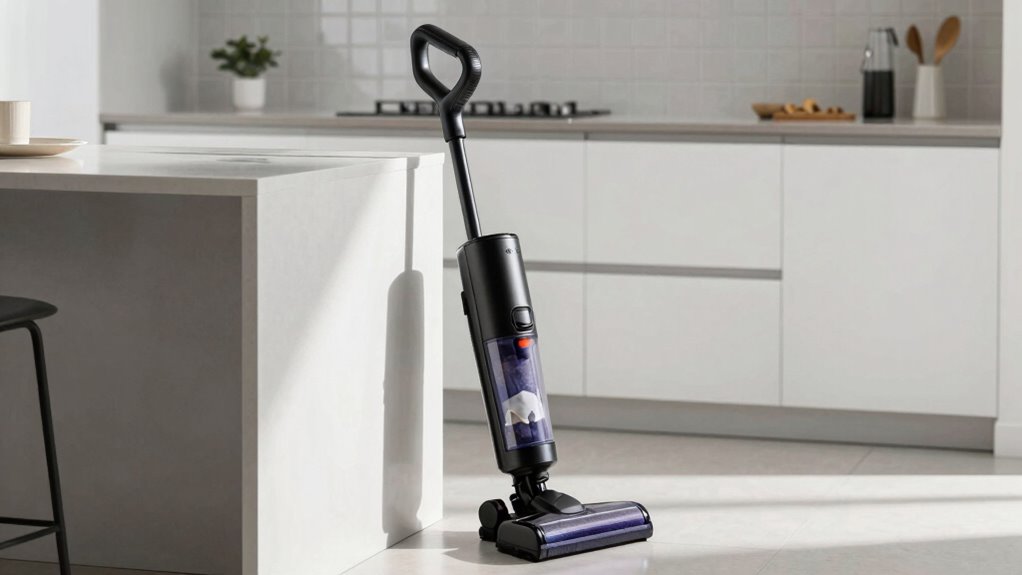

Your cordless vacuum’s runtime numbers often overstate what you’ll actually experience because they assume ideal conditions that rarely match real cleaning. Factors like power modes, debris type, brush resistance, and battery age all reduce the actual cleaning time. Smaller batteries lose capacity over repeated charges, shortening runtime further. If you want to understand why these numbers can be misleading and how to get the most from your vacuum, keep exploring the key details below.

Prime made for students and young adults
- Fast, free delivery for dorm and study essentials
- Prime Video and Amazon Music included
- Member-only deals
Key Takeaways
- Advertised runtime often reflects ideal conditions, not real-world usage, leading to overstated battery life.
- Power modes like turbo increase suction but drain the battery faster, reducing actual cleaning time.
- Battery degradation over cycles causes capacity loss, making initial runtime estimates less accurate over time.
- External factors such as debris type, brush resistance, and filter cleanliness impact energy consumption and runtime.
- Battery capacity (mAh or Wh) directly influences maximum possible runtime, but does not guarantee continuous use under all conditions.
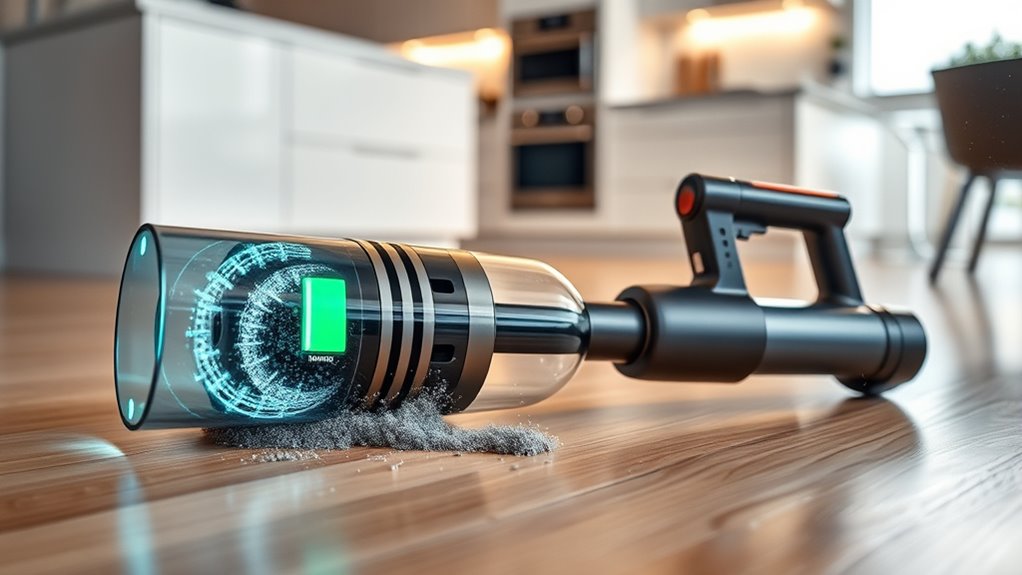
Have you ever wondered how long a cordless vacuum can run on a single charge? It’s a common question, especially when you’re trying to decide which model to buy or optimize your cleaning routine. The truth is, the advertised battery minutes often don’t tell the full story. Many factors influence how long your vacuum will operate, with battery capacity and charging cycles playing essential roles. Understanding these elements helps you set realistic expectations and get the most out of your device.
Battery capacity is the primary factor determining runtime. It’s usually measured in milliamp-hours (mAh) or watt-hours (Wh), indicating how much energy the battery can store. A larger capacity means more power reserve, allowing longer cleaning sessions. However, manufacturers often advertise the maximum runtime under ideal conditions, which rarely reflect real-world use. If your vacuum’s battery capacity is on the smaller side, you might find yourself recharging frequently, especially when tackling larger spaces or stubborn debris.
Battery capacity, measured in mAh or Wh, directly impacts vacuum runtime and real-world performance.
Charging cycles also impact the longevity and performance of your vacuum’s battery. A charging cycle occurs each time you fully charge and discharge the battery. Over time, batteries degrade, and their ability to hold a charge diminishes. For example, after several hundred charging cycles, even a well-made battery will produce shorter runtimes. This decline can make your vacuum seem less powerful, even if it’s relatively new. It’s common for batteries to lose about 20% of their capacity after 300-500 cycles, which can drastically reduce the runtime you experience in daily use. Battery degradation is an important factor to consider for long-term performance.
Additionally, the efficiency of your vacuum’s motor and the power mode you select influence how long it runs. Using high power or turbo modes consumes more energy, reducing runtime regardless of the battery’s capacity. Conversely, switching to eco or standard modes can extend your cleaning time, but may compromise suction power. Also, factors like brush roll resistance, debris type, and even the cleanliness of filters can affect how much energy your vacuum consumes per minute.
Ultimately, the number of charging cycles your battery can endure before performance drops markedly varies by brand and model. Some batteries are designed for more cycles, maintaining higher capacity over the long term, while others degrade faster. To maximize runtime and battery life, it’s wise to follow proper charging habits—avoiding frequent partial charges or letting the battery fully discharge regularly. Recognizing that battery capacity and charging cycles directly influence your cordless vacuum’s actual runtime helps you plan your cleaning sessions better, rather than relying solely on the advertised minutes, which can often be overly optimistic.
cordless vacuum battery capacity
As an affiliate, we earn on qualifying purchases.
As an affiliate, we earn on qualifying purchases.
Frequently Asked Questions
How Do Temperature Changes Affect Battery Performance?
Temperature changes impact your battery performance through thermal effects that alter battery chemistry. When it’s cold, your battery’s chemical reactions slow down, reducing power and runtime. Conversely, excessive heat speeds up these reactions but can damage the battery over time. You should keep your cordless vacuum in moderate temperatures to maintain ideal thermal effects, ensuring the battery chemistry stays balanced and your device runs efficiently.
Can Battery Age Impact Runtime Consistency?
Yes, battery age impacts runtime consistency. As batteries undergo degradation over time, they lose capacity, leading to shorter, less reliable run times. You might notice your vacuum’s power drops sooner than before. To counter this, focus on power optimization techniques, like avoiding full discharges and keeping the battery cool. Regularly replacing old batteries can restore more consistent runtime, ensuring your vacuum performs effectively when you need it most.
Do Different Floor Types Influence Vacuum Efficiency?
You might find that different floor types influence vacuum efficiency, and it’s true—flooring impact can make a big difference. Hard floors typically allow better surface suction, making your vacuum work more efficiently. Meanwhile, thick carpets can challenge suction, reducing cleaning power. So, don’t be surprised if your vacuum behaves differently across surfaces; it’s just the way the flooring impact plays out, and being aware helps you optimize your cleaning routine.
How Does User Cleaning Pattern Affect Runtime?
Your cleaning pattern directly impacts your vacuum’s runtime. If you clean frequently, dust accumulation stays low, allowing the vacuum to work efficiently and last longer per charge. Conversely, infrequent cleaning leads to more dust buildup, making the vacuum work harder and drain the battery faster. So, maintaining regular cleaning habits helps optimize your vacuum’s runtime and guarantees it operates effectively without prematurely running out of power.
Are There Features to Extend Battery Life During Use?
Yes, you can extend battery life during use by choosing vacuums with larger battery capacity and features focused on power optimization. Look for models with adjustable suction settings, which let you reduce power when cleaning lighter areas. Using the highest power mode only when necessary helps conserve energy. Regularly maintaining filters and brushes also improves efficiency, ensuring your vacuum runs longer on each charge and makes the most of its battery capacity.
best cordless vacuum for long runtime
As an affiliate, we earn on qualifying purchases.
As an affiliate, we earn on qualifying purchases.
Conclusion
Think of battery life as a marathon, not a sprint. The clock on your cordless vacuum’s runtime only shows part of the story, like a car’s fuel gauge that doesn’t account for hills or speed changes. Instead of relying solely on those minutes, focus on how smartly you use your vacuum—clean in short bursts or plan your chores. That way, you’ll enjoy a smooth ride, not a sudden stop, and keep your home shining without surprises.
As an affiliate, we earn on qualifying purchases.
cordless vacuum battery replacement
As an affiliate, we earn on qualifying purchases.
As an affiliate, we earn on qualifying purchases.
Fall Picks
fall essentials
As an affiliate, we earn on qualifying purchases.