
TL;DR

Prime made for students and young adults
- Fast, free delivery for dorm and study essentials
- Prime Video and Amazon Music included
- Member-only deals
Recent trading activity indicates market speculation about whether the maximum temperature will exceed 73°F on July 3, 2026. While no definitive forecast exists, the market reflects public interest in this specific climate prediction.
Recent trading activity on the Kalshi market indicates ongoing speculation about whether the maximum temperature will be greater than 73°F on July 3, 2026.
This market-based prediction reflects public interest and collective expectations about future climate conditions, though no official meteorological forecast is yet available for that date.
The Kalshi platform has seen 14 recent trades related to the question of whether the maximum temperature will exceed 73°F on July 3, 2026. These trades suggest a level of market engagement and speculation but do not constitute a scientific forecast.
There are no confirmed meteorological models or official weather predictions for that specific date at this time. Climate forecasts for 2026 remain uncertain, especially that far in advance, due to the inherent variability in weather patterns and climate change impacts.
Experts emphasize that market activity reflects public sentiment and betting behavior rather than scientific certainty. The question remains open, with no definitive data supporting or refuting the possibility that temperatures will surpass 73°F on that day.
Implications of Market-Based Climate Predictions in 2026
This market activity highlights how financial markets are increasingly used to gauge public expectations about future climate conditions. While not scientifically predictive, such markets can influence policy discussions and raise awareness about climate variability and change.
Understanding whether temperatures might exceed specific thresholds years in advance can impact planning for agriculture, infrastructure, and disaster preparedness, especially in regions vulnerable to heatwaves.
However, reliance on market speculation for precise climate forecasts remains limited, emphasizing the need for official meteorological data and climate models for accurate predictions.
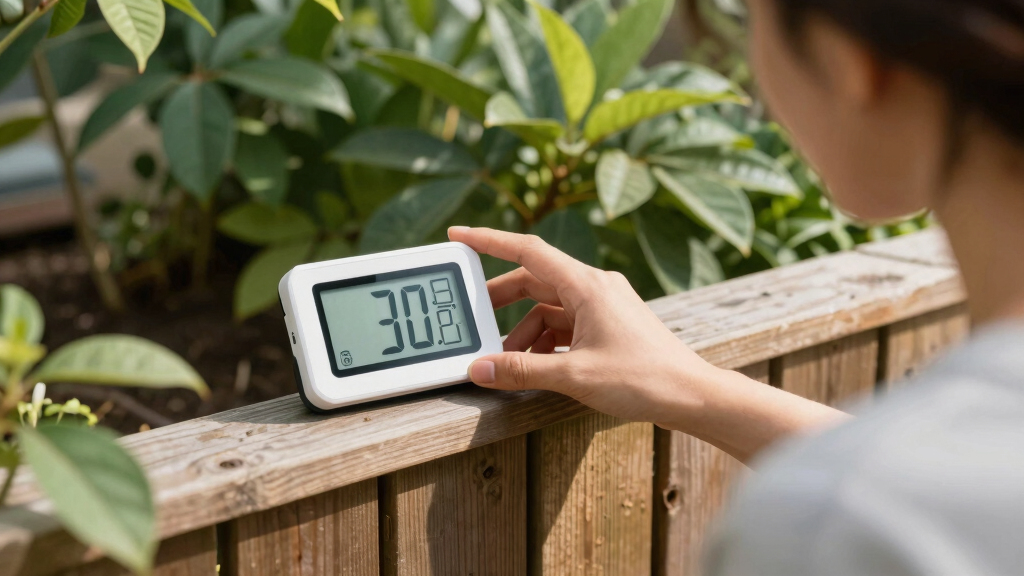
digital weather station with outdoor sensor
As an affiliate, we earn on qualifying purchases.
As an affiliate, we earn on qualifying purchases.
Background on Climate Prediction Markets and Long-Term Forecasts
The use of prediction markets like Kalshi to speculate on climate variables has grown in recent years, offering a new way for the public and investors to express expectations about future weather events.
While these markets can reflect collective sentiment, they are not substitutes for scientific climate models, which use complex data to project future conditions. Currently, meteorological agencies do not provide specific forecasts for individual days so far in advance, especially for 2026.
Long-term climate predictions typically focus on seasonal or decadal trends rather than specific daily temperatures, making such precise predictions inherently uncertain.
“Prediction markets can offer interesting insights into public expectations, but they should not be mistaken for scientific forecasts, especially for specific dates so far in the future.”
— Dr. Emily Carter, Climate Scientist
As an affiliate, we earn on qualifying purchases.
Limitations of Long-Term Climate Market Predictions
It remains unclear whether the market activity accurately predicts actual weather outcomes for July 3, 2026. No official meteorological models currently provide specific temperature forecasts for that date, and climate variability adds significant uncertainty.
Furthermore, the market reflects public sentiment and betting behavior, which may be influenced by various factors unrelated to actual climate trends.
As an affiliate, we earn on qualifying purchases.
Monitoring Scientific Forecasts and Market Trends for 2026
As the date approaches, official weather agencies will release seasonal and long-term climate models that may offer better insights into expected temperature ranges for early July 2026.
Market activity around these predictions may increase as more data becomes available, but scientific forecasts will remain the authoritative source for planning and policy decisions.
Researchers will continue to analyze the correlation between prediction market activity and actual climate outcomes to assess the utility of such markets in climate forecasting.
As an affiliate, we earn on qualifying purchases.
Key Questions
Can prediction markets accurately forecast specific weather events years in advance?
No, prediction markets primarily reflect public sentiment and betting behavior. They are not scientific tools for precise weather forecasting, especially for specific days so far in the future.
What factors influence whether temperatures will exceed 73°F on July 3, 2026?
Factors include long-term climate trends, regional climate variability, and potential impacts of climate change. However, precise temperature predictions for a specific day are highly uncertain at this lead time.
Are there any official forecasts for July 3, 2026?
No, current meteorological models do not provide specific forecasts for that date. Climate predictions are generally made on seasonal or decadal scales, not for individual days so far in advance.
How reliable are climate prediction markets for understanding future climate conditions?
They can provide insights into public expectations but should not be relied upon as scientific forecasts. Official climate models remain the primary source for accurate predictions.
Will the market activity around this question influence climate policy?
While it can raise awareness, policy decisions are based on scientific data. Market activity may influence public discourse but is not a substitute for scientific evidence.
Source: kalshi
Halloween Picks
halloween
As an affiliate, we earn on qualifying purchases.