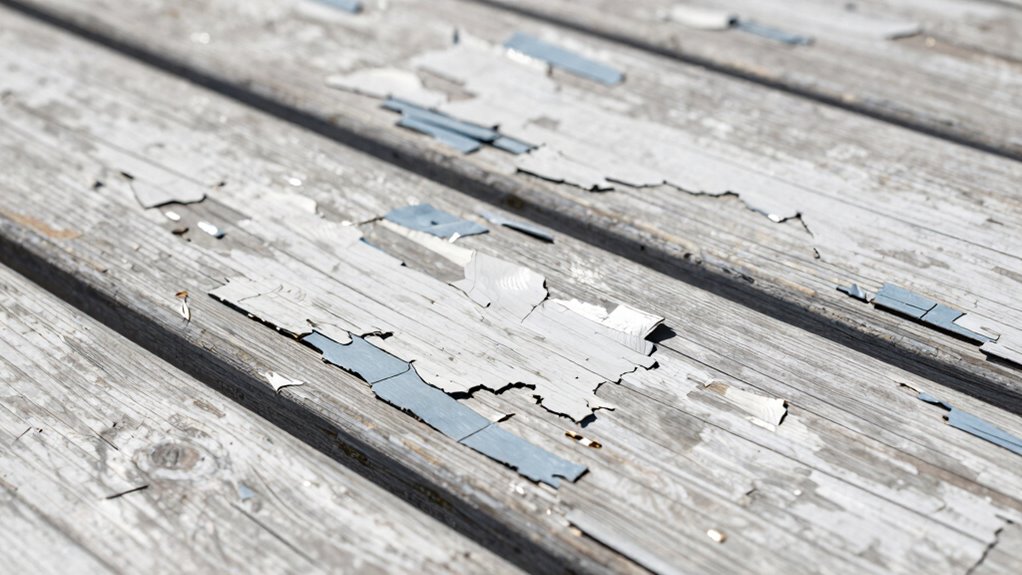

Peeling outdoor wood finishes usually happen when you don’t prepare the surface properly, like skipping cleaning or sanding, which weakens adhesion. Environmental factors such as moisture, humidity, and sunlight also play a big role in breaking down the coating over time. Applying finishes incorrectly or choosing the wrong type for your climate can make peeling worse. To stop this from happening, guarantee proper application and maintenance—if you continue, you’ll discover how to keep your finish lasting longer.
Key Takeaways
- Poor surface preparation, such as inadequate cleaning or sanding, prevents proper adhesion of the finish.
- Exposure to sunlight, moisture, and weather conditions accelerates finish deterioration and peeling over time.
- Applying finish over dirty, damp, or incompatible coatings weakens adhesion and leads to peeling.
- Repeated wetting and drying cycles cause wood swelling and stress, damaging the finish’s bond.
- Fungal growth and moisture infiltration degrade both the wood and the finish, resulting in peeling and surface breakdown.
Guardsman Revitalizing Lemon Oil | Teak Oil Protects and Cleans Outdoor and Indoor Wood Furniture, Lemon Scent, 16 Fluid Ounces
Indoor and outdoor furniture cleaner protects, restores, and gently cleans away built-up surface grime and residue; use on…
As an affiliate, we earn on qualifying purchases.
As an affiliate, we earn on qualifying purchases.
Explore the Types of Outdoor Wood Finishes
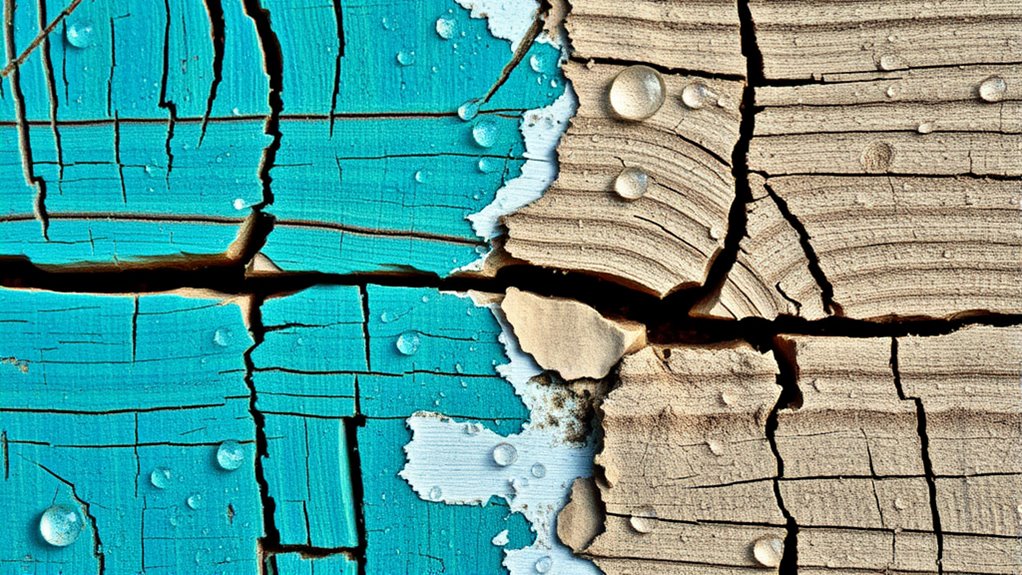
When choosing an outdoor wood finish, understanding the different types available is essential to protect your wood and enhance its appearance. Wood stain is a popular option because it penetrates the wood, providing color and UV protection while allowing the grain to show through. Oil-based finishes are another great choice; they offer deep penetration, durability, and a rich, warm glow. These finishes are excellent for outdoor furniture and decks, as they resist moisture and weathering. You can select from transparent, semi-transparent, or solid stains based on how much color you want to see. Oil-based finishes tend to last longer but take longer to dry. Knowing these options helps you pick the best finish to suit your project’s needs and guarantee your wood stays protected and beautiful over time. Understanding outdoor wood finishes is key to preventing issues like peeling and ensuring long-lasting beauty.

8 Pack Sanding Sponge, Sanding Blocks 60/80/120/220 Grit Assortment, Sand Paper for Wood Furniture, Sander Pads, Washable and Reusable Sandpaper for Drywall Metal Glasses Repair
4 Different Grits: Includes 8 sanding blocks in 4 grits—60/80/120/220 (coarse, medium, fine, and superfine), 2 blocks per…
As an affiliate, we earn on qualifying purchases.
As an affiliate, we earn on qualifying purchases.
Why Does Peeling Happen on Wooden Surfaces?
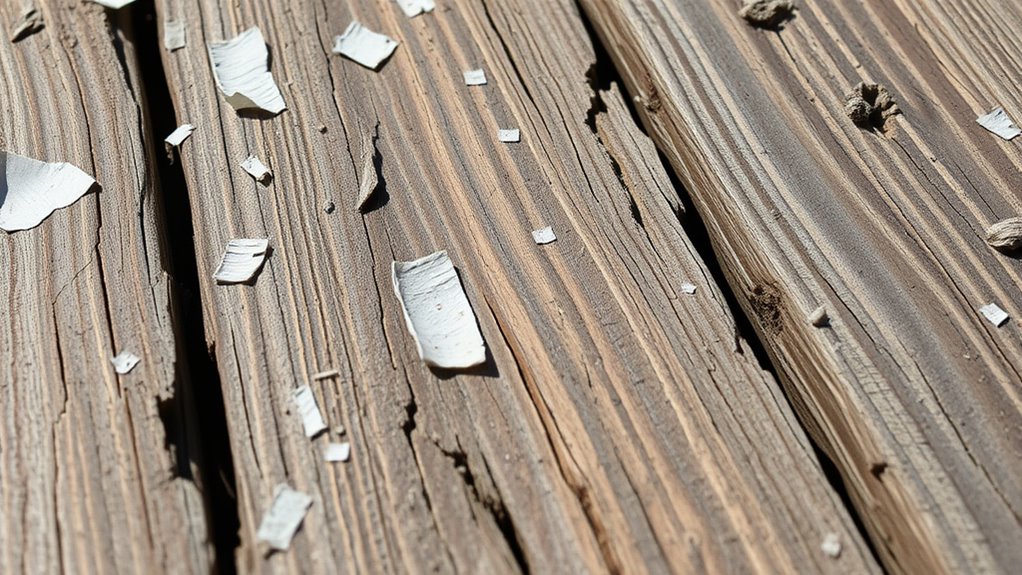
Peeling on wooden surfaces occurs primarily because the finish fails to adhere properly or deteriorates over time. When the finish doesn’t bond well with the wood grain or if the sheen is uneven, it can lift and peel. Poor surface preparation, such as skipping cleaning or sanding, hampers adhesion. Additionally, applying a finish over a dirty or damp surface causes problems. Over time, exposure to sunlight and weather weakens the finish, leading to cracks and peeling. Variations in finish sheen can also signal uneven application or aging, making peeling more likely. To prevent this, confirm proper surface prep, choose appropriate finishes, and maintain consistent application techniques. Surface preparation is crucial for ensuring a durable, long-lasting finish.

Ready Seal Stain and Sealer 120 Redwood – UV Resistant, Exterior Wood Stain Sealer – 1 Gallon
NO LAPS, RUNS OR STREAKS: Goof Proof formula with no back brushing required; ideal for exterior wood projects
As an affiliate, we earn on qualifying purchases.
As an affiliate, we earn on qualifying purchases.
How Moisture and Humidity Cause Finish Failure
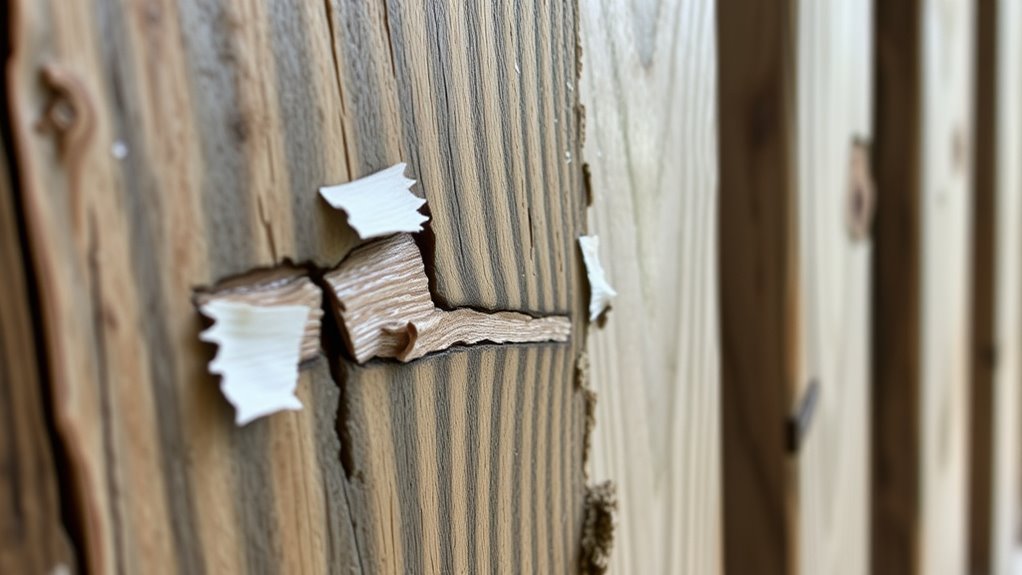
Moisture and humidity are major factors that contribute to finish failure on outdoor wooden surfaces. When moisture seeps into the wood, it causes wood swelling, which puts stress on the finish and can lead to peeling or cracking. Excess humidity creates an ideal environment for fungus growth, which deteriorates both the wood and the finish. As fungi break down the wood’s surface, the coating loses its grip, resulting in peeling or flaking. Additionally, repeated cycles of wetting and drying cause the finish to expand and contract, weakening its adhesion over time. Without proper protection, moisture infiltration accelerates deterioration, making it essential to select finishes that resist moisture and to maintain consistent dryness for longer-lasting outdoor wood surfaces. Understanding how air quality affects outdoor environments can also help in choosing appropriate protective measures.

Olympic WaterGuard 11 oz. Clear Exterior Waterproofing Wood Sealer Spray
Ready to use clear sealant and waterproofer
As an affiliate, we earn on qualifying purchases.
As an affiliate, we earn on qualifying purchases.
Applying Finishes Correctly for Better Durability
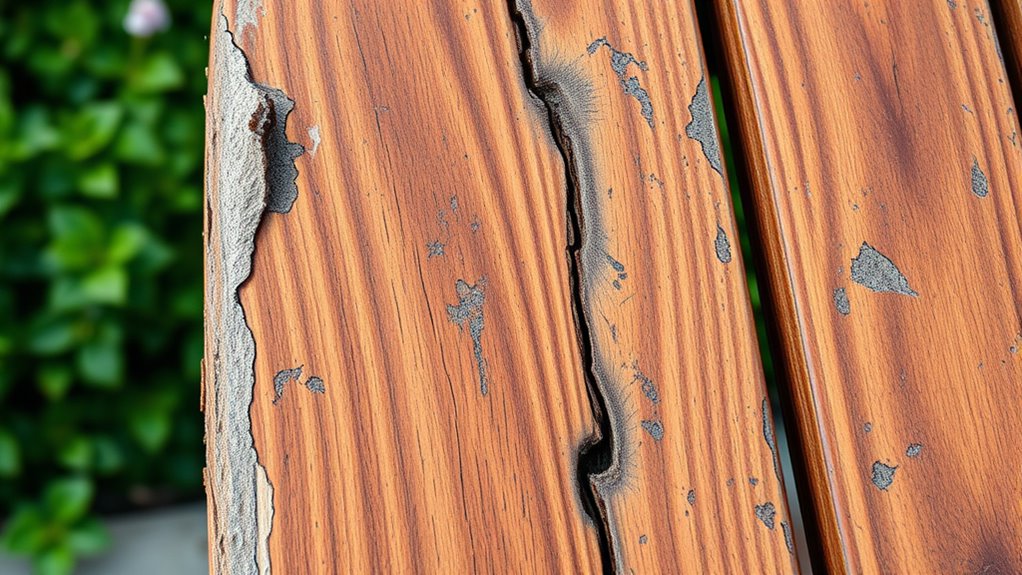
Proper application of outdoor wood finishes considerably enhances their durability and lifespan. To guarantee the best results, focus on correct techniques and compatibility. Use proper brush techniques by applying thin, even coats, avoiding over-brushing that can cause uneven absorption. Check finish compatibility with your wood type and previous coatings to prevent reactions that lead to peeling. Before applying, clean and sand the surface thoroughly to promote adhesion. Work in good lighting and avoid applying finishes in direct sunlight or extreme temperatures. Keep brushes and tools clean to prevent contamination. Layer finishes smoothly, allowing adequate drying time between coats. This careful approach minimizes issues and helps your finish withstand weather elements longer. Additionally, understanding Gold IRA Markets can help you make more informed investment decisions for your financial future.
How to Maintain and Recoat to Prevent Peeling
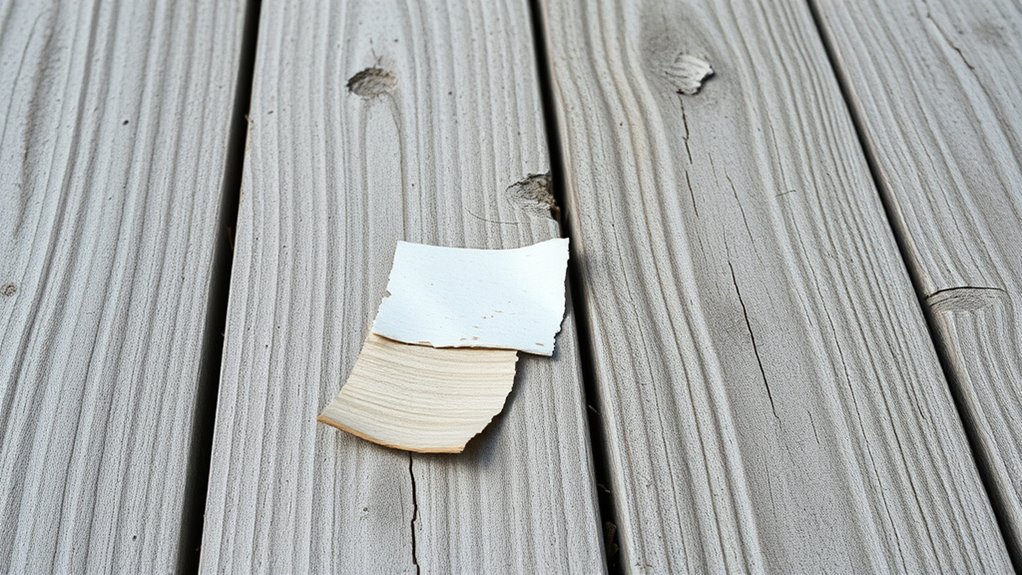
Regular maintenance and timely recoating are essential to prevent wood finishes from peeling. Start by inspecting your surface for signs of wear or damage. When recoating, focus on proper preparation: clean, sand, and remove loose paint or stain. To guarantee a seamless look, use color matching techniques when selecting your finish, so new coats blend smoothly with existing ones. Employ effective brush techniques—such as long, even strokes—to avoid streaks and uneven coverage. Proper surface preparation ensures better adhesion and longevity of your finish. Here’s a quick guide:
| Step | Tip |
|---|---|
| 1 | Clean thoroughly before recoating |
| 2 | Match colors carefully for blending |
| 3 | Use smooth, consistent brush strokes |
Following these steps helps maintain your finish’s integrity and prevents peeling over time.
Common Mistakes That Lead to Finish Peeling
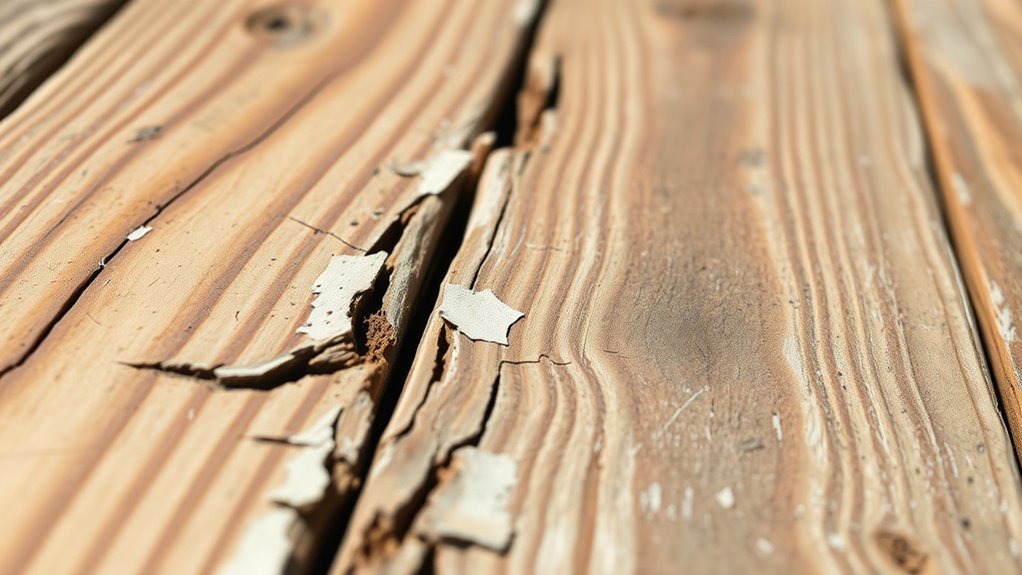
One common mistake is not preparing the surface properly, which prevents the finish from adhering well. Skipping primer layers can also cause the coating to peel over time. Additionally, applying thin coats without enough coverage often results in poor adhesion and peeling later on.
Inadequate Surface Preparation
Many finish peeling issues stem from inadequate surface preparation before applying wood finishes. If the surface isn’t properly prepared, the finish won’t adhere well, leading to peeling over time. To improve surface adhesion, focus on proper sanding techniques that remove dirt, old finishes, and rough spots, creating a smooth base. Skipping this step or rushing through it can leave behind contaminants that weaken the bond. Make sure to clean the surface thoroughly after sanding to remove dust and debris. Proper preparation ensures the finish bonds effectively, increasing durability and longevity. Neglecting these steps causes the finish to peel prematurely, wasting time and money. Take the time to prepare your wood surface correctly, and your outdoor finish will stand up better against the elements. Additionally, understanding the science of sound vibrations can help in developing better finishing techniques that promote adhesion and curing.
Skipping Primer Layers
Skipping primer layers is a common mistake that can cause your outdoor finish to peel prematurely. Primer application is vital for creating a strong bond between the wood and the paint or stain. Without it, paint adhesion suffers, leading to peeling and flaking over time. When you neglect to apply a proper primer, you miss out on sealing the wood’s surface and blocking moisture absorption, which weakens the overall finish. Even if the wood looks clean and smooth, skipping this step can compromise durability. Always confirm you apply a suitable primer designed for outdoor use, covering all surfaces evenly. Doing so enhances paint adhesion, extends the life of your finish, and prevents peeling caused by poor surface preparation. Remember, primer is a critical foundation for long-lasting outdoor wood finishes.
Applying Thin Coats
Applying coats that are too thin is a common mistake that can cause your outdoor finish to peel prematurely. Thin coats don’t provide enough protection, leading to issues like grain raising and poor stain penetration. When coats are too sparse, the wood’s surface remains uneven, making the finish prone to peeling as it doesn’t adhere properly. To avoid this, apply coats that are slightly thicker but still smooth. Properly applied coats help seal the wood, reduce grain raising, and ensure stain penetrates evenly. Additionally, thick coats allow for better adhesion and durability. Remember, patience and proper application techniques are key to a long-lasting finish that resists peeling and maintains its appearance over time. Using energy-efficient application methods can further enhance finish longevity and environmental sustainability.
Frequently Asked Questions
Can Outdoor Finishes Be Reapplied Over Peeling Surfaces?
Yes, you can reapply outdoor finishes over peeling surfaces, but you need to meticulously prepare the surface first. Start by removing all loose paint or finish with a scraper or sandpaper. Proper surface preparation guarantees good adhesion. Use appropriate application techniques, like brushing or spraying, and apply the new finish once the surface is clean and smooth. This helps prevent future peeling and extends the life of your outdoor wood finish.
What Environmental Factors Accelerate Finish Peeling?
You might notice your finish starts to peel faster when nature’s gentle touch becomes a bit too enthusiastic. Moisture infiltration and UV damage are the main culprits, gradually weakening the coating’s grip. Excessive rain, humidity, and prolonged sun exposure cause the finish to break down prematurely. By protecting your wood from these environmental factors—using proper sealants and shading—you can extend the life of your outdoor finish and keep it looking fresh longer.
How Long Does a Typical Outdoor Wood Finish Last?
A typical outdoor wood finish lasts about 1 to 3 years, depending on exposure and maintenance. You’ll notice that the finish’s durability varies with the wood grain and environmental conditions. To extend its lifespan, regularly inspect for peeling and reapply as needed. Proper preparation and choosing a quality finish can markedly improve finish durability, helping protect your wood from weathering and UV damage.
Are There Eco-Friendly Options for Durable Outdoor Finishes?
You can choose eco-friendly, durable outdoor finishes like natural oil-based finishes, which penetrate wood deeply and resist peeling. For example, a homeowner applied biodegradable coatings on their garden furniture, noticing increased longevity and a natural look. These options are non-toxic, environmentally safe, and often made from renewable resources. Switching to natural oils or biodegradable coatings not only protects your wood but also reduces environmental impact, ensuring your outdoor space stays beautiful longer.
How Can I Identify the Underlying Causes of Peeling?
You can identify peeling causes by inspecting your wood surface for poor surface preparation or incompatible finishes. Look for areas where the old finish wasn’t properly cleaned or sanded before applying new coats. Check if the finish you used is compatible with the wood and previous layers. Peeling often results from moisture, dirt, or incompatible products. Address these issues by prepping thoroughly and choosing the right finish for your wood.
Conclusion
Think of your outdoor wood finish as a shield guarding a delicate throne. When it peels, it’s like armor cracking, exposing the wood’s true beauty—and vulnerability. By choosing the right finish, applying it properly, and maintaining it, you keep that shield strong. Remember, your patience and care are the artisans carving a lasting masterpiece. Protect your wood with love, and it’ll stand tall, resilient, and beautiful, weathering every storm that comes your way.