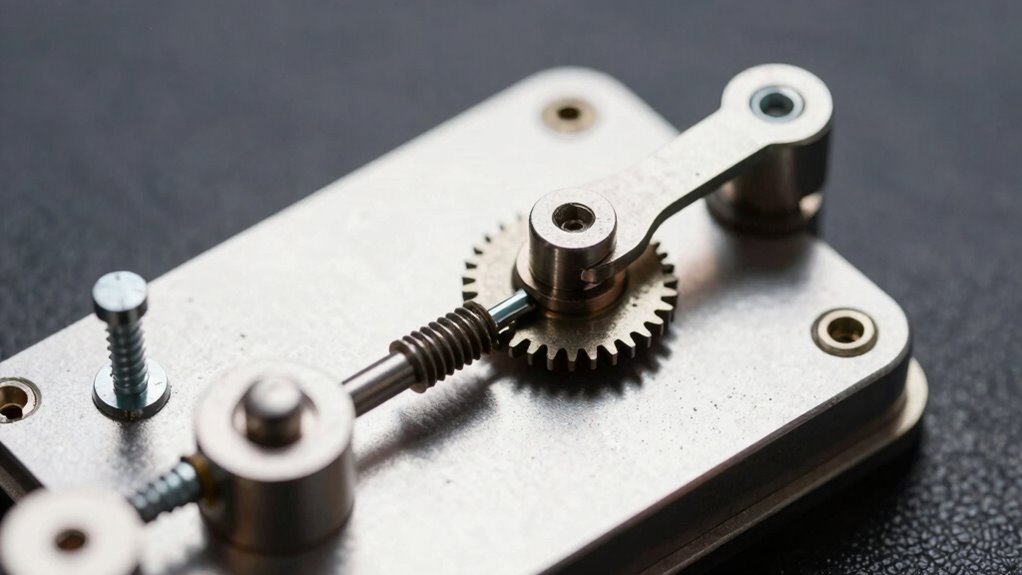

The tiny friction test you’re seeking involves advanced tools like atomic force microscopy and laser sensors that detect microscopic surface irregularities invisible to traditional methods. These detailed measurements reveal hidden flaws in materials and systems, often exposing underlying issues that can cause failures or inefficiencies. By pinpointing these tiny imperfections early, you can prevent costly breakdowns and improve durability. Stick with this exploration, and you’ll uncover how these innovations uncover secrets that shape reliable, efficient systems.

Prime made for students and young adults
- Fast, free delivery for dorm and study essentials
- Prime Video and Amazon Music included
- Member-only deals
Key Takeaways
- Tiny friction tests detect microscopic surface irregularities that indicate underlying system flaws or failures.
- Advanced measurement techniques, like atomic force microscopy, reveal imperfections missed by conventional tools.
- Small surface variations can cause significant system breakdowns or inefficiencies when overlooked.
- Precise friction analysis helps identify systemic issues before they escalate into major failures.
- Recognizing microscopic surface flaws is crucial for improving system reliability and preventing costly malfunctions.
Have you ever wondered how tiny differences in surface textures can affect movement? It’s a fascinating question, especially when you consider how seemingly minor variations can lead to major consequences in systems we rely on daily. That’s where the “tiny friction test” comes into play, serving as a window into the complexities of material interactions. This test isn’t just about measuring how surfaces slide against each other; it’s about uncovering the flaws within broader systems—whether in manufacturing, transportation, or even biomechanics. To do this effectively, researchers employ innovative methodologies that push beyond traditional approaches. These new techniques allow for more precise and thorough friction measurement, revealing subtle discrepancies often missed by standard equipment.
When you explore the domain of friction measurement, it becomes clear that conventional tools fall short in capturing the nuances of surface interactions at a microscopic level. Modern innovations, such as atomic force microscopy and laser-based sensors, help quantify friction with astonishing accuracy, down to nanometer scales. These methods uncover tiny irregularities that might seem insignificant but can cause failures or inefficiencies elsewhere. For instance, a slight inconsistency in a material’s surface texture can lead to increased wear, energy loss, or even catastrophic breakdowns in mechanical systems. By applying innovative methodologies, engineers and scientists can better understand these minute variations and their implications, ultimately leading to improved materials and design standards. Recognizing these microscopic variations is crucial for developing more reliable and durable systems that stand the test of time.
This tiny friction test acts as a diagnostic tool, exposing the cracks in a system’s foundation. When friction isn’t measured properly or overlooked, it creates a false sense of reliability, masking underlying issues that might only surface when it’s too late. The failure to adopt advanced friction measurement techniques perpetuates a broken system, where quality control becomes reactive rather than proactive. You might not see these flaws on the surface, but they quietly undermine performance and safety. The more precise your measurements, the better you can anticipate potential failures and implement corrective measures before problems escalate. Recognizing surface texture variations at a microscopic level enables the development of more reliable and durable materials, ultimately preventing costly failures.
In essence, this tiny friction test reveals a larger truth: that the gaps in our current systems are often rooted in overlooked details. By harnessing innovative methodologies, you gain the ability to detect and address these flaws early on. It’s a reminder that progress lies in the smallest of details—tiny surface imperfections—and that understanding and measuring friction at such a granular level can be the key to fixing a broken system.
atomic force microscopy surface tester
As an affiliate, we earn on qualifying purchases.
As an affiliate, we earn on qualifying purchases.
Frequently Asked Questions
How Does the Friction Test Specifically Identify Systemic Failures?
You can see systemic vulnerabilities through the friction test by observing where resistance or failure occurs, highlighting weak points in the system. It exposes diagnostic limitations by revealing hidden flaws that traditional methods might miss. When you conduct this test, small issues escalate quickly, showing how interconnected failures can undermine overall stability. This process helps identify areas needing reinforcement before larger, more damaging breakdowns happen.
What Tools Are Required to Perform the Tiny Friction Test?
To perform the tiny friction test, you’ll need a precision friction tester, which measures material properties like surface roughness and resistance. Make certain proper calibration procedures are followed to guarantee accurate results. You’ll also need a stable setup, such as a clean, flat surface, and sometimes a force gauge. This combination helps you identify subtle failures in systems by revealing inconsistencies in friction behavior, indicating potential issues.
Can This Test Be Applied to Large-Scale Systems or Only Small Ones?
You might think the tiny friction test only works on small systems, but it actually helps identify scaling challenges in large ones too. Its simplicity allows you to assess system adaptability regardless of size. By applying this test to bigger systems, you can reveal hidden inefficiencies and vulnerabilities, enabling you to make targeted improvements. So, don’t limit yourself—use this approach to evaluate and strengthen systems of any scale effectively.
How Accurate Is the Tiny Friction Test Compared to Other Diagnostic Methods?
You’ll find that the tiny friction test is quite accurate compared to other diagnostic methods, especially because it emphasizes material durability and calibration accuracy. It’s sensitive enough to detect subtle issues that larger tests might miss, providing precise insights into system integrity. While it’s highly reliable, combining it with other assessments can offer a more thorough picture, ensuring you catch problems early and maintain peak performance.
What Are Common Misconceptions About the Friction Test’s Capabilities?
Misconception myths often overestimate the friction test’s capability limits, making you think it reveals every system flaw. In reality, it’s a valuable tool, but it doesn’t detect all issues or provide detailed diagnostics. You might believe it’s a thorough check, but it’s best used alongside other methods. Understanding these capability limits helps you avoid false confidence and ensures you interpret results accurately, leading to better decisions.
As an affiliate, we earn on qualifying purchases.
Conclusion
By trying this tiny friction test, you realize how small issues can expose larger systemic flaws. It challenges the idea that minor problems are insignificant, revealing instead that they can be symptoms of deeper dysfunction. Investigate further, question assumptions, and remember that sometimes, the tiniest friction points hold the key to understanding a much bigger picture. Don’t dismiss small signs—they often reveal the true state of the system beneath the surface.
microscopic surface flaw detection tools
As an affiliate, we earn on qualifying purchases.
As an affiliate, we earn on qualifying purchases.
precision friction measurement device
As an affiliate, we earn on qualifying purchases.
As an affiliate, we earn on qualifying purchases.
Fall Picks
fall essentials
As an affiliate, we earn on qualifying purchases.