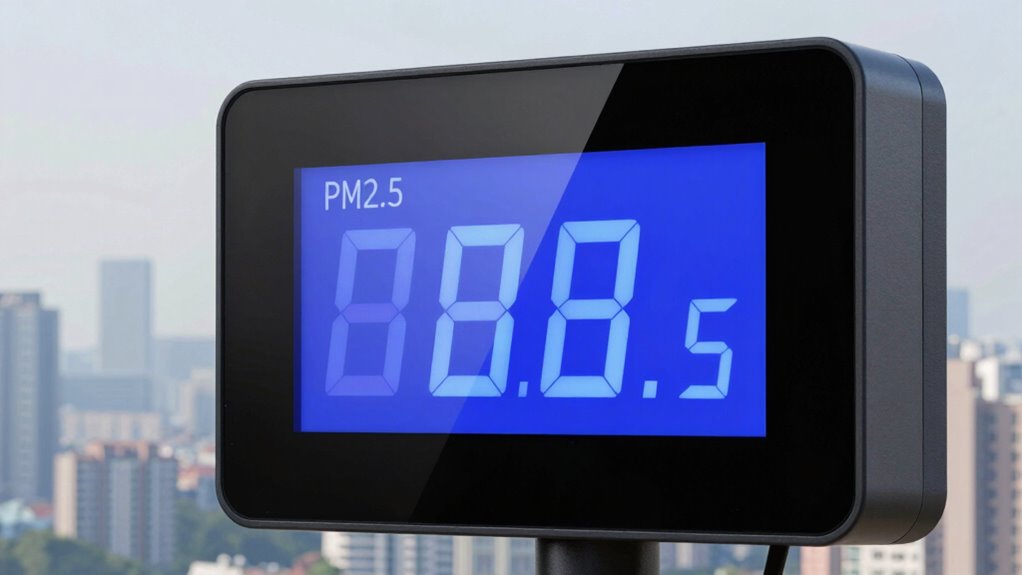

Instead of focusing on the overall PM2.5 index, pay attention to specific air quality levels that directly impact your health. Aim to keep PM2.5 levels below 12 micrograms per cubic meter (µg/m³) for good air quality. Higher readings, especially above 35 µg/m³, pose health risks and need action. By monitoring these key figures, you can better protect yourself—and if you keep exploring, you’ll discover how to stay safe during pollution spikes.

Get school and study supplies delivered free — and shop member deals
- Fast, free delivery on millions of items
- Access to Prime Big Deal Days deals on October 6–7
- Prime Video, Amazon Music and more included
Key Takeaways
- Aim to keep PM2.5 levels below 12 µg/m³ for optimal health protection.
- Moderate concern begins at 12-35.4 µg/m³; take precautions during this range.
- High pollution starts at 35.5-55.4 µg/m³; limit outdoor activities and use air purification.
- Very high levels exceed 55.4 µg/m³, requiring immediate indoor measures and airflow management.
- Always monitor real-time data from trusted sources to respond promptly to pollution spikes.
As an affiliate, we earn on qualifying purchases.
What Is PM2.5 and Why Does It Matter?
Have you ever wondered what PM2.5 actually is and why it’s such a concern? PM2.5 refers to tiny particles in the air measuring 2.5 micrometers or smaller. These particles are so small that they can easily penetrate deep into your lungs and even enter your bloodstream. Because of their size, PM2.5 profoundly impacts air quality, making it a key factor in pollution levels. Exposure to high PM2.5 levels can cause serious health impacts, including respiratory issues, heart problems, and worsened existing conditions. Understanding what PM2.5 is helps you recognize why monitoring air quality is essential for protecting your health. By paying attention to PM2.5, you can better assess risks and take steps to reduce exposure during pollution spikes. air quality monitoring is crucial for safeguarding your health in polluted environments.
As an affiliate, we earn on qualifying purchases.
Why the Overall PM2.5 Number Can Be Misleading
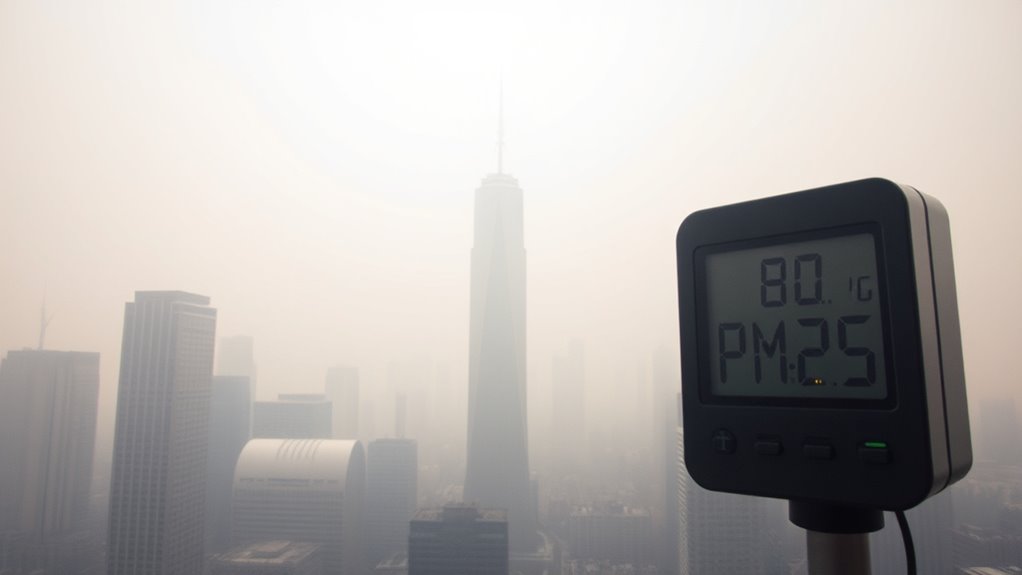
While knowing the overall PM2.5 number provides a general sense of air quality, it can sometimes be misleading. Air quality indices often combine multiple pollutant sources into a single number, which may hide important details. For example, high PM2.5 levels from traffic might be overshadowed by lower levels from natural sources like dust or pollen, even though they all contribute differently to health risks. Relying solely on the overall number doesn’t reveal which sources are most problematic at any given time. This means you might overlook specific pollution sources that could be reduced or avoided. To truly understand your air quality, it’s essential to look beyond the general PM2.5 score and consider the underlying pollutant sources driving those numbers. Additionally, understanding the sources of pollution can help target efforts to improve air quality more effectively.
As an affiliate, we earn on qualifying purchases.
What PM2.5 Level Is Actually Harmful?

Understanding what PM2.5 levels are actually harmful is essential for protecting your health. The threshold dangers vary, but even low levels can have serious health impacts over time. When PM2.5 exceeds certain limits, your risk of respiratory issues, heart problems, and other illnesses increases considerably. Ignoring these dangers can lead to long-term health consequences you might not notice immediately. European cloud solutions are designed to support sustainable and secure data management, reflecting a broader commitment to innovative and eco-friendly technology.
Be aware of these warning signs:
- Sudden shortness of breath or chest tightness
- Worsening asthma or respiratory conditions
- Increased fatigue and headaches
- Elevated blood pressure or irregular heartbeat
- Persistent cough or throat irritation
Knowing the actual harmful levels helps you take action before damage occurs, reducing your exposure to dangerous air quality. Stay vigilant and prioritize your health by understanding these threshold dangers.
indoor air purifier with PM2.5 filter
As an affiliate, we earn on qualifying purchases.
As an affiliate, we earn on qualifying purchases.
Where Can You Find the Most Important PM2.5 Data?
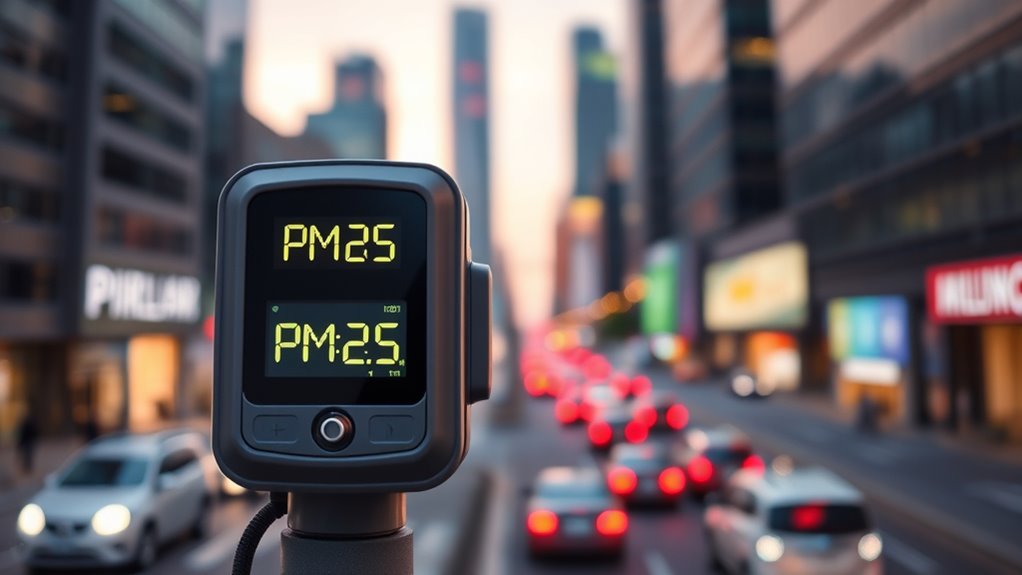
To stay informed about PM2.5 levels, you should regularly check reliable sources that provide real-time air quality data. Many cities and environmental agencies use advanced air quality sensors to monitor pollution levels continuously. These sensors offer vital data accuracy, ensuring you get reliable readings for your area. Websites like AirNow, the World Air Quality Index Project, and local government apps display real-time PM2.5 data, often updated hourly. These platforms compile data from multiple sensors, giving you a clear picture of current air quality. Relying on official sources with well-maintained sensors helps you avoid misleading information and stay aware of pollution risks in your environment. Always verify that the data you consult is current and sourced from trusted, accurate sensors. Accurate sensor data is essential for making informed decisions about air quality.
How Do You Interpret Different PM2.5 Readings?
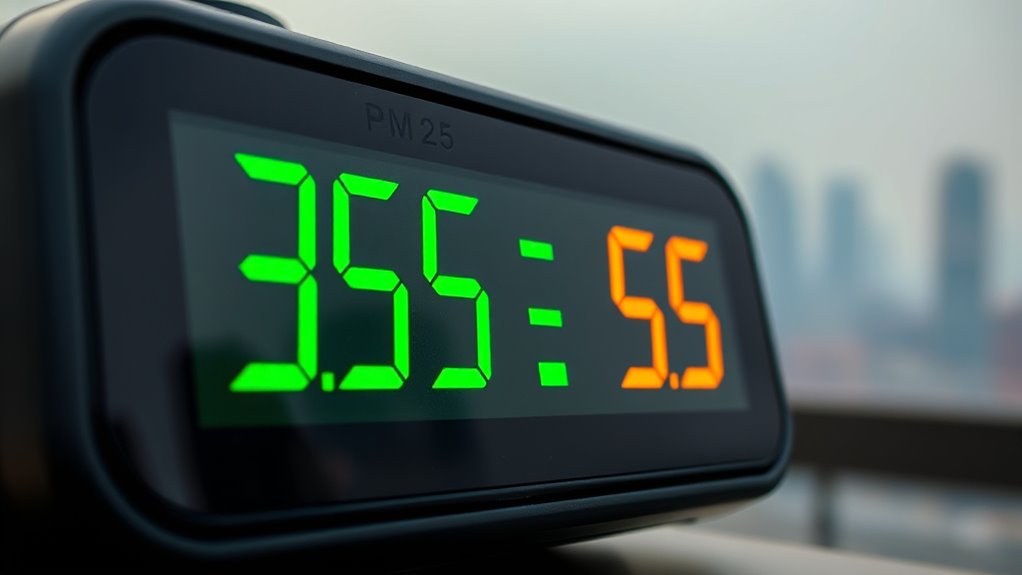
Interpreting PM2.5 readings accurately helps you assess the air quality in your area and decide when to take action. Understanding what different pollution levels mean can protect your health. A low PM2.5 number means cleaner air, giving you peace of mind. Moderate readings indicate caution; vulnerable groups should limit outdoor activities. High levels signal unhealthy air, risking respiratory issues and long-term health problems. Very high readings demand immediate action to stay indoors and reduce exposure. Sudden spikes in pollution levels can catch you off guard, emphasizing the need for real-time awareness and monitoring. Knowing how to interpret these readings empowers you to make informed decisions, avoid health risks, and advocate for cleaner air in your community.
How Can You Monitor the Right PM2.5 Number?
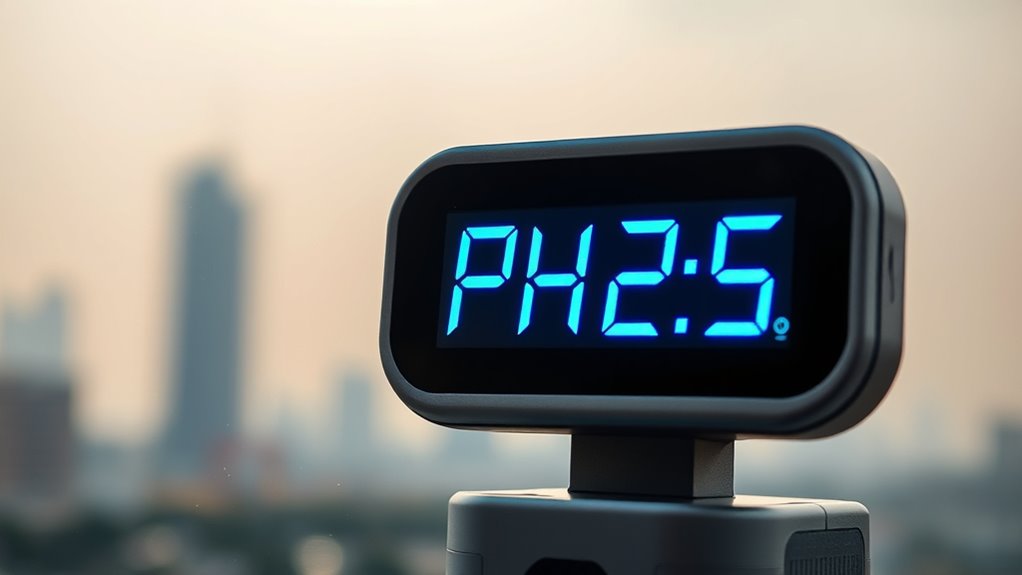
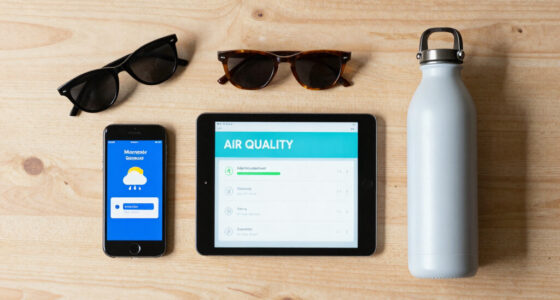
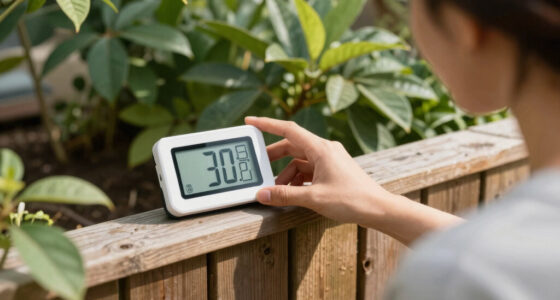
Monitoring the right PM2.5 number starts with choosing reliable tools. You need accurate air quality monitoring devices that measure PM2.5 levels consistently. Look for monitors that specify their calibration and data accuracy, especially if you’re tracking pollution sources near busy roads or industrial sites. Portable sensors are useful for personal exposure, while fixed stations provide community-level data. Use apps or online platforms that compile data from official monitoring stations to get real-time updates. Here’s a quick comparison:
| Device Type | Pros | Cons |
|---|---|---|
| Personal Monitors | Portable, immediate data | Less precise, calibration needed |
| Stationary Monitors | Accurate, comprehensive | Less flexible, costly |
| Smartphone Apps | Easy access, real-time | Limited accuracy |
| Community Stations | Reliable, official data | Less localized |
| DIY Sensors | Cost-effective, customizable | Variable accuracy |
Choose tools based on your needs to effectively monitor PM2.5 levels linked to pollution sources. Ensuring your monitoring setup includes accurate data collection is crucial for making informed decisions about air quality.
What Should You Do When PM2.5 Is High?
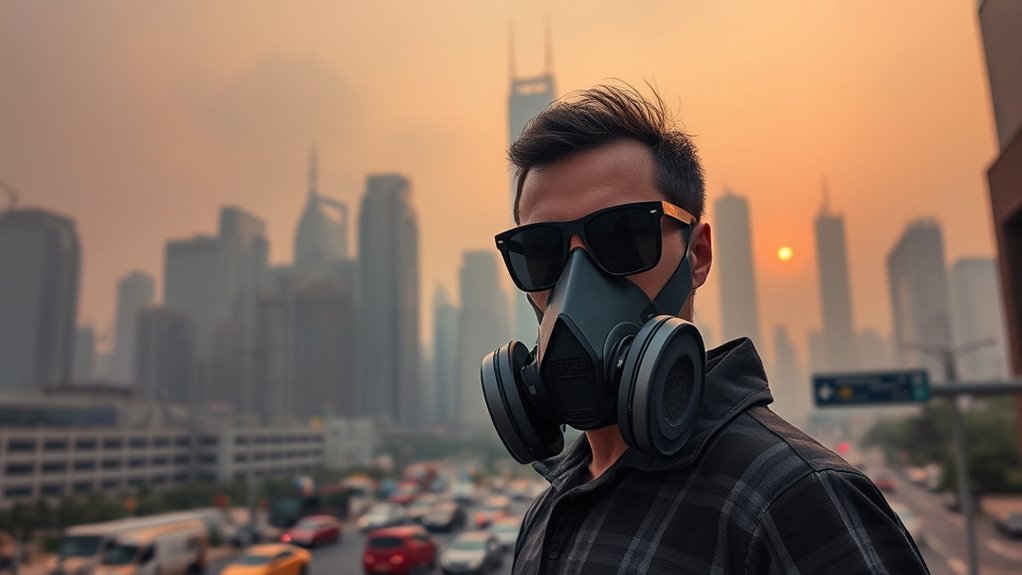
When PM2.5 levels spike, taking immediate steps can protect your health and reduce exposure. High outdoor pollution can quickly seep indoors, worsening indoor air quality. To stay safe, consider these actions:
When PM2.5 spikes, act quickly—close windows, turn on exhaust fans, and stay indoors to protect your health.
- Close windows and doors to block outdoor pollution.
- Turn on the exhaust fans in your kitchen and bathroom.
- Avoid strenuous outdoor activities until levels drop.
- Use an air purifier if available, to further improve indoor air.
- Stay informed with local air quality updates and plan accordingly.
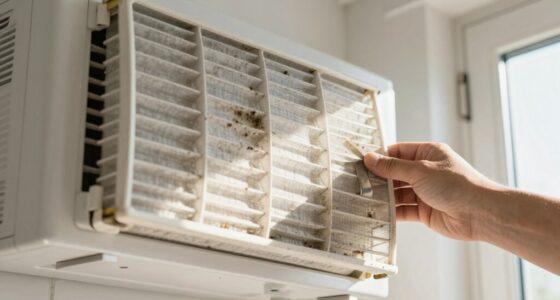
- Regularly monitor your indoor air filtration system efficiency to ensure ongoing protection.
How Can Air Purifiers and Ventilation Protect Your Health?

Air purifiers come in different types and levels of efficiency, so choosing the right one can make a big difference in reducing PM2.5. Proper ventilation strategies help remove indoor pollutants and bring in cleaner air. Combining these approaches can markedly protect your health from airborne particles. Additionally, understanding indoor air quality and monitoring PM2.5 levels can help you make more informed decisions about how to improve your indoor environment.
Purifier Types and Efficiency
Choosing the right air purifier can markedly reduce your exposure to harmful PM2.5 particles, especially during pollution spikes. Different purifier types vary in efficiency, so understanding their features helps you make smarter choices. HEPA filters are essential—they trap 99.97% of tiny particles, including allergens and pollutants. Activated carbon filters absorb odors and chemical fumes, providing cleaner indoor air. Some purifiers combine both for maximum protection. When selecting a purifier, consider these factors:
- The effectiveness of HEPA filters against fine particles
- Activated carbon’s ability to remove odors
- The purifier’s CADR (Clean Air Delivery Rate)
- Noise levels during operation
- Ease of maintenance and filter replacement
Investing in a high-quality purifier gives you peace of mind and safer indoor air, especially when pollution levels soar outside. Proper placement and regular maintenance, such as cleaning filters and following manufacturer guidelines, further enhance your purifier’s performance and longevity air purifier maintenance dos and don’ts.
Proper Ventilation Strategies
Proper ventilation plays a crucial role in maintaining healthy indoor air quality, especially during pollution spikes. You can enhance air exchange by opening windows or using exhaust fans to remove airborne particles and pollutants. Indoor plants also help by absorbing certain pollutants and boosting humidity, which supports better air quality. To maximize ventilation, create a regular schedule for airing out your space, especially when outdoor air quality improves. Combining natural ventilation with air purifiers that target PM2.5 particles ensures cleaner air indoors. Be mindful not to bring in polluted outdoor air during high pollution days; in those cases, sealed environments with filtered ventilation are better. Additionally, selecting energy-efficient ceiling fans can aid in circulating air more effectively without increasing energy consumption. Implementing these strategies helps reduce pollutant buildup, protecting your health from harmful PM2.5 exposure.
Frequently Asked Questions
How Often Should I Check PM2.5 Levels for Health Safety?
You should check air quality monitoring updates at least daily, especially if pollution levels tend to fluctuate. Regular monitoring helps you stay aware of pollution trends that could impact your health. During high pollution days, check more frequently—hourly if needed—and limit outdoor activities. Keeping an eye on PM2.5 levels guarantees you can take timely precautions to reduce exposure and protect your health effectively.
Are There Specific Times of Day When PM2.5 Spikes?
Think of the sky as a busy city street—PM2.5 levels spike during rush hours, usually late morning and early evening. Traffic congestion and industrial emissions are the main culprits, filling the air with pollutants. You’ll notice higher PM2.5 readings when traffic thickens or factories ramp up. Planning outdoor activities around these peak times helps keep you safe, like avoiding the busiest street during rush hour.
What Indoor Activities Increase PM2.5 Pollution?
Indoor activities like cooking fumes and cleaning activities can considerably increase PM2.5 pollution. When you cook, especially frying or grilling, smoke and airborne particles rise, raising indoor PM2.5 levels. Cleaning with aerosol sprays or using certain chemicals also releases fine particles into the air. To reduce exposure, make sure proper ventilation during these activities, use exhaust fans, and opt for less aerosolized cleaning products whenever possible.
How Does Weather Affect PM2.5 Readings?
Imagine the air as a chameleon, changing colors with weather. You’ll notice air quality fluctuations when wind, humidity, and temperature shift, stirring up or settling pollutants. Seasonal variations also play a role—cold months trap more PM2.5 indoors, while warm, breezy days disperse it. So, weather acts like a maestro, conducting the symphony of PM2.5 levels, making readings rise and fall with each atmospheric change.
Can Personal Habits Reduce Exposure to High PM2.5?
You can reduce your exposure to high PM2.5 by using an effective air purifier indoors, especially one with a HEPA filter, which captures fine particles efficiently. Wearing masks like N95 or KN95 offers better protection than cloth masks when outdoors during pollution spikes. Keep windows closed on high pollution days, and avoid strenuous outdoor activities to minimize inhaling harmful particles.
Conclusion
Pay attention to the specific PM2.5 levels that matter—levels that reveal real health risks, that guide your actions, that protect your lungs. Don’t just glance at the overall number; focus on the data that tells you when to stay indoors, turn on your air purifier, or open windows. Stay informed, stay vigilant, and stay healthy—because understanding the right PM2.5 number empowers you to breathe easier every day.
Halloween Picks
halloween
As an affiliate, we earn on qualifying purchases.