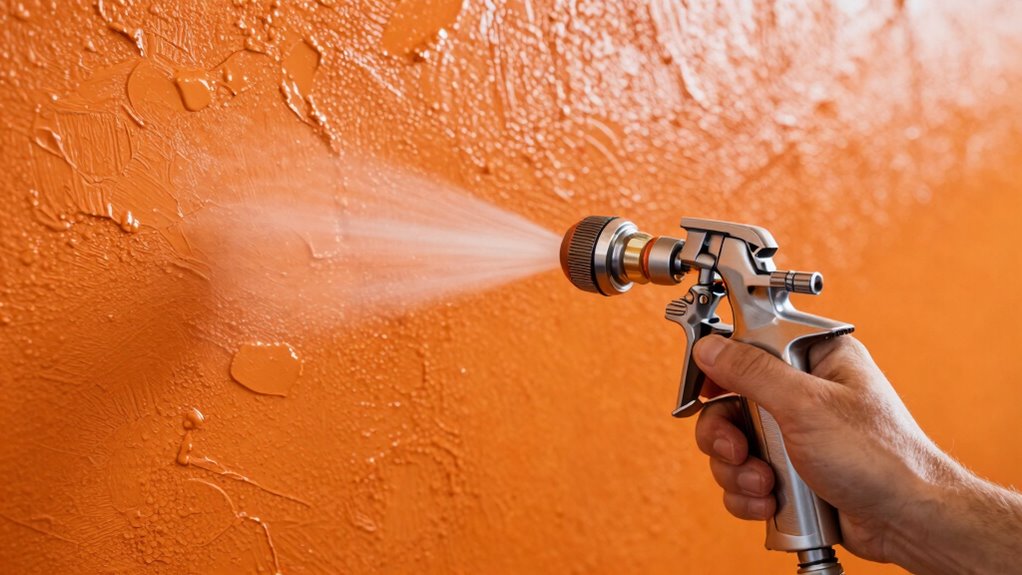

Choosing the right tip size for your airless sprayer is key to avoiding orange peel texture and achieving a smooth finish. Smaller tips (like 211 or 311) work well for detailed work and fine coatings, while larger tips (517 or 619) speed up large surfaces but can cause rough surfaces if misused. Properly matching your tip size, maintaining equipment, and thinning paint correctly help minimize texture issues. Keep exploring to discover how to get the perfect spray every time.

Prime made for students and young adults
- Fast, free delivery for dorm and study essentials
- Prime Video and Amazon Music included
- Member-only deals
Key Takeaways
- Proper tip size selection ensures smooth spray patterns, reducing the risk of orange peel texture on surfaces.
- Smaller tips provide finer finishes, minimizing orange peel, ideal for detailed or furniture work.
- Larger tips increase paint flow for faster coverage but may cause rough textures if not matched correctly.
- Maintaining equipment and using correct paint consistency prevents clogs that contribute to surface imperfections.
- Switching tip sizes during a project can optimize spray quality and help achieve a professional, smooth finish.
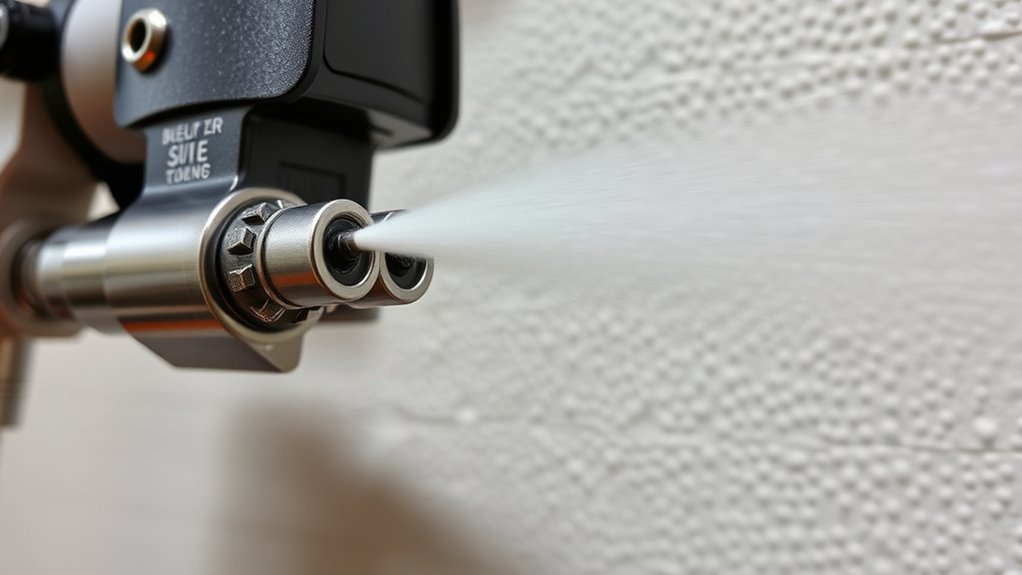
Are you looking for a faster, more efficient way to paint large surfaces? If so, understanding how your airless paint sprayer works can make a big difference in your results. One key aspect to consider is the tip size you choose, which directly influences spray pattern, paint flow, and finish quality. Proper spray gun maintenance is essential to keep your equipment functioning smoothly, ensuring consistent performance and preventing clogs that can disrupt your workflow. Additionally, maintaining good paint consistency is crucial; thin or thick paint can cause uneven spray patterns or drips, so always check your mixture before starting.
Optimize your painting with the right tip size, proper maintenance, and correct paint consistency for flawless results.
Choosing the right tip size is fundamental. Smaller tips, like 211 or 311, are ideal for fine finishes, furniture, or detailed work, but they may slow you down on large, flat surfaces. Larger tips, such as 517 or 619, allow for higher volume flow, making them perfect for walls or ceilings. The goal is to match the tip size to your project to achieve a smooth, even coat without over-spraying or creating a rough texture. Remember, if your spray pattern becomes uneven or you notice excessive overspray, it might be time to switch to a different tip size.
Spray gun maintenance plays a vital role in maintaining optimal spray quality. Regularly cleaning your spray gun after each use prevents paint buildup that can clog the nozzle or affect spray pattern consistency. Use the appropriate cleaning solutions recommended for your sprayer type, and inspect the nozzle and filters for wear or damage. A well-maintained spray gun ensures consistent paint flow, which is critical to achieving a professional-looking finish and avoiding issues like orange peel texture—an undesirable bumpy surface that results from inconsistent spray patterns or incorrect tip sizes. Keeping your equipment well-calibrated and understanding paint flow are also essential for optimal results.
Paint consistency is another factor you can’t overlook. If your paint is too thick, it can clog the nozzle, leading to uneven spray and a rough surface. Conversely, if it’s too thin, you might experience drips or runs, especially on larger surfaces. Always follow the manufacturer’s guidelines for thinning paint, and test your mixture on a scrap piece before starting your project. Properly adjusted paint consistency combined with the correct tip size results in a smooth, uniform finish, minimizing the appearance of orange peel, which is often caused by improper spray technique or equipment issues.
Frequently Asked Questions
Can Tip Size Affect Paint Coverage Speed?
Yes, tip size affects paint coverage speed. A larger tip increases paint flow, allowing you to cover more surface area quickly, which speeds up the process. It also produces a wider spray pattern, reducing the number of passes needed. However, using an excessively large tip can cause overspray and uneven coverage. Choose the right tip size to optimize your spray pattern and achieve efficient, smooth coverage without waste.
How Do I Choose the Right Tip for Textured Surfaces?
When choosing a tip for textured surfaces, you should consider surface preparation and paint adhesion. Use a larger tip size to guarantee paint penetrates deep into textures, creating an even coat. Proper surface prep ensures better adhesion, preventing uneven coverage or peeling. Select a tip that matches the texture’s roughness—more textured surfaces need wider tips—so your paint adheres well and covers evenly, giving you a professional finish.
Does a Smaller Tip Create a Smoother Finish?
A smaller tip acts like a fine brush, smoothing your finish. It produces a more controlled spray pattern, ideal for achieving a silky, even coat. When your paint consistency is just right, a smaller tip minimizes overspray and orange peel texture, giving you a smoother finish. Think of the tip size as your brush’s finesse—use a smaller one for intricate, polished results and a flawless look.
Are There Tips Designed Specifically for Latex vs. Oil-Based Paints?
Yes, there are tips designed specifically for latex vs. oil-based paints. You should choose tip compatibility based on the paint type you’re using. Latex paints require tips with larger orifices to handle their thicker consistency, while oil-based paints work well with smaller tips for smoother application. Using the right tip guarantees proper flow and finish, preventing clogs and uneven coverage. Always check manufacturer recommendations for peak results.
How Often Should I Replace Spray Tips for Optimal Results?
You should replace your spray tips when you notice uneven spray patterns, clogging, or reduced paint flow, as these indicate wear. Following a regular maintenance schedule, including tip cleaning after each use, helps prolong their lifespan. Typically, inspect your tips daily during projects and replace them every 6-12 months or sooner if performance declines. Proper maintenance guarantees smooth operation and professional-quality finishes every time.
Conclusion
Choosing the right tip size for your airless paint sprayer is like selecting the perfect brush for a masterpiece—you want precision and control. Understanding how tip sizes affect spray pattern and finish helps you avoid the dreaded orange peel texture. When you match your equipment to your project, your results will flow smoothly, like a well-orchestrated symphony. So, take the time to learn, and soon your painting will turn out flawless, leaving a professional-looking finish behind.
Fall Picks
fall essentials
As an affiliate, we earn on qualifying purchases.