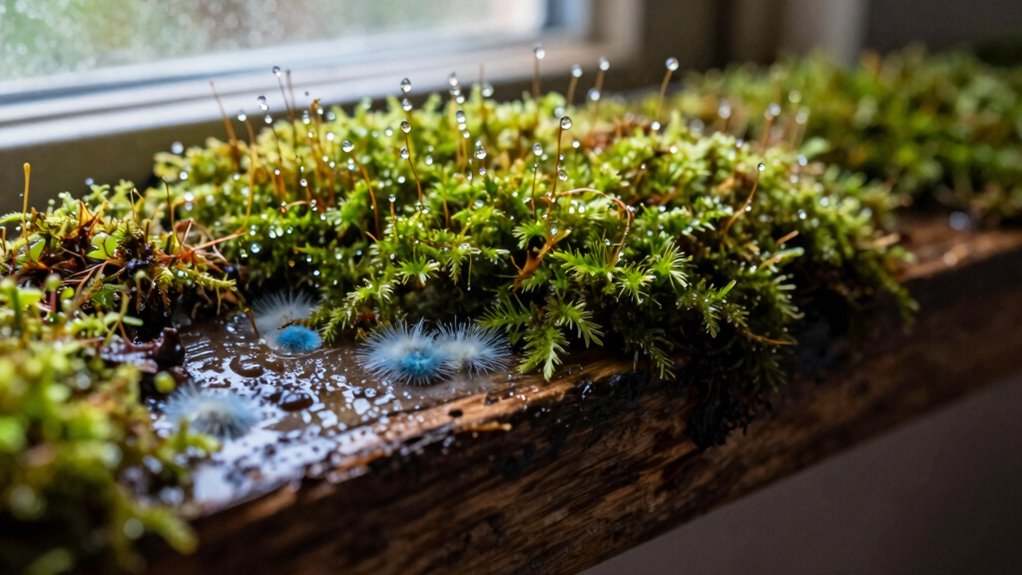

To prevent mold using the dew point rule, keep indoor humidity below 60%, ideally around 30-50%. When humidity rises, cool surfaces can drop below the dew point, causing moisture to condense and create mold-friendly conditions. By controlling temperature and moisture levels, you can avoid condensation buildup. Understanding how dew point affects moisture helps you stay ahead of mold growth—continue to learn more about effective humidity management techniques.

Prime made for students and young adults
- Fast, free delivery for dorm and study essentials
- Prime Video and Amazon Music included
- Member-only deals
Key Takeaways
- Mold growth accelerates when indoor humidity exceeds 60%, especially near the dew point where condensation occurs.
- The dew point indicates the temperature at which moisture condenses, increasing surface dampness and mold risk.
- Maintaining indoor relative humidity below 50% prevents surfaces from reaching dew point and reduces mold potential.
- Proper ventilation and dehumidification lower indoor humidity, keeping surfaces above dew point and dry.
- Monitoring indoor temperature and humidity helps control dew point conditions, preventing mold development.

Humidity levels play a crucial role in mold growth, and controlling them is key to maintaining a healthy indoor environment. Mold thrives when moisture is abundant, especially in areas where humidity exceeds 60%. To prevent this, you need effective ventilation strategies that promote air circulation and reduce indoor moisture buildup. Proper ventilation helps carry away excess humidity, preventing it from settling into walls, ceilings, or floors where mold spores can settle and grow. Installing exhaust fans in kitchens and bathrooms, keeping windows open when possible, and using air purifiers with humidity control features are practical ways to improve airflow and moisture removal.
Effective ventilation reduces indoor humidity and prevents mold growth.
In addition to ventilation, moisture barriers are essential in controlling indoor humidity levels. These barriers act as protective layers that prevent moisture from penetrating building materials such as walls, floors, and ceilings. For example, vapor barriers installed under concrete slabs or behind exterior walls stop ground moisture from seeping into your home. When moisture cannot infiltrate these surfaces, the likelihood of mold growth diminishes markedly. You should also consider sealing gaps around windows, doors, and utility penetrations to prevent moisture intrusion. Proper installation of moisture barriers creates a protective shield that maintains lower humidity levels indoors, reducing the risk of mold development over time.
It’s important to recognize that ventilation strategies and moisture barriers work best when used together. Good airflow helps dry out any dampness that might develop, while moisture barriers keep external moisture from entering the building. For instance, if you’re remodeling a basement or installing new insulation, make sure to incorporate vapor barriers and design ventilation that encourages continuous air exchange. This combination ensures that moisture stays outside or is quickly carried away, keeping indoor humidity within safe limits. You’ll want to monitor humidity levels regularly using a hygrometer to ensure your strategies are effective. Maintaining a relative humidity between 30% and 50% is ideal for mold prevention.
Furthermore, controlling humidity isn’t just about installing barriers or fans. It’s about creating a holistic approach to moisture management. You should fix leaks promptly, use dehumidifiers during humid months, and ensure your home’s drainage system directs water away from the foundation. All these measures support your ventilation strategies and moisture barriers, forming a cohesive defense against mold. Properly managing indoor humidity also involves understanding the dew point to prevent moisture from condensing on surfaces. When you actively manage humidity levels, you’re not just preventing mold—you’re also promoting better indoor air quality and protecting the structural integrity of your home. In the end, understanding the dew point rule and applying these practical strategies empowers you to keep mold at bay and enjoy a healthier living space.
Popular right now

Shark Rocket Pet Plus Corded Stick Vacuum, Bordeaux, HV322
Dyson Car+Boat Cordless Handheld Vacuum

Ninja Flip Toaster Oven and Air Fryer, 8-in-1, Stainless Steel, SP151
As an affiliate, we earn on qualifying purchases.
Frequently Asked Questions
How Does Outdoor Humidity Affect Indoor Mold Growth?
Outdoor humidity levels directly impact indoor mold growth because outdoor moisture can seep inside or increase indoor humidity. When outdoor humidity is high, it raises indoor moisture levels, creating an ideal environment for mold. You should monitor humidity levels indoors and use dehumidifiers if needed, especially during humid seasons. Keeping humidity below 60% helps prevent mold growth caused by outdoor moisture infiltrating your home.
Can Mold Grow in Areas With Low Humidity?
Think mold only thrives in humid spaces? Not quite. You can still find mold lurking in low-humidity areas if you don’t use mold-resistant paints or proper dehumidification techniques. Mold adapts surprisingly well, even in dry environments. Keep your space dry with these methods, and you’ll prevent mold growth, no matter how low the humidity seems. Remember, mold’s sneaky—so stay vigilant and proactive!
What Household Items Help Control Indoor Humidity Levels?
You can regulate indoor humidity levels with household items like dehumidifiers. Regular dehumidifier maintenance guarantees they work efficiently, helping prevent mold growth. Additionally, household cleaning tips like using moisture-absorbing products and ventilating spaces regularly can also help. Keep an eye on humidity levels with a hygrometer, and promptly address any excess moisture to maintain a healthy, mold-free environment.
Are There Health Risks Associated With Mold Exposure?
Think of mold as an uninvited guest that can cause trouble in your home. Exposure to mold can trigger health risks like mold allergy symptoms, respiratory issues, and worsen asthma. Poor indoor air quality worsens these effects, making your environment uncomfortable and unhealthy. To protect yourself, keep humidity levels in check and guarantee good ventilation. Staying vigilant prevents mold from taking hold and keeps your home’s air safe and clean.
How Often Should I Check Indoor Humidity and Mold Levels?
You should check your indoor humidity regularly, ideally once a week, using humidity sensors to monitor levels and prevent mold growth. Additionally, conduct mold testing kits if you notice a musty smell or visible mold. Consistent checks help you maintain ideal humidity levels between 30-50%, reducing mold risks and ensuring a healthier living environment. Stay vigilant and act quickly if readings indicate excessive moisture.
Conclusion
Remember, controlling humidity is like keeping a delicate balance on a tightrope—too high, and mold will take hold; too low, and comfort suffers. By understanding the dew point rule, you become the guardian of your home, much like a captain steering clear of stormy seas. Stay vigilant, monitor your environment, and you’ll prevent mold from turning your sanctuary into a battleground. Keep the dew point in check, and your space will stay safe and healthy.