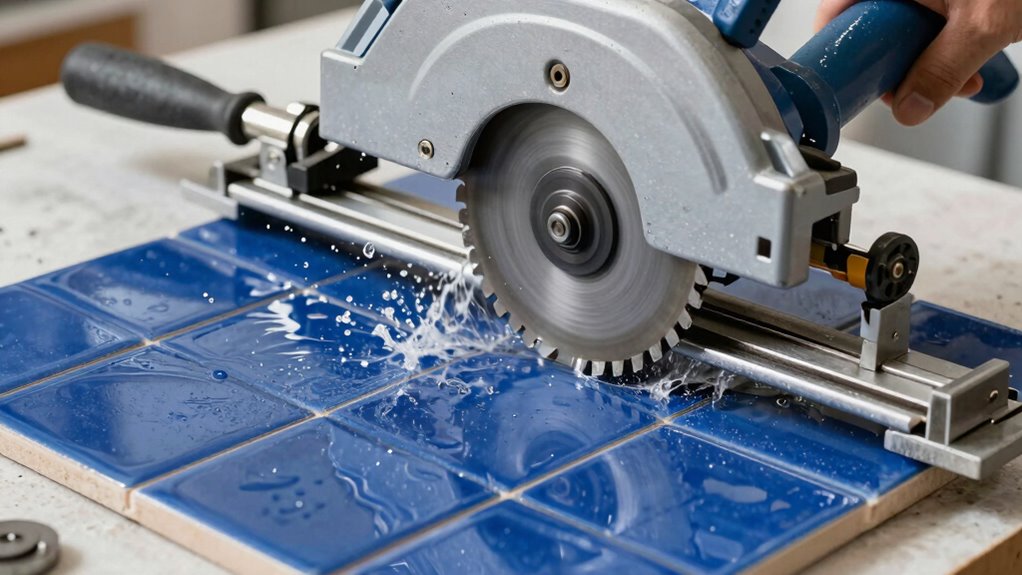
When choosing between wet saws and snap cutters for tile cutting, consider your project’s needs. Use a wet saw for large tiles, dense materials like porcelain, or intricate cuts, as it offers precision and handles tough surfaces. Snap cutters work well for small, soft tiles with straight cuts and are faster for simple jobs. Knowing when each tool wins helps guarantee safety and perfect results—keep going to discover how to pick the right tool for your project.
Key Takeaways
- Wet saws excel for large, hard, or thick tiles like porcelain and stone due to their powerful, precise cutting ability.
- Snap cutters are ideal for small, soft tiles or simple cuts, providing quick, clean results with minimal setup.
- Wet saws require more safety precautions and setup but offer higher accuracy for complex or long cuts.
- Snap cutters are portable, easy to use, and safer for quick, straight cuts on softer tiles.
- Choose a wet saw for professional, large-scale projects and a snap cutter for quick, small jobs or soft materials.
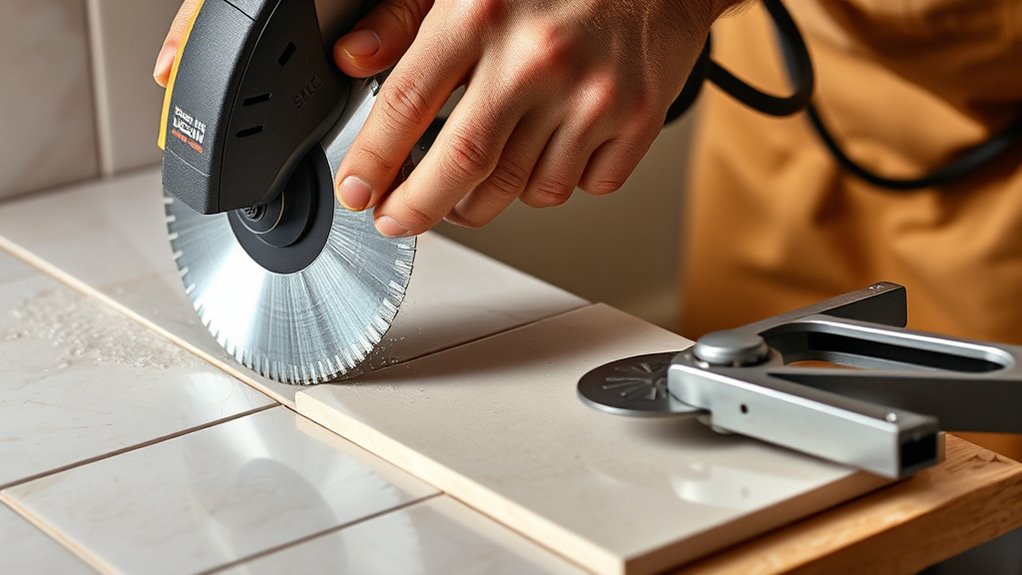
Have you ever wondered how to cut tiles accurately for your DIY project? Precision measurement is essential to ensure your tiles fit perfectly and give your space a professional look. Before you start, it’s vital to understand the different tools available and when each one wins. Using a wet saw or a snap cutter depends on the type of tile, the cut’s complexity, and your comfort level. No matter which tool you choose, safety precautions should always be your top priority. Wear safety goggles to protect your eyes from flying debris and gloves to guard your hands from sharp edges. Working in a well-ventilated area and securing your workspace prevents accidents and guarantees precise cuts. Additionally, understanding outdoor safety practices can help you stay alert and prepared for unexpected hazards while working with power tools. Wet saws are ideal for cutting large tiles or those made of harder materials like porcelain or stone. They use a high-speed blade and water to minimize dust and heat, making the cut smoother and cleaner. When using a wet saw, carefully measure your tile, mark your cut line, and double-check your measurements for accuracy. Precision measurement is critical here because a small mistake can ruin a costly tile. Take your time to align the tile properly on the saw’s bed, ensuring your cut follows the marked line precisely. Always keep your fingers clear of the blade, and don’t rush the process. The water helps keep the blade cool and reduces dust, but make sure the water supply is functioning correctly before starting. Many accidents happen when safety precautions are ignored, so follow the manufacturer’s instructions carefully and never bypass safety features.
wet tile saw for porcelain and stone
As an affiliate, we earn on qualifying purchases.
As an affiliate, we earn on qualifying purchases.
Frequently Asked Questions
Which Tile Cutting Method Produces the Cleanest Edge?
A wet saw produces the cleanest edge finish and offers superior cut precision. You’ll notice smoother, straighter cuts with less chipping, making it ideal for achieving professional-looking results. Snap cutters work well for quick, small cuts but can leave rougher edges. If you prioritize a polished, flawless edge finish, a wet saw is your best choice for precise, clean cuts, especially on delicate or large tiles.
How Much Does Each Tile Cutting Tool Typically Cost?
Think of choosing a tile cutter like picking the right tool for your project’s story. Wet saw prices can range from $150 to over $1,000, making them a splurge for big jobs. Snap cutters are more like budget heroes, costing between $20 and $80. For precision and heavy use, invest in a wet saw; if you’re DIYing small projects, a snap cutter keeps costs low while still getting the job done.
Are Wet Saws Suitable for All Tile Types?
Wet saws are suitable for most tile materials, including porcelain, ceramic, and natural stone. You need to take into account the tile’s hardness and thickness when choosing a tool, as some materials may require specialized blades. Regular tool maintenance, like cleaning and checking the blade, ensures precise cuts and longevity. If you use the right blade and keep your wet saw well-maintained, you’ll get clean, accurate cuts on various tile types.
Can Snap Cutters Handle Large or Thick Tiles?
Think of snap cutters like a trusty pair of scissors—they struggle with large or thick tiles. They handle small, thin tiles easily but falter with big or dense ones. For large tile handling and thick tile cutting, a wet saw is your best bet, offering precision and power. So, if you’re working on a project with hefty tiles, don’t rely on snap cutters; opt for a wet saw instead.
What Safety Precautions Should I Take When Using Each Tool?
When using wet saws and snap cutters, you should always wear personal protective equipment like goggles and gloves to protect against debris and sharp edges. Guarantee good workspace ventilation to avoid inhaling dust or fumes. Keep your workspace clean and well-lit, and follow manufacturer instructions carefully. For wet saws, avoid water spills, and for snap cutters, handle tiles carefully to prevent injury. Staying cautious keeps your work safe and efficient.

VEVOR 17-Inch Manual Tile Cutter for Wall & Polished Tiles,Double Rails for Precise Cutting, Tungsten Carbide Wheel,Non-Slip Handle,Anti-Displacement Pressure Rod,Precise Cuts for Pros & Beginners
- Versatile Tile Compatibility: Cuts wall, polished, and glazed tiles
- Ideal for Small Tiles: Maximum 17-inch length, 0.5-inch thickness
- Precise Cutting Performance: Smooth scoring with scale and angle rulers
As an affiliate, we earn on qualifying purchases.
As an affiliate, we earn on qualifying purchases.
Conclusion
When it comes to tile cutting, think of wet saws as your precision artist, slicing through tough tiles with ease, while snap cutters are your quick-draw sharpshooters for smaller jobs. Knowing when each tool shines helps you tame your project like a skilled craftsman. So, pick the right weapon for the task at hand, and watch your tiling masterpiece come to life—your perfect finish is just a cut away!
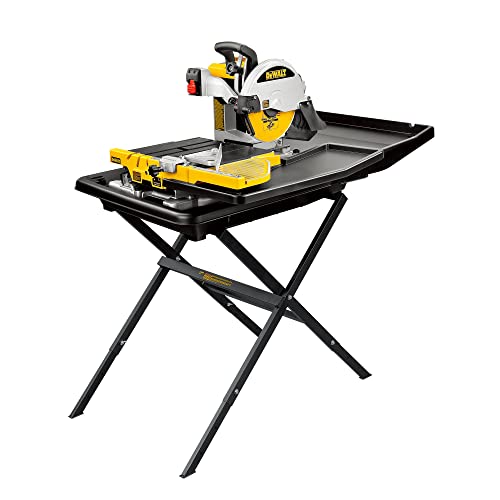
DEWALT Wet Tile Saw with Stand, 10-Inch, Corded (D24000S)
- Includes Complete Cutting Kit: Wet saw, stand, blades, and accessories
- Compact Tool Dimensions: 36” L x 29” W x 24” H
- Powerful Motor: 1.5 HP, 120V, corded
As an affiliate, we earn on qualifying purchases.
As an affiliate, we earn on qualifying purchases.

QEP Handheld Tile Cutter for Ceramic Wall Tile up to 1/4" Thick
- Suitable for small ceramic tiles: Cuts tiles up to 6×6 inches, 1/4 inch thick
- Durable construction: Made with rust-resistant chrome-plated steel
- Precise scoring wheel: Features 1/2 inch tungsten carbide wheel
As an affiliate, we earn on qualifying purchases.
As an affiliate, we earn on qualifying purchases.